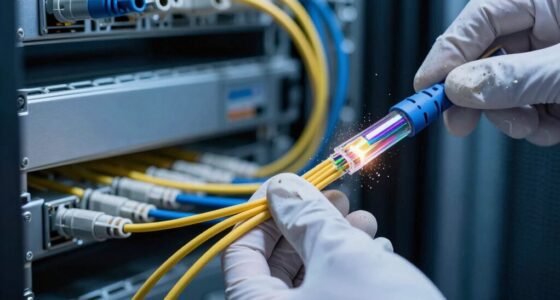
During busy install days, keep fiber end faces clean by handling fibers with gloves or tools to avoid oils and dirt transfer. Always work in a clean environment, use lint-free wipes and approved cleaning solutions, and inspect each fiber under a microscope before connecting. Avoid rushing, and re-clean if you see contamination or debris. Proper handling and regular inspection are key to avoiding performance issues, and you’ll discover more tips as you continue to improve your fiber maintenance skills.

Get business pricing on networking and server gear
- Business-only prices and quantity discounts
- Tax-exempt purchasing
- Multiple users, one account, clear invoices
Key Takeaways
- Use protective caps or holders to prevent touching fiber end faces during handling.
- Maintain a clean, dust-free workspace and handle fibers with gloves or tools.
- Regularly inspect and re-clean fibers before splicing or connectorizing.
- Follow proper polishing procedures and use appropriate polishing pads for each fiber.
- Keep cleaning supplies like lint-free wipes and approved solutions readily available for quick re-cleaning.

Have you ever wondered why clean fiber end faces are so vital for network performance? The answer lies in the essential role they play in maintaining ideal signal transmission. Dirty or scratched fiber end faces can cause signal loss, increased attenuation, and even network downtime. During busy install days, it’s easy to overlook proper cleaning, but neglecting this can lead to costly troubleshooting later. To keep your fiber connections in top shape, mastering fiber polishing techniques is key. Proper polishing ensures smooth, flat end faces that minimize insertion loss and back reflection. Using the right polishing pads, following manufacturer guidelines, and inspecting each fiber under a microscope after polishing help guarantee a flawless finish. Additionally, incorporating contamination prevention methods throughout your workflow can markedly reduce the risk of dirt, dust, and debris settling on the fiber ends. Always work in a clean environment, use lint-free wipes, and handle fibers with gloves or tools to prevent oils and dirt transfer. During installation, avoid touching the fiber end faces directly; instead, use protective caps or holders to minimize exposure to airborne contaminants. When it comes to cleaning, quick wipes with approved fiber cleaning solutions or lint-free wipes are effective, but never use alcohol or abrasive materials that can damage the surface. Before splicing or connectorization, inspect the fiber ends carefully with a microscope to detect any residues or scratches that could compromise performance. If contamination is visible, re-clean and re-inspect until the end face is spotless. Implementing contamination prevention methods extends beyond cleaning alone. Regularly replacing worn-out polishing pads and cleaning tools prevents the buildup of debris that might transfer to the fiber end faces. Keeping your workspace organized and free of dust also reduces airborne particles that could settle onto the fibers. During busy days, it’s tempting to rush through procedures, but cutting corners on fiber polishing or neglecting proper cleaning can lead to poor connections. Take a moment to verify each fiber’s cleanliness, and don’t hesitate to pause and re-clean if needed. Proper handling and detailed inspection are essential components that contribute to maintaining fiber integrity, and paying close attention to contamination prevention can significantly improve your results. Remember, the integrity of your fiber end faces directly impacts the network’s reliability and speed. Proper fiber end face maintenance is also crucial to prevent contamination and ensure optimal performance.
As an affiliate, we earn on qualifying purchases.
Frequently Asked Questions
Can Cleaning Fiber Ends Damage the Connectors?
Cleaning fiber ends can damage connectors if you use harsh chemicals, abrasive tools, or improper techniques, leading to fiber contamination or reduced connector durability. You should handle cleaning carefully, using appropriate wipes and cleaning solutions designed for fiber optics. Proper cleaning maintains connector durability and prevents fiber contamination, ensuring peak performance. Always follow manufacturer instructions and avoid excessive force to protect delicate fiber end faces during maintenance.
What Tools Are Safest for Cleaning Fiber End Faces?
Ever wonder what tools are safest for fiber cleaning and connector safety? You should use lint-free wipes, fiber-optic cleaning pens, and isopropyl alcohol specifically designed for fiber optics. These tools prevent scratches and damage, ensuring quality connections. Avoid harsh chemicals or abrasive materials that can harm the fiber end faces. Proper fiber cleaning maintains ideal signal transmission and prolongs the life of your connectors, especially during busy install days.
How Often Should Fiber End Faces Be Cleaned During Installation?
During installation, you should clean fiber end faces whenever you notice fiber contamination or dirt, guaranteeing peak performance. Regular cleaning frequency depends on the environment, but inspecting each connector before making a connection helps prevent contamination-related issues. Avoid excessive cleaning, which can damage the fiber end face. Instead, clean only when necessary, using proper tools, and follow best practices for fiber maintenance to assure a reliable, high-quality connection.
Are There Specific Cleaning Products Recommended for Fiber Optics?
You should use cleaning solutions specifically designed for fiber optic cables to guarantee effective cleaning without damage. Products like lint-free wipes with isopropyl alcohol (99%) are highly recommended. Avoid harsh chemicals that can harm the fiber end faces. Always choose cleaning solutions that are compatible with fiber optics, and follow manufacturer instructions to maintain the integrity and performance of your fiber optic cables during busy install days.
What Are Common Mistakes to Avoid When Cleaning Fiber Ends?
You should avoid common mistakes like using too much cleaning solution or abrasive materials, which can cause fiber contamination or damage. Don’t touch the end face with your fingers, as oils transfer easily. Stick to proper cleaning techniques—using lint-free wipes and approved cleaning tools—and guarantee you don’t rush the process. Overlooking these steps can compromise connection quality, so stay meticulous to maintain ideal fiber performance during busy install days.
fiber end face inspection microscope
As an affiliate, we earn on qualifying purchases.
As an affiliate, we earn on qualifying purchases.
Conclusion
Keeping fiber end faces clean might seem like a small detail, but it’s essential for a successful install. A single fingerprint or dust particle can cause signal loss or connection issues, leading to costly troubleshooting. Did you know that over 70% of fiber optic failures are due to contamination? By taking a few extra seconds to clean and inspect, you’ll save time and guarantee reliable performance—making your busy install days smoother and more efficient.
As an affiliate, we earn on qualifying purchases.
fiber optic connector cleaning tools
As an affiliate, we earn on qualifying purchases.
As an affiliate, we earn on qualifying purchases.
Fall Picks
fall essentials
As an affiliate, we earn on qualifying purchases.