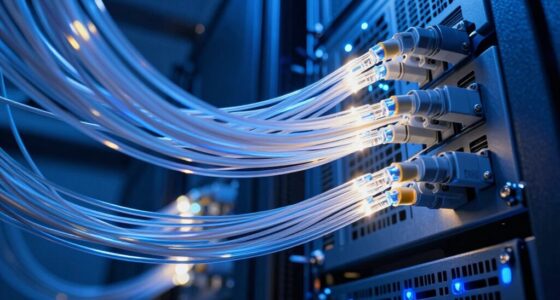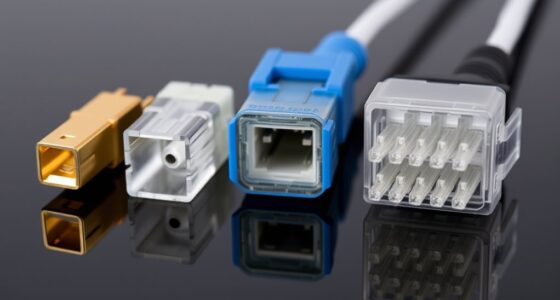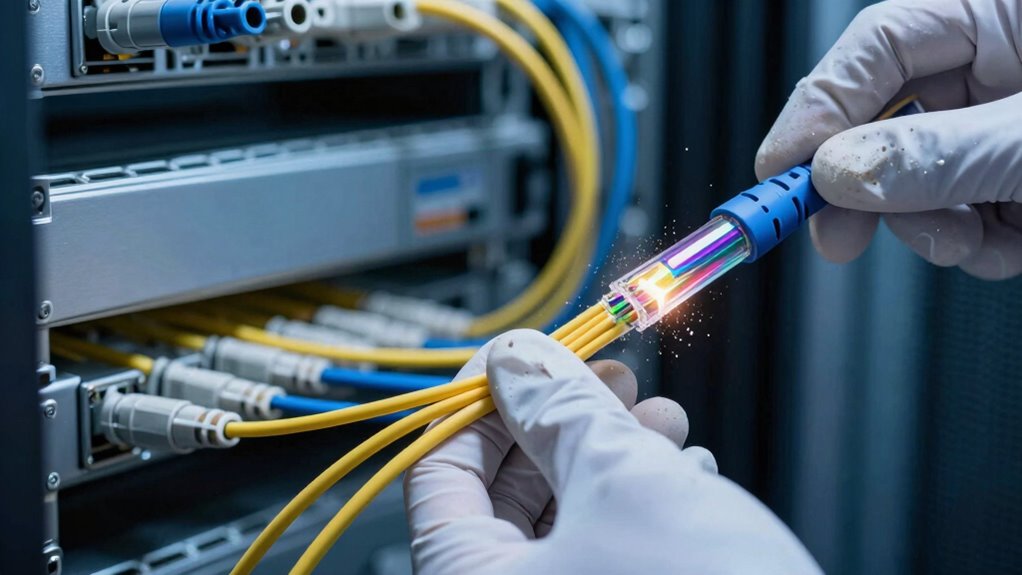
Effective fiber cleaning habits are more vital than many teams realize because they directly impact network performance and equipment longevity. Dirty connectors can cause signal loss, increased downtime, and costly repairs. Using the right tools and proper techniques guarantees you avoid damage and contamination. Regular training and inspections help catch issues early. Maintaining a clean network improves reliability and efficiency. Keep going—there’s more to discover about how these habits can protect your entire system.
Key Takeaways
- Proper cleaning prevents signal loss, attenuation, and connection failures, ensuring optimal network performance.
- Consistent cleaning habits reduce costly repairs and downtime caused by contamination.
- Using proper tools and techniques preserves fiber integrity and extends equipment lifespan.
- Regular cleaning and inspections help detect issues early, maintaining network reliability.
- Clean fibers support accurate testing and protect against vulnerabilities in cloud and network services.
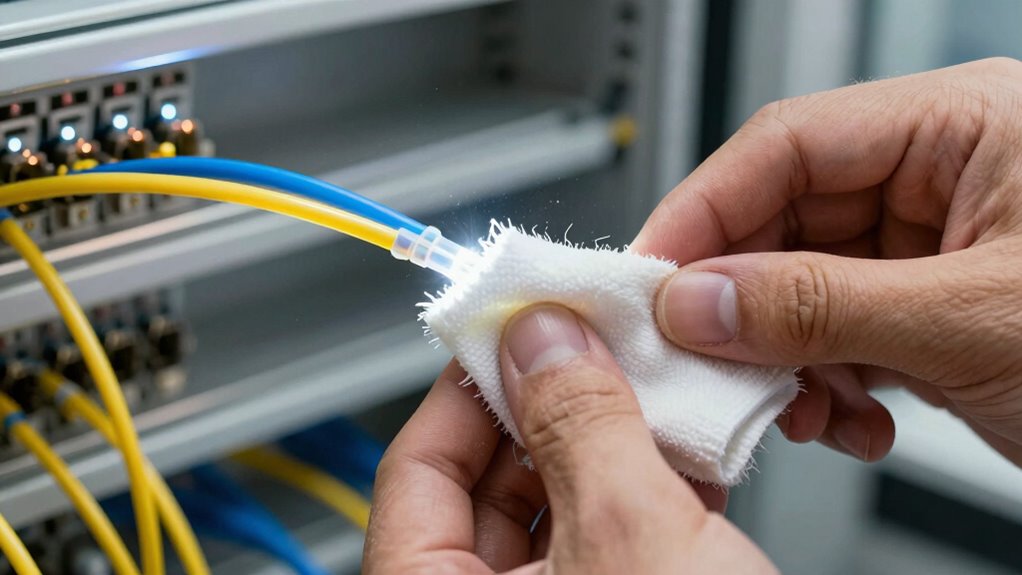
Maintaining clean fibers is vital for preserving their appearance and longevity, and it all starts with establishing good cleaning habits. When working with fiber optic cables, your goal is to guarantee optimal performance and prevent costly repairs or replacements down the line. The key lies in understanding that proper cleaning isn’t just a routine task; it’s an essential part of maintaining the integrity of your network. Using the right cleaning tools makes a significant difference. Specialized fiber optic cleaning tools are designed to remove dirt, dust, and oil without damaging delicate fibers. These tools are easy to use and more effective than makeshift alternatives, which can introduce contaminants or cause scratches. Investing in quality cleaning supplies guarantees you’re not just cleaning but doing so efficiently and safely.
Prioritize proper cleaning tools and habits to maintain fiber integrity and ensure optimal network performance.
Your cleaning habits should be consistent and methodical. Small particles or residues left on the fibers can cause signal loss, attenuation, or even complete failure of the connection. That’s why you need to develop a routine that includes inspecting the fibers first, then thoroughly cleaning them with the appropriate tools. Fiber optic cleaning wipes, lint-free cloths, and specialized cleaning pens are essential components of your toolkit. When cleaning, avoid using harsh chemicals or abrasive materials that could damage the fiber’s protective coatings. Instead, opt for alcohol-based cleaning solutions that evaporate quickly and leave no residue. Proper technique is equally important. Gently wiping the connector end face without applying excessive pressure prevents scratches and maintains the fiber’s smooth surface.
Another vital aspect of good fiber cleaning habits is training your team on proper procedures. Everyone involved in handling fiber optic cables should understand the importance of cleanliness and follow standardized protocols. Proper handling minimizes the risk of contamination and ensures that each connection is reliable. Regularly scheduled cleaning sessions, combined with visual inspections, help catch issues early before they escalate into major problems. Remember, dirty fibers can lead to increased downtime, degraded signal quality, and expensive repairs—all of which you can avoid with disciplined cleaning habits. Additionally, understanding fiber contamination and how it impacts network performance can help emphasize the importance of strict cleaning routines. Incorporating testing accuracy into your maintenance process can further help identify hidden issues caused by contamination or improper cleaning. Furthermore, utilizing specialized cleaning tools designed specifically for fiber optics can enhance the effectiveness and safety of your cleaning procedures. Establishing a cleaning schedule and documenting your procedures can also improve consistency and accountability across your team. Recognizing cloud service vulnerabilities underscores the importance of maintaining clean and well-functioning fiber connections, especially when relying on cloud-based solutions. Ultimately, the effort you put into maintaining clean fibers with the right cleaning tools pays off in improved network performance and longer-lasting equipment. Consistency, proper technique, and using the right tools are your best defense against fiber optic contamination. By making fiber cleaning a routine part of your maintenance process, you’re not just avoiding problems—you’re guaranteeing your network runs smoothly, efficiently, and reliably for years to come.

D YEDEMC Fiber Optic Connector Cleaning Kit with 1.25mm / 2.5mm Cleaner Pens & Cassette and Replacement Tapes for FC SC ST LC MU Connectors
- Fiber Clean Cassette: Cleans ferrules 2.5mm & 1.25mm
- Application Compatibility: Suitable for SC, FC, ST, LC, MU, D4, MPO
- Cleaning Capacity: Up to 550 cleaning cycles
As an affiliate, we earn on qualifying purchases.
As an affiliate, we earn on qualifying purchases.
Frequently Asked Questions
How Often Should Fiber Cleaning Be Performed for Optimal Health?
You should clean your fiber regularly, ideally every 4 to 6 weeks, to prevent fiber dust buildup. Maintaining a consistent cleaning schedule guarantees peak health by reducing allergens and dust particles that can accumulate over time. Don’t wait for visible dirt—routine cleaning keeps your fibers fresh and safe. By sticking to this schedule, you protect your environment and promote better air quality, making fiber cleaning an essential part of your health habits.
Are There Specific Cleaning Tools Recommended for Fiber Maintenance?
Did you know that using the right cleaning tools can extend fiber lifespan by up to 30%? For fiber maintenance, opt for soft, lint-free cloths or specialized microfiber wipes to prevent damage. Regular cleaning schedules benefit from durable tools designed for repeated use. Avoid harsh brushes or abrasive materials, as they can compromise tool durability and fiber integrity. Invest in quality, purpose-built tools to make certain effective, safe cleaning over time.
Can Improper Cleaning Damage Fiber Materials?
Improper cleaning can definitely damage fiber materials, especially if you neglect proper techniques. Fiber contamination from dirt or residue can weaken the fibers over time, leading to performance issues. Regular cleaning frequency is essential; cleaning too infrequently allows contaminants to build up, while over-cleaning risks damaging the fibers. Use the right tools and follow recommended procedures to prevent damage, ensuring your fiber remains strong and efficient for the long haul.
What Are Signs of Inadequate Fiber Cleaning?
Think of your fiber as a pristine lake. Signs of inadequate cleaning are like algae blooms—fiber contamination, clouded signals, and increased errors. If you notice dust, smudges, or fuzz, it’s a clear sign your cleaning frequency isn’t enough. Over time, these issues build up, degrading performance. Regular cleaning keeps your fiber lake clear, ensuring peak transmission and preventing contamination from spoiling your network’s clarity.
Does Fiber Cleaning Vary Between Different Types of Fibers?
Yes, fiber cleaning does vary between different types of fibers. Synthetic fibers, like polyester or nylon, often require specific cleaning methods to prevent static and maintain their shape. Natural fibers, such as cotton or wool, need gentle cleaning to preserve softness and prevent shrinking. You should tailor your cleaning routine based on the fiber type to guarantee effective maintenance and avoid damage, ultimately extending the lifespan of your textiles.
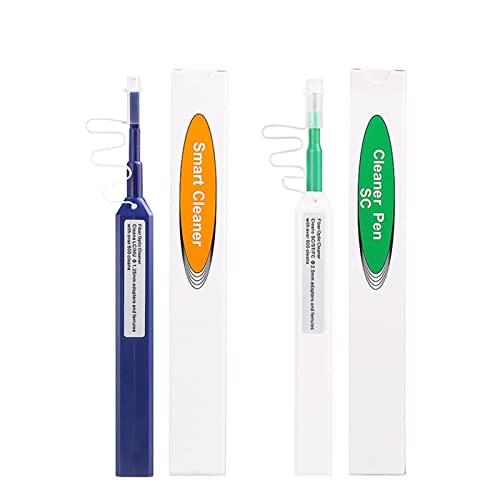
2pcs Fiber Optic Cleaner,Fiber Optic Connectors Cleaning Pen Over 800 Times
- Quick and Effective Cleaning: Fast cleaning of connector end faces
- Safe and Non-damaging: Removes dust, oil, debris without scratches
- High Cleaning Capacity: Over 800 cleans per pen
As an affiliate, we earn on qualifying purchases.
As an affiliate, we earn on qualifying purchases.
Conclusion
If you ignore your fiber cleaning habits, you’re risking an invasion of microscopic monsters that could take over your entire home! Neglecting this tiny task is like inviting a legion of dirt-dwelling villains to sabotage your health and comfort. Don’t underestimate the power of consistent fiber cleaning—it’s the ultimate defense against chaos. Get serious about it, and watch your space transform into a fortress of freshness! Trust me, your future self will thank you.

Elfcam® – Pack of 50 Fiber Optic Cleaning Papers, for Decontamination of Bare Fibre Before Splicing and Fibre Optic Connector Ends
- Purpose: Decontaminates bare fiber and connectors
- Compatibility: Cleans all fiber optic connectors
- Application: Suitable for labs and industrial use
As an affiliate, we earn on qualifying purchases.
As an affiliate, we earn on qualifying purchases.

400x Handheld Fiber Optic Microscope Inspection Tool Portable Microscope Fiber Optic Tools Lighted Pocket Microscope LED Light Coaxial Illumination 2.5mm FC SC ST and 1.25mm LC Adapter
- LED Illumination: Provides bright, clear viewing
- Multiple Adapters: Includes 2.5mm and 1.25mm adapters
- Quality & Safety Certified: Meets industry safety and quality standards
As an affiliate, we earn on qualifying purchases.
As an affiliate, we earn on qualifying purchases.