
To guarantee cable safety in schools and public spaces, you need to regularly inspect cables for damage like fraying or exposed wires, and keep them properly insulated with appropriate voltage ratings. Secure loose cables along walls or ceilings to prevent tripping, especially in high-traffic areas. Use protective covers around sensitive environments with children or the elderly, and organize cables to avoid clutter. Proper maintenance and safety standards help prevent accidents and extend cable lifespan—discover more ways to safeguard your environment as you continue.
Key Takeaways
- Regularly inspect and maintain cables to identify and repair damage promptly.
- Use cable covers, organizers, and secure mounting to prevent tripping hazards.
- Keep cables away from water and moisture-prone areas to reduce electrical risks.
- Educate staff and users on safe cable handling and proper management practices.
- Choose durable, properly rated cables suitable for high-traffic and sensitive environments.
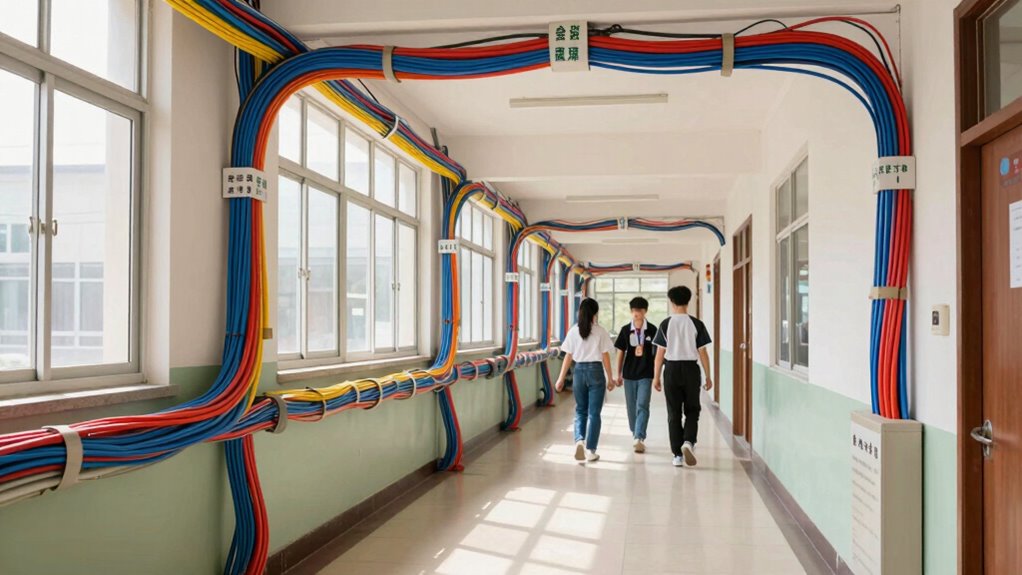
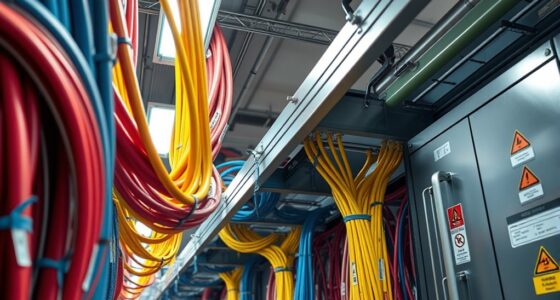
Have you ever contemplated how much danger lurks in everyday cables? It’s easy to overlook the potential hazards they pose, especially in busy environments like schools and public spaces. Cables are essential for connecting devices and keeping operations running smoothly, but if not managed properly, they can become serious safety risks. Electrical hazards are one of the biggest concerns. Exposed or damaged wires can deliver electric shocks if touched, which can cause injuries or even be fatal. It’s vital to regularly inspect cables for signs of wear and tear, such as fraying or exposed wiring. Using proper insulation and ensuring that cables are rated for their specific voltage helps prevent these electrical hazards. When installing cables, make sure they’re kept away from water sources and areas prone to moisture, as water increases the risk of short circuits and electrical shocks. Proper cable insulation significantly reduces the likelihood of electrical accidents.
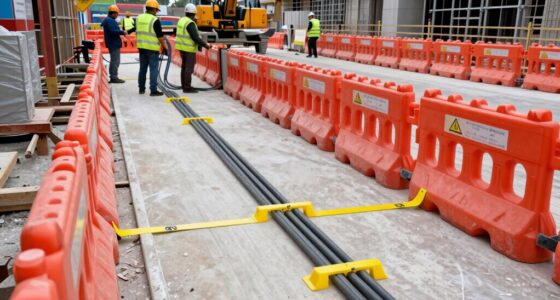
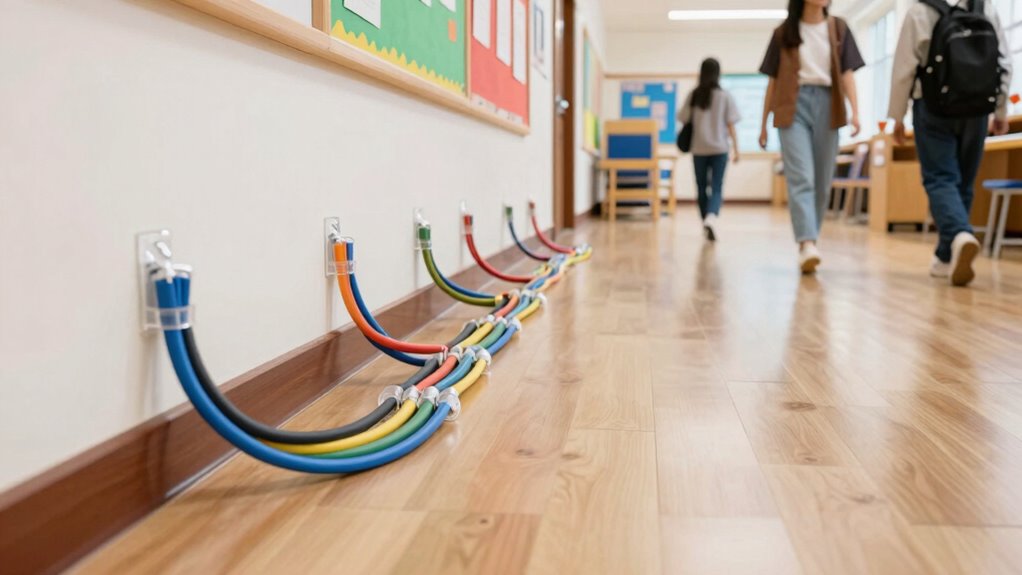
Tripping dangers are another serious issue that often gets overlooked. Loose or improperly secured cables can turn walkways into hazard zones, especially in high-traffic areas. People might trip and fall, leading to injuries that could have been avoided with better cable management. When setting up equipment, always run cables along walls or ceilings when possible, and use cable covers or floor mats to secure loose cords. This not only prevents tripping but also protects the cables from damage, reducing the risk of electrical hazards caused by exposed wires. Proper cable management also minimizes clutter, making it easier to conduct regular safety inspections and identify potential problems early. In environments like schools, where children or the elderly might be present, the importance of cable safety multiplies. Children are naturally curious and might tug on cords or try to pick them up, risking electric shock or falls. In these environments, it’s essential to use cable organizers and protective covers designed specifically for safety in such settings. Additionally, selecting cables with durable materials can extend their lifespan and resilience against wear and tear, especially in high-traffic or demanding environments.
Another aspect to think about is the overall organization of cables. A cluttered tangle of cords can hide potential hazards and make inspections difficult. Keeping cables neatly arranged and labeled simplifies regular safety checks and quick repairs. When cables are managed properly, it’s easier to identify damaged sections before they become a problem. Regular maintenance and adherence to safety standards are key to minimizing both electrical hazards and tripping dangers. Educating staff and users about proper cable handling and safety practices further reduces the risk of accidents. Additionally, understanding material durability can offer insights into how materials and environments influence cable and equipment longevity over time. Proper cable management and routine inspections are also crucial in environments with high foot traffic, such as schools and public spaces, to prevent unforeseen issues.

VEVOR 3 PCs Drop Over Cable Cover Ramp, 2,000 lbs/axle Load Capacity, Heavy Duty Cable Hose Protector Ramp, Floor Cord Cover for High Walking Traffic Areas Indoor Outdoor Home Office Warehouse School
- Pack Size: Set of 3 cable covers
- Dimensions: 39.37 x 5.12 x 0.79 inches
- Channel Groove: 1.57 x 0.51 inches
As an affiliate, we earn on qualifying purchases.
As an affiliate, we earn on qualifying purchases.
Frequently Asked Questions
Are There Specific Regulations for Cable Safety in Schools?
Yes, there are specific regulations for cable safety in schools. You should follow local electrical codes and standards, such as the National Electrical Code (NEC), to guarantee safety. Consider wireless alternatives where possible to reduce cable clutter. Use proper cable management techniques like wire covers and secure mounting to prevent trips and falls. Regular inspections and maintenance are essential to keep cables safe, compliant, and minimize hazards in educational environments.
How Often Should Cable Safety Inspections Be Conducted?
You should conduct cable safety inspections at least annually to guarantee proper cable maintenance and safety. Regular inspection frequency helps identify potential hazards like frayed wires, loose connections, or damaged insulation before accidents happen. By staying consistent with these inspections, you maintain a safe environment for students and staff. Always document each inspection, and address any issues promptly to prevent safety risks and ensure compliance with safety standards.
What Are the Signs of Damaged or Unsafe Cables?
You’ll notice damaged or unsafe cables through signs like frayed insulation, exposed wires, or visible wear. Sometimes, cables may emit sparks or heat, indicating serious issues. These signs of cable wear and insulation damage can pose electrical hazards, risking shocks or fires. Always inspect for cracks, cuts, or bent connectors. Recognizing these warning signs helps you prevent accidents and guarantees a safe environment in schools and public spaces.
How Can I Train Staff to Recognize Cable Hazards?
You can train staff effectively by implementing clear training protocols focused on hazard identification. Show them how to spot damaged or frayed cables, loose connections, and improper setups. Use real-life examples and hands-on demonstrations to reinforce learning. Encourage them to routinely inspect cables and report hazards immediately. Regular refresher sessions guarantee ongoing awareness, empowering staff to recognize risks early and maintain a safe environment for everyone.
Are There Eco-Friendly Cable Safety Solutions?
Yes, eco-friendly cable safety solutions exist. You can choose cables made from biodegradable materials, reducing environmental impact. Additionally, supporting recycling initiatives guarantees old cables are properly disposed of or repurposed, minimizing waste. These green options help you maintain safety standards while promoting sustainability. By integrating biodegradable cables and participating in recycling programs, you demonstrate your commitment to eco-conscious practices in schools and public spaces.

Cable Management Under Desk, Enhanced up to 15 Cord Organizer 20 Pair-Black
- Under-Desk Cable Management: Includes 20 hook-and-loop cable holders
- Flexible Narrow-Space Design: Adjusts easily without full removal
- Low-Profile Fit: Fits tight corners effortlessly
As an affiliate, we earn on qualifying purchases.
As an affiliate, we earn on qualifying purchases.
Conclusion
By prioritizing cable safety, you’re not just preventing a trip or fall—you’re stopping a potential disaster that could turn your school or public space into chaos. Imagine a world where one loose cable sparks a domino effect of injuries, chaos, and chaos. But with vigilant checks and proper management, you hold the power to turn that nightmare into a safe, secure haven. Take action today—because a safe space is a happy, worry-free place!
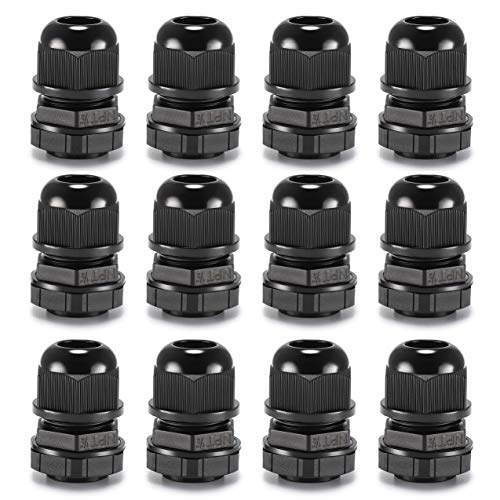
QILIPSU 12pcs 1/2" NPT Cable Gland Waterproof IP68 Nylon Cable Pass Through Cord Grip Connector Strain Relief Wire Grommet
- High-Quality Material: Made from durable, eco-friendly plastic
- Enhanced Seal: EPDM rubber for superior resistance and sealing
- Waterproof Protection: IP68 rated for water and contaminant resistance
As an affiliate, we earn on qualifying purchases.
As an affiliate, we earn on qualifying purchases.

XHF 120 PCS Adhesive Cable Wire Clips Black, Outdoor Christmas Light Clips, Cable Management Wire Organizer Cord Holder for Under Desk, Car, Wall, TV PC Ethernet Cable
- High-Quality Material: Strong adhesive and PA66 nylon construction
- Versatile Usage: Suitable for USB, Ethernet, lights, and more
- Compact Size: Base 5/8" x 5/8", buckle 1/4" x 2/5"
As an affiliate, we earn on qualifying purchases.
As an affiliate, we earn on qualifying purchases.