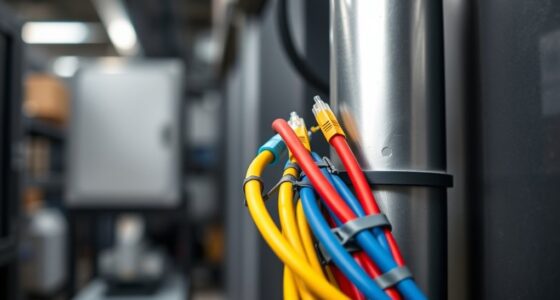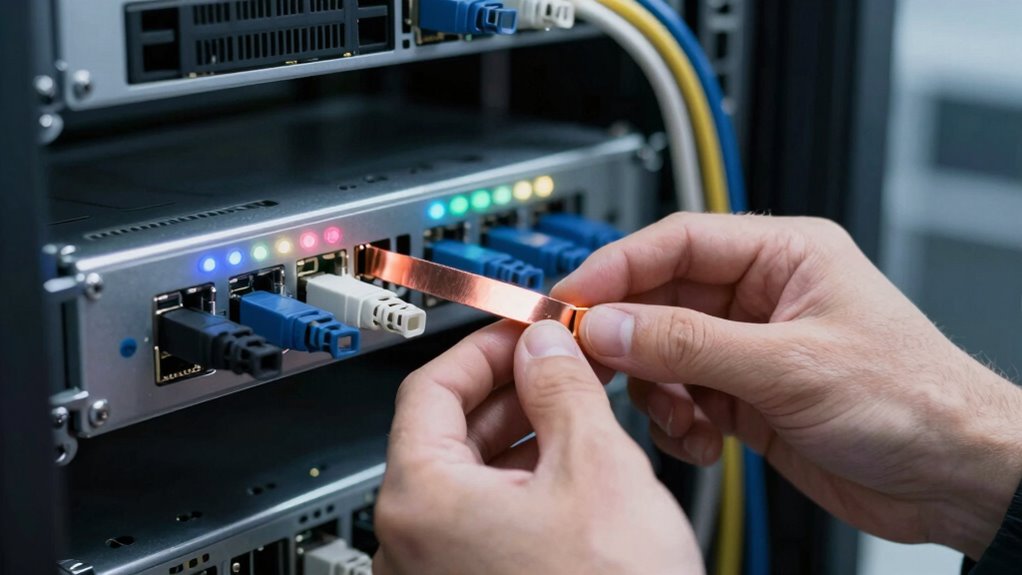

Many people forget that proper grounding isn’t just a quick step; it needs ongoing maintenance, like checking for corrosion or looseness. You might focus on installing equipment but overlook the importance of following safety standards and local regulations. This can leave your network vulnerable to electrical surges, interference, and damage. Paying attention to details now helps prevent costly issues later, and if you keep exploring, you’ll discover how to guarantee your setup stays safe and reliable.

Get networking and server gear delivered free — and shop member deals
- Fast, free delivery on millions of items
- Access to Prime Big Deal Days deals on October 6–7
- Prime Video, Amazon Music and more included
Key Takeaways
- Regular inspection and testing of grounding connections are often overlooked, risking safety and performance.
- Proper grounding techniques must be carefully planned; improper methods can lead to vulnerabilities.
- Grounding systems can corrode or loosen over time, requiring ongoing maintenance.
- Many forget that grounding must comply with local regulations to ensure safety and reliability.
- Neglecting to consider electrical safety and interference mitigation can compromise data integrity and equipment lifespan.
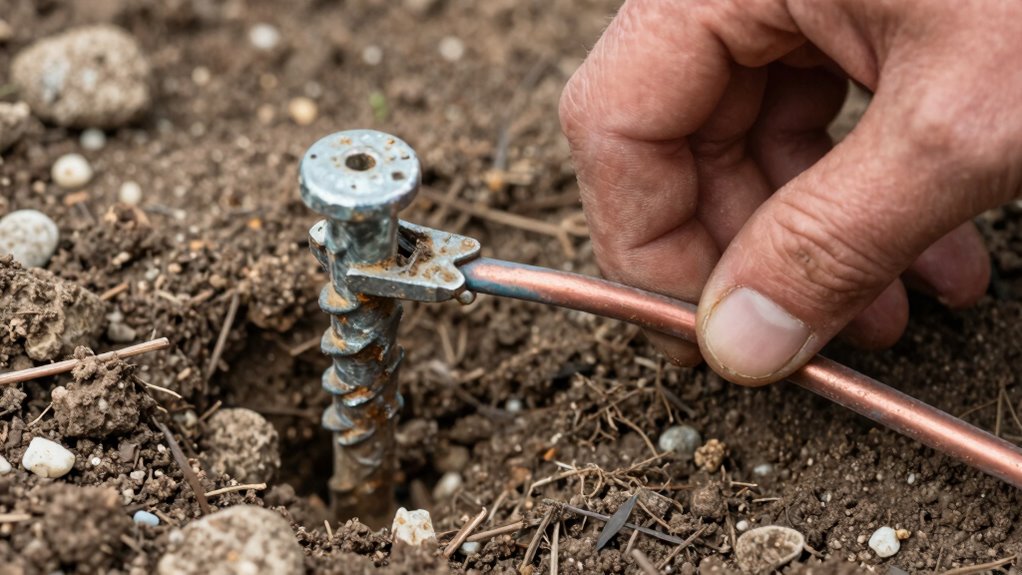
Grounding is a crucial component of network installations because it guarantees safety, equipment protection, and reliable data transmission. When you set up a network, it’s easy to overlook the importance of proper grounding, but neglecting this step can lead to serious issues. One of the primary reasons grounding matters so much is electrical safety. Without a solid grounding system, power surges or faults can cause dangerous voltages to build up, risking electric shocks or fires. Proper grounding ensures that any excess electrical energy has a safe path to the earth, protecting both your equipment and the people around it.
Many forget that grounding also plays an essential role in minimizing signal interference. In network setups, especially those involving sensitive data transmissions, interference from external sources can degrade performance. Without adequate grounding, electromagnetic interference (EMI) from nearby electrical devices or radio waves can seep into your cables, causing data corruption or slower speeds. Proper grounding acts as a shield, reducing the impact of these external signals and maintaining the integrity of your network.
Another aspect people often overlook is the significance of grounding for equipment protection. Network devices like routers, switches, and servers are expensive investments, and a power fluctuation or lightning strike can cause irreparable damage. When your system is properly grounded, it can absorb and dissipate such surges, preventing costly replacements and downtime. This protection isn’t just about keeping your hardware safe; it also helps maintain consistent network performance, ensuring your operations run smoothly.
You might also forget that grounding isn’t a one-time setup. It requires ongoing attention and maintenance to ensure it remains effective. Over time, grounding conductors can corrode or become loose, especially in challenging environments. Regular inspections and testing of your grounding system are critical to catching issues before they escalate. This proactive approach guarantees continuous electrical safety, minimizes signal interference, and preserves equipment longevity.
Finally, many underestimate the importance of proper grounding standards and codes. Following local regulations isn’t just about compliance; it’s about ensuring your network’s safety and reliability. Proper grounding practices aren’t complicated, but they do demand careful planning and execution. If you overlook these details, you risk creating vulnerabilities that could jeopardize your entire network infrastructure. Paying attention to grounding ensures your network remains safe, efficient, and resilient over time. Additionally, understanding the grounding techniques used in network installations can further enhance your setup’s safety and performance.
grounding tester for network cables
As an affiliate, we earn on qualifying purchases.
As an affiliate, we earn on qualifying purchases.
Frequently Asked Questions
How Does Grounding Affect Network Performance During Power Surges?
Grounding helps protect your network during power surges by reducing electromagnetic interference, which can disrupt signal integrity. When your system is properly grounded, it provides a safe path for excess current, preventing damage to equipment and maintaining stable data transmission. This guarantees your network remains reliable and performs at its best during power fluctuations, avoiding potential data loss and connection issues caused by electromagnetic disturbances.
What Are the Common Mistakes in Grounding Network Systems?
Don’t let grounding safety slip through the cracks—it’s the backbone of reliable network performance. Common mistakes include neglecting proper grounding standards, skipping regular inspections, and using incompatible materials. You risk electrical shocks and data loss if you overlook these errors. Always follow grounding standards meticulously, guarantee secure connections, and perform routine checks. Proper grounding isn’t just a rule; it’s your shield against costly failures and hazards.
How Often Should Grounding Systems Be Inspected or Tested?
You should inspect and test your grounding system at least once a year to verify grounding safety and equipment compatibility. Regular inspections help identify corrosion, loose connections, or damage that could compromise safety or system performance. Testing more frequently, especially after any major modifications or adverse weather events, helps maintain peak grounding integrity, ensuring your network remains protected and compliant with safety standards.
Can Improper Grounding Cause Data Loss or Corruption?
Improper grounding can definitely cause data loss or corruption. When grounding isn’t properly established, electromagnetic interference (EMI) increases, which disrupts signal integrity. This interference can corrupt data transmissions or cause errors in your network. Without solid grounding, your network becomes vulnerable to electrical noise, leading to unstable connections and potential data issues. Ensuring proper grounding minimizes EMI, preserves signal integrity, and keeps your data safe and reliable.
What Grounding Materials Are Best for High-Frequency Network Signals?
Think of your grounding setup as the conductor of an orchestra, ensuring harmony at high frequencies. Use a high-quality grounding wire made of copper or silver-plated copper, as these materials excel at transmitting high-frequency signals with minimal loss. Pair it with a sturdy grounding rod, ideally copper or copper-clad, driven deep into the earth. This combo helps maintain signal integrity, reduces interference, and keeps your network running smoothly at high frequencies.
As an affiliate, we earn on qualifying purchases.
Conclusion
Remember, proper grounding isn’t just a technical detail; it’s your network’s safeguard. Neglecting it can lead to costly outages and equipment damage. Did you know that over 40% of network failures are caused by grounding issues? By prioritizing grounding in your installations, you guarantee stability, safety, and longevity for your network. Don’t overlook this essential step—your system depends on it for reliable performance and protection.
As an affiliate, we earn on qualifying purchases.
electrical grounding inspection tools
As an affiliate, we earn on qualifying purchases.
As an affiliate, we earn on qualifying purchases.
Halloween Picks
halloween
As an affiliate, we earn on qualifying purchases.