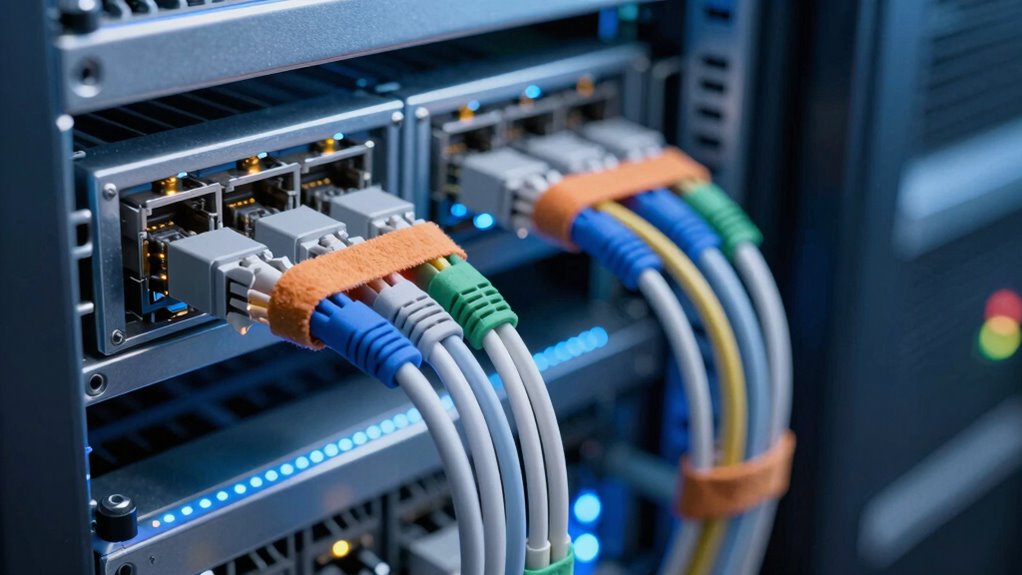

Cabling basics still matter in advanced network designs because they lay the foundation for reliable, secure, and scalable connections. Proper installation, connectors, and organization guarantee ideal performance, prevent costly downtime, and support future upgrades. Good cabling practices also strengthen the integration of wired and wireless systems, making your network more resilient. Focusing on these fundamentals helps you build a robust infrastructure that performs efficiently now and as your network evolves—this is just the start.

Get business pricing on networking and server gear
- Business-only prices and quantity discounts
- Tax-exempt purchasing
- Multiple users, one account, clear invoices
Key Takeaways
- Proper cabling ensures reliable connections, foundational for complex network architectures.
- Correct installation prevents performance issues and costly downtime in advanced networks.
- Organized cabling simplifies troubleshooting, maintenance, and future scalability.
- Good cabling practices support high-demand applications like fiber and PoE.
- Solid physical infrastructure underpins the effectiveness of wireless and hybrid network integrations.
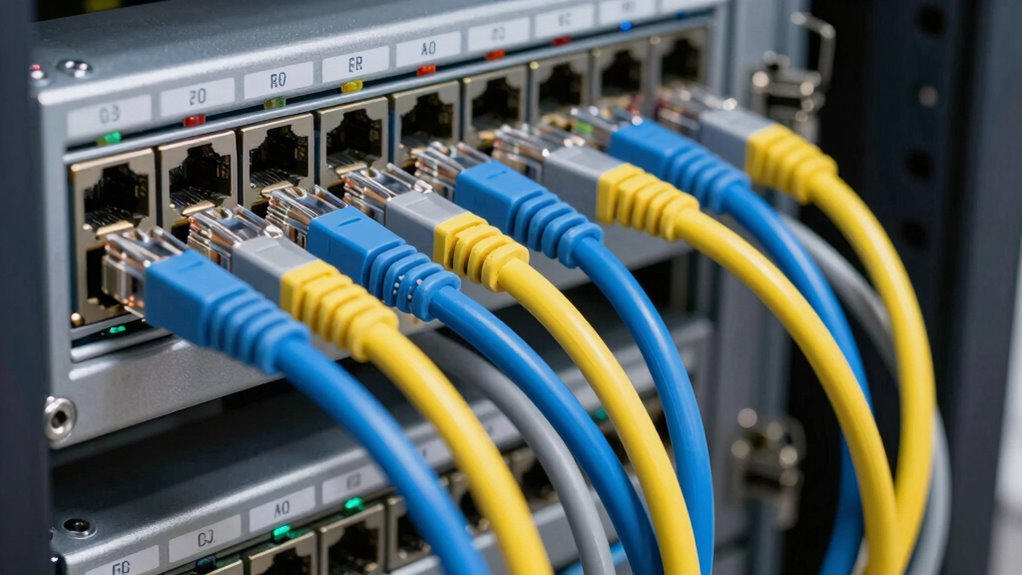
Have you ever wondered how network connections stay reliable and fast? The answer often comes down to the fundamentals of cabling, even in today’s sophisticated network designs. While it might seem like cutting-edge technology like fiber optimization and wireless integration are all you need, solid cabling practices form the backbone that keeps everything functioning smoothly. Proper cabling isn’t just about making connections; it’s about guaranteeing those connections are efficient, secure, and scalable, which is essential as networks grow more complex. cabling practices play a vital role in maintaining overall network performance, especially when dealing with high-speed data transfer and expanding infrastructure. Correct fiber optimization involves precise handling, proper connectors, and avoiding bends or damage that degrade performance, emphasizing the importance of adhering to industry standards for installation. These small details make a big difference in how well your fiber network performs, especially when supporting demanding applications or future upgrades. Ensuring proper fiber management can prevent costly downtime and performance bottlenecks. Additionally, following installation best practices helps ensure that your network remains compliant with safety and quality regulations, minimizing risks and enhancing reliability. Moreover, understanding the significance of cabling organization can improve overall maintenance and troubleshooting efficiency, reducing downtime during issues.
Solid cabling practices are the backbone of reliable, scalable, and secure network connections.
At the same time, wireless integration complements traditional cabling, but it doesn’t replace the need for solid physical infrastructure. Wireless signals depend heavily on the quality of the underlying cabling that connects access points, switches, and routers. If these connections are poorly installed or inadequately shielded, interference and signal degradation can occur, reducing network reliability. This is why understanding cabling basics helps you create a robust hybrid network that leverages the strengths of both wired and wireless technologies.
Moreover, cabling fundamentals influence the ease of maintenance and scalability. When your cables are organized, labeled, and installed following best practices, troubleshooting becomes faster, and expanding your network is less disruptive. Even with advanced features like Power over Ethernet (PoE) and network segmentation, a well-laid-out cabling plan ensures your system remains flexible and responsive to changing needs. This foundation allows you to efficiently integrate new devices or upgrade existing ones without overhauling the entire infrastructure.
In essence, mastering cabling basics is a strategic move that supports the most modern network innovations. It guarantees fiber optimization works at its best, enhances wireless integration, and provides a stable platform for future growth. No matter how advanced your network becomes, the fundamental principles of cabling remain the cornerstone for delivering reliable, high-performance connectivity day after day.
Cat6 Ethernet cable for high-speed networks
As an affiliate, we earn on qualifying purchases.
As an affiliate, we earn on qualifying purchases.
Frequently Asked Questions
How Often Should Network Cabling Be Inspected or Replaced?
You should inspect your network cabling at least once a year to guarantee peak performance, especially considering cable lifespan and potential wear. Replace cables if you notice physical damage, corrosion, or connectivity issues. Regular inspections help prevent unexpected failures and maintain network reliability. For high-traffic or critical systems, more frequent checks are recommended, as early detection of issues minimizes downtime and preserves the integrity of your advanced network design.
What Are the Environmental Factors Affecting Cabling Performance?
Environmental hazards can silently threaten your cabling’s performance, making cable durability a crucial concern. Extreme temperatures, moisture, and exposure to chemicals can weaken or damage cables over time, risking network disruptions. You might not notice the damage until it’s too late, so understanding how these factors affect your infrastructure is essential. Protect your cables by choosing durable materials and installing them in safe environments to guarantee long-lasting, reliable connectivity.
Are There Specific Certifications for High-Quality Network Cabling?
Yes, there are specific certifications for high-quality network cabling. You should look for cabling certifications like UL, ETL, or ISO/IEC standards, which verify compliance with industry quality standards. These certifications guarantee that the cabling meets rigorous performance, safety, and durability requirements. Choosing cables with recognized quality standards helps you achieve reliable network performance and future-proof your infrastructure, making your network more resilient and efficient.
How Does Cable Management Impact Network Troubleshooting?
Think of cable management as a well-organized library; when cables are neatly arranged, troubleshooting becomes like quickly finding a book on a shelf. Proper cable organization reduces confusion, minimizes errors, and speeds up troubleshooting efficiency. When cables are tangled or cluttered, identifying issues takes longer and risks disrupting other connections. Clear, organized cabling guarantees you can swiftly trace and resolve problems, keeping your network running smoothly and efficiently.
Can Upgrading Cabling Improve Overall Network Speed?
Upgrading your cabling can definitely improve your network speed, especially if you switch to fiber optics, which offer faster data transfer rates. Modern cables are also more durable, reducing the risk of damage that can slow down your network. By investing in high-quality, durable cables, you guarantee a more reliable connection, minimizing downtime and boosting overall performance for your advanced network.
As an affiliate, we earn on qualifying purchases.
Conclusion
So, next time you’re designing an advanced network, don’t overlook the basics. Those simple cabling choices could be the difference between seamless performance and unexpected failures. As technology evolves, the fundamentals remain your strongest foundation—hidden yet essential. Are you prepared to make the right connections? Remember, sometimes the smallest details hold the biggest power. Stay vigilant, and your network’s future just might depend on it.
cable management and organization kit
As an affiliate, we earn on qualifying purchases.
As an affiliate, we earn on qualifying purchases.
PoE network switch with cabling bundle
As an affiliate, we earn on qualifying purchases.
As an affiliate, we earn on qualifying purchases.
Evergreen bestsellers Picks
bestsellers
As an affiliate, we earn on qualifying purchases.