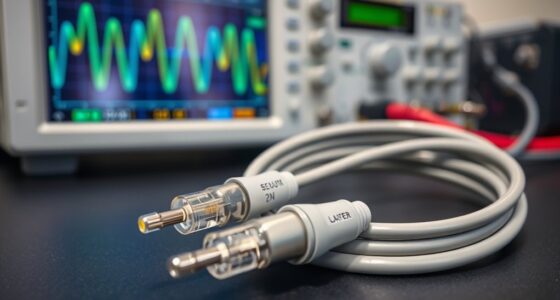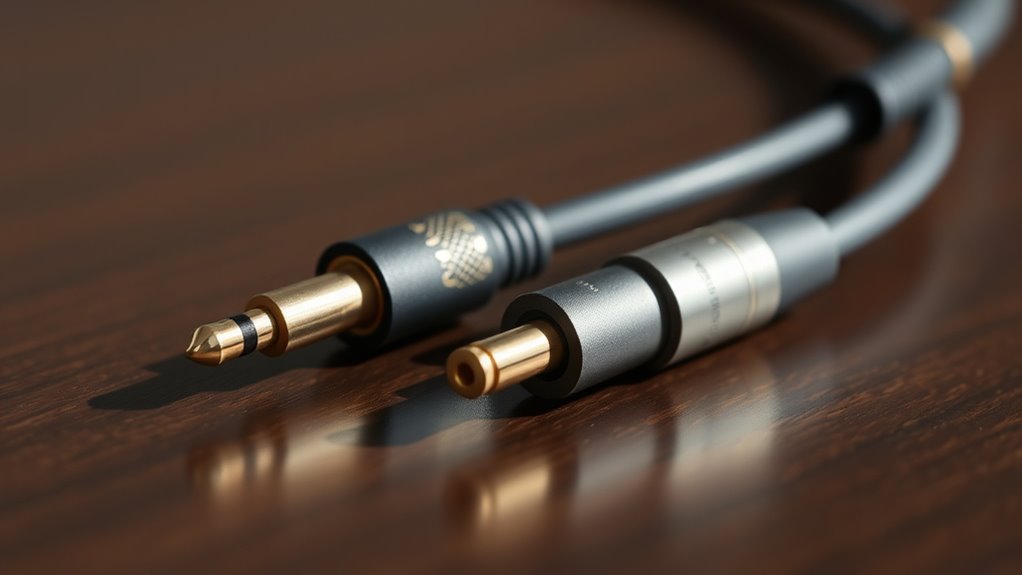
When choosing between single-ended and double-ended cables, consider your environment, distance, and noise levels. Single-ended cables are simpler and cheaper but more susceptible to interference, making them suitable for short runs in low-noise areas. Double-ended cables use differential signaling to improve signal integrity over longer distances and in noisier settings. Weigh these factors carefully, as the right choice can guarantee reliable, high-quality signal transfer, and exploring more details will help you make the best decision.

Get business pricing on networking and server gear
- Business-only prices and quantity discounts
- Tax-exempt purchasing
- Multiple users, one account, clear invoices
Key Takeaways
- Use single-ended cables for short-distance, low-noise environments to save costs and simplify installation.
- Choose double-ended cables in long-distance or high-noise settings for better noise immunity and signal integrity.
- Consider environmental factors like EMI and installation complexity when selecting between the two types.
- Double-ended cables offer improved performance but at a higher cost and installation complexity.
- Evaluate the application’s signal fidelity needs and environment to balance performance, cost, and ease of deployment.

Are you unsure which cable best suits your needs? When it comes to choosing between single-ended and double-ended cables, understanding their differences is essential to making an informed decision. Both types serve specific purposes, and your choice depends heavily on the application, signal integrity requirements, and installation considerations. Single-ended cables are typically simpler and cost-effective, featuring one conductor that carries the signal and a ground reference. They are often used for short-distance connections where electromagnetic interference (EMI) isn’t a major concern. However, these cables can be more susceptible to noise, which might compromise signal quality over longer runs or in electrically noisy environments. This susceptibility can lead to signal degradation, making it vital to consider the environment in which you’ll install them. Additionally, signal integrity plays a crucial role in ensuring reliable data transmission over various distances and conditions. Double-ended cables, on the other hand, have conductors at both ends, often incorporating differential signaling. This configuration improves signal integrity because it helps cancel out noise picked up along the cable run. If you’re working on a setup where maintaining high signal quality over longer distances is essential, double-ended cables are usually the better choice. They are designed to reduce common-mode noise, which can greatly affect data transmission, especially in industrial or high-frequency applications. However, they tend to be more complex and costlier than single-ended options, so you’ll need to evaluate whether the benefits outweigh the added expense and installation considerations. When selecting between these two, think about your environment and how the cables will be installed. If space is limited and your setup is relatively short, single-ended cables might suffice, provided the environment isn’t prone to interference. Conversely, if you’re installing cables in an environment with a lot of electrical noise or over longer distances, double-ended cables will likely provide more reliable performance. Installation considerations also include ease of termination and compatibility with your existing equipment. Double-ended cables often require more precise termination techniques and may need additional shielding or grounding, which can influence your overall installation process.
As an affiliate, we earn on qualifying purchases.
Frequently Asked Questions
How Do I Identify if My Device Requires Single-Ended or Double-Ended Cables?
You identify if your device needs single-ended or double-ended cables by checking its connector types and compatibility considerations. Look at the device’s ports—if it has RCA or 3.5mm jacks, it likely requires single-ended cables. For balanced audio setups with XLR or TRS connectors, double-ended cables are usually needed. Always consult your device’s manual to verify the recommended cable type, ensuring peak performance and compatibility.
Are Double-Ended Cables More Resistant to Interference Than Single-Ended Cables?
Think of double-ended cables as shields bravely standing guard against interference. They typically offer better shielding effectiveness, making them more resistant to noise and electromagnetic disturbances. Proper grounding techniques enhance this resistance, creating a safe haven for your signals. While not invincible, double-ended cables with solid shielding and proper grounding markedly reduce interference, ensuring your audio or data stays clear and strong amid the chaos of electromagnetic interference.
Can I Switch Between Single-Ended and Double-Ended Cables for the Same Device?
You can’t directly switch between single-ended and double-ended cables for the same device without verifying compatibility considerations. Some devices are designed to work with only one type, and using the wrong cable could cause issues or damage. Always review the manufacturer’s installation procedures and specifications to ensure proper connection. If needed, consult with an expert to confirm whether your device can handle both cable types safely.
What Are the Cost Differences Between Single-Ended and Double-Ended Cables?
You’ll find that single-ended cables are generally cheaper because they use simpler cable insulation and connectors, making them more affordable for basic setups. Double-ended cables cost more due to higher-quality insulation and connector compatibility, which improve signal quality and durability. If you need better performance and reliability, expect to pay a bit extra for double-ended options. Your choice depends on your budget and the quality you require.
Do Double-Ended Cables Have Better Signal Quality Over Long Distances?
Double-ended cables generally offer better signal quality over long distances because they reduce signal degradation. They often incorporate superior cable shielding, which helps prevent interference and preserves signal integrity. This means you’ll experience less noise and clearer audio or data transmission, especially over extended runs. If you need reliable performance over long distances, double-ended cables are a smarter choice, as their enhanced shielding and balanced design minimize interference and maintain signal quality.
double-ended differential cables
As an affiliate, we earn on qualifying purchases.
As an affiliate, we earn on qualifying purchases.
Conclusion
Think of choosing cables like selecting a path through a forest. Single-ended cables are like a well-trodden trail—simple and straightforward, perfect for clear, direct signals. Double-ended cables are like a scenic route—more complex but offering better noise rejection and stability. Your choice shapes your journey’s quality. Pick the right path for your needs, and your connection will flow smoothly, just like a peaceful walk through the woods, guiding you to your destination with confidence.
shielded audio cables for long distance
As an affiliate, we earn on qualifying purchases.
As an affiliate, we earn on qualifying purchases.
As an affiliate, we earn on qualifying purchases.
Halloween Picks
halloween
As an affiliate, we earn on qualifying purchases.