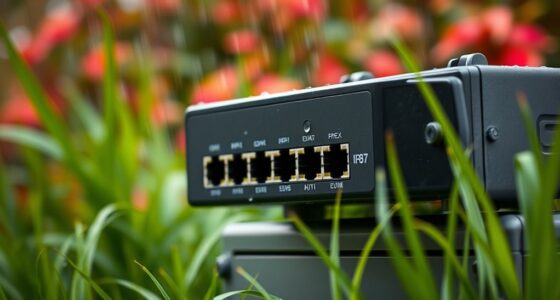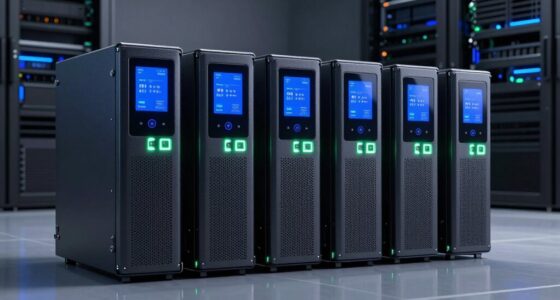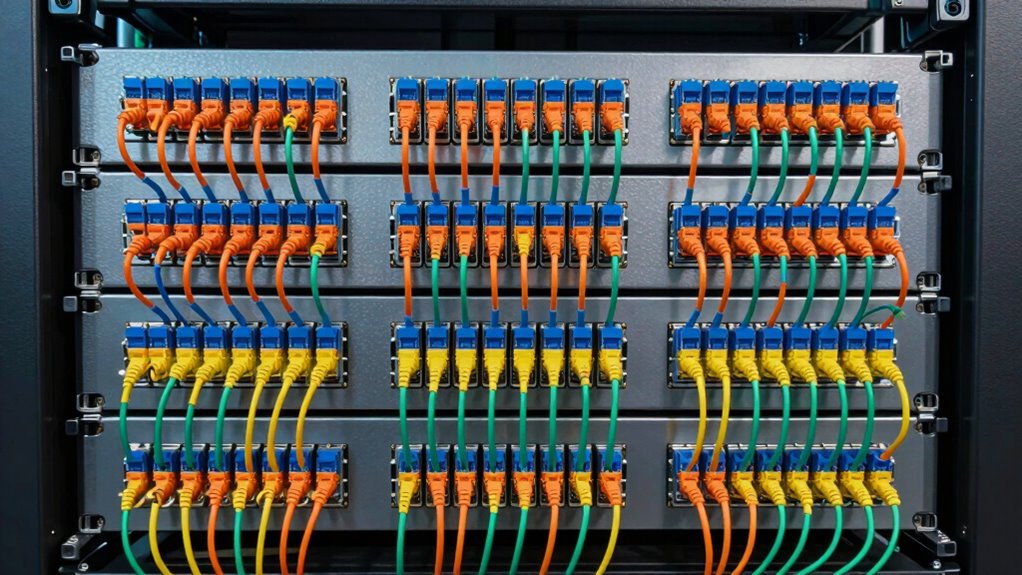

For fiber patch panels for data centers, my best overall pick is the 48 Port 1U panel with 24 duplex SM LC/UPC adapters, which offers the highest listed LC port density in a standard rack space. The 1U 24-core LC OS2 panel is a simpler fit for single-mode links, while the 12 Duplex LC-OS1 wall-mount enclosure kit suits setups that need a wall-mounted enclosure and included cable-management parts. The key tradeoff is between rack density, fiber type, connector compatibility, and how much installation hardware comes in the package. ST options can suit existing legacy connections, but they are less aligned with LC-based deployments. Read on for the full breakdown and guidance on matching a panel to your data-center layout.

Get business pricing on networking and server gear
- Business-only prices and quantity discounts
- Tax-exempt purchasing
- Multiple users, one account, clear invoices
Key Takeaways
- The 48-port 1U LC/UPC panel leads on listed density: its 24 duplex adapters provide more connection points per rack unit than the 24-core rack panels.
- OS2 and OS1 labels need checking against the installed cabling: the single-mode models are not interchangeable by name alone, so match the panel and fiber path to the network specification.
- The two 24-core LC rack panels differ by fiber type, not stated capacity: choose OM3 for compatible multimode links or OS2 for compatible single-mode links.
- Both ST panels target a different connector environment: the Ultra Spec Cables rack panel and red Duogalia LGX panel make more sense when existing ST equipment or infrastructure dictates that interface.
- The wall-mount kit trades rack fit for package completeness: it includes single-mode cables and a spool, while the other options are framed around rack or panel hardware.
| 1U 24-core LC OM3 Fiber Panel for 19″ Racks Mount, 1 pack |  | Best Overall for Multimode Racks | Ports: 24 LC duplex | Rack height: 1U | Rack compatibility: 19 inches | VIEW ON AMAZON | See Our Full Breakdown |
| 1U 24-core LC OS2 Fiber Panel for 19″ Racks Mount, 1 Pack |  | Best for OS2 Single-Mode Racks | Ports: 24 LC duplex | Mounting height: 1U | Rack compatibility: 19 inches | VIEW ON AMAZON | See Our Full Breakdown |
| Ultra Spec Cables 12 Port ST Fiber Optic Patch Panel 1U 19″ with ST Female/Female |  | Best for Existing ST Installations | Ports: 12 | Panel height: 1U | Panel dimensions: 19 inches | VIEW ON AMAZON | See Our Full Breakdown |
| Duogalia ST LGX Fiber Patch Panel with 12 ST Fiber Ports (Red) |  | Best Compact ST Single-Mode Option | Ports: 12 ST ports | Connector format: Simplex single-mode ST | Gender: Female-to-female | VIEW ON AMAZON | See Our Full Breakdown |
| 12 Duplex 24 Port LC-OS1 Wall Mount Fiber Enclosure Kit with SingleMode Cables and Spool |  | Best Complete Wall-Mount Kit | Fiber type: Single-mode 9/125 | Panel ports: 12-port LGX panel | Strands: 24 color-coded strands | VIEW ON AMAZON | See Our Full Breakdown |
| 48 Port Fiber Patch Panel, 1U 19″ with 24 Duplex SM LC/UPC Adapters |  | Best for High-Density Singlemode Connections | Rack height: 1U | Rack width: 19 inches | Port configuration: 48 ports via 24 duplex LC/UPC adapters | VIEW ON AMAZON | See Our Full Breakdown |
| fiber patch panels for data center | Connector type | Ports | Fiber type | Material |
|---|---|---|---|---|
| 1U 24-core LC OM3 Fiber Panel | LC | 24 LC duplex | OM3/OM4 multimode | Heavy-duty steel |
| 1U 24-core LC OS2 Fiber Panel | LC | 24 LC duplex | OS2 single-mode | Heavy-duty steel |
| Ultra Spec Cables 12 Port ST F | ST female-to-female | 12 | — | Steel |
| Duogalia ST LGX Fiber Patch Pa | — | 12 ST ports | — | Steel |
| 12 Duplex 24 Port LC-OS1 Wall | LC-OS1 | — | Single-mode 9/125 | — |
| 48 Port Fiber Patch Panel | LC | — | Singlemode | — |
More Details on Our Top Picks
1U 24-core LC OM3 Fiber Panel for 19″ Racks Mount, 1 pack
For a data center already built around multimode links, this panel balances 24 LC duplex ports with a familiar 1U, 19-inch rack fit. That density can free rack space compared with the 12-port Ultra Spec Cables ST panel, while LC connections suit installations that use LC-terminated patch leads. Its stated OM3/OM4 compatibility and 10 Gbps rating make it a practical choice for supported multimode links, but they do not make it a universal upgrade for every data center: buyers planning single-mode runs should choose the OS2 version instead. The steel construction is suited to rack use, and tool-free installation may shorten deployment. I would also account for the lack of included cables or connectors and the absence of built-in cable management details before standardizing it across a large row.
Pros:- 24 LC duplex ports provide more connections per 1U than the 12-port ST panels in this roundup.
- 19-inch rack mounting fits a common data center rack format.
- OM3/OM4 multimode support matches installations standardized on those fiber types.
- Heavy-duty steel construction suits fixed rack deployments.
Cons:- Multimode compatibility makes it the wrong match for OS2 single-mode infrastructure.
- Fiber cables and connectors are not included.
- Specified for indoor use only.
Best for: Data center teams expanding an existing 19-inch rack with LC-terminated OM3/OM4 multimode cabling and a need for 24 duplex ports in 1U.
Not ideal for: Teams building single-mode links, needing outdoor-rated hardware, or expecting cables, connectors, or integrated cable management in the box.
- Ports:24 LC duplex
- Rack height:1U
- Rack compatibility:19 inches
- Fiber type:OM3/OM4 multimode
- Connector type:LC
- Material:Heavy-duty steel
- Wavelength:1310/1550 nm
- Stated data transfer rate:10 Gbps
Our verdict“Choose this panel for a dense 1U LC multimode rack build; pick the OS2 model instead for single-mode links.”
1U 24-core LC OS2 Fiber Panel for 19″ Racks Mount, 1 Pack
This is the single-mode counterpart to the OM3/OM4 24-port panel: the 24 LC duplex ports and 1U rack footprint are similar, but OS2 support points it toward single-mode infrastructure. That distinction matters more than the shared steel chassis when choosing between the two. For a data center standardizing on OS2, this panel keeps many LC connections in one rack unit and includes mounting screws, while the multimode model lists a 10 Gbps rate but is not the right fiber type for an OS2 build. The tradeoff is a sparse management feature set: no integrated cable management is specified, and compatible patch leads are not included. I would reserve it for racks where the cabling plan already accounts for routing and strain relief rather than expecting the panel itself to organize cable runs.
Pros:- OS2 single-mode compatibility suits single-mode rack infrastructure.
- 24 LC duplex ports fit a high connection count into 1U.
- 19-inch rack format and included mounting screws support rack installation.
- Heavy-duty steel construction is suited to fixed equipment racks.
Cons:- No integrated cable management features are specified.
- Cables and connectors must be sourced separately.
- Indoor use only limits placement options.
Best for: Data center operators adding LC connections to an existing OS2 single-mode network in a 19-inch rack.
Not ideal for: Multimode network owners or teams that need an enclosure with integrated cable routing and supplied fiber leads.
- Ports:24 LC duplex
- Mounting height:1U
- Rack compatibility:19 inches
- Fiber type:OS2 single-mode
- Connector type:LC
- Material:Heavy-duty steel
- Color:Black
- Included hardware:Mounting screws
Our verdict“Choose this over the OM3/OM4 panel when your data center uses OS2 single-mode LC links and can manage cabling separately.”
Ultra Spec Cables 12 Port ST Fiber Optic Patch Panel 1U 19″ with ST Female/Female
The Ultra Spec Cables panel earns its place for one specific reason: it offers a rack-mounted way to retain ST female-to-female connections in a data center that already depends on them. Its 12 ports use a full 1U, so it gives up half the connection count of the 24-port LC rack panels, but replacing an established ST layout with LC hardware could create more work than this smaller capacity warrants. Front access is a practical advantage for maintenance, and steel construction supports a fixed rack installation. Compared with the Duogalia ST panel, this model provides clearer rack dimensions and a 12-port count; the Duogalia listing instead specifies simplex single-mode ST ports. Neither is a flexible choice for LC-centric builds, so I would skip this panel unless ST compatibility is a firm requirement.
Pros:- 12 ST female-to-female ports suit existing ST-terminated links.
- 1U, 19-inch format fits standard rack installations.
- Front access supports inspection and maintenance.
- Steel construction provides a durable rack-mounted enclosure.
Cons:- ST-only connectivity is less suitable for LC-centered data center designs.
- 12 ports provide less connection density than the 24-port LC panels.
- The listing does not specify included fiber cables or adapters beyond the ST connections.
Best for: Data center technicians maintaining a legacy ST fiber layout that needs a 1U, 19-inch rack panel with front access.
Not ideal for: Teams installing LC-based high-density racks or seeking more than 12 ST ports within the listed panel.
- Ports:12
- Panel height:1U
- Panel dimensions:19 inches
- Connector type:ST female-to-female
- Cable type:Fiber optic
- Material:Steel
- Color:Black
- Listed environment:Indoor and outdoor
Our verdict“Choose this panel to preserve a rack-based ST installation, not for a new LC high-density build.”
Duogalia ST LGX Fiber Patch Panel with 12 ST Fiber Ports (Red)
The Duogalia is the more narrowly specified ST pick: it lists 12 simplex single-mode ST ports and a tool-less installation approach, making it a fit for data center or WAN setups where that exact connector and fiber format are already in use. Unlike the Ultra Spec Cables panel, its listing does not state a 1U, 19-inch rack size, so I would verify LGX compatibility and mounting details before planning a rack layout. The steel body and powder coating are useful for a fixed installation, but the panel does not include cables or transceivers, and installation still calls for fiber-network know-how. Its single-mode ST specification also makes it a poor substitute for the LC OS2 panel when the rack is designed around LC patching.
Pros:- 12 simplex single-mode ST ports target a specific legacy or specialty fiber setup.
- Tool-less installation can simplify panel fitting.
- Steel construction with electrostatic powder coating is suited to fixed installations.
- Listed for fiber distribution frames and terminal boxes.
Cons:- ST-only connectivity limits usefulness in LC-based data center racks.
- Rack height and 19-inch compatibility are not specified in the supplied product data.
- Cables and transceivers are not included.
Best for: Network teams with an existing single-mode ST system that need a compact LGX-style panel and can confirm frame compatibility.
Not ideal for: Data centers standardizing on LC connectors or buyers who require clearly stated 1U, 19-inch rack dimensions.
- Ports:12 ST ports
- Connector format:Simplex single-mode ST
- Gender:Female-to-female
- Panel format:LGX
- Material:Steel
- Finish:Electrostatic powder coating
- Installation:Tool-less
- Listed compatible devices:Fiber optic distribution frame; fiber optic terminal box
Our verdict“Pick the Duogalia for a compatible frame that requires simplex single-mode ST connections, after verifying its mounting dimensions.”
12 Duplex 24 Port LC-OS1 Wall Mount Fiber Enclosure Kit with SingleMode Cables and Spool
This kit differs from the rack panels by bundling the connection hardware with 24 color-coded single-mode strands and 1-meter pigtails, so it can reduce separate component sourcing for a small fiber distribution point. Its wall-mount enclosure can be positioned vertically or horizontally, unlike the 1U options from the OM3/OM4 and OS2 panel listings. The supplied OS1/9/125 LC components suit a single-mode plan, but the stated 12-port LGX panel and 12 duplex port description should be checked against the intended port layout before ordering. With dimensions of 255 × 130 × 40 mm, it is not a direct substitute for a 19-inch rack panel. The kit is attractive for organized terminations, but its indoor-only use and need for installation knowledge make it less appealing for quick, tool-free rack expansion.
Pros:- Includes 24 single-mode strands, LC pigtails, duplex couplers, and a loaded LGX panel.
- Color-coded strands can help technicians identify fibers during termination and service.
- Vertical or horizontal mounting offers placement flexibility.
- Compact enclosure dimensions suit a wall-mounted distribution point.
Cons:- Wall-mount design does not directly fit the 1U, 19-inch rack format of the other panels.
- The listing’s 12-port panel and 12 duplex port wording should be verified against the required layout.
- Indoor use and technical installation requirements limit deployment flexibility.
Best for: Installers creating a small indoor single-mode termination point who want an enclosure, LC components, and color-coded pigtails in one kit.
Not ideal for: Data center teams requiring a 1U, 19-inch rack panel, outdoor installation, or a clearly specified 24-port duplex adapter layout.
- Fiber type:Single-mode 9/125
- Panel ports:12-port LGX panel
- Strands:24 color-coded strands
- Cable length:1 meter
- Connector type:LC-OS1
- Fiber grade:G.652D
- Wavelength:1310–1550 nm
- Bend radius:15 mm
- Dimensions:255 × 130 × 40 mm
Our verdict“Choose this kit for a compact indoor single-mode wall termination where its port layout matches the project, not for a rack-mounted panel replacement.”
48 Port Fiber Patch Panel, 1U 19″ with 24 Duplex SM LC/UPC Adapters
I’d put this panel on the shortlist for data center racks where 48 singlemode fibers need to fit in 1U. Its 24 duplex LC/UPC adapters provide that capacity in a standard 19-inch rack, while the detachable back bar gives installers a place to support and organize incoming cables. Compared with the 1U 24-core LC OS2 Fiber Panel, this model offers twice the stated port capacity in the same rack height, making it a better fit when rack space is tight and connection density matters.
The tradeoff is that its density and LC connectors are less useful for smaller builds that need only a handful of links or equipment built around ST connections, such as the Ultra Spec Cables 12 Port ST Fiber Optic Patch Panel. Plug-and-play installation and replaceable adapters simplify deployment and maintenance, but the panel is intended for indoor use and still requires standard 19-inch rack space. The listed 100G support is a capability claim; buyers should confirm compatibility with their optics and link design.
Pros:- Fits 24 duplex LC/UPC adapters and 48 ports in 1U
- Detachable back bar supports organized cable routing
- Replaceable adapters can simplify maintenance
- Plug-and-play installation supports straightforward deployment
Cons:- Requires a standard 19-inch rack and is designed primarily for indoor use
- LC/UPC adapter format may not suit ST-based infrastructure
- The 100G claim does not by itself establish compatibility with every optic or link configuration
Best for: Data center teams expanding singlemode LC connections in a standard 19-inch rack, especially where 1U space and cable organization matter.
Not ideal for: Small network closets needing fewer connections, wall-mounted installations, or networks using ST connectors; this panel is rack-mounted, indoor-oriented, and LC-based.
- Rack height:1U
- Rack width:19 inches
- Port configuration:48 ports via 24 duplex LC/UPC adapters
- Connector type:LC
- Fiber type:Singlemode
- Stated transfer speed:Up to 100 Gbps
- Cable management:Detachable back bar
- Included components:Fiber optical patch panel, detachable back bar, screws, and cable ties
- Color:Black
Our verdict“Choose this panel when you need dense singlemode LC connectivity in 1U, but skip it if your rack uses ST connections or you need a wall-mounted enclosure.”

How We Picked
I ranked these fiber patch panels for data centers by how clearly their stated format and connections serve a defined installation need. The main criteria were rack or wall mounting, port capacity, connector type, fiber designation, and whether the listing names useful installation components. A panel can have strong density on paper yet be a poor fit if its connector or fiber type does not match the equipment already in the data path.
The 48-port LC/UPC rack panel ranks first for its stated capacity in a 1U format. The 24-core LC rack panels follow as more straightforward choices for OM3 or OS2 links, while the wall kit earns a place for buyers who need an enclosure beyond a rack and value included cable-management items. The ST models rank lower for broad data-center use because their connector style is more specialized; they remain relevant where existing ST connections make that choice deliberate. Product descriptions do not specify every deployment detail, so buyers should verify adapter counts, fiber compatibility, mounting dimensions, and included hardware before ordering.
| fiber patch panels for data center | Fiber type | Connector type | Material |
|---|---|---|---|
| 1U 24-core LC OM3 Fiber Panel | OM3/OM4 multimode | LC | Heavy-duty steel |
| 1U 24-core LC OS2 Fiber Panel | OS2 single-mode | LC | Heavy-duty steel |
| Ultra Spec Cables 12 Port ST F | — | ST female-to-female | Steel |
| Duogalia ST LGX Fiber Patch Pa | — | — | Steel |
| 12 Duplex 24 Port LC-OS1 Wall | Single-mode 9/125 | LC-OS1 | — |
| 48 Port Fiber Patch Panel | Singlemode | LC | — |
Factors to Consider When Choosing Fiber Patch Panels For Data Centers
Choosing a panel is a cabling and operations decision, not just a port-count comparison. I would start with the installed fiber and connector standard, then check how technicians will route, label, access, and maintain connections as the data center grows.
Match the Panel to the Fiber Already Installed
First identify whether the intended links use multimode or single-mode fiber, then confirm the exact fiber grade in the cabling plan. The OM3 option here is distinct from the OS2 and OS1 single-mode listings, and a panel should not be selected by a vague assumption that all fiber is equivalent. A mismatch can leave you with an enclosure that fits physically but does not suit the optical path or planned transceivers. Check the documentation for the existing trunk cables and optics, especially in a mixed-generation facility. If a room contains several fiber types, separate and label the paths rather than treating them as one interchangeable system.
Count Usable Connections, Not Just Advertised Ports
Port descriptions can count simplex connections, duplex adapters, or fiber cores differently, so translate the listing into the number of links your team can actually patch. The 48-port product specifies 24 duplex LC/UPC adapters, while the 24-core products use a different capacity description. Confirm whether the stated number refers to adapter positions, fibers, or complete duplex connections before planning rack utilization. Leave spare capacity for moves and adds instead of filling every position on day one. Higher density can reduce rack-space use, but it can also make labeling and access harder if cables crowd the front of the panel.
Treat Connector Style as an Infrastructure Constraint
LC is a common choice in compact, high-density layouts, while ST connections are more likely to be selected to match existing hardware or a particular legacy path. Do not choose ST solely because a panel specification looks familiar; check the connectors on patch cords, trunks, and connected equipment. Mixing connector types requires suitable conversion or termination planning, adding parts and potential points of confusion. If a refresh is underway, compare the cost and disruption of keeping an ST segment against standardizing future work around the site’s chosen connector family. The right answer depends on the installed base, not on connector preference in isolation.
Choose Rack or Wall Mount Around Service Access
A 1U rack panel fits standard rack planning and keeps fiber terminations near rack-mounted equipment. A wall enclosure can be more practical for a distribution point outside the rack row, but it needs a suitable mounting surface and a route that protects incoming cable. Before buying, check the physical depth, mounting pattern, bend-radius space, and whether doors or adjacent equipment will obstruct access. A panel that saves rack units may still create a maintenance problem if technicians cannot reach it safely. Plan cable paths and service clearance at the same time as enclosure placement.
Check Cable Management and Installation Scope
Product bundles vary in what they supply, and the wall-mount kit is specifically listed with single-mode cables and a spool. Do not assume that a panel includes pigtails, splice trays, mounting screws, labels, or every part needed to complete a fiber run unless the listing says so. A spool or routing feature can help control slack, but it does not replace a plan for bend radius, strain relief, and separation from power cabling. For a live data center, confirm whether installation requires splicing or only adapter-based patching. A short bill of materials can prevent delays caused by missing small parts.
Balance Density Against Future Maintenance
High-density panels use less rack space for a given number of connections, but technicians need enough room to identify and handle each patch cord without disturbing neighboring links. Consider labeling conventions, expected adds and changes, and how often the panel will be serviced. A lower-capacity panel can be easier to work with where access is tight or where the fiber layout changes often. Conversely, a consolidated 1U panel may suit a stable, carefully documented rack. Plan spare ports and cable routes together; unused capacity is most useful when it remains accessible.
Frequently Asked Questions
Should I choose the 48-port LC panel or a 24-core LC panel?
Choose based on the number of usable connections your rack needs and the way the listing defines capacity. The 48-port model specifies 24 duplex LC/UPC adapters in 1U, while the 24-core models state a 24-core configuration. Confirm whether your design counts individual fibers, duplex links, or adapter positions before comparing those figures. Also match the panel’s single-mode designation to the installed fiber and connected optics. If you do not need the added density, a 24-core panel may be easier to plan around.
Can I use an OS1 panel with OS2 fiber, or the other way around?
Do not rely on the panel label alone to decide compatibility. Verify the exact cable, adapter, and system specifications with the manufacturer and the network design, since the listings identify different single-mode designations but do not establish that every combination is supported. Also check connector polish and the equipment requirements at both ends of the link. If the existing plant is OS2, select components documented for that path rather than assuming an OS1-labeled product is equivalent. When specifications are unclear, ask the supplier before deploying across a live link.
When does an ST patch panel still make sense in a data center?
An ST panel can make sense when it must connect directly to installed ST trunks, patch cords, or equipment and replacing those components would add disruption. The two ST options in this roundup differ in form: one is described as a 1U rack panel, while the other is an LGX-style panel with 12 ST ports. Check the mounting system and the full connection path before choosing between them. For a new LC-based build, an ST panel may add unnecessary connector-management work. Treat it as a fit for a defined infrastructure requirement, not a default choice.
Is a wall-mount enclosure suitable for a rack-based data-center build?
It can work when the fiber distribution point belongs on a wall or outside the equipment rack, but it is not a direct substitute for a 1U rack panel. Confirm the enclosure’s mounting location, access clearance, cable entry route, and protection from accidental disturbance. The listed wall kit includes single-mode cables and a spool, which may simplify part of the installation, but verify that those components match your run and termination plan. If the connections need to sit beside rack equipment, a rack-mounted option may make patching and service access simpler. Choose by placement and maintenance workflow rather than by the bundle alone.
What should I verify before ordering a fiber patch panel for a live rack?
Check the rack width and available rack units, the exact adapter type and count, the fiber designation, and the panel’s front and rear access requirements. Confirm which installation parts are included and which must be supplied separately, including any splice or cable-management hardware your design requires. Compare the planned patch cords and optical equipment with the panel’s connector style and polish specification. Review bend-radius and slack-management needs so the installed cables can be routed without crowding. For a live environment, coordinate labeling and cutover procedures before disconnecting or moving existing links.
Conclusion
For most rack-based builds that need many LC connections in limited space, I would choose the 48 Port 1U LC/UPC panel as best overall, subject to confirming its specifications against the installed single-mode system. The best value in practical fit is the 1U 24-core LC panel that matches your fiber: pick OM3 for a compatible multimode path or OS2 for a compatible single-mode path. The best premium-style choice for density is also the 48-port model, though its extra capacity only helps if your rack plan can use it. For beginners, I recommend starting with the simpler 24-core LC rack panel that matches the documented cabling, since a clear fiber-type match matters more than maximum density. For specific needs, choose the wall-mount kit when its location and included spool suit the installation, or an ST panel when existing ST connections require it; otherwise, the LC options are the more direct fit for these data-center use cases.