
Many believe that a simple cabling setup is enough for building automation systems, but the truth is, proper cabling plays a vital role in system reliability and future expansion. If you overlook cable management and standard practices, you risk frequent disruptions and costly repairs down the line. Understanding the essentials of cabling, from backbone connections to secure terminations, can make all the difference in maintaining an efficient, scalable system.
Key Takeaways
- Use high-quality, shielded cables to ensure reliable data transmission and compliance with industry standards.
- Organize and label cables neatly to facilitate maintenance, troubleshooting, and future upgrades.
- Plan cable pathways to minimize interference, support system scalability, and enhance overall system stability.
- Combine wired backbone with wireless components for flexible, resilient building automation network integration.
- Regular inspections and proper cable management practices extend cable lifespan and prevent system downtime.
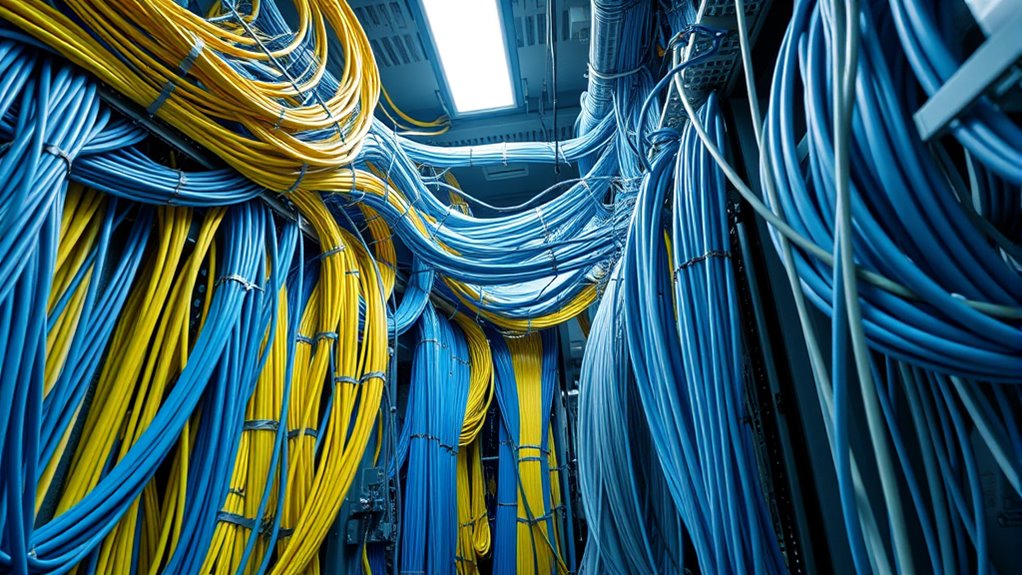
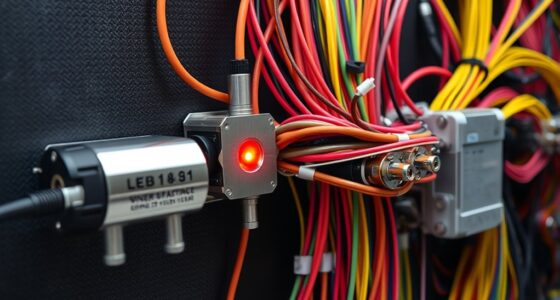
Building automation system cabling is a critical component that guarantees reliable communication between various building management devices. When designing your cabling infrastructure, you need to prioritize both wired and wireless integration to ensure seamless operation and future scalability. Wireless integration, in particular, offers flexibility and reduces the clutter of physical cables, making it easier to add or modify devices without extensive rewiring. However, even with wireless options, a solid cabling foundation remains essential for core functions, such as connecting central controllers and sensors that require stable, high-speed data transfer.
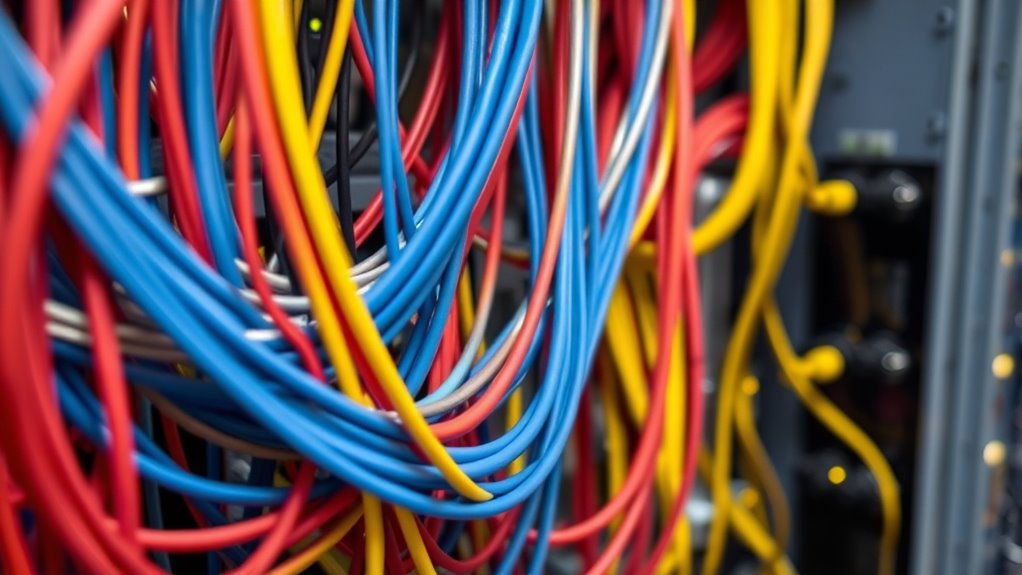
Effective cable management is essential to maintain system reliability and ease of maintenance. Proper cable management involves organizing cables neatly, labeling them clearly, and securing them to prevent damage or disconnection. When you plan your cabling layout, consider pathways that minimize interference and allow for straightforward troubleshooting. Using cable trays, conduits, and cable ties helps keep your installation tidy and reduces the risk of accidental disconnections or wear over time. Well-managed cables also facilitate upgrades and adjustments, saving you time and effort during system expansion or maintenance.
Proper cable management ensures system reliability, simplifies maintenance, and facilitates future upgrades.
Incorporating wireless integration into your building automation system doesn’t mean abandoning traditional cabling altogether. Instead, it complements your wired infrastructure, allowing devices like sensors, controllers, and access points to communicate wirelessly while critical backbone connections remain wired for stability. This hybrid approach offers a versatile, resilient network architecture. When deploying wireless components, ensure that your cabling supports sufficient power supply and network bandwidth, and that wireless signals are strong and secure. Proper placement of wireless access points and clear pathways free of interference are essential to maximize performance.
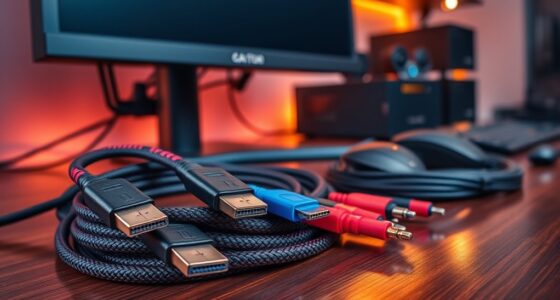
Cabling for building automation systems should also adhere to industry standards and best practices. Use high-quality cables suited for data and power transmission, and ensure all connections are secure and shielded against electromagnetic interference. Regular inspections and maintenance of your cabling infrastructure help identify potential issues early, preventing system downtime. Remember that cable management isn’t just about aesthetics; it directly impacts your system’s reliability, safety, and ease of future upgrades. Additionally, understanding the importance of meditation can promote a calm and focused approach during system installation and troubleshooting, reducing stress and improving decision-making.

Cat 6 Ethernet Cable 1ft (6 Pack) (at a Cat5e Price but Higher Bandwidth) Flat Internet Network Cable - Cat6 Ethernet Patch Cable Short Black - Cat6 Computer Cable with Snagless RJ45 Connectors
Wide Compatibility: CableGeeker Cat6 Ethernet cable connects all Gigabit LAN devices—PCs, servers, printers, routers, and more. Supports Gigabit...
As an affiliate, we earn on qualifying purchases.
Frequently Asked Questions
What Are the Latest Industry Standards for BAS Cabling?
You should follow the latest industry standards like TIA-568.2-D and IEEE 802.3 for BAS cabling, ensuring reliable performance. Incorporate wireless integration where possible to reduce cabling. Use proper cable management techniques to prevent damage and maintain system efficiency. Stay updated on standards that support high-speed data transfer and future expansion, making sure your cabling setup promotes seamless communication between components and simplifies maintenance.
How Does Cabling Affect System Security and Data Privacy?
Think of cabling as the nervous system of your BAS, transmitting sensitive data securely. Proper cable shielding prevents wireless interference that could disrupt signals or expose data, while robust cabling keeps unauthorized access at bay. When you choose quality cabling and shielding, you create a fortified pathway, ensuring system security and data privacy. Without it, vulnerabilities emerge, like cracks in a fortress, risking breaches and compromising your entire automation network.
What Are Common Troubleshooting Steps for Cabling Issues?
When troubleshooting cabling issues, start with a thorough cabling inspection to identify any physical damage or loose connections. Check connectors for proper seating and secure attachment, as connector troubleshooting often reveals issues like corrosion or wear. Use a cable tester to verify continuity and signal quality. Replacing damaged cables or connectors usually resolves most problems. Always make certain your connections are tight and free from debris for ideal system performance.
How Can Future Expansion Impact Cabling Design Choices?
Have you considered how future expansion might influence your cabling design? It can lead you to prioritize flexible layouts that support wireless integration and scalable power management. You’ll want to leave room for additional cables or conduit pathways, ensuring smooth upgrades. This approach reduces costly rewiring later and keeps your system adaptable, so you’re prepared for emerging technologies and increased demands without compromising performance or efficiency.
What Environmental Factors Influence Cabling Durability?
Environmental factors like moisture, temperature fluctuations, and exposure to chemicals directly influence cable durability. You should choose cable material that withstands these conditions, such as UV-resistant or waterproof options. Ensuring proper environmental protection, like conduits or protective coatings, helps prevent damage over time. By selecting durable cable materials and implementing environmental protection measures, you can substantially extend your cabling system’s lifespan and maintain reliable building automation performance.

Mnlnbuao Cat6 Slim Patch Cables 0.5 Feet 10-Pack Blue, Cat6a Patch Cables 10Gbps 550MHz High-Speed, Cat 6 Ethernet Cable Pure Copper UTP, Flexible & Thin Patch Cable Cat 6 for Network Cabling
【10G High Performance】Slim cat6 patch cable provide fast and stable data transmission, supporting up to 10Gbps and 550MHz...
As an affiliate, we earn on qualifying purchases.
Conclusion
Think of your building automation cabling as the nervous system of your smart environment, much like Da Vinci’s intricate sketches revealing unseen connections. By maintaining organized, secure, and standards-compliant cabling, you guarantee reliable performance and easy upgrades. Just as a well-tuned orchestra depends on harmony, your system relies on proper cabling to function flawlessly. Invest in proper management now, and you’ll keep your building running smoothly for years to come, revealing its full potential.

Cat 6 Ethernet Cable 1FT (24Pack), Cat6 Ethernet Patch Cable 10Gbps, High-Speed UTP Cat6 Network Cable Pure Copper, Cat 6 Cable for Home and Office Network, White
High Performance : Cat 6 ethernet cable support up to 10 Gbps and 550 Mhz application. Cat6 patch...
As an affiliate, we earn on qualifying purchases.
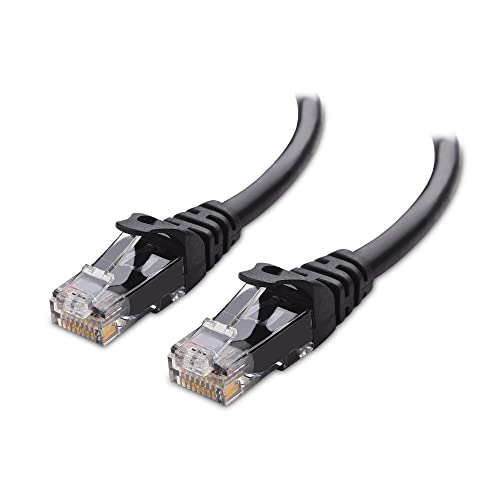
Cable Matters 10Gbps Snagless Cat 6 Ethernet Cable - 6ft, Cat 6 Cable, Cat6 Cord, Ethernet Cord, Black
High-Performance Connectivity: This Cat 6 ethernet cable is designed for superior performance, with a 24 AWG copper wire...
As an affiliate, we earn on qualifying purchases.