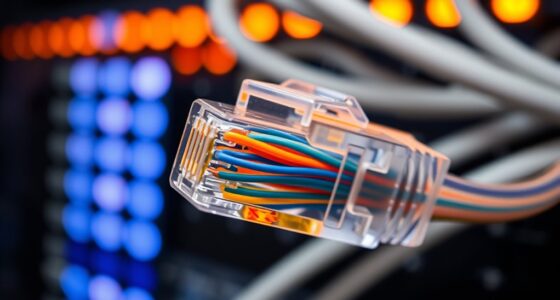
If you’re involved in managing or designing network systems, understanding structured cabling is essential. It’s the organized wiring system that keeps your network running smoothly, supporting everything from data transfer to voice communication. But why is it so important, and how does it impact your overall infrastructure? Keep these questions in mind as you explore the key concepts behind structured cabling and its role in building reliable, scalable networks.
Key Takeaways
- Structured cabling provides an organized, reliable backbone for modern networks, ensuring seamless communication and minimal downtime.
- It supports fiber optics, enabling faster data transmission, higher bandwidth, and long-distance secure connections.
- Proper cable management prevents damage, reduces interference, and facilitates easy maintenance, upgrades, and troubleshooting.
- Well-designed cabling infrastructure enhances network scalability and future-proofing for evolving technological needs.
- Effective cabling practices improve airflow, reduce heat buildup, and extend the longevity of network components.

Structured cabling is the backbone of modern network infrastructure, providing a reliable and organized way to connect devices across a building or campus. When designing or upgrading your network, understanding the importance of proper cabling lays the foundation for seamless communication and minimal downtime. One key aspect of this is incorporating fiber optics, which notably enhances data transmission speeds and bandwidth capacity. Unlike traditional copper cables, fiber optics use light signals, allowing for faster, more secure, and longer-distance connections. This makes them ideal for supporting high-demand applications like video streaming, cloud computing, and large data transfers. Integrating fiber optics into your structured cabling system ensures your network remains scalable and future-proof as your needs evolve.
Equally important is effective cable management. When cables are poorly organized, it becomes challenging to troubleshoot issues, perform upgrades, or add new connections. Good cable management involves neatly routing cables, using labels, and securing them properly to prevent tangling or damage. This not only improves airflow and reduces heat buildup but also simplifies maintenance, saving you time and effort in the long run. In a structured cabling setup, cable management is the key to maintaining an organized infrastructure that’s easy to understand and modify. Proper planning from the start helps you identify the ideal pathways for cables, minimizing interference and signal degradation, especially when dealing with delicate fiber optics. Proper cable management also protects your investment by reducing the risk of physical damage and ensuring reliable performance.
Furthermore, cable management plays a vital role in protecting your investment. Properly secured and routed cables are less vulnerable to physical damage, which can cause costly outages or data loss. When working with fiber optics, careful handling is essential because the fibers are fragile. Using appropriate connectors, protective sleeves, and organized pathways reduces the risk of breakage and ensures the integrity of your high-speed connections. Additionally, a well-designed cabling system makes future expansion straightforward, as you can add new cables without disturbing existing ones or creating clutter.
Frequently Asked Questions
How Does Structured Cabling Support Future Technology Upgrades?
Structured cabling supports future technology upgrades by providing a flexible, scalable foundation that easily accommodates advancements like fiber optics and wireless integration. You can expand your network without overhauling existing infrastructure, ensuring faster data transfer and better connectivity. This setup makes it simple to upgrade hardware, add new devices, or enhance bandwidth, so your system stays current with evolving technology needs and minimizes costly disruptions down the line.
What Are Common Mistakes to Avoid During Installation?
To avoid installation errors, pay close attention to cable management and follow best practices. Don’t overlook proper labeling, which helps prevent confusion later. Avoid twisting or overstretching cables, as this can cause damage. Make certain connectors are securely attached and avoid cluttered pathways that hinder airflow or future upgrades. Taking your time during installation reduces mistakes, resulting in a reliable, organized cabling system that supports your network’s growth.
Is Structured Cabling Suitable for Both Small and Large Buildings?
Yes, structured cabling suits both small and large buildings. It offers building flexibility, allowing you to easily adapt as your needs grow. The system’s scalability options mean you can add or upgrade components without major disruptions. This makes it a cost-effective, long-term solution that keeps your network reliable and efficient, whether you’re managing a compact office or a sprawling commercial space.
How Does It Impact Network Security and Data Protection?
Structured cabling enhances your network security and data protection by supporting robust encryption protocols and access controls. You can implement encryption to safeguard sensitive information during transmission, while access controls restrict unauthorized users from entering your network. This organized cabling system makes it easier to monitor, manage, and upgrade your security measures, ensuring your data remains protected and your network stays resilient against potential threats.
What Is the Typical Lifespan of a Structured Cabling System?
You’ll find that a structured cabling system typically lasts between 10 to 15 years. Cable durability plays a key role in this longevity, as high-quality materials resist wear and environmental factors. Proper installation and regular maintenance can extend system longevity, ensuring reliable performance over time. Keep in mind, upgrades may be needed sooner if your environment experiences heavy use or technological advances, but good cabling remains a solid investment for years to come.
Conclusion
Think of structured cabling as the nervous system of your network—keeping everything connected and running smoothly. When you invest in organized, well-managed wiring, you’re building a highway for your data to flow effortlessly. It simplifies maintenance, prevents downtime, and future-proofs your setup. By prioritizing proper cable management, you’re ensuring your network remains resilient and efficient—ready to grow and adapt just like a well-oiled machine. Keep it structured, keep it strong.