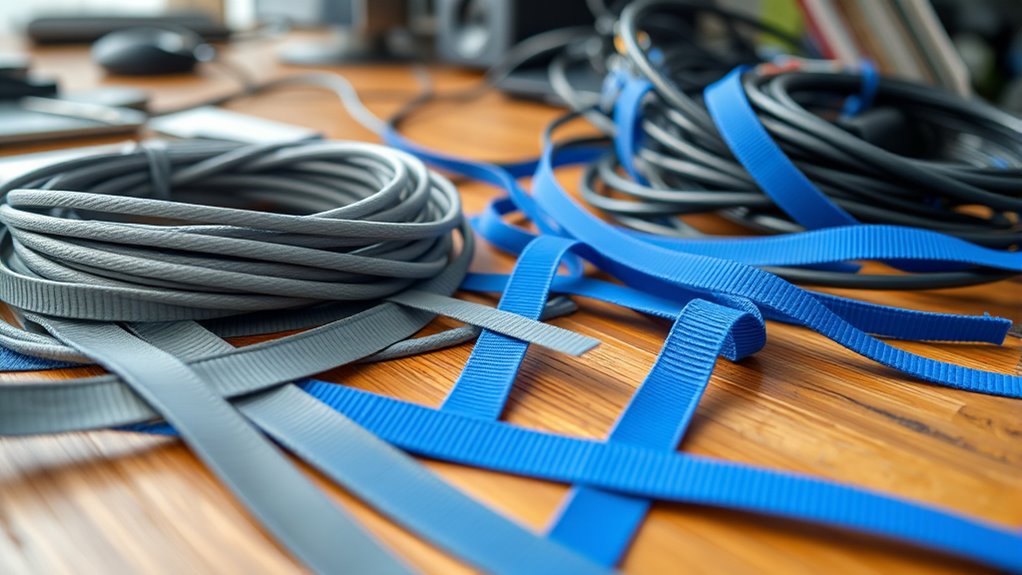

Cable ties are strong, secure, and great for fixed setups, but they’re usually single-use and can damage cables if tightened too much. Velcro straps are reusable, flexible, and ideal for projects needing frequent adjustments, though they might loosen over time. Consider your needs: for permanent organization, cable ties work well, while Velcro straps suit adjustable, DIY tasks. More insights will help you choose the best option for your cable management tasks.

Get networking and server gear delivered free — and shop member deals
- Fast, free delivery on millions of items
- Access to Prime Big Deal Days deals on October 6–7
- Prime Video, Amazon Music and more included
Key Takeaways
- Cable ties offer strong, permanent securing ideal for fixed setups, while Velcro straps are reusable and adaptable for adjustable cable management.
- Cable ties are single-use and require cutting for removal, whereas Velcro straps can be easily repositioned and reused multiple times.
- Velcro straps are gentler on cables and easier to adjust, but may loosen over time, unlike the firm hold of cable ties.
- Cable ties are inexpensive and suitable for permanent installations, while Velcro straps are more environmentally friendly and preferred for flexible projects.
- Proper wire management enhances safety and organization, with choice depending on whether permanence or reusability is prioritized.

When it comes to organizing and securing cables, choosing the right fastening method can make a big difference. Whether you’re tackling a complex wiring setup or working on a DIY project, the way you manage your cables impacts safety, accessibility, and the overall neatness of your workspace. Two popular options are cable ties and Velcro straps, each with their own advantages and drawbacks. Your choice depends on your specific needs and preferences for wire management.
Cable ties, also known as zip ties, are known for their strength and permanence. They’re made from durable plastic, which allows them to hold tightly around bundles of cables, keeping everything secure and in place. If you’re working on a project where cables won’t need to be adjusted frequently, cable ties are a reliable choice. They’re inexpensive, easy to use, and provide a clean, tidy appearance. However, their main drawback is that once tightened, they can’t be reused or loosened without cutting and replacing them. This can be problematic if you need to make adjustments later or if you’re working on a project that might require frequent reconfiguration. Using cable ties also requires careful planning to avoid over-tightening, which could damage cables or connectors.
Cable ties are strong, permanent, and inexpensive solutions for securing cables in fixed setups.
Velcro straps, on the other hand, offer flexibility and reusability. Made from fabric with hook-and-loop fasteners, Velcro straps are gentle on cables but still strong enough to keep them organized. They’re especially useful for wire management in DIY projects where you anticipate changing or rerouting cables often. You can easily adjust their length or reposition them without damaging the cables or creating waste. Plus, they come in various sizes, making them versatile for different cable bundles. The downside is that Velcro straps might not hold as tightly as cable ties, especially if the strap length is too long or if they aren’t secured properly. Over time, the hook-and-loop material can wear out or collect dust, reducing their effectiveness. Additionally, Velcro straps can be a more environmentally friendly alternative due to their reusability and reduced waste.
Both cable ties and Velcro straps serve important roles in cable management. If you prioritize a permanent, secure solution and don’t plan on adjusting your setup frequently, cable ties are ideal. But if you value flexibility, reusability, and ease of access — especially for DIY projects or situations where cables need to be moved around often — Velcro straps are a better fit. Ultimately, your decision should be based on your project requirements and how much you value convenience versus security. Proper wire management not only keeps your workspace tidy but also prevents damage, reduces hazards, and makes troubleshooting easier in the future.
As an affiliate, we earn on qualifying purchases.
Frequently Asked Questions
Are Cable Ties or Velcro Straps More Environmentally Friendly?
You’ll find velcro straps are more environmentally friendly due to their recyclability comparison and biodegradability factors. Unlike plastic cable ties, which often aren’t recyclable and take centuries to decompose, velcro straps can be reused multiple times, reducing waste. Their fabric-based material breaks down more easily, making them a greener choice overall. So, if sustainability matters to you, velcro straps are the better option for eco-conscious packaging and organization.
Can Velcro Straps Be Reused More Times Than Cable Ties?
Velcro straps can be reused more times than cable ties because of their higher reusable potential and material durability. Unlike cable ties, which often break after a single use, velcro straps are designed to be opened and closed repeatedly without losing their fastening strength. This makes velcro straps a more sustainable choice if you need a versatile, long-lasting solution for organizing cables or other items.
Which Option Offers Better Resistance to Extreme Weather Conditions?
Velcro straps generally offer better resistance to extreme weather conditions compared to cable ties. They often feature UV-resistant materials that prevent deterioration from sunlight, and their corrosion durability helps withstand moisture and humidity. You’ll find that Velcro straps maintain their strength and flexibility longer in harsh environments, making them ideal for outdoor or industrial use. Cable ties, on the other hand, may degrade faster when exposed to UV rays and corrosive elements.
Are There Safety Concerns With Using Cable Ties or Velcro Straps?
Did you know that improper use of cable ties caused over 1,500 injuries last year? Safety hazards with both options exist; cable ties can snap unexpectedly, posing a risk of accidental injury, while velcro straps might loosen if not secured properly. Always check your straps regularly, avoid over-tightening, and use the right type for your application to guarantee safety and prevent accidents.
How Do the Costs Compare Over Long-Term Use?
Over long-term use, velcro straps generally cost less due to their reusability, making them a smart choice for ongoing projects. Cable ties might have a lower initial price but can become more expensive if you need replacements or upgrades. Conducting a durability analysis shows velcro straps withstand repeated use better, saving you money over time. So, for cost comparison, velcro straps offer better value in the long run.
As an affiliate, we earn on qualifying purchases.
Conclusion
Choosing between cable ties and Velcro straps is like picking the right tool for a job—you’ll want what fits your needs best. Cable ties are strong and permanent, perfect for secure, long-term fixes. Velcro straps are flexible and reusable, great for quick adjustments and easy removal. Think of it as a dance—sometimes you need a quick, nimble move, other times a steady, firm hold. Decide what works best, and you’ll keep your cables tidy and safe.
As an affiliate, we earn on qualifying purchases.
adjustable Velcro cable organizers
As an affiliate, we earn on qualifying purchases.
As an affiliate, we earn on qualifying purchases.
Halloween Picks
halloween
As an affiliate, we earn on qualifying purchases.