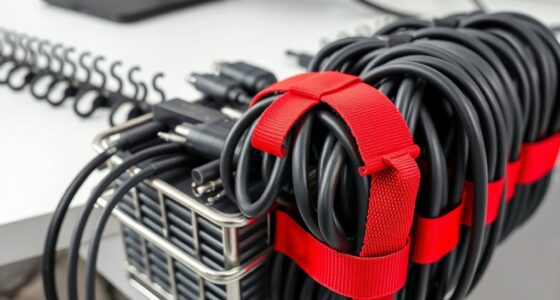
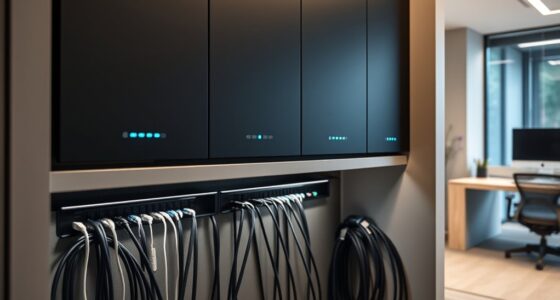
Horizontal cable management organizes cables across the front or back of your rack, making access and modifications straightforward, while vertical management runs cables along the sides to improve airflow and cooling. If you prioritize easy maintenance and tidy appearances, horizontal systems work well. For better airflow and heat dissipation, vertical setups are ideal. Combining both strategies can give you the best of both worlds. Keep exploring to discover more about choosing the right cable management method for your needs.
Key Takeaways
- Horizontal management offers easy access and simplified cable routing at the front or back of the rack.
- Vertical management improves airflow and cooling by organizing cables along the sides of the rack.
- Horizontal is ideal for quick maintenance and frequent changes; vertical suits environments prioritizing airflow.
- Combining both methods can optimize cable organization and airflow efficiency.
- Choice depends on operational needs, space constraints, and whether accessibility or cooling is a priority.

Proper cable management is essential for maintaining an organized and efficient workspace, but deciding between horizontal and vertical methods can be confusing. When you’re working with racks, understanding how each approach impacts your setup is key. Horizontal cable management typically involves using rack accessories like cable trays or organizers that run parallel to the equipment, allowing you to route cables neatly across the front or back of the rack. This method is often favored for its simplicity and ease of access, especially when you need to make frequent changes or troubleshoot. It helps you keep cables straight and tidy, reducing clutter and preventing tangles. Plus, with the right rack accessories, you can customize your horizontal setup to suit your specific needs, whether that’s adding extra trays for different cable types or incorporating cable ties for extra security.
On the other hand, vertical cable management involves running cables along the sides of the rack, often using vertical cable organizers or panels. This approach is particularly effective for maintaining airflow optimization. When cables are managed vertically, they don’t obstruct the front-to-back airflow paths, which is crucial for keeping your equipment cool and preventing overheating. Proper airflow is critical in densely packed racks, and vertical management helps you achieve this by minimizing cable clutter that could block vents or fans. This method also makes it easier to identify and access individual cables since they’re grouped along the sides, streamlining maintenance and upgrades. You might find that vertical management works best in situations where space is tight or where airflow is a top priority.
Both methods have their advantages, and your choice largely depends on your specific setup and operational needs. Horizontal management is great if you want quick access and straightforward organization, especially when using rack accessories designed for this purpose. Vertical management, however, excels in maintaining airflow and keeping your equipment cool, which is vital for high-performance environments. Some setups even combine both strategies, using horizontal management for easy access to power and data cables and vertical management to optimize airflow. Additionally, cable clutter can significantly impact the efficiency of your workspace, making proper management even more crucial. Whichever approach you choose, the goal remains the same: keeping cables organized, reducing clutter, and ensuring your rack operates smoothly. Properly managed cables not only look better but also help prevent damage, improve airflow, and make future upgrades or troubleshooting faster and easier.
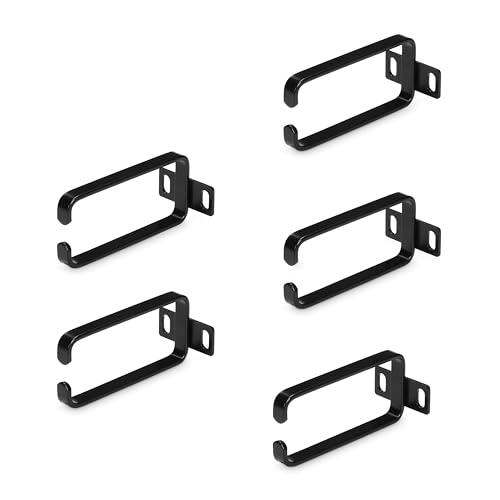
StarTech 5-Pack 1U Vertical 1.8 x 3.9in (4.5 x 10cm) Server Rack Cable Management D-Ring Hook; Network Rack-Mount Cord Organizer; Cable Manager for 19" and 10" Cabinets
CONTROL VERTICAL CABLE RUNS: Mounts vertically to 2-post and 4-post racks and supports both 10-inch and 19-inch rack…
As an affiliate, we earn on qualifying purchases.
As an affiliate, we earn on qualifying purchases.
Frequently Asked Questions
Which Cable Management Type Is More Cost-Effective?
Vertical cable management tends to be more cost-effective because it typically involves simpler installation and fewer materials, reducing overall costs. When comparing the cost, vertical systems usually have lower installation costs due to easier access and less labor. A cost comparison shows that vertical channels often save you money upfront and in maintenance over time, making them a smarter choice if budget is your priority.
How Does Cable Management Impact Airflow and Cooling?
Your cable management can transform your system into a powerhouse or a heat monster. Properly organized cables boost airflow efficiency, preventing clutter from blocking essential vents, which in turn enhances cooling performance. When cables are neatly routed, hot air escapes easily, and cool air reaches components effortlessly. This seamless airflow keeps temperatures low, allowing your system to run smoothly and preventing overheating, so your hardware stays cool under pressure.
Can Horizontal and Vertical Management Be Combined Effectively?
Yes, you can combine horizontal and vertical cable management effectively by using modular systems designed for both. This approach enhances aesthetic considerations and keeps cables organized, making maintenance easier. By integrating these methods, you improve airflow and cooling, which benefits overall system performance. Plan carefully to make certain easy access and minimal clutter, allowing your setup to stay neat, functional, and visually appealing.
What Tools Are Recommended for Installing Each Type?
For installing horizontal cable management, you’ll want tools like screwdrivers, snap-on covers, and cable ties to secure and organize cables efficiently. Vertical cable management requires tools such as punch-down tools, cable lacing bars, and Velcro strips to help with neat routing and secure attachment. Comparing tools helps you choose the right ones for each installation technique, ensuring a clean, organized setup. Always follow manufacturer guidelines for best results.
How Do Cable Management Methods Differ for High-Density Racks?
Imagine you’re a tech pioneer steering the wild west of high-density racks. You’ll want to prioritize rack organization and space optimization by combining horizontal and vertical cable management techniques. Use horizontal managers for neat, accessible wiring and vertical channels to maximize space and reduce clutter. This approach helps you easily identify cables, improves airflow, and keeps your high-density setup efficient and tidy, even in the most demanding environments.

StarTech 2-Pack 20U Vertical Cable Organizer with Finger Ducts, Vertical Cable Management Panel, 40U Rack-Mount Cable Raceway, 2x 3ft (91cm) Wire Organizers
VERSATILE CABLE MANAGEMENT: You can install the two 3-foot panels end to end so that they span the…
As an affiliate, we earn on qualifying purchases.
As an affiliate, we earn on qualifying purchases.
Conclusion
Choosing between horizontal and vertical cable management is like picking the right path in a maze—you want the one that keeps things organized and easy to navigate. Both methods have their benefits, so consider your setup’s space and future needs. By implementing effective cable management, you’ll prevent chaos and make troubleshooting a breeze. Think of it as giving your cables a neat, organized runway—making your workspace as smooth as a well-oiled machine.

RackSolutions 1U Horizontal 2 Post 19 Inch Server Rack Cable Management Tray
Horizontal cable management tray capable of organizing large bundles of cables
As an affiliate, we earn on qualifying purchases.
As an affiliate, we earn on qualifying purchases.

10 Pcs 19 in Rack Cable Management Kit, Including 0.5U L-Shaped Tie Bars, 20 Cabinet Screws, 100 Cable Ties, Sturdy Metal with Black Coating, Multi-Hole Design for Flexible Cabling
Sturdy Construction: Crafted from thick metal with a sleek black coating, our L-shaped tie bars offer exceptional scratch…
As an affiliate, we earn on qualifying purchases.
As an affiliate, we earn on qualifying purchases.