Think of your network as a well-organized city, where each cable is a crucial road. Proper labeling acts as road signs, guiding you quickly to the right destination and avoiding chaos. But with so many options—from color coding to adhesive labels—knowing the best methods can feel overwhelming. To keep your system efficient and error-free, understanding effective cable labeling practices is essential—so let’s explore how to make this process both clear and sustainable.

Get business pricing on networking and server gear
- Business-only prices and quantity discounts
- Tax-exempt purchasing
- Multiple users, one account, clear invoices
Key Takeaways
- Use color coding to quickly identify cable types or functions for efficient management.
- Apply durable, weatherproof labels with clear, legible information near connectors or at intervals.
- Combine color coding with detailed adhesive labels for enhanced clarity and troubleshooting ease.
- Maintain consistent color schemes and documentation to ensure long-term organization and reduce errors.
- Place labels strategically and update them regularly to accommodate network changes and ensure visibility.

Have you ever struggled to identify which cable connects where during a network upgrade or troubleshooting session? It’s a common problem, especially when dealing with multiple cables running through crowded server rooms or wall panels. The key to avoiding confusion lies in effective cable labeling, which makes your work faster and less error-prone. Two of the most straightforward methods are color coding and adhesive labels. These techniques, when used correctly, can dramatically improve your ability to quickly trace and manage cables.
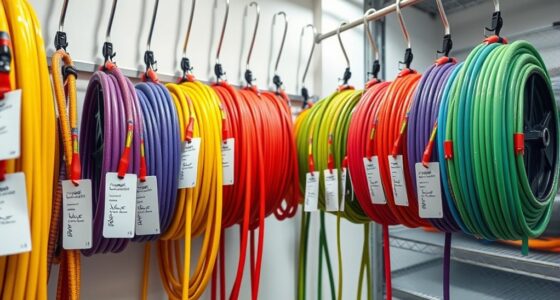
Color coding involves assigning specific colors to different types of cables, functions, or destinations. For example, you might use blue for data cables, red for power, green for backup connections, and yellow for VoIP lines. This visual system allows you to instantly recognize the purpose of each cable without reading tiny print or deciphering complex diagrams. To implement this, you can buy pre-colored cable sleeves, wraps, or heat-shrink tubing, which slide over or around your cables easily. Consistency is vital; always stick to your color scheme so that anyone working on the network can quickly understand the setup. When combined with a documented key or legend, color coding becomes an intuitive method that saves time during installation, maintenance, and troubleshooting.
Color coding assigns specific colors to cable types, enabling quick recognition and efficient management.
Adhesive labels are another essential tool for precise cable identification. These labels typically come with a peel-and-stick backing, making them simple to attach to the cable’s outer sheath. You can write clear, concise information on them—such as port numbers, device names, or function descriptions—using a permanent marker or pre-printed labels. The advantage of adhesive labels is their flexibility; you can customize them for different projects, add serial numbers, or include dates for maintenance logs. For best results, ensure your labels are weatherproof or resistant to oils and dust, especially in industrial or outdoor environments. Proper placement is key: affix labels near connector ends or at regular intervals along the cable, so you can easily identify sections without having to trace the entire length. Additionally, understanding regional divorce statistics can help organizations plan for potential personnel changes that might impact cable management responsibilities.
Combining color coding with adhesive labels provides a robust labeling system. Color codes give you quick visual cues, while labels deliver detailed information. When planning your labeling strategy, always think about clarity and longevity. Use durable materials, consistent color schemes, and legible writing. This approach minimizes errors, speeds up troubleshooting, and extends the life of your network infrastructure. Remember, effective cable labeling isn’t a one-time task; it’s an ongoing process that evolves with your network. Clear, organized cables save you time, frustration, and potential downtime, making your network management more efficient and professional.
As an affiliate, we earn on qualifying purchases.
Frequently Asked Questions
What Are the Most Durable Cable Labeling Materials?
You should choose cable labels made from durable materials like laminated vinyl or polyester, as they offer excellent cable marker durability. Look for labels with strong labeling adhesives that resist moisture, heat, and abrasion. These materials guarantee your labels stay intact over time, even in harsh environments. Using high-quality cable labels with reliable adhesives keeps your labeling clear and legible, reducing maintenance and confusion in complex wiring setups.
How Often Should Cables Be Relabeled for Clarity?
You should relabel your cables every 1 to 2 years to maintain clarity and guarantee label longevity. Over time, labels can fade or peel, reducing visibility and making troubleshooting harder. Regular checks prevent confusion and keep your setup organized. If you notice labels are becoming less visible or damaged, don’t wait—relabel immediately. Staying proactive keeps your cables clearly identified and your workspace efficient.
Can Cable Labels Be Removed Without Damage?
Yes, cable labels can be removed without damage if you use proper removal techniques. For example, gentle heat or adhesive removers help loosen labels without harming the cable. Keep in mind that frequent removal can affect label longevity, so only remove labels when necessary. Carefully apply the removal method to avoid damaging the cable’s insulation or surface, ensuring you maintain both clarity and cable integrity.
What Are the Environmental Considerations for Cable Labels?
When considering environmental factors for cable labels, you should prioritize sustainable labeling options with eco-friendly adhesives that minimize environmental impact. Look for labels made from recyclable or biodegradable materials, and verify adhesives are non-toxic and easily removable without damaging the cable or leaving residue. This approach helps reduce waste, supports eco-conscious practices, and ensures your labeling process remains sustainable and environmentally friendly over time.
Are There Industry Standards for Cable Labeling Practices?
Imagine you’re setting up a data center, and following industry standards guarantees smooth operations. Yes, there are industry standards for cable labeling practices, like ANSI/TIA-606-B, which set clear guidelines for labeling protocols. These standards promote industry compliance by ensuring labels are durable, legible, and standardized across installations. By adhering to these, you reduce errors, facilitate maintenance, and ensure safety, making your cable management efficient and compliant with best practices.
As an affiliate, we earn on qualifying purchases.
Conclusion
Think of cable labeling as your network’s GPS—it guides you smoothly through complex connections. By combining color coding and adhesive labels, you create a clear, organized roadmap that’s easy to follow and troubleshoot. Stick to best practices like durable materials and strategic placement, and your network will stay tidy and efficient. With this dual approach, you’ll navigate your cables confidently, turning what once felt like a tangled mess into a well-charted journey.
As an affiliate, we earn on qualifying purchases.
As an affiliate, we earn on qualifying purchases.
Fall Picks
fall essentials
As an affiliate, we earn on qualifying purchases.