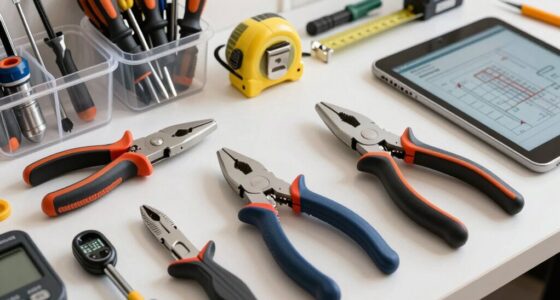

Did you know that improper cable management in tight spaces can lead to quicker wear and potential safety hazards? Many overlook how small, crowded areas can cause cables to bend sharply or become tangled, reducing their lifespan and risking damage. Proper organization might seem simple, but it’s vital for safety and efficiency. Understanding the best strategies can make a significant difference—are you aware of the most effective methods to keep your cables neat and safe?
Key Takeaways
- Use compact cable ties and sleeves to bundle cables tightly without bulk.
- Mount wall panels or hooks to elevate cables and free up limited space.
- Route cables along edges and corners to maximize available room efficiently.
- Employ under-desk trays or raceways to contain and organize cables in confined areas.
- Regularly review and adjust cable arrangements to prevent clutter and maintain accessibility.

Managing the challenge of handling cables in tight spaces requires careful planning and organization. When you’re working with limited room, clutter quickly becomes a problem, making it difficult to access devices or troubleshoot issues. To keep things efficient, focus on effective cable organization. This means grouping cables logically, labeling them clearly, and using appropriate tools like cable clips or sleeves to keep everything neat. Cable organization isn’t just about tidiness; it’s about creating a system that allows you to identify and access cables quickly, saving you time and frustration. When cables are tangled or scattered, it’s easy to accidentally disconnect the wrong one or struggle to find the right connection. Proper organization helps you avoid these pitfalls and guarantees your setup remains functional and safe. Additionally, practicing self-awareness about your workspace can help you recognize potential clutter before it becomes overwhelming, ensuring ongoing manageability.
Space optimization plays an essential role when managing cables in tight environments. You want to make the most of every inch without sacrificing accessibility or safety. Start by evaluating the layout and identifying the best routes for cables to run, minimizing unnecessary bends or overlaps. Use vertical space whenever possible—mounting panels or hooks on walls can free up valuable surface area and reduce clutter. Additionally, consider using compact cable management solutions, such as slim cable ties, under-desk trays, or cable raceways, to keep cables close to their source or destination. These tools help you streamline your setup and prevent cables from sprawling across work surfaces or floors, which can create trip hazards or accidental disconnections. Regular maintenance is also essential; periodically check and adjust your cable arrangement to prevent buildup of clutter over time. This proactive approach guarantees that your setup remains manageable and safe, even in the most confined environments.
As an affiliate, we earn on qualifying purchases.
Frequently Asked Questions
What Are the Best Tools for Cable Management in Tight Spaces?
To manage cables in tight spaces effectively, you should use tools like cable labels to identify wires easily and cable sleeving to organize and protect multiple cables. A compact cable tie tool helps secure bundles neatly, while a hook-and-loop strap offers adjustable flexibility. These tools help you keep cables tidy, prevent tangling, and make future adjustments simple, ensuring a clean, functional setup even in confined areas.
How Can I Prevent Cables From Tangling in Confined Areas?
You can prevent cables from tangling by using cable sleeves to keep them organized and protected. Label each cable clearly so you can identify them quickly, avoiding unnecessary knotting. When routing cables, keep them straight and avoid crossing excessively. Use velcro straps or cable ties sparingly to bundle cables neatly without adding bulk. This combination of cable labeling and sleeves creates a tidy setup, making maintenance easier and preventing frustrating tangles.
Are There Specific Cable Types Suited for Tight Installations?
Yes, for tight installations, you should choose cables with flexible cable insulation to bend easily without damage. Look for connector types that are compact and designed for tight spaces, such as right-angle or miniature connectors. These features help you fit cables neatly, reducing clutter and preventing tangling. Opting for cables with durable insulation and appropriate connectors guarantees reliable performance and easier management in confined areas.
How Do I Access Cables Once They Are Organized in Small Spaces?
To access cables in small spaces, start by using organizational strategies like labeling and color-coding to quickly identify each cable. Keep a clear, accessible path by using slim, flexible cable organizers or zip ties. Regularly review and adjust your setup, ensuring cables remain reachable without disturbing the entire system. This approach improves cable accessibility, making future maintenance or adjustments easier while maintaining a tidy, efficient installation.
What Safety Precautions Should I Follow During Installation?
During installation, prioritize electrical safety by turning off power before handling cables. Always wear personal protective equipment like gloves and safety glasses to prevent injuries. Confirm your workspace is dry and well-lit to avoid accidents. Use insulated tools and double-check connections. Avoid overloading circuits and follow all manufacturer guidelines. These precautions help protect you from electrical hazards and ensure a safe, efficient installation process.
As an affiliate, we earn on qualifying purchases.
Conclusion
By organizing cables effectively in tight spaces, you reduce trip hazards and improve safety. Using wall-mounted hooks, cable ties, and proper routing keeps everything neat and accessible. Did you know that cluttered cable setups can increase maintenance time by up to 30%? Regular checks make sure your system stays efficient and safe. Stay proactive, keep cables tidy, and you’ll create a more organized, hazard-free environment even in the smallest areas.
As an affiliate, we earn on qualifying purchases.
As an affiliate, we earn on qualifying purchases.