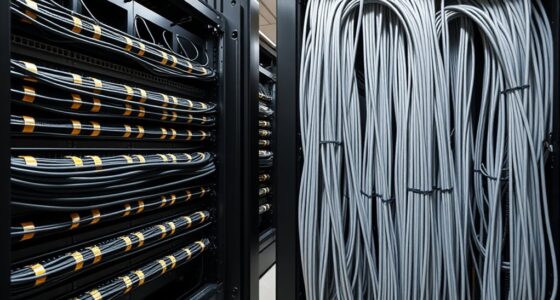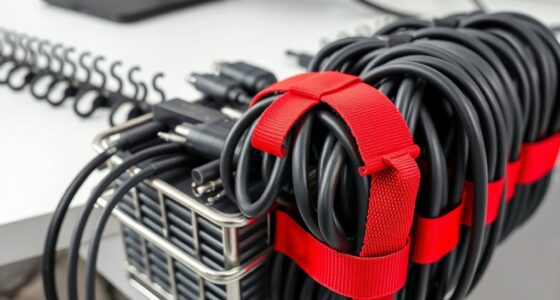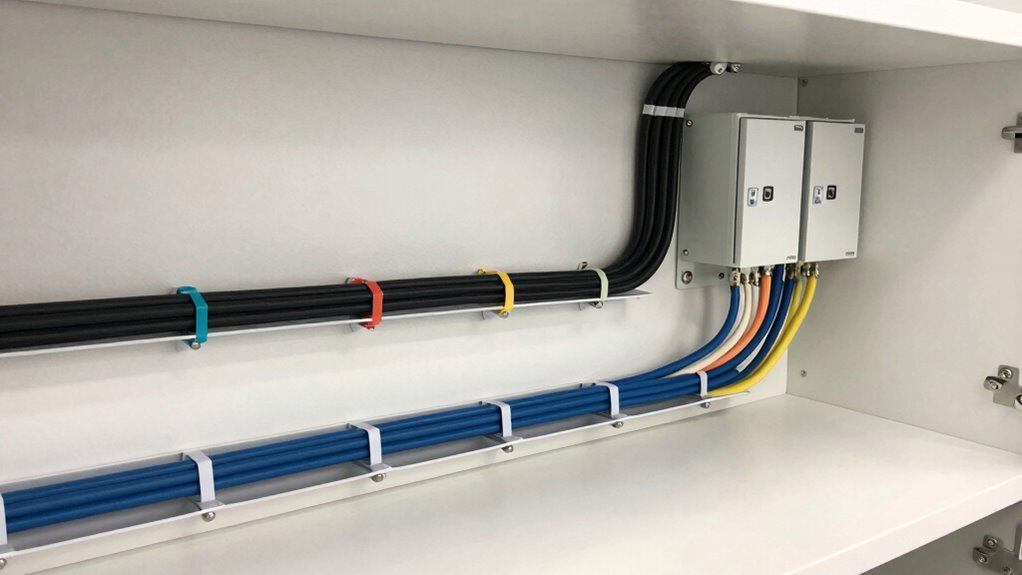

To organize low-voltage cabling in shared utility areas, start by evaluating the space and labeling all cables at both ends with durable, color-coded tags. Route cables along walls or ceilings using clips or conduit, leaving slack at connection points to prevent strain. Secure cables with ties or straps, avoiding over-tightening. Keep layout documented for easier maintenance. Proper organization increases safety and simplifies troubleshooting — continue to find out more tips for efficient cable management.

Get business pricing on networking and server gear
- Business-only prices and quantity discounts
- Tax-exempt purchasing
- Multiple users, one account, clear invoices
Key Takeaways
- Plan and document cable layouts to prevent clutter and facilitate future upgrades.
- Use cable ties, clips, or conduit to route cables neatly along walls or ceilings.
- Label both ends of each cable with durable, color-coded tags for quick identification.
- Group related cables and leave slack at connections to prevent strain and damage.
- Regularly inspect labels and cables for security, replacing worn or loose components promptly.
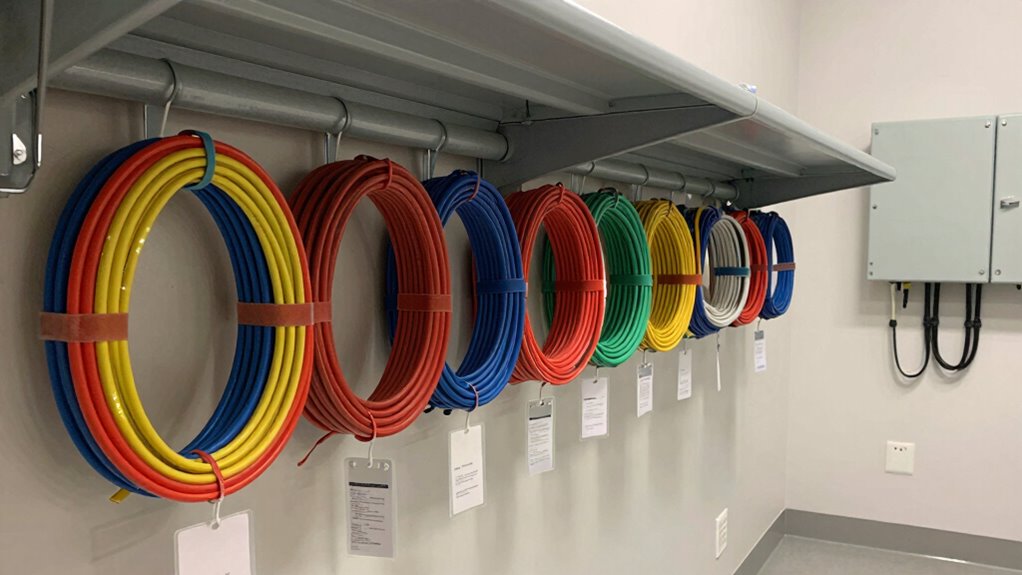
Organizing low-voltage cabling might seem intimidating, but with a few simple steps, you can keep your wiring neat and safe. The key is to focus on effective wire management, which involves arranging and securing cables to prevent tangling, damage, or accidental disconnections. Start by evaluating your space and identifying all the cables that run through the shared utility area. Once you have a clear picture, gather the necessary tools—cable ties, cable clips, velcro straps, and cable labels. Proper cable labeling is vital; it helps you quickly identify each cable’s purpose, reducing confusion during maintenance or troubleshooting. Use durable labels or color-coded tags to mark each wire at both ends, so you know exactly what they connect to without guesswork.
Effective wire management keeps low-voltage cabling neat, safe, and easy to troubleshoot.
When managing cables, avoid letting them hang loosely or pile up in untidy clusters. Instead, route them along walls or ceilings using cable clips or conduit to keep everything organized and out of the way. Secure each cable with cable ties or velcro straps, but don’t tighten them too much—over-tightening can damage the wires or cause stress points. Group related cables together, such as those running to the same device or area, to streamline your setup and simplify future modifications. As you route the cables, make sure to leave some slack at connection points; this prevents strain on the connectors and makes maintenance easier. Additionally, considering cable management best practices can help you achieve a more organized and efficient setup.
Integrate your wire management with cable labeling by attaching labels at both ends of each cable. This ensures that even if cables are bundled together, you can easily trace them back to their source or destination. It also helps when you need to replace or upgrade equipment, saving you time and effort. Regularly check your cable organization to guarantee labels remain legible and cables stay securely fastened. If you notice any wear or looseness, re-secure or replace the affected cables promptly to maintain safety and functionality. Incorporating proper cable installation techniques can further enhance the longevity and safety of your wiring system. Remember that proper documentation of your cable layout can significantly simplify troubleshooting and future upgrades.
Additionally, understanding the importance of contrast ratio in your setup can help you optimize your workspace for better visibility and clarity, especially if you incorporate screens or monitors in your utility area. Paying attention to cable routing not only improves safety but also reduces electromagnetic interference that can affect your devices. Consistent wire management and diligent cable labeling make your utility area safer, more accessible, and easier to service. Clear labeling minimizes errors, while tidy routing prevents accidental disconnections or damage. Remember, investing a little time in organizing your low-voltage cabling pays off in the long run, making future maintenance smoother and reducing the risk of electrical hazards. By keeping your wiring well-managed, you create a safer environment and ensure your systems run reliably for years to come.
cable management clips for low-voltage wiring
As an affiliate, we earn on qualifying purchases.
As an affiliate, we earn on qualifying purchases.
Frequently Asked Questions
What Tools Are Essential for Low-Voltage Cable Organization?
You’ll need essential tools like cable labels and a label maker to guarantee clear cable labeling, making future maintenance easier. A conduit bender and conduit installation tools help route cables neatly through conduits. A wire stripper and crimping tool are crucial for preparing and securing connections. Additionally, cable ties and Velcro straps keep cables organized and secure. These tools streamline low-voltage cable organization, guaranteeing safety and easy identification.
How Often Should Cabling Be Inspected for Safety?
Back in the day, you’d want to inspect your cabling regularly—at least every six months. During these checks, make certain cables are properly labeled and follow safety protocols. Look for signs of wear, damage, or loose connections. Regular inspections help prevent potential hazards and ensure everything remains organized. Keeping to this schedule fosters a safer environment, minimizes downtime, and confirms your low-voltage cabling stays in top shape for years to come.
Can Flexible Conduits Be Used in All Shared Areas?
Yes, flexible conduits can be used in all shared areas because they offer excellent cable flexibility, making routing easier around obstacles. They’re ideal for spaces where cables need to bend or move slightly without damage. Just make certain you select the right type of flexible conduit for the environment, and follow local electrical codes. This way, you maintain safety and organization while taking advantage of the adaptability flexible conduits provide in shared utility areas.
What Are Common Mistakes to Avoid in Cabling Setup?
Ever wonder if your cables are inviting trouble? To avoid common mistakes, prioritize cable management by securing and labeling cables properly. Follow safety protocols diligently to prevent hazards like overheating or interference. Don’t neglect proper spacing and avoid cluttered setups that can make maintenance difficult. Ensuring neat, organized cabling not only enhances safety but also simplifies future upgrades. Remember, a well-planned cable setup keeps everything running smoothly and safely.
How to Handle Cable Upgrades or Expansions Efficiently?
To handle cable upgrades or expansions efficiently, focus on clear cable routing and consistent labeling practices. Plan ahead by leaving extra slack for future additions, and keep cables organized to avoid confusion. Use labels with detailed information to quickly identify cables during upgrades. Regularly review and update your cable map, ensuring that new cables integrate smoothly with existing infrastructure, minimizing downtime and simplifying maintenance.
color-coded cable labels for wiring
As an affiliate, we earn on qualifying purchases.
As an affiliate, we earn on qualifying purchases.
Conclusion
So, next time you find yourself tangled in a web of low-voltage chaos, remember—organization isn’t just for the neat freaks. With a little planning and some clever cable management, you can turn that spaghetti mess into a masterpiece of order. After all, who wouldn’t want their utility room to look as polished as a high-end boutique? Embrace the elegance of tidy cabling, and watch as your utility area transforms from chaos to class—without the need for a magic wand.
cable ties and straps for electrical wiring
As an affiliate, we earn on qualifying purchases.
As an affiliate, we earn on qualifying purchases.
conduit for low-voltage cable routing
As an affiliate, we earn on qualifying purchases.
As an affiliate, we earn on qualifying purchases.
Halloween Picks
halloween
As an affiliate, we earn on qualifying purchases.