
To prevent messy cable bundles from slowing down maintenance, you should categorize and label your cables with color codes for quick identification. Use cable ties, clips, or Velcro straps to bundle and secure cables neatly along designated pathways. Regularly inspect and remove damaged or unnecessary cables to keep everything tidy. Invest in cable management accessories like sleeves or modular panels to streamline setup and future additions. Keeping cables organized saves time and reduces frustration—discover more ways to improve your system’s efficiency below.
Key Takeaways
- Implement clear labeling and color coding for quick cable identification during maintenance.
- Use cable ties, Velcro straps, and clips to keep bundles neat and prevent tangling.
- Organize cables along designated pathways or management systems to maintain order.
- Conduct regular inspections and remove outdated or damaged cables promptly.
- Invest in cable management accessories to facilitate easy addition, removal, and reorganization.
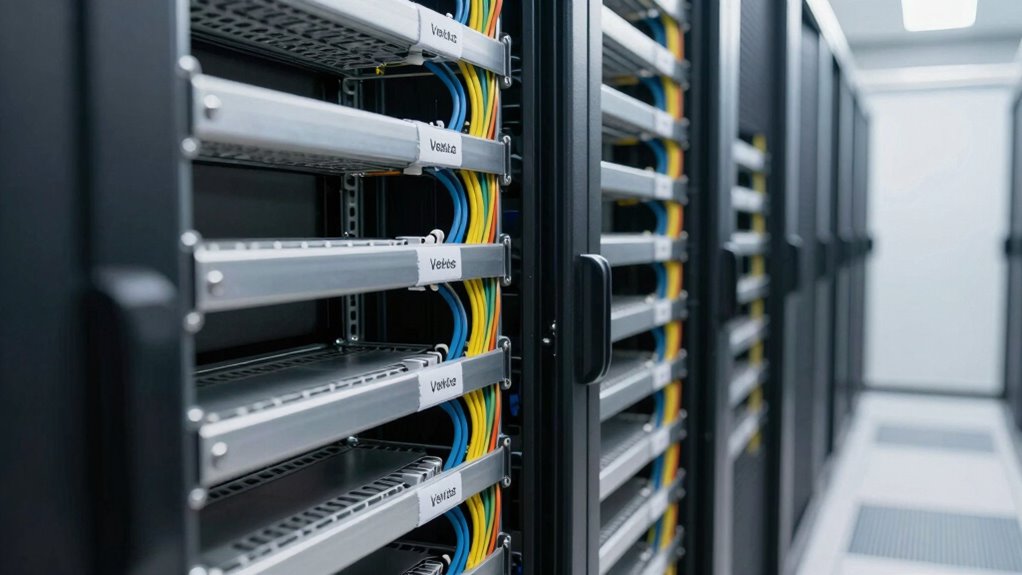
Have you ever struggled to find the right cable or spent extra time untangling a messy bundle during maintenance? If so, you’re not alone. Disorganized cables can turn even simple tasks into frustrating, time-consuming chores. To keep things running smoothly, focusing on effective cable management is essential. When you implement proper cable management strategies, you considerably improve your workflow efficiency, making maintenance quicker and less stressful.
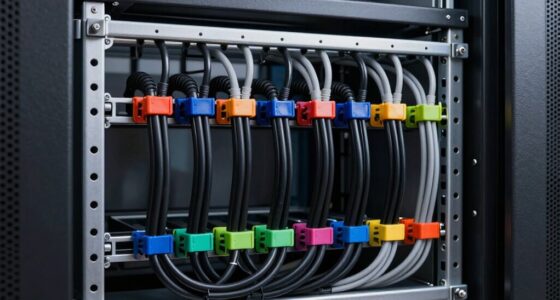
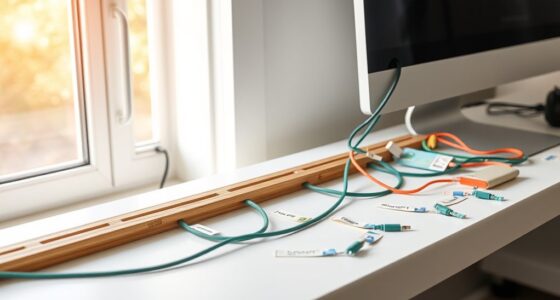
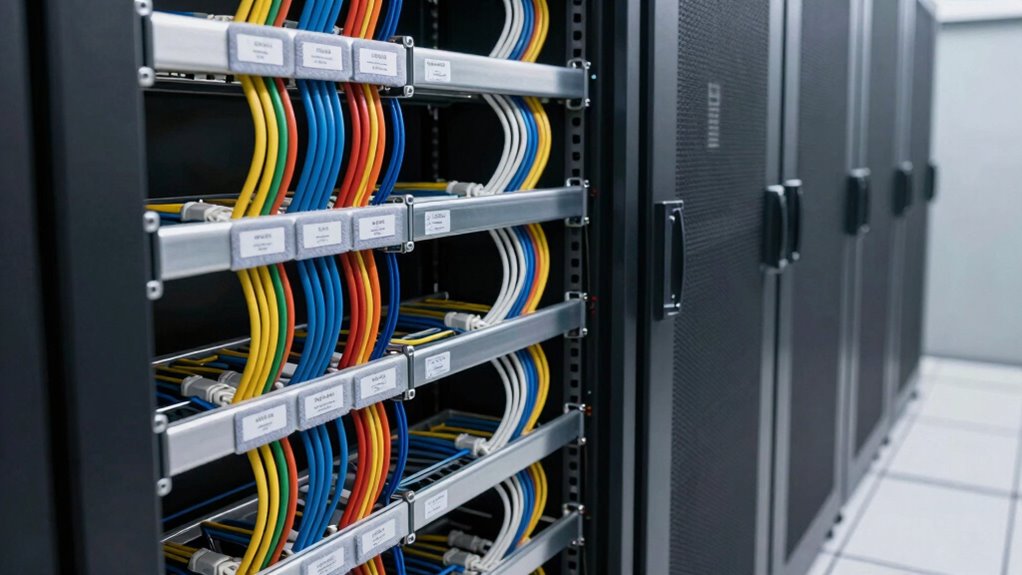
Start by categorizing your cables. Use labels or color codes to distinguish different types—power, data, audio, or video. When you know exactly which cable is which at a glance, you eliminate the need to trace and untangle. Additionally, consider using cable ties, Velcro straps, or cable clips to bundle cables neatly together. These tools prevent cables from tangling and keep them in place, reducing clutter and making it easier to access the right cable when needed.
Categorize and label cables with color codes and use ties or clips for neat, accessible organization.
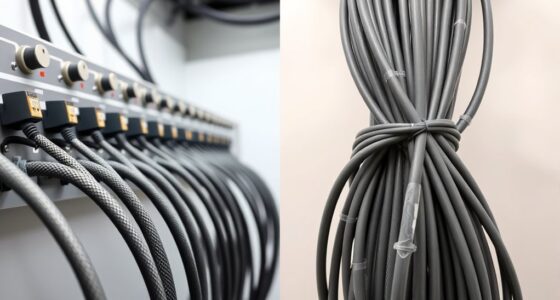
Another key step is organizing cables along designated pathways or cable trays. Instead of letting cables spill across desks or equipment, run them through cable conduits or sleeves. This keeps everything orderly and prevents accidental disconnections or damage. When cables are neatly arranged, your workflow efficiency improves because you spend less time searching for the right connection or untangling knots. Plus, a tidy setup minimizes the risk of accidental disconnections, which can cause downtime or hardware issues. Proper cable routing can also help in managing heat and airflow, further protecting your equipment.
Regular maintenance is also crucial. Periodically check your cable bundles to remove unnecessary or outdated cables. Over time, unused cables can clutter your workspace and add to the chaos. Replacing damaged or frayed cables immediately keeps your system safe and operational, reducing unexpected troubleshooting. Keeping cables organized from the outset means you won’t have to deal with a giant mess later on, saving you valuable time during routine maintenance.
Investing in cable management accessories like cable organizers, sleeves, or modular panels can make a huge difference. These tools are designed to streamline your setup, making it easier to add or remove cables without disturbing the entire bundle. When your cables are systematically managed, it promotes a cleaner workspace and enhances your overall workflow efficiency. Incorporating cable management techniques can significantly reduce clutter and improve overall system reliability.
Ultimately, good cable management isn’t just about aesthetics; it’s about ensuring your maintenance process is swift and effective. When you take the time to organize and properly manage your cables, you make your workspace safer, more efficient, and far easier to navigate during routine checks. This proactive approach minimizes downtime, reduces frustrations, and keeps your operations running smoothly.

Alex Tech 10ft – 1/2 inch Cord Protector Wire Loom Tubing Cable Sleeve Split Sleeving For USB Cable Power Cord Audio Video Cable – Protect Cat From Chewing – Black
- Size and Length: 1/2 inch diameter, 10 feet long
- Color: Black
- Easy to Load: Split design for simple wire loading
As an affiliate, we earn on qualifying purchases.
As an affiliate, we earn on qualifying purchases.
Frequently Asked Questions
What Tools Are Best for Organizing Cable Bundles?
You should use cable management accessories like Velcro straps, cable clips, and cable sleeves to organize bundles effectively. These tools keep cables neat and accessible, making maintenance easier. Opt for accessories that offer label durability so you can mark cables clearly, reducing confusion during troubleshooting. With the right tools, you streamline your setup, prevent tangles, and guarantee quick identification, ultimately speeding up maintenance and avoiding messes.
How Often Should Cable Management Be Inspected?
You should inspect your cable management regularly, ideally every three to six months, to guarantee peak performance. Schedule routine cable inspections as part of your maintenance routine, paying attention to any signs of wear, loose connections, or clutter. Consistent maintenance scheduling helps prevent cable mess from impacting system efficiency, allowing you to identify potential issues early, improve safety, and keep your setup organized and functional.
Can Cable Labels Fade Over Time?
Don’t let your cable labels fade into obscurity; they can indeed lose clarity over time. To guarantee durability, choose high-quality labels designed for longevity, and apply label fading prevention techniques like UV-resistant coatings or lamination. Regular inspections help spot worn labels early, so you can replace them before they become a headache. Think of it as keeping your cables in tip-top shape—staying ahead prevents chaos down the line.
What Are the Safety Risks of Messy Cables?
Messy cables pose significant safety risks, especially with electrical hazards and fire risks. You might trip over tangled cords, causing injuries or damage. Poorly organized cables can overheat, increasing the chance of electrical fires. Additionally, damaged or frayed wires hidden within the mess can lead to electric shocks. To keep everyone safe, regularly inspect, label, and neatly organize cables, preventing hazards and ensuring quick maintenance access.
How Do Temperature Changes Affect Cable Organization?
When temperature changes, cables can become a ticking time bomb if you’re not careful. Thermal expansion causes cables to stretch and loosen, making organization a nightmare. This can also impact conductor conductivity, leading to inefficiencies or failures. You must monitor and control temperature variations, ensuring cables stay within ideal ranges. Otherwise, the constant shifts might turn your tidy bundles into a tangled mess, slowing down maintenance and risking damage.

Nettbe 60 PCS 6 Inches Reusable Cable Ties, Adjustable Cord Straps Wire Organizer Cord Wrap and Hook Loop Cable Management
- Reusable nylon cable ties: Made from durable, eco-friendly nylon
- Versatile cable organizer: Wraps all types of loose cords
- Multi-use application: Suitable for home, office, garage, outdoors
As an affiliate, we earn on qualifying purchases.
As an affiliate, we earn on qualifying purchases.
Conclusion
Keeping your cable bundles neat isn’t just about looks; it’s about staying ahead of the game. When cables are organized, maintenance becomes quicker and less stressful. Don’t let tangled wires turn into a wolf in sheep’s clothing—sneaking up and causing chaos. Take the time to implement proper cable management now, and you’ll save yourself from headaches down the line. Remember, a tidy workspace is a happy workspace, so don’t let clutter be your Achilles’ heel.
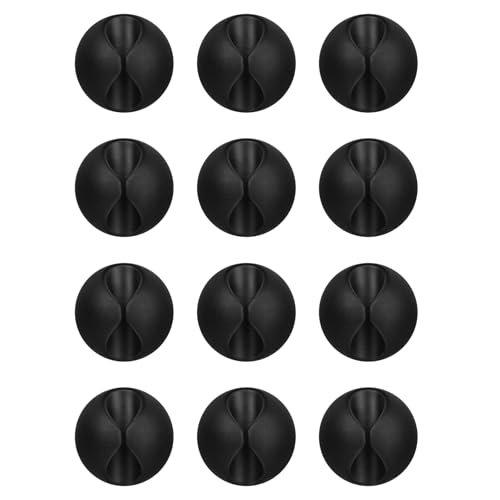
Flezoo 12PCS Black Adhesive Cable Clips Cord Organizer for Wire Management
- Package Includes: 12 black cable clips for organization
- Strong Adhesive: Adheres to wood, plastic, glass, metal, rubber
- Easy Installation: Peel, stick, and twist to remove
As an affiliate, we earn on qualifying purchases.
As an affiliate, we earn on qualifying purchases.

Cable Matters 1U 24 Port Keystone Patch Panel with Cable Management
- Flexible Keystone Compatibility: Supports various keystone jacks including RJ45, HDMI, USB, fiber, and more
- Universal Mounting Options: Fits 19-inch racks, cabinets, or wall mounts
- All-in-One Cable Management: Consolidates coax, Ethernet, fiber, voice, and video cables
As an affiliate, we earn on qualifying purchases.
As an affiliate, we earn on qualifying purchases.