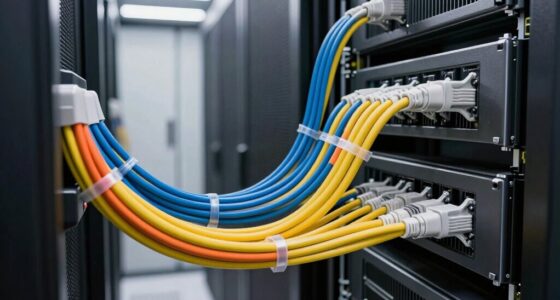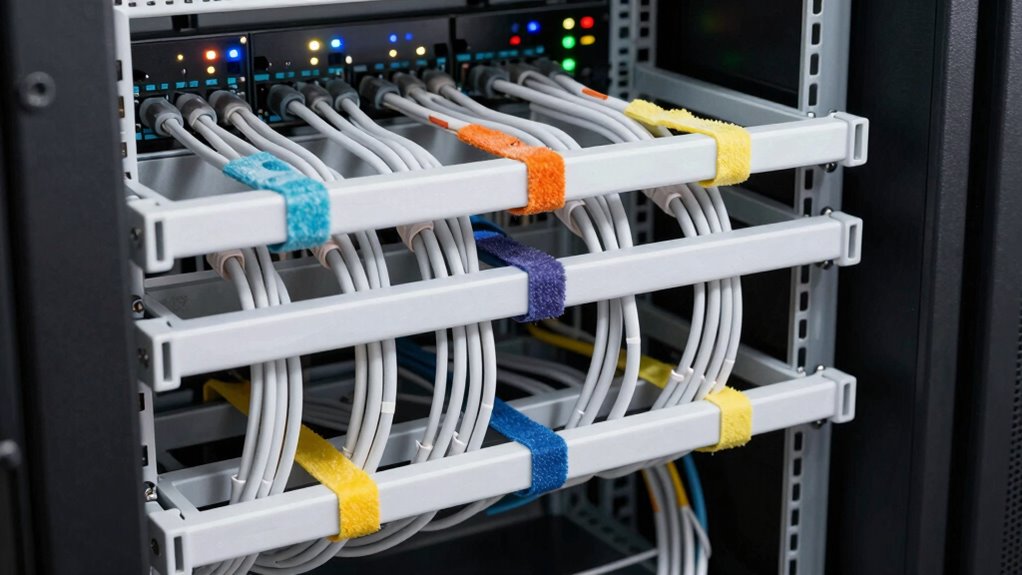

To keep rack cabling clean during fast expansions, plan cable pathways in advance and use structured solutions like cable trays and Velcro straps. Label each cable clearly to make future troubleshooting easier, and keep cables organized by zones for power, data, and network. Regularly inspect and adjust the arrangement to prevent clutter and guarantee proper airflow. Continuing along, you’ll discover even more tips to keep your cabling neat and efficient during growth.

Get business pricing on networking and server gear
- Business-only prices and quantity discounts
- Tax-exempt purchasing
- Multiple users, one account, clear invoices
Key Takeaways
- Plan and label cables meticulously before expansion to prevent tangles and facilitate easy identification.
- Use structured cable management solutions like trays and Velcro straps to maintain order.
- Implement modular, zone-based organization to simplify additions and reduce clutter.
- Regularly inspect and reposition cables to ensure proper airflow and prevent congestion.
- Keep detailed documentation of cable routes and labels for efficient troubleshooting and future growth.
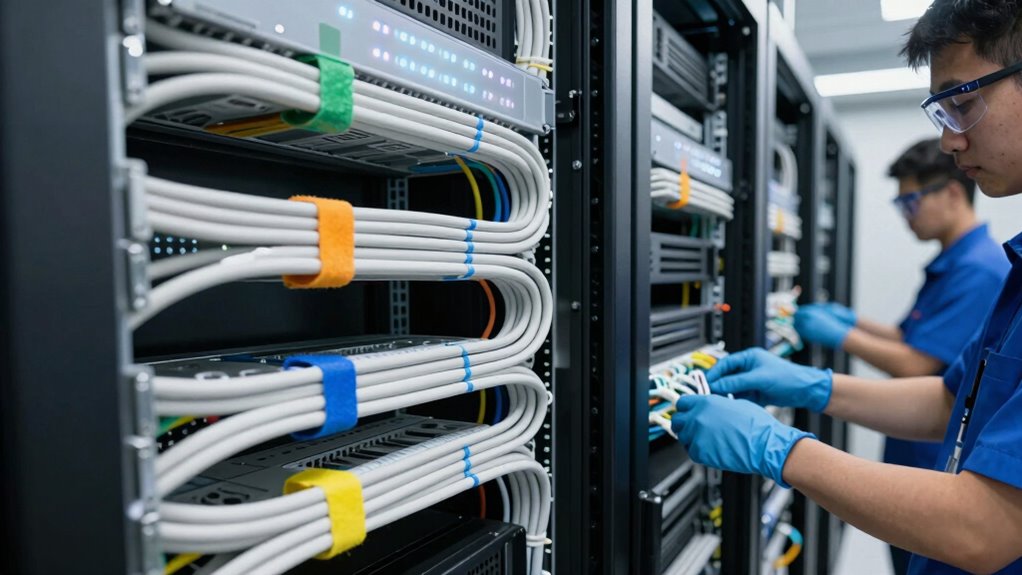
Ever wondered how to keep your rack cabling organized during rapid expansions? When your infrastructure grows quickly, it can feel like a challenge to maintain order without sacrificing accessibility or performance. Good cable management is vital—not just for a tidy look but also for optimizing airflow and preventing overheating. If cables are left unmanaged, airflow becomes obstructed, increasing the risk of equipment failure and reducing efficiency. The key is to implement strategies that streamline your setup while allowing for future growth.
Effective cable management ensures airflow, prevents overheating, and keeps your rack organized during rapid infrastructure growth.
Start by planning your cable pathways before installing new hardware. Use structured cable management solutions like cable trays, panels, and Velcro straps to route cables neatly along designated paths. This prevents tangles and makes it easier to identify and troubleshoot issues later. Label each cable clearly, especially during rapid expansions, so you can quickly trace connections without unnecessary disassembly. This approach saves you time and minimizes disruptions, keeping your environment efficient even as it scales.
As you add new servers and switches, prioritize maintaining proper airflow. Avoid overloading cable bundles, which can block vents and restrict airflow. Instead, use horizontal and vertical cable organizers that keep cables aligned and separated, reducing clutter and promoting better ventilation. Remember, good airflow isn’t just about keeping equipment cool; it also extends the lifespan of your hardware and reduces energy costs. When possible, leave enough space between cables and equipment to facilitate airflow, and regularly inspect your cable routes to ensure no obstructions develop over time.
Another essential tip is to adopt a modular approach to cable management. Set up your racks with designated zones for power, data, and network cables. This separation minimizes interference and simplifies troubleshooting. As you expand, add new sections with the same organizational principles, so your system remains consistent and manageable. Keep extra cable slack in designated areas, which allows for easy adjustments or replacements without disturbing the entire setup.
Lastly, document your cable management plan. Keep detailed records of cable routes, labels, and connection points. This documentation becomes invaluable during rapid growth phases, helping you maintain clarity and control. When new hardware arrives, referencing your plan ensures you install and organize cables correctly from the start. By integrating these practices—structured cable management, airflow optimization, modular zoning, and thorough documentation—you’ll stay ahead of clutter and chaos, even during rapid expansion. Your rack will not only look professional but also operate at peak efficiency, ready to support your growing infrastructure seamlessly.
As an affiliate, we earn on qualifying purchases.
Frequently Asked Questions
What Tools Are Best for Organizing Rack Cabling During Expansions?
You should use cable management tools like cable ties, Velcro straps, and cable labeling to organize rack cabling during expansions. Cable bundling keeps wires neat and prevents tangling, while proper labeling helps you quickly identify connections. Use cable organizers or trays to route cables cleanly. These tools make maintenance easier, reduce clutter, and enhance airflow, ensuring your rack stays tidy and efficient during rapid growth.
How Often Should Rack Cabling Be Inspected for Cleanliness?
You should inspect rack cabling for cleanliness at least quarterly, or more often if your environment is prone to dust or debris. During these visual inspections, check cable durability by looking for signs of wear, such as fraying or discoloration. Regular inspections help you catch issues early, ensuring your cables stay organized, clean, and functioning most effectively, which ultimately extends their lifespan and maintains system reliability.
Can Cable Management Accessories Be Reused After Expansion?
A stitch in time saves nine, so you can often reuse cable management accessories after expansion. Reusable accessories, like velcro straps or modular cable ties, are designed for cable reuse, making your upgrades more efficient and eco-friendly. Just make certain they’re still in good condition—no tears or damage—before reusing. This way, you maintain a clean, organized rack while saving time and resources during rapid expansions.
What Are Common Mistakes to Avoid During Rapid Rack Expansions?
During rapid rack expansions, avoid neglecting proper cable labeling and power distribution. Don’t skip labeling cables—they help prevent confusion and make future troubleshooting easier. Make sure power distribution is well-organized to prevent overloads and maintain safety. Also, resist the temptation to reuse worn or damaged accessories; replacing them keeps your cabling clean and reliable. Finally, plan your layout carefully to minimize clutter and improve airflow, ensuring efficient expansion.
How Does Cable Type Affect Maintenance During Expansions?
The cable type considerably impacts maintenance during expansions. Flexible cables make rerouting easier, preventing clutter and reducing strain on connectors. Meanwhile, insulation durability ensures cables withstand frequent handling and environmental stresses, reducing risks of damage or failure. Choosing the right cable with ideal flexibility and insulation durability helps keep your rack organized, simplifies maintenance, and minimizes downtime during rapid expansions. Proper cable selection ultimately maintains a clean, efficient, and reliable cabling system.
Velcro cable straps for server racks
As an affiliate, we earn on qualifying purchases.
As an affiliate, we earn on qualifying purchases.
Conclusion
By maintaining organized cabling during rapid expansions, you’re not just ensuring easier maintenance—you’re building a foundation for future growth. Think of your rack as a garden; with the right care and attention, it flourishes and adapts to change. So, stay proactive, keep things tidy, and remember that a well-organized rack isn’t just about looks—it’s about resilience and foresight. After all, a neat cable is a sign of a strong, thriving system.
structured cable management panels
As an affiliate, we earn on qualifying purchases.
As an affiliate, we earn on qualifying purchases.
As an affiliate, we earn on qualifying purchases.
Halloween Picks
halloween
As an affiliate, we earn on qualifying purchases.