
TL;DR

Get business pricing on networking and server gear
- Business-only prices and quantity discounts
- Tax-exempt purchasing
- Multiple users, one account, clear invoices
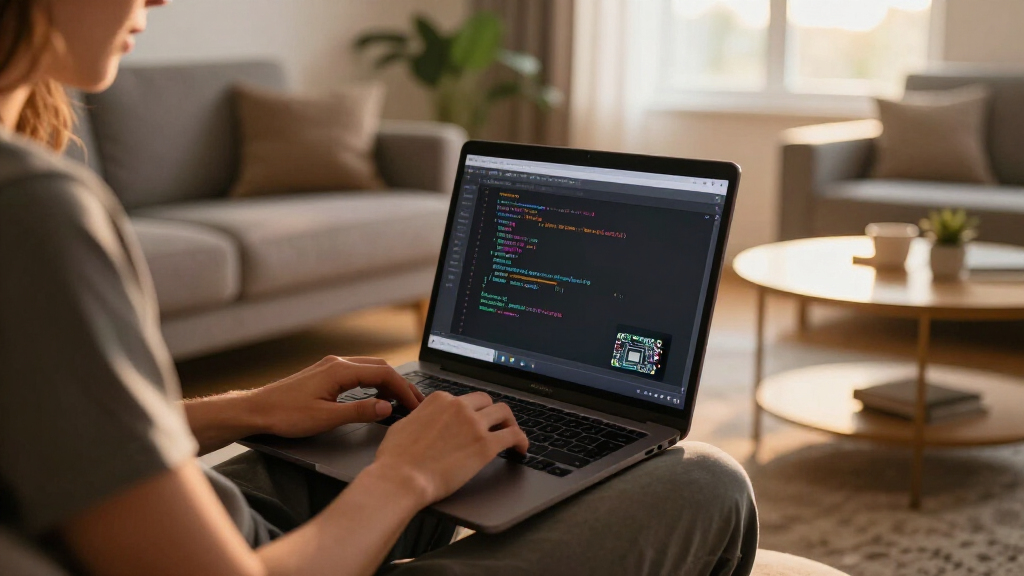
A programmer has developed Thoreau BASIC, a minimalistic BASIC interpreter that boots natively on UEFI machines. This innovation allows users to run a classic programming environment on modern hardware without traditional OS dependencies. The project is shared on Show HN, sparking interest among hobbyists and retro computing enthusiasts.
A developer has released Thoreau BASIC, a lightweight BASIC interpreter that can boot directly on UEFI systems. This project allows users to run a vintage-style programming environment without needing a traditional operating system, marking a notable achievement in the intersection of retro computing and modern firmware technology.
The developer, who posted on Show HN, described Thoreau BASIC as an interpreter designed to run in the UEFI firmware environment, bypassing the need for an OS. The project aims to emulate classic BASIC features such as line numbers, immediate mode, simple graphics, strings, and arrays, creating a nostalgic yet functional programming experience directly on contemporary hardware.
According to the author, the implementation is minimalistic, focusing on core features to keep the interpreter small and fast. The code is openly shared, and the project has garnered interest from hobbyists, retro computing fans, and those interested in low-level programming. The developer emphasized that Thoreau BASIC is intended as an educational tool and a proof of concept for running high-level languages in firmware environments.
Impact of UEFI-bootable BASIC on Modern Computing
This development demonstrates that it is possible to run high-level programming environments directly from firmware, bypassing traditional operating systems. It opens avenues for educational experiments, embedded applications, and hobbyist projects that seek to understand low-level hardware interactions. Additionally, it revives interest in vintage programming languages, providing a platform for nostalgic coding experiences on modern hardware.
Furthermore, Thoreau BASIC could serve as a foundation for more sophisticated firmware-based programming environments, potentially influencing how minimal systems are designed in the future. It also highlights the growing community interest in low-level programming and hardware hacking, which could lead to new innovations in firmware-based computing.
As an affiliate, we earn on qualifying purchases.
Background of BASIC and UEFI Boot Environments
BASIC, a programming language developed in the 1960s, became popular for its simplicity and accessibility. Over the decades, it evolved into various dialects and implementations, often associated with early personal computers. The language’s straightforward syntax and immediate mode made it a favorite among hobbyists and educators.
Meanwhile, UEFI (Unified Extensible Firmware Interface) replaced traditional BIOS firmware in modern PCs, providing a more flexible and programmable environment during system startup. UEFI firmware can run custom code before an operating system loads, enabling advanced boot scenarios, including the possibility of running high-level code directly from firmware.
The combination of these two—vintage BASIC and modern UEFI firmware—has been largely unexplored until now. The developer’s project leverages UEFI’s capabilities to run a BASIC interpreter directly, effectively creating a bridge between vintage programming environments and contemporary hardware.
“Thoreau BASIC is designed to be a minimal yet functional environment, allowing users to experience classic programming directly from firmware without OS overhead.”
— The developer
As an affiliate, we earn on qualifying purchases.
Limitations and Compatibility of Thoreau BASIC
It is not yet clear how broadly compatible Thoreau BASIC is across different hardware configurations or UEFI firmware implementations. The project currently supports specific hardware setups, and compatibility with secure boot or newer firmware features remains untested. Additionally, performance benchmarks and stability assessments are still pending, and the project is in early development stages.
As an affiliate, we earn on qualifying purchases.
Future Development and Community Involvement
The developer plans to expand compatibility to more hardware platforms and improve stability. They also intend to add features such as file I/O, extended graphics, and user input handling. Community feedback and contributions are encouraged to refine the interpreter and explore additional use cases, including embedded systems and educational tools. Further testing and documentation are expected to be released in the coming months.
As an affiliate, we earn on qualifying purchases.
Key Questions
Can Thoreau BASIC run on any UEFI system?
Currently, it supports specific hardware configurations. Compatibility with all UEFI systems is still being tested.
Does Thoreau BASIC support modern features like networking?
No, the interpreter is designed to emulate a vintage BASIC environment, focusing on core features like graphics and strings. Networking is not supported at this stage.
Is the source code available for modification?
Yes, the project is openly shared by the developer, inviting community contributions and experimentation.
What are the potential uses of this project?
It can be used for educational purposes, hobbyist programming, embedded systems experiments, and understanding low-level firmware interactions.
Will this project support other high-level languages in the future?
There are no current plans for additional languages, but community interest could influence future development directions.
Source: hn
Halloween Picks
halloween
As an affiliate, we earn on qualifying purchases.