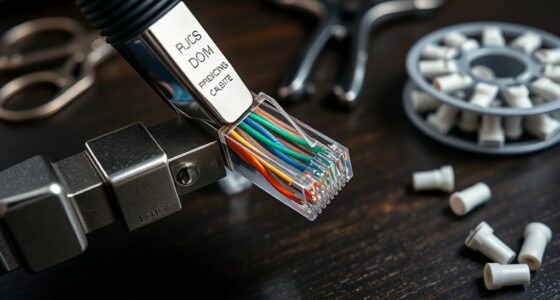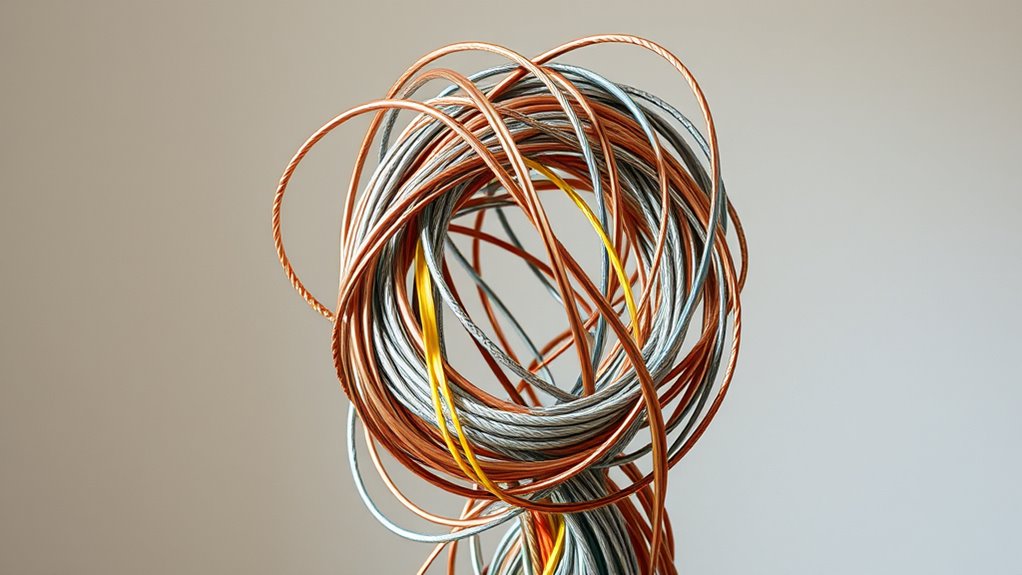

Did you know that old cables can be transformed into striking works of art rather than simply discarded? Many people overlook the potential of these electronic leftovers to become creative and sustainable projects. By repurposing cables, you not only reduce waste but also create unique pieces that showcase your environmental awareness. Curious about how to turn everyday cables into eye-catching art? There are simple techniques and inspiring ideas that can help you get started.
Key Takeaways
- Clean and straighten cables before shaping or assembling for art projects.
- Use twisting, braiding, or wrapping techniques to create textured sculptures and jewelry.
- Incorporate cables into mixed media art with recycled materials like fabric or bottle caps.
- Prioritize safety by ensuring cables are unplugged and properly insulated during manipulation.
- Dispose of leftover or damaged cables responsibly at electronic waste recycling centers.
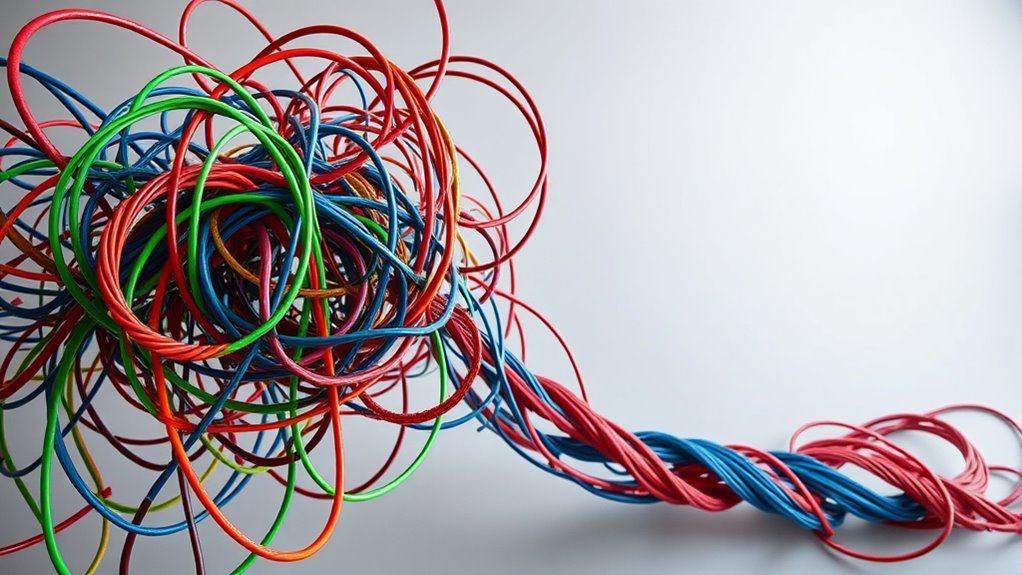
Old cables often end up discarded, but with a little creativity, you can transform them into useful and decorative items. Instead of letting these wires clutter your space or contribute to waste, consider upcycling them into unique art projects. Before you start, it’s essential to understand cable safety—never manipulate cables that are damaged or still connected to power sources. Cutting into live wires can be dangerous, so always ensure the cables are unplugged and properly insulated. Additionally, familiarize yourself with recycling regulations in your area. Many regions have specific rules about disposing of electronic waste, and repurposing cables can help you comply with these guidelines while reducing environmental impact.
Transform old cables into creative art safely by unplugging and insulating them first.
When you begin your project, start by cleaning the cables thoroughly to remove any dirt or grime. This not only makes them easier to work with but also ensures your finished piece looks polished. You can straighten out cables or coil them into interesting shapes, creating sculptures or wall hangings. Twisting and braiding multiple cables together can produce textured patterns for jewelry or decorative art pieces. To add color or texture, consider wrapping parts of the cables with fabric, wire, or paint—just be sure to use non-toxic materials that won’t compromise cable safety or violate recycling regulations. Remember that incorporating upcycling practices not only enhances your creativity but also supports environmental sustainability.
If you’re interested in more complex projects, you might create a wire mesh or frame by bending the cables into geometric forms. These structures can serve as bases for mixed media art, allowing you to incorporate other recycled elements like bottle caps, fabric scraps, or small electronic parts. Always keep in mind that safety should be your priority—avoid sharp edges or exposed wires, and ensure your artwork is stable and secure, especially if it’s meant to hang on a wall.
Finally, when your project is complete, think about how to dispose of or recycle any leftover cables responsibly. Many recycling centers accept electronic waste, but some may require that cables are cut into smaller pieces or that they’re free of any non-recyclable components. By upcycling old cables into art, you not only reduce waste and support recycling regulations but also create one-of-a-kind pieces that showcase your creativity. With a little effort and attention to safety and regulations, you turn discarded wires into inspiring art that’s both eco-friendly and visually striking.
Frequently Asked Questions
What Tools Are Best for Cutting Old Cables?
You should use wire cutters or heavy-duty pliers for cutting old cables, especially when working on cable recycling and creating artistic cable designs. These tools give you precise control and clean cuts, making your project easier. A utility knife can also help with stripping insulation. Always wear safety gloves and goggles to protect yourself. With the right tools, you can transform old cables into unique, eco-friendly art pieces efficiently.
How Do I Safely Strip Insulation From Cables?
To safely strip insulation from cables, you should use proper wire stripper techniques, ensuring you don’t damage the wire. Select the right gauge slot on your wire stripper and gently squeeze to cut through the insulation. Always wear safety gear essentials like gloves and safety glasses to protect yourself. Keep your workspace clear, and work slowly to prevent accidents or damaging the wire’s core. This approach keeps you safe and achieves a clean strip every time.
Can All Types of Cables Be Upcycled Into Art?
Not all cables can be upcycled into art due to cable material diversity. Some cables use flexible plastics or delicate insulation that might not hold up over time, while others with sturdy metal or thicker plastic can be easily repurposed. When considering upcycling, think about aesthetic design considerations, such as color, texture, and flexibility. Choose cables that align with your artistic vision and can withstand the crafting process for the best results.
How Do I Prevent Electrical Hazards During Upcycling?
Think of electrical hazards as lurking shadows you must outsmart. To prevent them, always store cables properly in cable storage, keeping them untangled and dry. Before starting, verify cables are de-energized and have proper electrical certification if needed. Use insulated tools and wear gloves. Double-check connections, and never cut into live wires. Safety first keeps your creative journey bright and free of unforeseen sparks!
Are There Eco-Friendly Adhesives Suitable for Cable Art?
Yes, you can find eco-friendly adhesives suitable for cable art. Look for biodegradable adhesives and non-toxic glue options, which are safe for the environment and your health. These glues work well for bonding cables without harmful chemicals. Always read labels to make sure they meet eco-friendly standards. Using biodegradable adhesives not only secures your art but also helps reduce environmental impact, making your project both beautiful and sustainable.
Conclusion
So, you’ve turned old cables into stunning art, proving that even waste can become wonder. Ironically, what once powered devices now power your creativity, reminding us that trash can truly be treasure—if you’re willing to twist and reshape it. Just remember, while you’re making a statement about sustainability, always handle those cables safely. After all, the best art is eco-friendly and accident-free—because nothing kills creativity faster than a little shock.