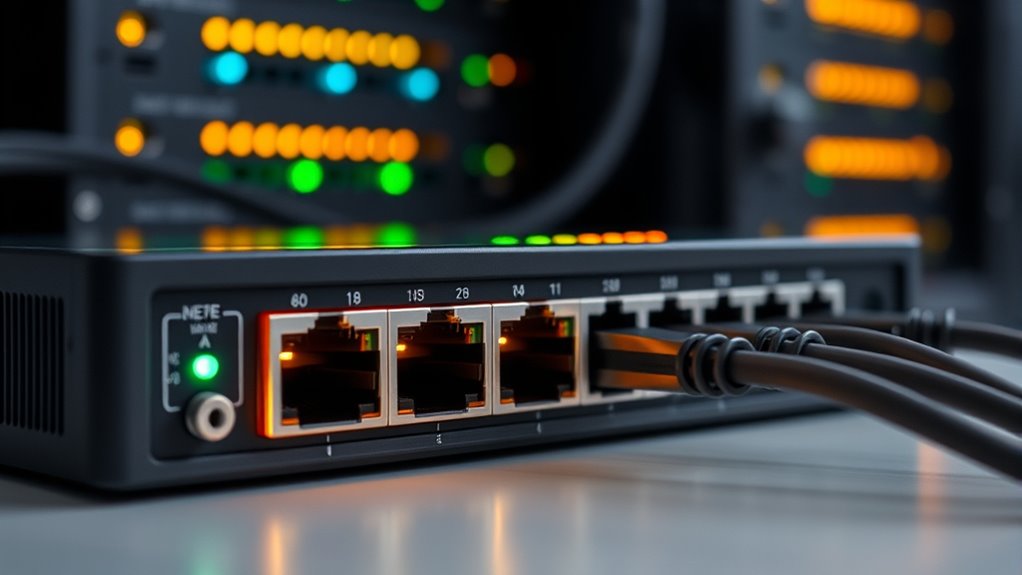

Backwards compatibility in Ethernet means your newer devices can still communicate with older hardware, ensuring smooth network performance while upgrading systems. It helps you connect different Ethernet standards, like 10G and 1G, without replacing everything at once. This way, you minimize disruptions and protect your infrastructure investments. Understanding how this compatibility works can make your network more reliable and scalable, so you can confidently upgrade with ease. Keep exploring how this can benefit your setup.
Key Takeaways
- Backward compatibility in Ethernet allows new devices to communicate with older hardware seamlessly.
- It ensures network stability during upgrades by supporting mixed standards like 1G and 10G Ethernet.
- Ethernet standards are designed to coexist, enabling devices to negotiate optimal connection modes.
- It facilitates gradual network upgrades without replacing all devices at once, saving costs and time.
- Backward compatibility supports future-proofing, scalability, and maintaining reliable connectivity over time.

Backward compatibility in Ethernet guarantees that newer network devices can communicate seamlessly with older ones, maintaining network stability and protecting your investment. This feature is vital when you’re planning a network upgrade, as it allows you to introduce new equipment without disrupting existing systems. By guaranteeing device interoperability, backward compatibility minimizes downtime and reduces the need for costly replacements, making your network more flexible and adaptable over time.
Backward compatibility in Ethernet ensures seamless communication between new and old devices, safeguarding your investment and maintaining network stability.
When you add a new switch or router to your network, you want to make sure it can work with your existing hardware. Ethernet standards evolve, with newer versions offering faster speeds and improved features, but they often retain compatibility with older standards. For example, a device supporting Ethernet 10G can typically connect with a device running Ethernet 1G, thanks to backward compatibility. This means you don’t have to replace all your older equipment at once; instead, you can upgrade gradually, integrating new devices as needed. This phased approach saves money and time, avoiding major disruptions while still boosting your network’s performance.
Device interoperability is at the heart of backward compatibility. It allows devices built on different standards to communicate effectively, even if they were designed years apart. Ethernet standards like 100BASE-T, Fast Ethernet, Gigabit Ethernet, and 10-Gigabit Ethernet are designed to coexist within the same network, thanks to compatibility protocols and negotiation features. For instance, when a new device connects to an older switch, they negotiate the best possible connection speed and mode, ensuring smooth operation. This interoperability makes your network more resilient and adaptable, accommodating future upgrades without requiring a complete overhaul.
Furthermore, backward compatibility helps future-proof your infrastructure. As technology advances, you’ll be able to introduce cutting-edge devices without sacrificing connectivity. You can upgrade parts of your network without worrying about losing access to legacy systems or facing compatibility issues. This flexibility is especially important in enterprise environments where downtime can be costly, and seamless connectivity is critical. By choosing devices that prioritize backward compatibility, you ensure your network remains robust, scalable, and ready for future innovations. Additionally, the ability to support high-speed data transfer ensures your network stays efficient as demands grow.
Frequently Asked Questions
Does Backward Compatibility Affect Network Speed?
Backward compatibility can slightly affect your network speed because it guarantees legacy protocols and older hardware still work together. While newer devices are faster, integrating older hardware may limit overall performance, as they might not support the latest standards. This interoperability allows smooth connectivity but can introduce minor bottlenecks, especially if your network relies heavily on legacy protocols or outdated hardware, slightly reducing ideal speeds.
Can Newer Ethernet Devices Operate With Older Hardware?
You can definitely use newer Ethernet devices with legacy hardware, easing interoperability challenges. While it might seem intimidating, many modern devices are designed with backward compatibility to guarantee seamless integration. This means you won’t need to replace all your equipment at once, saving you money and frustration. Embrace the flexibility of newer Ethernet tech, and enjoy a smoother upgrade path without sacrificing your existing hardware.
What Are the Limitations of Backward Compatibility?
You might face interoperability challenges when relying on backward compatibility, as newer Ethernet devices may not fully support legacy devices. Limitations include reduced performance, since older hardware might not handle higher speeds or advanced features, and potential compatibility issues that can hinder seamless network integration. These constraints mean you need to carefully consider legacy device support when upgrading, to make certain your network remains reliable and efficient without unexpected disruptions.
How Does Backward Compatibility Impact Network Security?
You might worry that backward compatibility weakens network security, but it doesn’t have to. While it can introduce network security vulnerabilities if older devices lack the latest security features, you can mitigate this by performing regular firmware update requirements. Staying vigilant guarantees that even compatible devices maintain security standards, preventing potential threats from exploiting vulnerabilities in outdated hardware or software.
Is Backward Compatibility Necessary for All Ethernet Applications?
You don’t need backward compatibility for all Ethernet applications, but it’s often essential for legacy support and hardware interoperability. When older devices need to connect with newer equipment, backward compatibility guarantees seamless communication without replacing existing infrastructure. This flexibility helps you avoid costly upgrades and maintains network stability. However, for specialized or future-focused applications, compatibility might be less critical, allowing you to prioritize newer standards for enhanced performance.
Conclusion
Think of Ethernet backward compatibility like a universal translator at a global gathering. It guarantees your old devices can still join the party without missing a beat, while new devices bring fresh language and capabilities. This seamless communication keeps the network lively and connected, no matter how much technology evolves. Embrace this harmony, and you’ll always be part of the conversation, no matter which “language” your Ethernet devices speak.