

When you work with cables, understanding testing and certification standards becomes essential to guarantee safety and reliability. These standards set the benchmarks for quality, performance, and safety across different applications. Knowing how organizations like IEC, UL, and IEEE enforce these guidelines can help you avoid costly mistakes. But what specific procedures do these standards require, and how do they influence your project’s success? Exploring these questions can make all the difference.
Key Takeaways
- International standards like IEC, UL, and IEEE define testing procedures and acceptance criteria for cable certification.
- Insulation resistance tests verify cable insulation durability and electrical safety before market approval.
- Continuity testing ensures the integrity of conductors, detecting breaks or manufacturing defects.
- Proper documentation of testing results supports compliance, certification, and quality assurance processes.
- Skilled training and quality assurance practices are essential for accurate testing and maintaining certification standards.
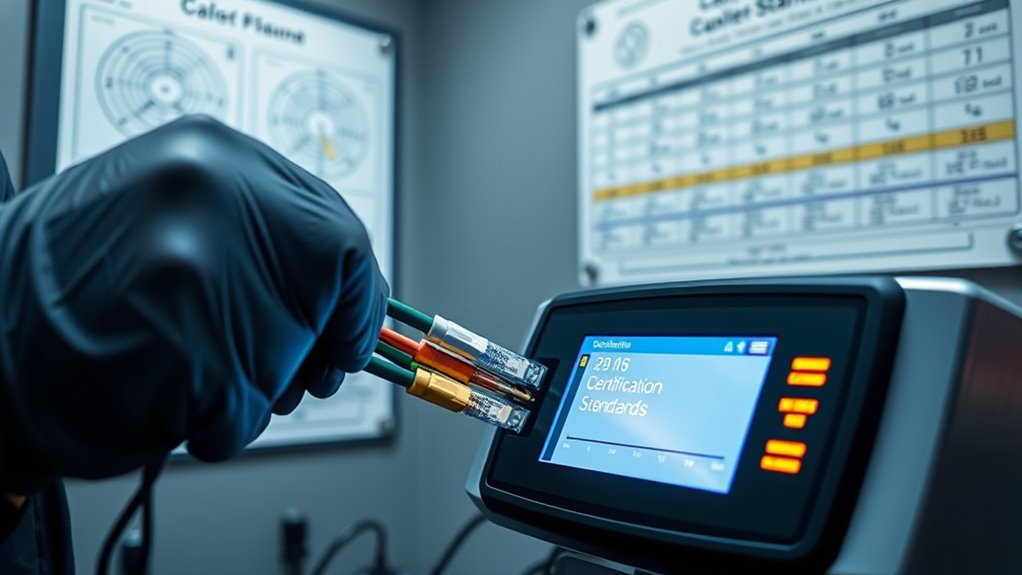
Have you ever wondered how the safety and performance of cables are guaranteed before they hit the market? It all starts with rigorous testing and certification processes that ensure cables meet strict standards. When manufacturers produce cables, they don’t just rely on quality materials; they subject each batch to a series of tests designed to verify their electrical properties and durability. Two critical tests in this process are insulation resistance testing and continuity verification. These tests are fundamental in determining whether a cable is fit for use and compliant with safety standards.
Insulation resistance testing measures how well the cable’s insulation can withstand electrical stress without breaking down. You might think of it as a way to check if the insulation material can resist leakage currents over time. High insulation resistance indicates that the cable’s insulation is effective, preventing short circuits, electrical shocks, and fire hazards. During testing, an insulation resistance tester applies a high voltage across the insulation and measures the resistance. If the reading falls below the acceptable threshold, it signals potential issues with the insulation material, prompting further investigation or rejection of the cable. This step is essential because insulation failure is one of the leading causes of electrical faults, and catching it early ensures only safe, reliable cables reach the market.
Insulation resistance testing ensures cables can withstand electrical stress and prevent faults.
Continuity verification, on the other hand, confirms the integrity of the electrical circuit within the cable. It’s a straightforward but crucial test that checks if the conducting wire is continuous and has no breaks or faults. When you perform a continuity test, you send a small current through the conductor and verify if it completes the circuit. If the circuit is complete, the tester indicates continuity; if not, it reveals a break or disconnection. This process helps identify manufacturing defects, damage during handling, or faulty connections that could compromise the cable’s performance. Ensuring continuity is especially critical in complex installations where a single broken conductor can lead to system failure or safety hazards.
Together, these tests form the backbone of cable certification standards. They’re not just about meeting regulatory requirements but also about guaranteeing that the cables you use are safe, durable, and reliable. Manufacturers must document the results, often including detailed reports, to demonstrate compliance during certification processes. These standards are set by international organizations like IEC, UL, and IEEE, which specify acceptable ranges and testing procedures. By adhering to these standards, manufacturers ensure their products can withstand real-world conditions, reducing risks and increasing confidence for end-users. Additionally, training and skill in testing procedures are vital for accurate results and maintaining high quality. Ultimately, the thorough testing for insulation resistance and continuity verification helps keep you safe and ensures the cables perform exceptionally throughout their lifespan.

Klein Tools ET600 Multimeter, Megohmmeter Insulation Tester, 4000 Ohms Resistance, 125V/250V/500V/1000V, Auto-Ranging TRMS Multimeter
- Insulation Resistance Testing: Measures up to 4000MΩ at various voltages
- Easy Testing Operation: Test and lock buttons for straightforward use
- Voltage Detection & Safety: Warning alarm and high voltage icon
As an affiliate, we earn on qualifying purchases.
As an affiliate, we earn on qualifying purchases.
Frequently Asked Questions
How Often Should Cable Testing Be Performed in a Facility?
You should perform cable testing at regular intervals, typically every 1 to 3 years, depending on your facility’s inspection frequency and the cable’s environment. Conducting testing more frequently is advisable if cables are exposed to harsh conditions or heavy usage. Regular testing ensures your cables remain safe and compliant, helping you identify potential issues early and maintain peak performance. Adjust testing intervals based on your specific operational needs and standards.
Are There Specific Standards for Outdoor vs. Indoor Cables?
Yes, there are specific standards for outdoor versus indoor cables. You should consider weather conditions and material durability when choosing cables for outdoor use, as outdoor cables need to withstand elements like rain, UV exposure, and temperature fluctuations. Indoor cables, on the other hand, require less weather resistance but should still meet durability standards for everyday wear and tear. Always select cables that match their intended environment for safety and longevity.
What Are the Latest Updates in International Cable Certification Requirements?
You should know that the latest updates in international cable certification requirements emphasize fiber optic cables meeting stricter environmental compliance standards. New regulations focus on improving durability, safety, and performance in various environments. You’ll need to guarantee your cables pass rigorous testing for flame retardancy, moisture resistance, and temperature tolerance. Staying current with these updates helps you maintain compliance and ensures your fiber optic installations are reliable and environmentally responsible across different regions.
How Do Testing Standards Differ for High-Voltage Versus Low-Voltage Cables?
You’ll find that testing standards for high-voltage cables focus heavily on dielectric strength and insulation resistance to make certain they can withstand higher electrical stresses without failure. In contrast, low-voltage cable standards emphasize flexibility and insulation integrity under normal operating conditions. High-voltage testing often involves more rigorous dielectric tests, while low-voltage cables prioritize insulation resistance measurements to confirm safety and performance.
Can Portable Testing Equipment Meet All Certification Standards?
Portable testing equipment can often meet certification compliance, but it depends on the device’s capabilities and the standards you’re aiming for. You need to make certain that the portable equipment you select is validated for your specific testing requirements. While it offers convenience and flexibility, some certification standards may require more advanced or stationary testing setups for full compliance, so verify the equipment’s specifications thoroughly before relying on it.
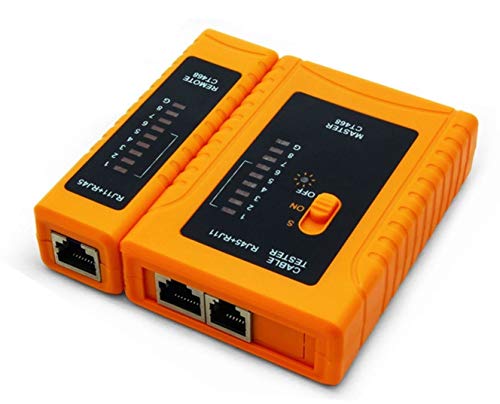
iMBAPrice – RJ45 Network Cable Tester for Lan Phone RJ45/RJ11/RJ12/CAT5/CAT6/CAT7 UTP Wire Test Tool
- Automatic Test Functions: Checks continuity, open, short, crossed wires
- LED Status Display: Visual indicator for test results
- Cable State Testing: Detects line DC, ringing, open, short, cross
As an affiliate, we earn on qualifying purchases.
As an affiliate, we earn on qualifying purchases.
Conclusion
So, next time you plug in that “certified” cable, remember—without proper testing standards, it’s basically a lottery. While organizations like IEC and UL may seem to have it all figured out, don’t be surprised if your cable’s “safety” is more wishful thinking than fact. After all, relying on certifications without understanding the rigorous testing behind them is like trusting a magician’s hat—looks impressive, but don’t expect real safety.

DIY USB Cable Tester Soldering Kit, PEMENOL 9-in-1 USB Cable Checker for USB Type A/C, RJ45, Lightning, Micro B, Mini B, Electronics Project for School Home Data Wire Fast Detection
- Cable Compatibility: Supports USB, RJ45, Lightning, Micro B, Mini B
- Dual Power Modes: Battery-powered or USB-powered operation
- Transparent Acrylic Case: See internal components and LEDs
As an affiliate, we earn on qualifying purchases.
As an affiliate, we earn on qualifying purchases.

EM415Pro Automotive Wire Tracer Circuit Breaker Finder, 6-42V Short Circuit Finder Electrical Tester, Cable Tracker & Voltage Detector with 7 Inch Flexible Probe for Car and Low Voltage DC Diagnostics
- Fast Open & Short Circuit Detection: Identify wiring issues quickly with audible feedback
- Hidden Wiring Tracing: Follow wires behind panels and under carpets
- DC Voltage Testing: Suitable for 6-42V automotive electrical systems
As an affiliate, we earn on qualifying purchases.
As an affiliate, we earn on qualifying purchases.



![Paged Out #9 [Pdf]](https://cables-and-networks.com/wp-content/uploads/2026/07/paged-out-9-pdf-featured-260x140.jpg)