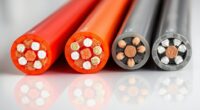
Like a seasoned navigator choosing the right path, deciding between stranded and solid Ethernet cables depends on your specific needs. Each type offers distinct advantages, but understanding when to use one over the other can considerably impact your network’s performance and durability. Are you setting up a temporary patch cord or planning a permanent installation? The answer could change everything. Let’s explore the key differences and what makes each suitable for different situations.

Get business pricing on networking and server gear
- Business-only prices and quantity discounts
- Tax-exempt purchasing
- Multiple users, one account, clear invoices
Key Takeaways
- Use solid cables for permanent, fixed installations like wall outlets and long-distance runs.
- Choose stranded cables for flexible, temporary, or movable setups such as patch cords.
- Opt for solid cables when high bandwidth and minimal interference are priorities over long distances.
- Select stranded cables in environments requiring frequent bending, repositioning, or durability.
- Consider fiber optic connections for high-speed, stable links; stranded cables are suitable for portable or quick setups.
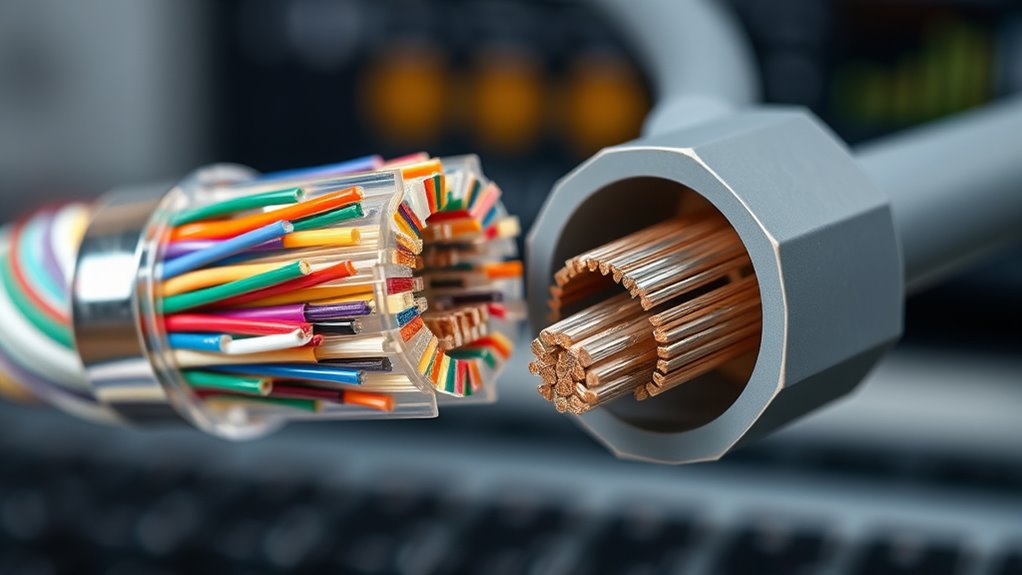
When choosing Ethernet cables, understanding the differences between stranded and solid cables is essential, as each type offers distinct advantages depending on your networking needs. Solid Ethernet cables feature a single solid conductor inside, making them ideal for long-term, stable connections. They’re typically used in fixed setups, such as wall outlets or permanent networking runs, where the cable isn’t moved frequently. Because of their construction, solid cables provide excellent signal transmission over longer distances, which is vital if you’re working with high-bandwidth applications or need a reliable connection for devices like servers or desktop computers. They’re also less prone to interference, ensuring consistent performance, especially when paired with fiber optic connections that demand high quality data transfer.
However, if your setup involves frequent cable moves or temporary connections, stranded Ethernet cables are more suitable. These cables contain multiple smaller strands of wire twisted together, providing greater flexibility and durability. You’ll find stranded cables handy in environments where you need to run cables around corners, through tight spaces, or between devices that might be repositioned often. Their flexibility reduces the risk of damage due to bending or twisting, making them a practical choice for patch cords or temporary networking setups. While they may not transmit signals as effectively over long distances as solid cables, their flexibility compensates in dynamic environments, especially in office settings or for connecting wireless access points where wireless connectivity often complements wired infrastructure. Additionally, stranded cables are often used in flexible wiring applications, where adaptability is crucial.
When it comes to integrating fiber optic technology, the choice between stranded and solid Ethernet becomes even more relevant. Fiber optic cables handle much higher data rates and longer distances without signal degradation, but the Ethernet cables you use alongside or within your network should match your needs. For stationary connections to fiber optic hubs or switches, solid Ethernet cables are generally preferred because they offer stability and superior signal integrity for high-speed data transfer. Conversely, if you’re setting up temporary or mobile connections that link to wireless connectivity points, stranded cables might be more practical, especially if you need to frequently reposition equipment.
Ultimately, your decision hinges on your specific use case. For permanent, high-performance setups, solid Ethernet cables usually provide the reliability and long-range benefits you need, especially when working in tandem with fiber optic infrastructure. For flexible, short-term, or mobile connections, stranded cables deliver the ease of installation and durability required. Both types serve vital roles in modern networks, and understanding their differences helps you make the right choice for your environment.
Ethernet cable stranded vs solid
As an affiliate, we earn on qualifying purchases.
As an affiliate, we earn on qualifying purchases.
Frequently Asked Questions
Can Stranded Cables Support Higher Data Transfer Speeds Than Solid Cables?
Stranded cables don’t support higher data transfer speeds than solid cables because fiber flexibility and signal interference depend more on cable quality and shielding. While stranded cables are more flexible and better for frequent movement, solid cables typically offer better performance over longer distances, with less signal interference. If your setup involves stationary installations, solid cables are usually the better choice for maintaining high-speed, reliable connections.
Are Stranded Cables More Resistant to Environmental Damage Than Solid Cables?
Are stranded cables more resistant to environmental damage? Not necessarily. While they offer greater flexibility benefits and easier installation, especially in tight spaces, they aren’t designed to withstand harsh conditions like moisture or extreme temperatures. Solid cables, on the other hand, are more durable outdoors or in industrial settings. So, consider your environment carefully—stranded cables excel in flexibility, but for environmental resilience, solid cables are often the better choice.
Which Cable Type Is Better for Outdoor Networking Installations?
For outdoor networking, stranded cables are better due to their UV resistance and flexibility, making them suitable for outdoor environments. They can withstand weather conditions and are easier to route around obstacles. Solid cables, while offering better data transmission, are less flexible and prone to damage outdoors. So, if you’re installing outside, opt for stranded Ethernet cables to guarantee durability and ease of installation.
Do Stranded Cables Have a Longer Lifespan Than Solid Cables?
Stranded cables generally don’t have a longer lifespan than solid cables; in fact, solid cables tend to be more durable over time due to their rigid construction. When you compare durability, solid cables often outperform stranded ones, especially in fixed installations. From a cost-effectiveness perspective, solid cables are usually more economical long-term because they last longer and maintain consistent performance. So, for longevity, solid cables are often the better choice.
Are Stranded Cables Easier to Install in Tight Spaces Than Solid Cables?
Ironically, stranded cables are often seen as easier to install in tight spaces, thanks to their flexibility benefits. While solid cables might seem more rigid, stranded cables bend and twist more easily, reducing installation challenges in confined areas. So, if you’re working in a cramped setup, stranded cables let you maneuver with less effort. Just remember, their flexibility makes them more forgiving in tight spots, easing your installation process.
high quality Ethernet patch cords
As an affiliate, we earn on qualifying purchases.
As an affiliate, we earn on qualifying purchases.
Conclusion
So, next time you’re choosing between stranded and solid Ethernet cables, remember—if you want your connection to suddenly fail after a little movement, go with solid. On the other hand, if you prefer flexibility and a bit of chaos, stranded cables are your best friend. Ironically, the very qualities that make stranded cables perfect for mobility can also make your network less stable. Sometimes, stability isn’t as glamorous as flexibility—unless you enjoy surprises.
permanent Ethernet wall outlet cables
As an affiliate, we earn on qualifying purchases.
As an affiliate, we earn on qualifying purchases.
flexible Ethernet cables for office
As an affiliate, we earn on qualifying purchases.
As an affiliate, we earn on qualifying purchases.
Fall Picks
fall essentials
As an affiliate, we earn on qualifying purchases.