
If you’re choosing between fusion and mechanical splicing for fiber, consider your project’s needs. Fusion splicing offers lower ongoing costs, higher performance, and durable, nearly seamless connections, but requires expensive equipment and skill. Mechanical splicing is easier and faster to set up, making it suitable for quick repairs or small jobs, but may have higher long-term maintenance. If you want to discover more about which method suits your project best, keep exploring the details below.
Key Takeaways
- Fusion splicing offers lower long-term costs and minimal signal loss, ideal for large-scale, permanent fiber installations.
- Mechanical splicing is quicker and easier to deploy, suitable for short-term, emergency, or small-scale projects.
- Fusion splicing requires expensive equipment and skilled technicians, whereas mechanical splicing involves simpler, more accessible tools.
- Fusion splicing provides more durable, stable connections with less maintenance over time.
- Mechanical splicing is cost-effective initially but may incur higher costs due to frequent adjustments or replacements.
Are you trying to decide between fusion splicing and mechanical splicing for your fiber optic connections? Understanding the differences can help you make the right choice, especially when it comes to cost and installation complexity. Fusion splicing generally involves higher initial costs, but it offers lower ongoing maintenance expenses. The equipment needed for fusion splicing is more expensive upfront, including precision splicers and protective sleeves. However, once set up, the process creates a nearly seamless connection with minimal signal loss, reducing the need for frequent repairs. Mechanical splicing, on the other hand, usually comes with lower initial costs since it uses simpler devices like splice trays and alignment fixtures. This makes it more accessible if you’re working within a tight budget or on smaller projects. But over time, the cost can add up because mechanical splices tend to have higher insertion loss and require more frequent adjustments or replacements, especially in environments with vibration or temperature fluctuations.
When it comes to installation complexity, fusion splicing demands a higher skill level and more precise preparation. You need to strip, clean, cleave, and align the fibers accurately before the actual splicing process, which can take more time and training. The equipment is also more sensitive, requiring careful calibration and maintenance. This makes fusion splicing less suitable for quick or DIY setups unless you have experienced technicians. Mechanical splicing, by comparison, is more straightforward. It involves simply cleaning the fibers, aligning them in the splice holder, and securing the connection with a mechanical fixture. This simplicity translates into faster installation times and less training needed, making it ideal for emergency repairs or small-scale deployments. However, the ease of installation with mechanical splicing can come at the expense of long-term performance, especially in demanding environments.
Ultimately, your decision depends on your specific needs. If you’re working on a large project where long-term performance and minimal maintenance are priorities, investing in fusion splicing makes sense despite the higher initial cost and installation effort. Conversely, if you need a quick, cost-effective solution for a temporary or small-scale connection, mechanical splicing can be a practical choice. Both methods have their merits, but understanding the trade-offs in cost comparison and installation complexity ensures you select the best option for your fiber optic network.

Signal fire New Model AI-9 Fusion Splicing Six Motor Core Alignment Fiber Fusion Splicer Automatic FTTH Fiber Optical Welding Splicing 5S Heating 15S
【Faster Splicing & Heating】- The AI-9 fusion splicing machine uses a powerful high-speed motor that allows fast 5S…
As an affiliate, we earn on qualifying purchases.
As an affiliate, we earn on qualifying purchases.
Frequently Asked Questions
How Does Environmental Durability Differ Between Fusion and Mechanical Splicing?
You’ll find fusion splicing offers superior environmental resistance and durability factors compared to mechanical splicing. Fusion splicing creates a seamless, permanent connection, making it less vulnerable to moisture, temperature changes, and physical stress. Mechanical splicing, while easier and quicker, has weaker environmental durability because the connectors can loosen or degrade over time. For long-term outdoor use, fusion splicing generally provides better protection against environmental factors.
What Are the Training Requirements for Technicians Performing Each Splice Type?
You need to obtain technician certification for both fusion and mechanical splicing, ensuring you understand proper safety protocols. Training programs cover fiber handling, splicing techniques, and equipment operation. Certification verifies your skills and knowledge, helping you perform precise, reliable splices. Safety protocols are vital to prevent injuries and damage. Continuous education keeps you updated on best practices, ensuring high-quality work whether you’re doing fusion or mechanical splicing.
Can Fusion Splicing Be Performed on All Fiber Types Effectively?
Imagine a delicate glass bridge seamlessly joining two fragile strands. Fusion splicing can be highly effective across many fiber types, but fiber compatibility matters. Certain fibers, like some specialty or highly coated ones, may have splicing limitations, making fusion less suitable. You should assess each fiber’s characteristics first, ensuring your equipment and techniques match its specific requirements. When done correctly, fusion splicing offers a strong, low-loss connection for most standard fibers.
How Do Splice Loss and Reflection Compare Between the Two Methods?
You’ll find that fusion splicing generally results in lower splice loss and fewer reflection issues compared to mechanical splicing. Fusion splicing creates a seamless, permanent connection, minimizing signal loss and reflection problems. Mechanical splicing, on the other hand, tends to have higher splice loss and can introduce reflection issues due to the imperfect alignment and gaps between fibers. For ideal performance, fusion splicing is often the preferred method.
What Are the Maintenance Considerations Post-Splicing for Each Method?
Think of your splices as delicate bridges that need regular care. With fusion splicing, you mainly check splice protector maintenance to guarantee it’s secure, while mechanical splices require periodic calibration to keep alignment perfect. Both methods demand cleanliness and protection from environmental factors, but fusion splices generally need less ongoing adjustment. Staying vigilant keeps your fiber links running smoothly, much like a well-tended garden flourishes with proper care.

Duogalia 5-Pack Fiber Optic Quick Connector Optical Fiber Mechanical Splice for 0.25mm Bare Fiber & 0.9mm Pigtail
The package includes 5PC fiber cable quick connector.
As an affiliate, we earn on qualifying purchases.
As an affiliate, we earn on qualifying purchases.
Conclusion
When choosing between fusion and mechanical splicing, think of fusion as a seamless, glass bridge—strong and almost invisible—while mechanical splicing is like fitting puzzle pieces together—quick but with visible gaps. Fusion offers durability, like a sturdy road, perfect for long-term needs. Mechanical splicing provides speed, like a quick shortcut. Your choice depends on whether you value lasting strength or immediate convenience, each with its own image—one a smooth, unbroken path, the other a handy, temporary fix.

ofcn-013A 12 cores Fiber Optic Splice Tray
As an affiliate, we earn on qualifying purchases.
As an affiliate, we earn on qualifying purchases.
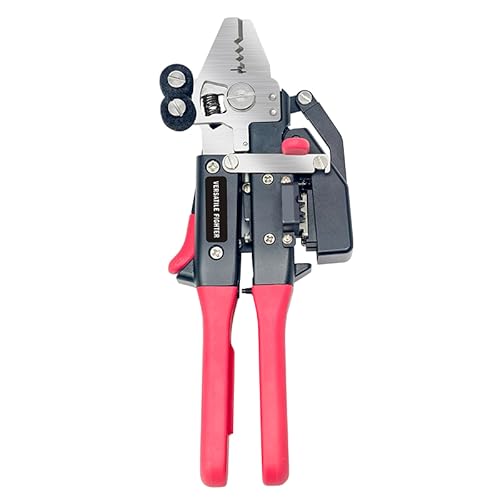
Signal fire MC 16 Integrated Fiber Stripper & Cleaver, Versatile Fighter Fiber Optic Stripper & Cutters Pliers for Wire Stripping Cutting & Cleaning, Fiber Cable Stripping Tool for Technicians
[MC 16 Integrated Fiber Stripper & Cleaver] – This is a multi-functional Versatile Fighter optical fiber stripper and…
As an affiliate, we earn on qualifying purchases.
As an affiliate, we earn on qualifying purchases.