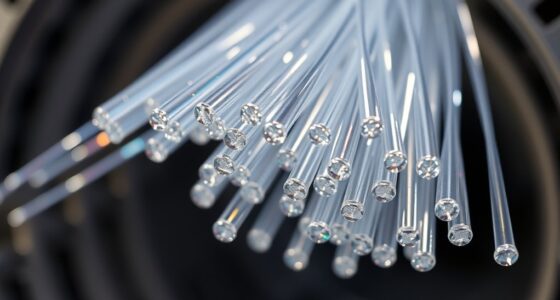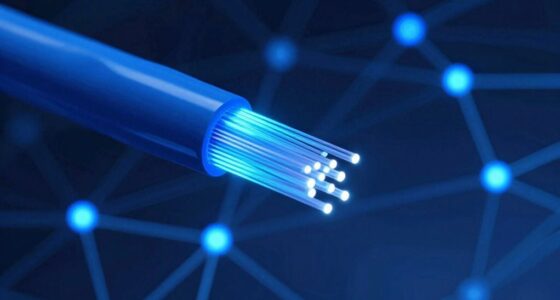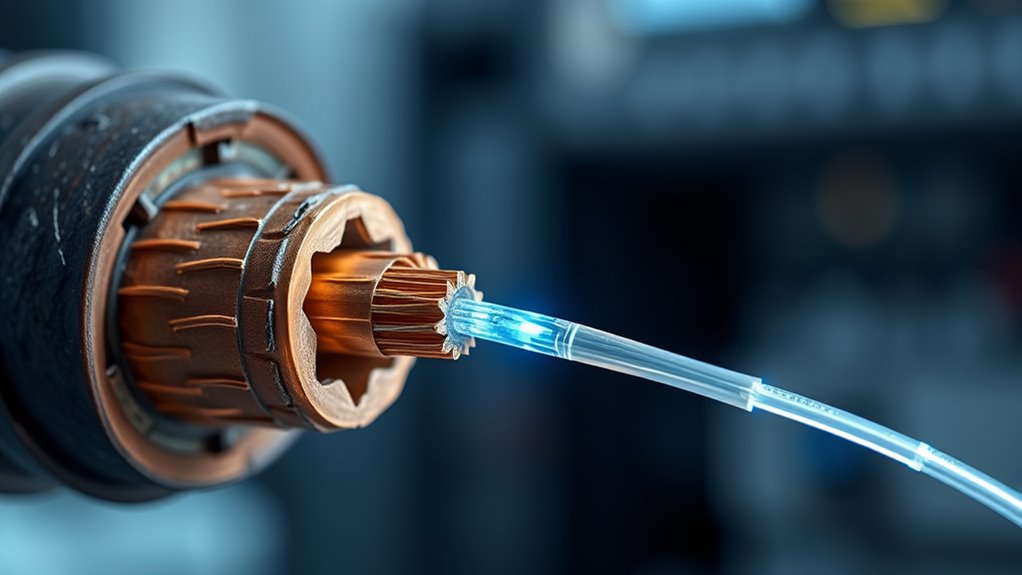

When comparing fiber optics to copper cables, you’ll find that fiber offers notable benefits in speed, capacity, and reliability. Its ability to transmit data over longer distances without signal loss makes it an attractive choice for modern networks. Plus, fiber’s resistance to electrical interference and environmental factors can substantially improve performance. As technology advances and costs decrease, understanding these advantages can help you decide whether fiber optics suit your needs better.

Get business pricing on networking and server gear
- Business-only prices and quantity discounts
- Tax-exempt purchasing
- Multiple users, one account, clear invoices
Key Takeaways
- Fiber optics offer higher data transmission speeds and greater bandwidth than copper cables.
- They transmit signals using light, making them immune to electrical noise and interference.
- Fiber optics are lightweight, flexible, and easier to install in tight or complex spaces.
- They are highly durable, resistant to corrosion, and perform reliably in harsh outdoor or industrial environments.
- Technological advancements have reduced costs and simplified upgrades, ensuring long-term cost efficiency and scalability.
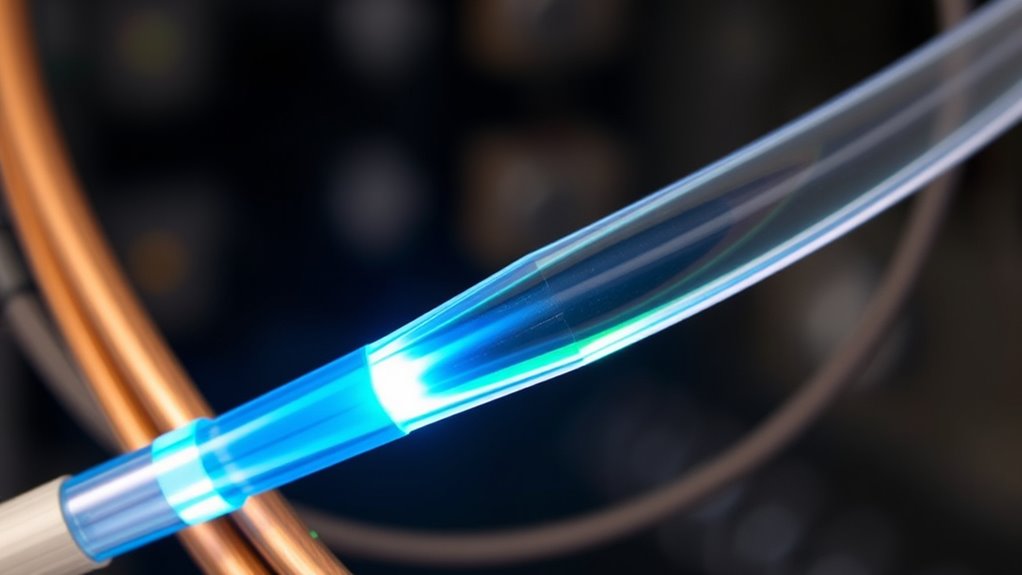
Fiber optics offer significant advantages over copper cables, especially concerning speed and capacity. When you choose fiber, you’ll experience faster data transmission rates and higher bandwidth, which means more information can flow through your network without delays. Unlike copper, which can slow down over longer distances due to signal degradation, fiber maintains its strength, guaranteeing your data arrives quickly and reliably. This makes fiber ideal for high-demand environments like data centers, large offices, or any setup where speed is critical. You won’t have to worry about signal loss or interference affecting your connection, giving you a more consistent and dependable network experience.
One of the standout benefits of fiber optics is its superior signal integrity. Copper cables are susceptible to electromagnetic interference from nearby electrical devices, which can distort signals and cause data errors. Fiber, on the other hand, uses light to transmit information, making it immune to electrical noise. This means your data stays intact from source to destination, reducing errors and the need for retransmissions. If you’re running a network that requires high precision—such as financial trading floors or medical facilities—fiber ensures your signals remain clear and accurate, minimizing downtime and boosting efficiency.
Installation flexibility is another key advantage. Fiber optic cables are lightweight and thinner than copper wires, making them easier to handle during installation. You can run fiber through tighter spaces, around bends, or over long distances without the need for signal boosters or repeaters. This flexibility reduces installation time and costs, especially in complex environments like historic buildings or data centers with limited space. Plus, fiber can be spliced or connected with minimal disruption, allowing you to expand or modify your network as your needs evolve. Whether you’re laying new fiber or upgrading existing infrastructure, the ease of installation means less downtime and a smoother transition.
Additionally, fiber’s durability and resistance to environmental factors mean you won’t need to worry about climate or physical wear and tear compromising your network. Copper cables are more prone to corrosion, especially in humid or corrosive environments, which can lead to maintenance issues. Fiber’s resilience makes it suitable for outdoor and industrial applications, ensuring your network remains robust and reliable over time. Furthermore, advancements in fiber optic technology continue to improve performance and reduce costs, making it an increasingly attractive choice for diverse networking needs.
As an affiliate, we earn on qualifying purchases.
Frequently Asked Questions
How Does Fiber Optics Handle Power Transmission Compared to Copper?
You’ll find that fiber optics aren’t designed for power transmission like copper cables. They handle signals with high integrity and minimal loss, but their power capacity is limited because they’re meant for data, not electrical power. This means you can’t rely on fiber optics for high-power applications, but they excel at maintaining signal integrity over long distances, making them ideal for fast, reliable data transfer rather than power delivery.
Are Fiber Optics More Environmentally Friendly Than Copper Cables?
You’ll be amazed at how fiber optics outshines copper cables in eco-friendliness. Their production uses fewer toxic materials, and they’re incredibly sustainable because they last longer and require less energy to operate. Plus, fiber optic cables are more biodegradable and generate less electronic waste, making them a smarter choice for a greener planet. Choosing fiber optics helps you support sustainability efforts and reduces your environmental footprint dramatically.
What Is the Lifespan Difference Between Fiber Optic and Copper Cables?
You’ll find fiber optic cables generally last longer than copper cables due to their superior cable durability. They typically have a lifespan of 25 to 50 years, while copper cables often need replacement every 10 to 15 years. This longer lifespan means less frequent maintenance, saving you time and money. Plus, fiber’s resilience to environmental factors further extends its durability, making it a more reliable choice over time.
Can Fiber Optics Be Easily Repaired if Damaged?
Fiber optics aren’t easy to repair when damaged, but it’s not impossible either. You face repairability challenges because the cables are delicate and require specialized skills. Damage detection is critical; you need precise tools to identify issues without causing further harm. While repairs can be complex, with expert handling, you can restore fiber optic cables effectively, making them a reliable choice even when accidents happen.
How Do Installation Costs Compare Between Fiber Optics and Copper?
Installation costs for fiber optics tend to be higher than for copper because of the cost comparison and installation complexity. You’ll find that fiber optic cables require specialized tools and skilled technicians, which increases expenses. However, while the initial investment is greater, fiber optics often save you money long-term through lower maintenance and higher performance. Overall, expect a more complex and costly installation process upfront compared to traditional copper wiring.
As an affiliate, we earn on qualifying purchases.
Conclusion
Choosing fiber optics over copper is a smart move for your network. With faster speeds, higher capacity, and resistance to interference, you’ll experience fewer issues and better performance. Think of it like upgrading from a dirt road to a highway—you get where you’re going quicker and smoother. As the saying goes, “A chain is only as strong as its weakest link,” and with fiber optics, your connection becomes the strongest link in your digital world.
fiber optic cable installation kit
As an affiliate, we earn on qualifying purchases.
As an affiliate, we earn on qualifying purchases.
high speed fiber optic internet modem
As an affiliate, we earn on qualifying purchases.
As an affiliate, we earn on qualifying purchases.
Halloween Picks
halloween
As an affiliate, we earn on qualifying purchases.