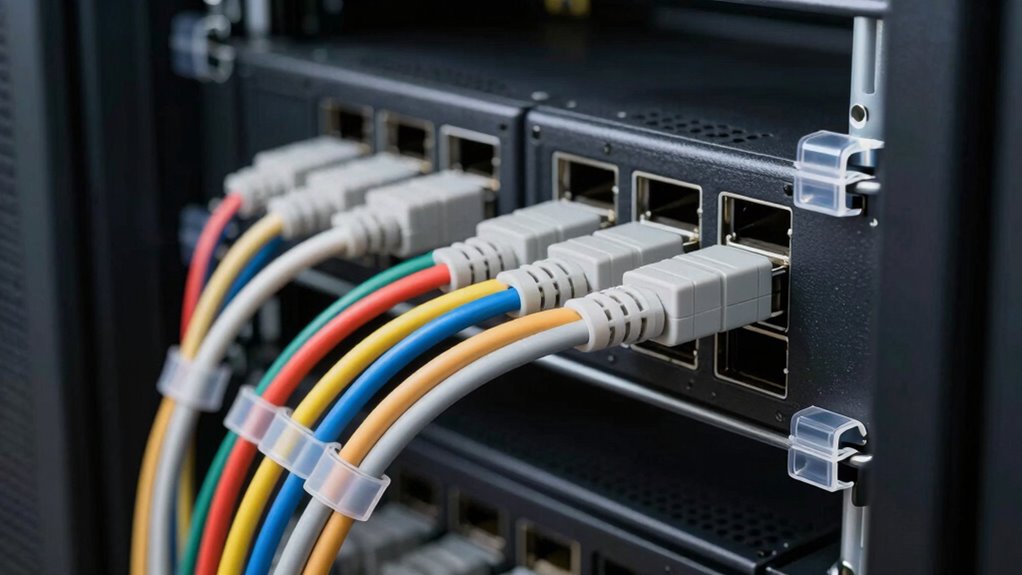

To plan better cable entry points into racks and cabinets, assess your equipment layout and identify logical entry locations to minimize cable length and crossing. Use tools like grommets, brush panels, or cable glands to protect and organize cables. Label and document all pathways for quick troubleshooting and future upgrades. Leave slack for growth and consider additional entry points. Strategic planning guarantees efficient airflow and easier maintenance—keep exploring to learn more about creating the perfect cable management system.

Get networking and server gear delivered free — and shop member deals
- Fast, free delivery on millions of items
- Access to Prime Big Deal Days deals on October 6–7
- Prime Video, Amazon Music and more included
Key Takeaways
- Assess equipment layout and identify optimal entry points to minimize cable length and crossing.
- Use protective fittings like grommets or brush panels to organize and safeguard cables at entry points.
- Plan for sufficient slack and extra entry points to accommodate future expansion and maintenance.
- Label cables clearly and document pathways for quick troubleshooting and upgrades.
- Position entry points to optimize airflow, prevent dust ingress, and facilitate easy access.

Have you ever wondered how to efficiently manage cables entering racks and cabinets? Proper planning of cable entry points is vital for effective cable management and maintaining a clean rack organization. When you’re designing or upgrading your setup, thinking ahead about where cables will come in helps prevent clutter, reduces airflow obstruction, and makes future maintenance smoother. Without strategic entry points, cables can become tangled, increase strain on connectors, and create unnecessary difficulty during troubleshooting or upgrades.
Start by evaluating your equipment layout and understanding your current or anticipated cable volume. Identify the most logical entry points on your cabinets—these should be positioned to minimize cable lengths and reduce crossing paths. For example, if your servers and switches are stacked vertically, plan for entry points at the top or bottom of the rack, allowing cables to run straight to their destination. This approach keeps cables organized and reduces slack, which can otherwise lead to clutter and accidental disconnections.
Evaluate equipment layout to strategically position entry points, minimizing cable length and crossing for better organization and efficiency.
When planning cable entry points, consider using grommets, cable glands, or brush panels. These tools not only protect cables from sharp edges but also help maintain proper cable management by guiding cables neatly through openings. Properly sealed entry points prevent dust and debris from entering the cabinet, which can compromise equipment and airflow. Positioning these entry points strategically can also improve airflow, helping to maintain ideal cooling and prevent overheating. Additionally, selecting the right cable management tools can further enhance organization and ease future modifications.
Another key factor is labeling and documenting your cable pathways from the outset. When you know exactly where each cable enters and exits, it’s easier to troubleshoot issues and perform upgrades without disturbing the entire setup. Use color-coded or numbered labels on cables and at entry points to speed up identification. This organization reduces downtime and enhances overall rack organization because you’re not rummaging through tangled cables trying to trace connections.
Finally, think about future expansion. Leave some slack at entry points for additional cables, and plan for extra entry points if you expect growth. Having a flexible cable entry plan saves you from having to redo your entire setup later. Regularly review and adjust your cable management strategies as your system evolves to maintain a tidy, efficient rack environment. Incorporating proper cable entry planning can also help prevent issues caused by cable failures or strain on connectors.
As an affiliate, we earn on qualifying purchases.
Frequently Asked Questions
What Tools Are Best for Installing Cable Entry Points?
You’ll want a drill with appropriate-sized drill bits for creating precise cable entry points, along with a punch tool to clean the edges. Using a grommet or rubber gasket helps with cable management and enhances entry point security. A cable clamp or tie ensures cables stay organized, preventing strain. These tools streamline installation, improve cable management, and maintain the integrity of your rack or cabinet, guaranteeing secure, tidy entry points.
How Do I Prevent Cable Damage at Entry Points?
Think of your cables like delicate vines reaching through a fortress wall—protecting them is essential. You prevent damage by managing cable strain with proper slack and gentle bends, avoiding tight pulls that can fray wires. Use entry sealants to cushion the point of entry, acting like a soft pillow that absorbs shock. These measures keep your cables safe, ensuring they stay strong and reliable, just like a fortress standing tall against the storm.
Can Modular Cable Entry Systems Be Expanded Later?
Yes, modular cable entry systems can be expanded later, thanks to their expandable configurations and modular flexibility. You can add or adjust components as your needs grow or change, making them a versatile choice. This adaptability guarantees your rack or cabinet remains organized and efficient over time, minimizing disruptions. With these systems, you won’t need to replace entire setups—simply expand or reconfigure to accommodate new cables or equipment.
What Are the Cost Differences Between Bulkhead and Patch Panel Entries?
You might think bulkhead entries are cheaper, but a thorough cost comparison shows patch panel entries often have lower installation expenses in the long run. Bulkhead systems usually involve higher upfront costs due to specialized hardware and labor-intensive setup. However, patch panels streamline cable management and can reduce maintenance costs over time. So, investing wisely now can save you money and hassle later, making patch panels a smarter choice financially.
How Do Environmental Factors Affect Cable Entry Point Selection?
Environmental impact influences your choice of cable entry points because factors like moisture, temperature, and dust can damage cables. You need to prioritize cable protection by selecting entry points that shield cables from environmental elements and prevent ingress of dust or water. Proper sealing and weatherproofing are essential, especially in harsh environments, to guarantee cable longevity and maintain reliable network performance.
As an affiliate, we earn on qualifying purchases.
Conclusion
By carefully planning your cable entry points, you guarantee a tidy, efficient, and accessible setup. Think ahead to avoid clutter and future headaches—after all, “A stitch in time saves nine.” When you organize your cabling from the start, you create a reliable environment that’s easier to maintain and troubleshoot. Remember, thoughtful planning now can save you time and effort later, making your rack or cabinet a model of organization and functionality.
As an affiliate, we earn on qualifying purchases.
As an affiliate, we earn on qualifying purchases.
Fall Picks
fall essentials
As an affiliate, we earn on qualifying purchases.