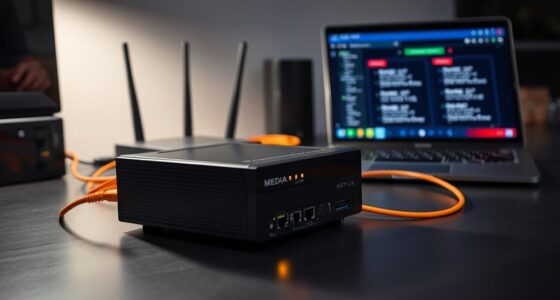
When deciding whether to use Wi-Fi or wired connections at home, you need to consider what’s most important for your internet experience. Wi-Fi offers convenience and flexibility but can pose security risks and sometimes be less stable. Wired connections, on the other hand, provide reliability and security but come with installation challenges. Understanding the trade-offs can help you choose the best setup, especially as your needs and devices evolve.
Key Takeaways
- Wi-Fi offers greater convenience and flexibility for multiple devices and easy reconfiguration, while wired connections provide enhanced stability and security.
- Wired setups are more secure due to physical access restrictions, whereas Wi-Fi requires strong encryption to prevent unauthorized access.
- Wi-Fi installation costs are generally lower and simpler, but wired networks involve higher initial costs for cables and professional setup.
- Wired connections minimize interference and signal degradation, ideal for activities needing consistent bandwidth; Wi-Fi may experience fluctuations.
- Choose Wi-Fi for mobility and ease, but opt for wired connections when prioritizing security, stability, and reliable performance.

When deciding between Wi-Fi and wired connections for your home, understanding their differences can help you choose the best option for your needs. One of the key considerations is security risks. Wi-Fi networks, especially if not properly secured, can be more vulnerable to hacking or unauthorized access. Since Wi-Fi signals broadcast through the air, someone nearby could potentially intercept your data if your network isn’t protected with strong encryption and passwords. On the other hand, wired connections tend to be more secure because they require physical access to your Ethernet cables and ports. This physical barrier makes it harder for outsiders to tap into your network without your knowledge, reducing the risk of data breaches or cyberattacks.
Another important factor is installation costs. Setting up a Wi-Fi network is generally less expensive and simpler than installing wired connections. With Wi-Fi, you mainly need a modem and a wireless router, which you can set up yourself with minimal tools and technical know-how. This means you avoid the costs of running Ethernet cables through walls, floors, or ceilings, which can be labor-intensive and costly if your home isn’t pre-wired. Wired connections, however, require running cables to each device or installing network ports in multiple rooms. If your home isn’t already wired, you might need to hire professionals to do the installation, which can substantially increase the initial investment. Additionally, wired setups might involve buying longer cables and cable management accessories, adding to the overall expense.
While Wi-Fi offers convenience and flexibility—allowing you to connect multiple devices without hassle—its security risks can be a concern if not managed properly. Securing your wireless network with strong passwords, enabling encryption, and updating firmware regularly can mitigate many threats. Wired connections, by contrast, inherently provide a more secure environment but at the cost of convenience and higher installation expenses. The decision ultimately depends on your priorities: if you want easy setup and mobility, Wi-Fi might suit you better. But if security and stability are your main concerns, investing in wired connections could be the smarter choice, despite the higher initial costs and effort involved. Additionally, understanding security in payment processing is crucial if you are conducting any online transactions from your home network.

WiFi Thermometer Hygrometer with Waterproof Probe: Smart Temperature Humidity Sensor with LCD Backlit Screen & Calibration Function, App & Buzzer Alert, Indoor Temperature Monitor for Home Pet
WIFI TEMPERATURE HUMIDITY MONITOR WITH DOUBLE ALARM: Connecting with 2.4GHz WiFi(No 5G support), you can remotely monitor the...
As an affiliate, we earn on qualifying purchases.
Frequently Asked Questions
Can I Upgrade My Wi-Fi to Improve Speed?
Yes, you can upgrade your Wi-Fi to improve speed. You should consider getting a new router upgrade, which often offers faster speeds and better coverage. Adding signal boosters can also help extend your Wi-Fi range and reduce dead zones. Make sure to position your router centrally and keep it away from interference. These upgrades can markedly boost your Wi-Fi performance, making your internet faster and more reliable.
How Secure Is a Wired Connection Compared to Wi-Fi?
A wired connection is generally more secure than Wi-Fi because it faces fewer security risks. With a wired setup, you’re less vulnerable to hacking or unauthorized access since physical access is required. Plus, wired networks often employ data encryption protocols, adding an extra layer of protection for your sensitive information. Overall, a wired connection offers a more secure environment, especially if you’re concerned about online privacy and data safety.
Will a Wired Connection Reduce Latency During Gaming?
A wired connection will drastically reduce latency during gaming, making your experience smoother than ever. Ethernet stability outperforms wireless flexibility, ensuring minimal lag spikes and faster response times. With a wired setup, you eliminate the interference and signal drops common with Wi-Fi, giving you a competitive edge. If you want the lowest latency possible, plugging in directly is your best bet—your gaming will feel like lightning on steroids.
Is It Possible to Use Both Wi-Fi and Wired Simultaneously?
Yes, you can use both Wi-Fi and wired connections simultaneously through hybrid networking. This setup allows you to manage your connections efficiently, prioritizing wired for gaming or streaming, while keeping Wi-Fi for browsing or devices farther from your router. By configuring connection management settings on your router, you ensure maximum performance and stability, making the most of both connection types without sacrificing speed or reliability.
How Does Each Connection Type Affect Energy Consumption?
Wired connections typically use less energy, making them more energy-efficient and reducing power consumption compared to Wi-Fi. When you connect devices via Ethernet, they draw less power than maintaining a Wi-Fi signal, which constantly transmits data wirelessly. If you’re focused on saving energy, using wired connections for stationary devices can lower your overall power consumption, while Wi-Fi is convenient but slightly less efficient in regards to energy use.

ThermoPro Bluetooth Thermometer Hygrometer, 260FT Range Temperature Sensor Greenhouse Thermometer, Remote App Control Temperature and Humidity Monitor with 2-Year Data Logging Export (TP351)
【Easy Bluetooth Connection】Features advanced auto-connection technology, effortlessly pairing your smart device with this bluetooth temperature monitor; Simply put...
As an affiliate, we earn on qualifying purchases.
Conclusion
Ultimately, choosing between Wi-Fi and wired connections is like selecting the right path through a bustling forest. Wi-Fi offers the freedom to roam, like a bird soaring through open skies, while wired connections are your steady anchor, like roots grounding you in stability. Consider what matters most—convenience or consistency—and let that choice be your guiding star. Whichever path you choose, make sure it leads to a smoother, more connected home experience.
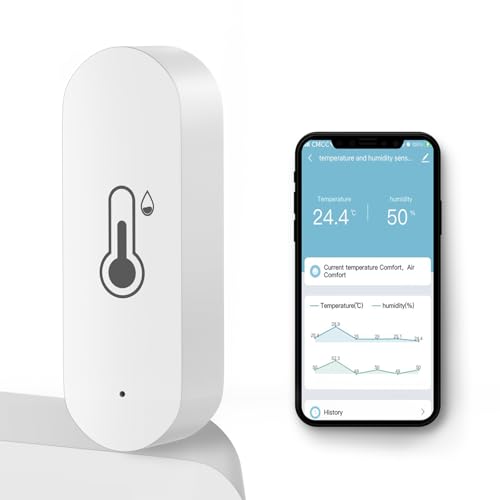
WiFi Temperature Humidity Sensor Smart Hygrometer Thermometer Sensor with APP Remote Monitor and Alert High Precision Indoor Thermometer No Hub Required, Compatible with Alexa Google Assistant
NOTE: After opening the package and taking out the thermometer, it will sense the temperature of your hand,...
As an affiliate, we earn on qualifying purchases.

tempi.fi Wireless Temperature and Humidity Sensor - Developed in The USA - 24/7 Data Logger with Alarm – Bluetooth Smart Thermometer and Hygrometer - Bluetooth Only - Not WiFi
🌡️ ACCURATE AND AUTOMATIC - Made with premium Swiss components, this wireless temperature and humidity monitor is extremely...
As an affiliate, we earn on qualifying purchases.