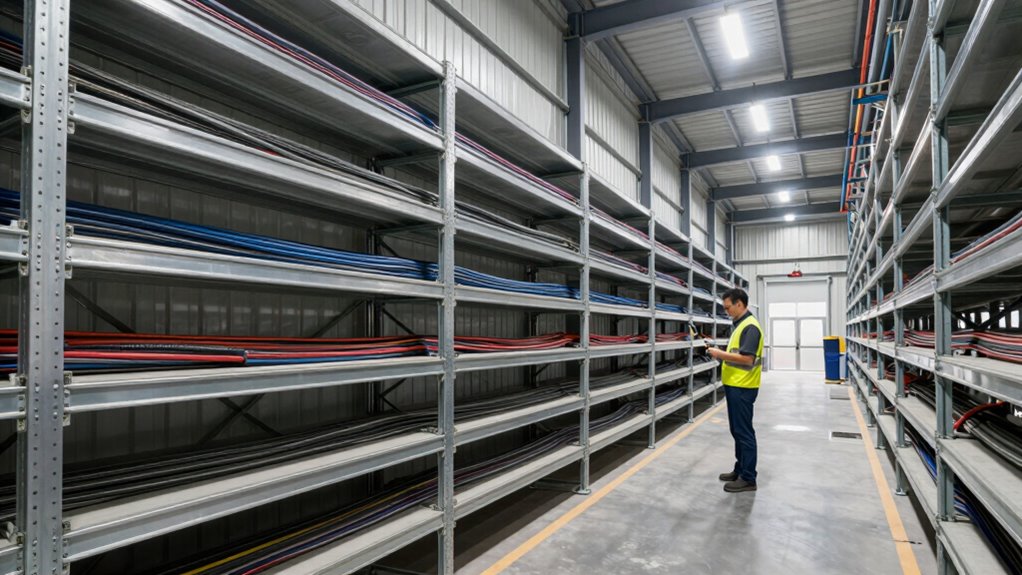

To build better cable routes in warehouses and industrial sites, you should start by mapping your workspace to identify key pathways. Use cable trays, conduits, and ties to secure and organize cables along walls, ceilings, or designated paths. Label cables for quick troubleshooting and protect them from mechanical and environmental damage. Incorporate wireless solutions where possible to further reduce clutter and hazards. Keep exploring to discover more effective strategies for a safer, more organized environment.

Get business pricing on networking and server gear
- Business-only prices and quantity discounts
- Tax-exempt purchasing
- Multiple users, one account, clear invoices
Key Takeaways
- Map workspace to identify optimal cable routes, minimizing length and obstacles.
- Use cable trays, conduits, and ties to secure and organize cables along designated pathways.
- Route cables along walls, ceilings, or dedicated pathways to enhance safety and accessibility.
- Properly label cables for quick identification and efficient troubleshooting.
- Incorporate wireless power solutions and flexible conduits to reduce clutter and adapt to future needs.
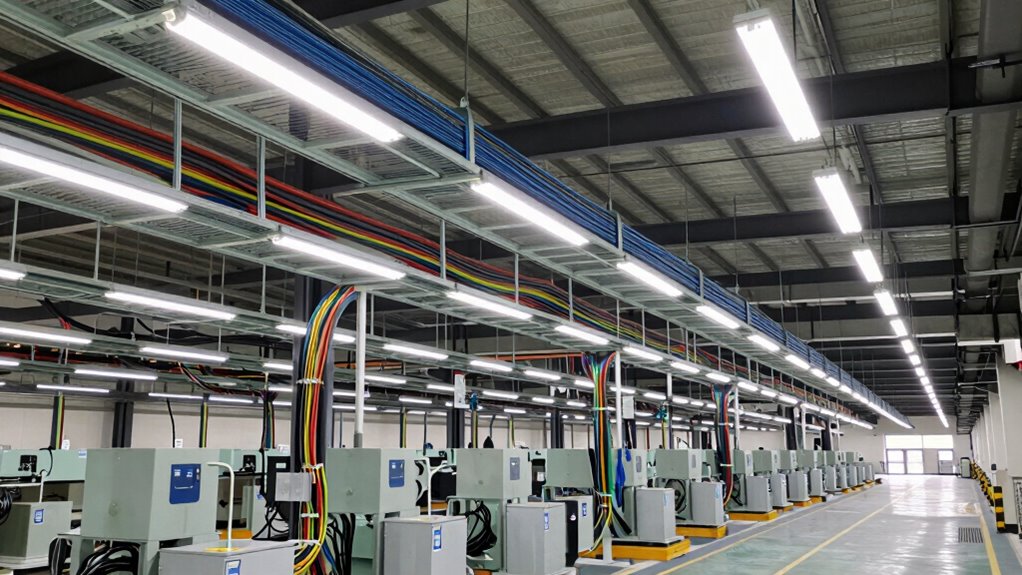
Have you ever struggled with tangled, inefficient cable routes that slow down your work or cause damage? If so, you’re not alone. Managing cables in busy warehouses and industrial sites can be a constant challenge, but adopting better cable management practices can make a huge difference. One way to start is by reducing reliance on traditional wired setups with wireless power solutions. Wireless power systems eliminate the need for extensive wiring and can streamline your environment, cutting down on clutter and the risk of cables becoming tripping hazards or suffering damage. When you switch to wireless power, you free up space and simplify your cable routes, making maintenance and troubleshooting much easier.
Switching to wireless power reduces clutter, enhances safety, and simplifies cable management in busy industrial environments.
Efficient cable management begins with planning. Map out your workspace carefully, identifying key areas where cables run and where they can be minimized or eliminated. Use cable trays, conduits, and cable ties to keep cables organized and secured. Avoid haphazardly running cables across walkways or work zones, as this creates hazards and complicates access. Instead, route cables along walls, ceilings, or designated pathways, ensuring they’re protected from mechanical stress and environmental damage. Proper labeling of cables also helps quickly identify and troubleshoot issues, reducing downtime. Additionally, understanding the importance of contrast ratio can help you select equipment with better visual clarity in your operational displays or signage. Incorporating sustainable practices in your cable management strategy can further reduce environmental impact and operational costs.
Investing in cable management accessories, such as cable raceways and modular connectors, helps keep cables tidy and accessible. Modular connectors allow you to disconnect and reconnect cables efficiently, which is especially useful in dynamic warehouse environments. When possible, leverage the vertical space by hanging cables from ceilings or walls, freeing up valuable floor space for operations. This approach not only improves safety but also enhances overall workflow efficiency. Incorporating vetted products and solutions can guarantee higher quality and durability in your cable management system, minimizing replacements and maintenance. Additionally, considering future-proofing your cable infrastructure ensures your setup remains adaptable to evolving technology needs.
Another key point is to incorporate wireless power where feasible. Wireless charging stations, for example, can power mobile equipment without the need for constant cable connection, reducing the number of cables required in high-traffic areas. This not only improves safety but also reduces the wear and tear on cables, prolonging their lifespan. Additionally, consider using cable management systems that incorporate cable sleeves and flexible conduits to protect and organize cables in harsh industrial settings. Recognizing the importance of proper infrastructure helps create a resilient and adaptable cable management system that can meet future demands.
industrial cable management tray
As an affiliate, we earn on qualifying purchases.
As an affiliate, we earn on qualifying purchases.
Frequently Asked Questions
How Often Should Cable Routes Be Inspected for Safety?
You should inspect cable routes at least every six months to guarantee safety compliance. Regular cable inspection helps identify wear, damage, or potential hazards early, preventing accidents and downtime. In high-traffic or hazardous environments, consider more frequent inspections, such as quarterly. Staying proactive with scheduled inspections keeps your cables safe, extending their lifespan and maintaining a secure workspace. Always document inspections to meet safety regulations and improve your safety protocols.
What Are the Best Materials for Durable Cable Conduits?
If you want your cable routes to stand the test of time, opt for durable conduit materials like galvanized steel, PVC, or flexible metal. Cable material selection is vital, as high-quality materials resist corrosion, impact, and wear. These choices guarantee conduit durability, safeguarding your cables from damage and reducing maintenance needs. Don’t compromise—select robust, dependable materials to keep your industrial site running smoothly and safely.
How Can I Prevent Cable Damage From Warehouse Equipment?
You can prevent cable damage from warehouse equipment by implementing proper cable protection, such as armored conduits or protective covers, especially in high-traffic areas. Make certain there is sufficient equipment clearance so cables aren’t pinched or crushed by machinery. Regularly inspect cables for wear and tear, and reposition or replace damaged sections promptly. Clear pathways and designate specific routes for equipment to minimize accidental damage, keeping your cables safe and extending their lifespan.
Are There Specific Regulations for Cable Management in Industrial Sites?
Imagine a maze of cables snaking through your warehouse, each protected and organized. Yes, there are specific regulations for cable management in industrial sites, focused on fire safety and electrical codes. These standards guarantee cables are properly routed, protected from damage, and minimize fire risks. Following these regulations helps prevent accidents, improves safety, and keeps your facility compliant with local and national safety standards.
How Do I Plan for Future Cable Expansions Efficiently?
To plan for future cable expansions efficiently, you should incorporate future planning and expansion strategies from the start. Allocate extra space in cable trays and conduits, and choose scalable routing paths. Consider modular components and flexible connectors to accommodate growth. Regularly review your current layout, anticipate your warehouse’s expansion needs, and collaborate with cable management experts to guarantee your infrastructure remains adaptable, reducing costly upgrades later on.
As an affiliate, we earn on qualifying purchases.
Conclusion
Think of your cable routes as the veins of your warehouse—steady, reliable, and unobstructed. When you plan with care and precision, you create a smooth flow that keeps everything moving seamlessly, just like a well-orchestrated symphony. A thoughtfully designed cable system isn’t just infrastructure; it’s the lifeblood that powers productivity and safety. So, lay your cables wisely, and watch your operations thrive like a healthy, vibrant ecosystem.
As an affiliate, we earn on qualifying purchases.
modular cable connectors for warehouses
As an affiliate, we earn on qualifying purchases.
As an affiliate, we earn on qualifying purchases.
Columbus Day / Indigenous Peoples' Day Picks
long weekend sales
As an affiliate, we earn on qualifying purchases.