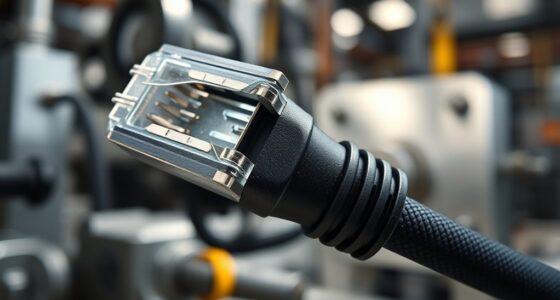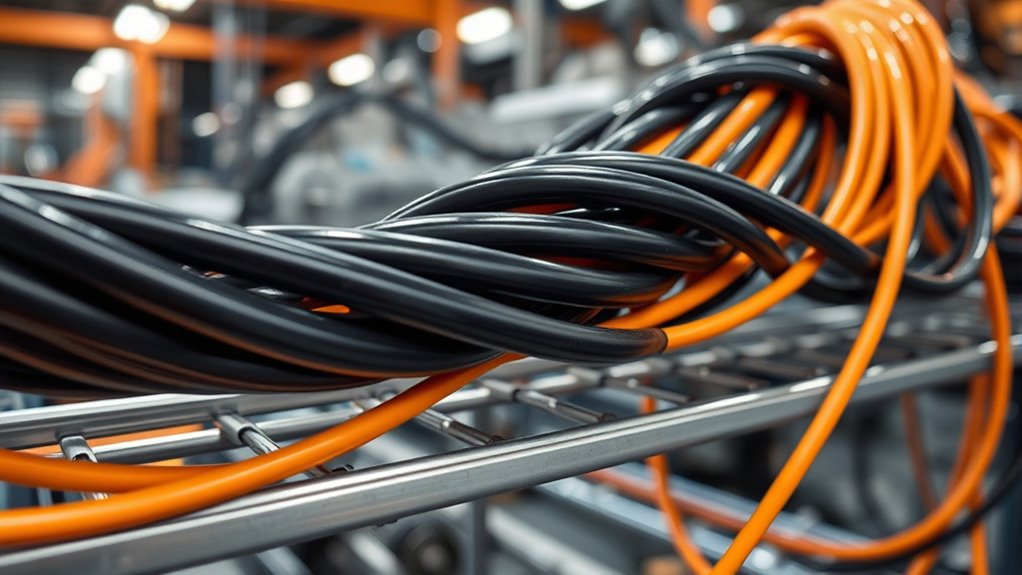

Imagine a cable as the nerve center of your system, silently bearing the stress of relentless vibrations. When you’re working in high-vibration environments, choosing the right cable isn’t just about connectivity—it’s about resilience. Proper installation and material selection can mean the difference between continued performance and costly failures. To keep your systems running smoothly under these conditions, understanding key considerations becomes essential. Let’s explore what it takes to safeguard cables against constant movement.
Key Takeaways
- Use vibration-dampening cables with built-in flexible jackets or damping materials to absorb vibrational energy.
- Secure cables firmly with vibration-resistant clamps and route along stable pathways to minimize movement.
- Select cables with durable insulation and implement strain relief techniques to prevent damage from mechanical stress.
- Regularly inspect cables for wear, cracks, or loosened fittings to ensure ongoing integrity in high-vibration settings.
- Combine shock absorption features with proper securing, routing, and high-quality cable selection for optimal performance.

When operating in high-vibration environments, selecting the right cables is essential to guarantee reliable performance and safety. Vibrations can cause significant stress on cables, leading to damage, disconnections, or failures if you’re not careful. To prevent this, you need cables that incorporate effective shock absorption features. Shock absorption allows the cable to flex and absorb vibrational energy, reducing the risk of internal wire breakage or insulation damage. Look for cables with flexible jackets or built-in damping materials that can withstand constant movement without compromising electrical integrity. These features help maintain signal quality and power delivery, even under relentless vibration. Additionally, choosing cables with durable insulation designed to resist environmental stressors can further enhance longevity in such challenging settings.
Cable securing is equally important in such settings. Properly securing cables prevents unnecessary movement that could exacerbate wear and tear. Use robust cable ties, clamps, or brackets designed for high-vibration applications to keep cables firmly in place. When securing cables, avoid overtightening, as this can stress the cable and its connections. Instead, aim for snug, supportive fastening that limits movement but doesn’t damage the cable’s outer insulation. Securing cables properly also minimizes the risk of accidental disconnections, which can be costly or dangerous in critical environments. Additionally, consider routing cables along stable, vibration-resistant paths to further reduce movement and strain.
Along with shock absorption and securing, selecting cables with durable insulation and strain relief is essential. High-quality insulation protects against environmental factors such as moisture, dust, or chemicals that can accelerate wear when combined with vibrations. Strain relief techniques, like grommets or flexible connectors, help distribute mechanical stress away from connection points, extending the lifespan of your cables. These measures are crucial because vibrations tend to loosen or degrade connections over time, leading to intermittent faults or complete failures.
Furthermore, you should regularly inspect and maintain your cables in high-vibration environments. Look for signs of wear, cracks, or loosened securing points. Promptly replacing or repairing damaged cables prevents unexpected downtime or safety hazards. When selecting cables, choose those rated specifically for vibration-heavy applications, often marked with standards or certifications that indicate their suitability. Combining shock absorption features with proper securing practices ensures your cables can withstand the rigors of high-vibration environments, maintaining both performance and safety over the long haul.
Frequently Asked Questions
How Do Vibration Frequencies Affect Cable Durability?
Vibration frequencies directly impact cable durability by causing resonance effects, which amplify stress on the cable over time. When the frequency matches the cable’s natural resonance, it accelerates fatigue failure, weakening the material and increasing the risk of breakage. You should select cables designed to withstand specific vibration levels and frequencies, and consider damping solutions to reduce resonance effects, thereby extending the cable’s lifespan in high-vibration environments.
Are There Specific Cable Materials Resistant to Long-Term Vibration?
Did you know that over 60% of cable failures in vibration-prone environments result from material fatigue? You should choose materials like silicone rubber or Teflon that withstand long-term vibration. Your cable design also matters—opt for flexible, strain-relieved structures to reduce stress. By carefully selecting materials and optimizing your design, you can substantially increase cable longevity even in challenging, high-vibration conditions.
What Maintenance Practices Prevent Cable Failure in High-Vibration Settings?
To prevent cable failure in high-vibration settings, you should regularly perform resonance mitigation checks and adjust installation techniques. Use proper cable supports and secure connections to minimize movement and stress. Inspect for signs of wear or damage, and replace worn cables promptly. Ensuring proper damping and avoiding resonance buildup are essential. These practices help maintain cable integrity and extend lifespan in challenging environments.
How Do Environmental Factors Interact With Vibration to Impact Cables?
Did you know that electromagnetic interference increases cable failure risk by up to 40% in vibrating environments? You’ll find that environmental factors like temperature fluctuations cause thermal expansion, which worsens vibration effects on cables. These combined stresses can weaken insulation and connections, leading to faults. To protect your cables, consider shielding against electromagnetic interference and using flexible materials that accommodate thermal expansion, ensuring durability amidst environmental and vibrational challenges.
Can Vibration Dampers Extend Cable Lifespan Effectively?
Yes, vibration dampers can effectively extend cable lifespan by providing vibration isolation, which reduces stress on cable insulation. When you install dampers, they absorb and dissipate vibrational energy, preventing damage to the insulation and core. This not only minimizes wear and tear but also delays potential failures. Properly chosen vibration dampers guarantee your cables remain protected in high-vibration environments, ultimately improving durability and reducing maintenance costs.
Conclusion
By choosing the right cables and securing them properly, you build a resilient shield against the relentless dance of vibrations. Think of your cables as a steady heartbeat in a storm—flexible enough to bend without breaking, yet strong enough to withstand the chaos. Regular inspections and smart installation practices keep this rhythm steady, ensuring your system stays reliable and safe. When you prioritize these strategies, you create a fortress that endures the relentless march of vibration.