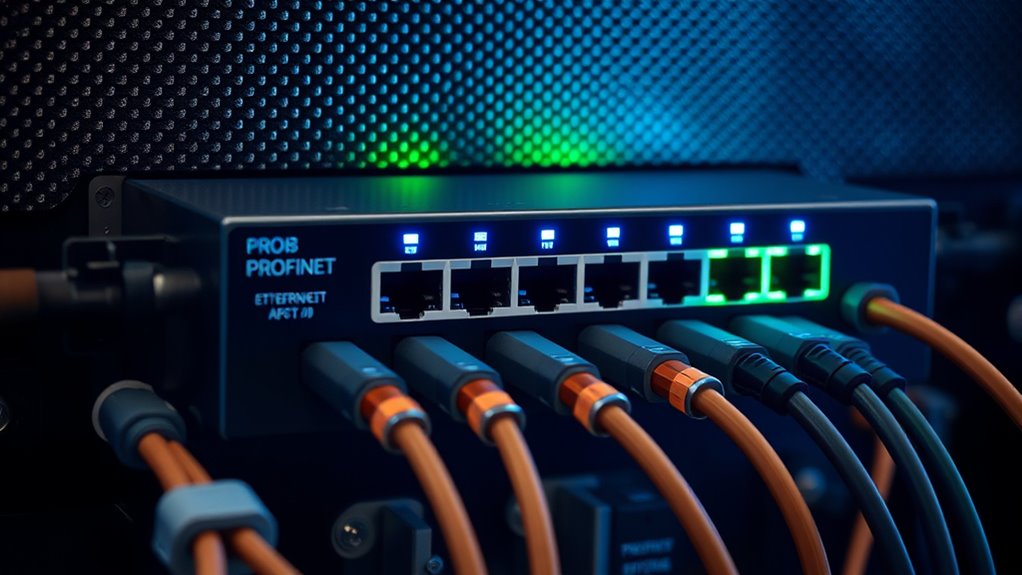

While Ethernet has become a universal networking foundation, the industrial standards built upon it, like PROFINET and Ethernet/IP, are what truly guarantee seamless, real-time communication in automation systems. These protocols address the unique demands of industrial environments, from safety to interoperability. Understanding how they enable reliable data transfer and system integration can substantially impact your operations. But how do these standards actually work to keep everything connected and secure?
Key Takeaways
- PROFINET and Ethernet/IP are industrial communication protocols built on Ethernet for real-time data transfer.
- They ensure interoperability among devices from different vendors, supporting seamless system integration.
- Both standards incorporate safety features like encryption and authentication to protect data and network integrity.
- They facilitate rapid troubleshooting and maintenance through standardized behaviors and error handling.
- These protocols conform to industry standards, ensuring reliable, safe, and efficient industrial automation operations.
Industrial standards set the benchmarks that guarantee products, services, and processes meet consistent quality, safety, and efficiency criteria. When it comes to modern automation and networking, standards like PROFINET and Ethernet/IP play an essential role in ensuring seamless communication across devices and systems. As you work with these technologies, understanding how they integrate into your operations helps you maintain high performance and safety levels, especially in environments where rapid data exchange is fundamental.
Wireless communication has become increasingly important in industrial settings, offering flexibility and reducing wiring complexity. However, adopting wireless solutions requires strict adherence to safety protocols to prevent data loss, interference, or security breaches. Industry standards help you establish reliable wireless communication channels by providing guidelines that safeguard data integrity and ensure consistent signal quality. These safety protocols include encryption, authentication, and interference mitigation, which are indispensable to prevent unauthorized access and maintain operational safety. When you implement wireless communication following established standards, you minimize risks and keep your network resilient against potential disruptions or cyber threats.
Implement wireless communication standards to ensure data security, signal quality, and operational safety in industrial environments.
PROFINET and Ethernet/IP are designed to facilitate real-time data transfer, which is essential for automation systems that depend on precise timing. They are built upon Ethernet technology, so understanding their compliance with industrial standards ensures your systems communicate effectively and safely. These standards specify protocol behaviors, data structure, and error handling, allowing you to troubleshoot issues swiftly and maintain system integrity. By following these protocols, you ensure that safety-related information is transmitted accurately, reducing the chance of miscommunication that could lead to accidents or equipment failures. Additionally, incorporating AI Security strategies can further enhance the resilience of your network against emerging cyber threats.
Moreover, these standards promote interoperability among different devices and vendors. This interoperability is indispensable when integrating new equipment into existing networks, as it guarantees compatibility and prevents costly downtime. As you upgrade or expand your automation infrastructure, relying on PROFINET and Ethernet/IP standards ensures that safety protocols are embedded into every layer of communication, from physical connections to application-level data exchange. This thorough approach helps you create a safer, more reliable industrial environment where safety protocols are not an afterthought but an integral part of your network design.

Teltonika TSW202 8 Ports Industrial L2+ Managed PoE Switch, 2 SFP Uplinks, Supports ProfiNET, EtherNet/IP, MRP, for Industrial Automation, IP Surveillance, and Networking
L2+ MANAGED PoE SWITCH – Supports L2+ management functions like VLAN, QoS, Static Routing, DHCP, Link Aggregation, Loop…
As an affiliate, we earn on qualifying purchases.
As an affiliate, we earn on qualifying purchases.
Frequently Asked Questions
How Does PROFINET Ensure Real-Time Data Transmission?
Profinet guarantees real-time data transmission through real-time synchronization and data prioritization. You benefit from synchronized communication cycles, which coordinate data exchange precisely, reducing delays. Data prioritization assigns higher priority to critical information, ensuring it’s transmitted without delay. This combination allows your automation system to operate smoothly, with timely updates and minimal latency, making Profinet ideal for demanding industrial applications where real-time performance is essential.
What Are the Main Differences Between PROFINET and Ethernet/Ip?
While both protocols facilitate industrial communication, PROFINET and Ethernet/IP differ subtly yet notably. PROFINET emphasizes minimizing network latency and enhancing device interoperability through real-time capabilities, making it ideal for precise automation tasks. Ethernet/IP, on the other hand, leverages standard Ethernet technologies, offering broader compatibility but with slightly higher latency. You’ll find PROFINET tends to be more suited for demanding applications, whereas Ethernet/IP provides flexibility and ease of integration.
Is PROFINET Compatible With Existing Ethernet Networks?
Yes, PROFINET is compatible with existing Ethernet networks, making network integration straightforward. It uses standard Ethernet hardware and protocols, so you don’t need to overhaul your current setup. Just guarantee your network supports the necessary protocol compatibility for PROFINET communications. This compatibility allows seamless integration, enabling you to connect automation devices efficiently without extensive reconfiguration or additional hardware, saving time and costs in your industrial network upgrades.
What Security Features Are Integrated Into Ethernet/Ip?
Ethernet/IP’s security features are like a sturdy fortress guarding your data. It integrates network encryption to protect information from eavesdroppers and employs access control to restrict who can connect and operate within the network. These measures help prevent unauthorized access and guarantee data integrity. By implementing these security features, you can confidently operate your industrial network knowing your critical information stays safe and secure from potential threats.
How Scalable Are PROFINET and Ethernet/Ip for Large Industrial Setups?
You’ll find that PROFINET and Ethernet/IP are highly scalable for large industrial setups, thanks to their robust network integration capabilities. They handle increasing data throughput efficiently, allowing you to expand your network without sacrificing performance. Both standards support seamless integration of new devices and segments, making them ideal for growing operations. Your network stays reliable and responsive, even as your industrial environment becomes more complex and data demands rise.

BV-Tech 8 Port PoE Switch with 1 Gigabit Uplink and Industrial DIN Rail – Power Over Ethernet Network Switch for IP Cameras, VoIP Phones, Wireless APs – IEEE802.3af/at, Wide Temperature Range
Seamless Power Distribution: Power and manage IP cameras, VoIP phones, and wireless access points with ease using the…
As an affiliate, we earn on qualifying purchases.
As an affiliate, we earn on qualifying purchases.
Conclusion
By embracing standards like PROFINET and Ethernet/IP, you open the door to a world where devices communicate seamlessly, like a well-orchestrated symphony. These protocols aren’t just technical guidelines—they’re the backbone of reliable, real-time automation. As you integrate them, remember: in the dance of industry, it’s the harmony of standards that guarantees your systems stay synchronized, secure, and ready to adapt to tomorrow’s demands. Without them, progress risks losing its rhythm.
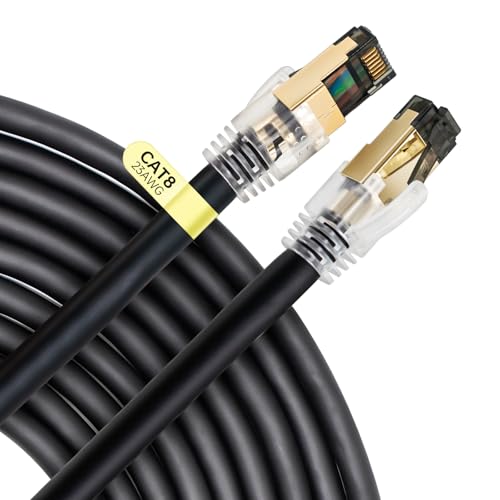
CNCOB Cat 8 Ethernet Cable 50 ft,23AWG Industrial Shielded S/FTP Anti- Wobble Internet Cable,40Gbps High Speed Gaming Waterproof Patch Cord
[ High Quality Connection ] Cat 8 Ethernet Cable is made of shielded foiled twisted pair(S/FTP) oxygen-free pure…
As an affiliate, we earn on qualifying purchases.
As an affiliate, we earn on qualifying purchases.

Network Security, Firewalls, and VPNs: . (Issa)
Available with the Cloud Labs which provide a hands-on, immersive mock IT infrastructure enabling students to test their…
As an affiliate, we earn on qualifying purchases.
As an affiliate, we earn on qualifying purchases.