
While it’s often tempting to focus solely on immediate needs, overlooking scalability in your industrial cabling infrastructure can lead to costly challenges down the line. Planning for future growth requires thoughtful design and strategic foresight, so your system remains flexible and reliable as technology evolves. The question is, how can you guarantee your cabling setup accommodates expansion smoothly without disrupting operations? Exploring best practices now can save you time and resources later.
Key Takeaways
- Incorporate structured pathways and cable trays to accommodate future cable additions comfortably.
- Select high-capacity, high-quality cables and connectors to support increased data and power demands.
- Maintain detailed documentation of current layouts and leave extra capacity for future upgrades.
- Use modular components like patch panels and conduit systems for flexible expansion options.
- Regularly review and update infrastructure to align with evolving industry standards and technological advancements.

Are you prepared to handle future growth in your industrial facility? Planning for scalability begins with understanding that your current cabling setup needs to accommodate not just today’s demands but also tomorrow’s expansion. Effective cable management is critical here. Well-organized cables reduce clutter, improve airflow, and make future upgrades smoother. When you invest in proper cable management now, you prevent costly rework later. It’s about designing a system that’s flexible enough to adapt as your operational needs evolve. Implementing structured pathways, cable trays, and secure routing methods ensures your infrastructure remains manageable even as the volume of cables increases. This foresight enables you to add new equipment or reroute existing connections without disrupting ongoing processes.
Proper cable management prepares your facility for future growth and seamless upgrades.
Future proofing infrastructure isn’t just about installing more cables; it’s about choosing the right types of cabling and connectors that can support higher data rates, increased power loads, and emerging technologies. Use high-quality cables with greater bandwidth capacity to avoid bottlenecks that could hinder productivity down the line. When planning your cabling infrastructure, consider future technology standards and ensure your current setup can support upgrades. This might include installing conduit systems or modular patch panels that make adding or replacing cables straightforward. Think about scalability from the start—anticipate growth in your operations and select components that can handle increased demands without requiring complete overhauls.
Another essential aspect is documentation. Keep detailed records of your cable layouts, specifications, and connections so future upgrades are easier to implement. Proper documentation allows your team to quickly identify and troubleshoot issues, saving time and resources. Additionally, consider leaving extra capacity in your pathways and enclosures—this provides room for additional cables without overcrowding or compromising safety standards. It’s a proactive approach that minimizes downtime and reduces the risk of damage during expansion efforts.
Finally, integrating best practices for cable management and future proofing infrastructure ensures your facility remains agile and resilient. Regularly review your cabling setup and stay informed about new technologies and industry standards. By doing so, you’ll be better equipped to plan upgrades and expansions seamlessly. Your goal should be a scalable, organized, and durable cabling system that supports your facility’s growth without sacrificing efficiency or safety. Investing in these strategies today means you’ll be able to meet future demands with confidence, minimizing disruptions and maximizing your operational flexibility. Additionally, understanding the role of high-quality cables in supporting increased data rates can significantly impact your long-term infrastructure planning.

Strike Industries Strike Gear Cable Management System Sleeve (Multicam)
The Strike Gear Cable Management System Sleeve offers a way for you to attach your switch or pressure…
As an affiliate, we earn on qualifying purchases.
As an affiliate, we earn on qualifying purchases.
Frequently Asked Questions
How Often Should I Review My Cabling Infrastructure for Scalability?
You should review your cabling infrastructure for scalability at least annually, especially during routine cabling maintenance. Regular assessments help identify potential bottlenecks and guarantee your infrastructure planning remains aligned with your growth. Keep an eye on technological updates and changing operational needs, and adjust your cabling setup accordingly. Proactive reviews ensure your system stays reliable and scalable, minimizing disruptions and supporting future expansion effectively.
What Are the Signs Indicating My Current Cabling Is Becoming Outdated?
You’ll notice your cabling is outdated when you see signs like cable deterioration, which causes signal loss or intermittent connections. Misaligned connectors can also indicate aging or improper installation, leading to connectivity issues. If you experience frequent downtime, slow data transfer, or increased maintenance costs, it’s a clear sign your current cabling needs an upgrade. Regular inspections help catch these issues early, ensuring your system remains reliable and scalable.
How Can Future Technological Upgrades Influence Cabling Design Choices?
Future tech upgrades shape your cabling design by pushing you toward fiber optic solutions and modular connectors. While copper cables may suffice now, fiber optics offer higher bandwidth and faster speeds, preparing you for bandwidth-hungry applications. Modular connectors give you flexibility to upgrade or reconfigure easily, avoiding costly rewiring. Embracing these choices guarantees your system remains adaptable, scalable, and ready to meet emerging technological demands seamlessly.
What Are Cost-Effective Ways to Upgrade Cabling Systems for Scalability?
To upgrade cabling systems cost-effectively, you should perform a thorough cost analysis to identify affordable options and prioritize upgrades that offer the best ROI. Incorporate flexible cable types and modular designs to simplify future expansions. Additionally, focus on risk management by choosing reliable, future-proof components that reduce downtime and maintenance costs, ensuring your system scales smoothly without hefty expenses down the line.
How Does Cabling Scalability Impact Overall Industrial Network Security?
You’re opening a can of worms if you ignore cabling scalability’s impact on security. As your network grows, vulnerabilities can multiply, so implementing network redundancy and robust data encryption is essential. Scalability ensures you can add new devices without compromising security, but if not planned properly, it leaves gaps for cyber threats. Stay ahead by designing scalable cabling that prioritizes security, so your network remains resilient as it expands.
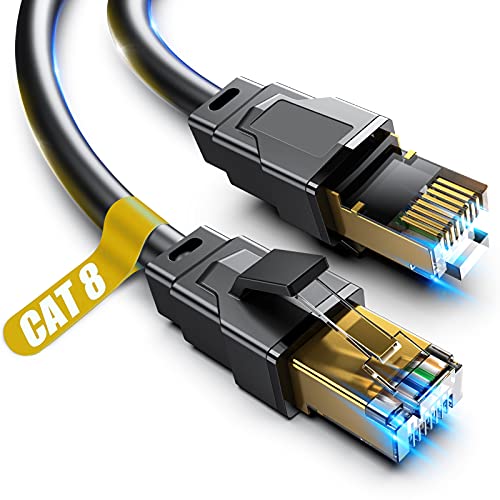
Vabogu Cat 8 Ethernet Cable 10FT, Heavy Duty 26AWG High Speed 40Gbps 2000MHz, Gold Plated RJ45 Shielded, Weatherproof Indoor & Outdoor LAN Cable for Gaming PC PS5 Xbox Modem Router
【Ultra Internet speed】Cat 8 ethernet cable support bandwidth up to 2000MHz and boosts the speed of data transmission…
As an affiliate, we earn on qualifying purchases.
As an affiliate, we earn on qualifying purchases.
Conclusion
Think of your industrial cabling system as a well-planned garden. When you plant with future growth in mind, it flourishes without constant replanting or upheaval. By designing with scalability now, you create a resilient infrastructure that adapts and thrives as technology evolves. Stay proactive, document thoroughly, and choose quality components. This way, your cabling network will be a robust garden that blossoms effortlessly, accommodating future upgrades with ease and minimal disruption.

TRENDnet 24-Port Blank Keystone 1U Patch Panel, 1U 19" Metal Rackmount Housing, Recommended with TC-K25C6 & TC-K50C6 Cat6 Keystone Jacks (Sold Separately), Black, TC-KP24
BLANK KEYSTONE 1U PATCH PANEL: The 24-Port Blank Keystone 1U Patch Panel supports standard sized Cat6 keystone jacks…
As an affiliate, we earn on qualifying purchases.
As an affiliate, we earn on qualifying purchases.

Hazztoll 100 Pack 2-Inch Galvanized Steel J-Hooks with Retainer Clips – Heavy-Duty Cable Management System for Data Centers, Conduit, Cable, Coaxial & Fiber Optic Wires – Durable Corrosion-Resistant
PRO-GRADE CABLE ORGANIZATION: With Hazztoll j hooks, securely route CAT5e/CAT6/CAT6A, coaxial, fiber optic, and electrical conduits in commercial…
As an affiliate, we earn on qualifying purchases.
As an affiliate, we earn on qualifying purchases.