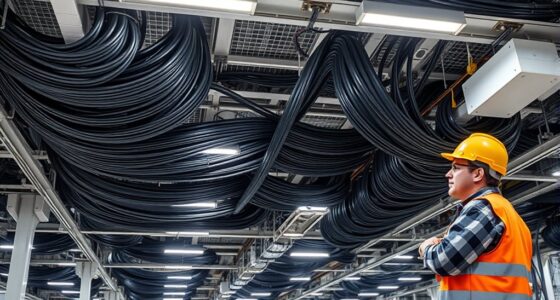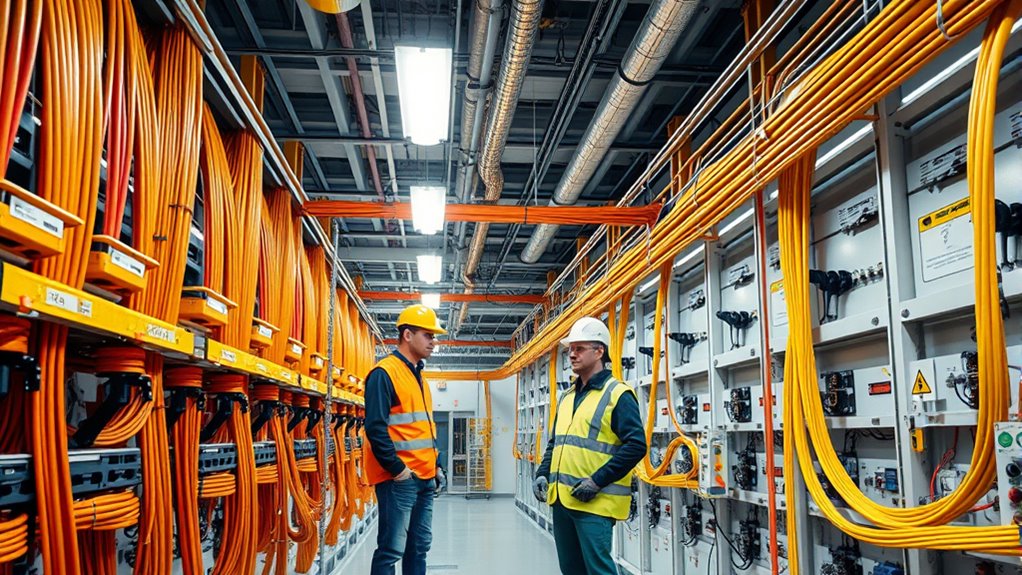

Did you know that improper cabling can lead to costly downtime and safety hazards in industrial settings? Ensuring compliance isn’t just about following rules—it’s about protecting your people, equipment, and environment. From grounding to cable marking, every detail matters. Staying up-to-date with standards and incorporating best practices can make all the difference. Curious how to create a safer, more reliable industrial environment? Let’s explore the key strategies that can get you there.

Get business pricing on networking and server gear
- Business-only prices and quantity discounts
- Tax-exempt purchasing
- Multiple users, one account, clear invoices
Key Takeaways
- Ensure proper grounding of electrical systems to prevent shocks and comply with standards like NEC or IEC.
- Use clear, durable markings on cables to facilitate maintenance, troubleshooting, and safety identification.
- Conduct regular inspections and testing to verify grounding integrity and marking legibility, ensuring ongoing compliance.
- Utilize high-quality, certified components and follow established procedures for installation and maintenance.
- Foster a safety-focused culture through continuous training, maintenance, and adherence to regulatory requirements.

Have you ever wondered what guarantees safety and compliance in industrial cabling? It all starts with strict adherence to grounding standards. These standards are essential because they ensure that electrical systems are properly grounded, preventing dangerous electrical shocks and reducing the risk of equipment damage. When grounding is correctly implemented, any fault current has a clear path to earth, minimizing hazards and enhancing overall safety. You need to verify that your cables meet the relevant grounding standards set by organizations like the National Electrical Code (NEC) or IEC. Proper grounding isn’t just a recommendation—it’s a critical requirement for safe operation and regulatory compliance.
Proper grounding standards are essential for safety and compliance in industrial cabling.
Another vital aspect that often goes unnoticed is cable marking. Clear, durable cable marking helps identify circuits, voltage levels, and specific functions. This practice simplifies maintenance, troubleshooting, and emergency response, reducing the chances of errors that could lead to accidents or equipment failure. When cables are properly marked, technicians can quickly determine their purpose and connections, which is essential for safety during installation and ongoing maintenance. Make sure your cable markings are compliant with industry standards, using permanent labels that withstand environmental factors like heat, moisture, and abrasion. Proper marking isn’t just about organization; it’s about creating a safer working environment.
In addition to grounding standards and cable marking, adhering to national and international regulations ensures your system remains compliant and safe. Regular inspections and testing verify that grounding connections are intact and that cable markings remain legible and accurate over time. These practices help catch potential issues early before they become hazards. Using high-quality, certified cables and connectors also plays a role in safety and compliance, as substandard components can compromise the entire system’s integrity.
Training your team on proper procedures is equally important. Educate them about the significance of grounding standards and the importance of accurate cable marking. When everyone understands the purpose behind these practices, they’re more likely to follow procedures diligently. This collective effort helps maintain compliance and reduces the risk of accidents caused by human error.
Ultimately, guaranteeing safety and compliance in industrial cabling isn’t a one-time task; it’s an ongoing process. Consistently applying grounding standards, maintaining clear cable marking, adhering to regulations, and fostering a safety-conscious culture are what protect people, equipment, and your operation. By paying close attention to these details, you’re not just following rules—you’re actively creating a safer, more reliable industrial environment.
Frequently Asked Questions
How Often Should Industrial Cabling Inspections Be Performed?
You should perform industrial cabling inspections at least annually, but more frequent inspection scheduling is advisable if your environment is harsh or the cables are vital for operations. Regular inspections help you identify wear, damage, or potential failures early. Incorporate maintenance best practices by documenting inspection results and addressing issues promptly to guarantee safety, reliability, and compliance. Always tailor your inspection frequency to your specific operational needs and manufacturer recommendations.
What Are the Common Signs of Cable Failure?
You might think your cables are fine until you notice visual inspection reveals frayed insulation or burn marks. Ironically, thermal anomalies often signal failure before wires actually fail, yet many overlook these warning signs. Keep an eye out for melting or discoloration, which indicate overheating. Regularly inspecting for these signs helps catch problems early, preventing costly downtime and ensuring safety. Trust your senses and don’t ignore the subtle hints of cable trouble.
Are There Specific Certifications Required for Industrial Cabling Installers?
Yes, you need to meet specific certification standards to become an industrial cabling installer. These standards guarantee your qualifications and skills are up to industry requirements. You should obtain certifications like the BICSI Installer or similar credentials, which demonstrate your knowledge of proper installation techniques and safety protocols. Meeting these qualifications helps you maintain high standards, ensures safety, and complies with industry regulations, giving clients confidence in your work.
How Does Environmental Humidity Affect Cable Safety?
You’ll find that high environmental humidity can increase the risk of cable corrosion and compromise moisture resistance, which affects safety. About 80% of electrical failures are linked to moisture-related issues. When humidity levels rise, it can cause corrosion in connectors and degrade insulation, making cables unsafe over time. To stay protected, make sure your cables are rated for high humidity environments and use appropriate moisture-resistant coatings.
What Are the Latest Advancements in Industrial Cabling Materials?
You’ll find that recent advancements in industrial cabling focus on fiber optics and fire-resistant materials. Fiber optics now offer faster, higher bandwidth data transmission, ideal for modern industrial needs. Fire-resistant materials enhance safety by preventing fires and reducing damage during incidents. These innovations help you improve system reliability, ensure safety compliance, and streamline maintenance, making your industrial operations more efficient and resilient in demanding environments.
Conclusion
By prioritizing proper grounding, clear cable marking, and regular inspections, you create a safer, compliant industrial environment. Using high-quality components and staying updated with standards protect your team and equipment. Remember, safety isn’t a one-time effort—it’s a continuous journey. As the saying goes, “A chain is only as strong as its weakest link.” Stay vigilant and committed to maintenance, and you’ll build a resilient, hazard-free workspace.
Fall Picks
fall essentials
As an affiliate, we earn on qualifying purchases.