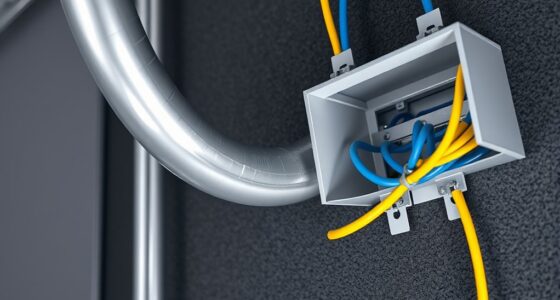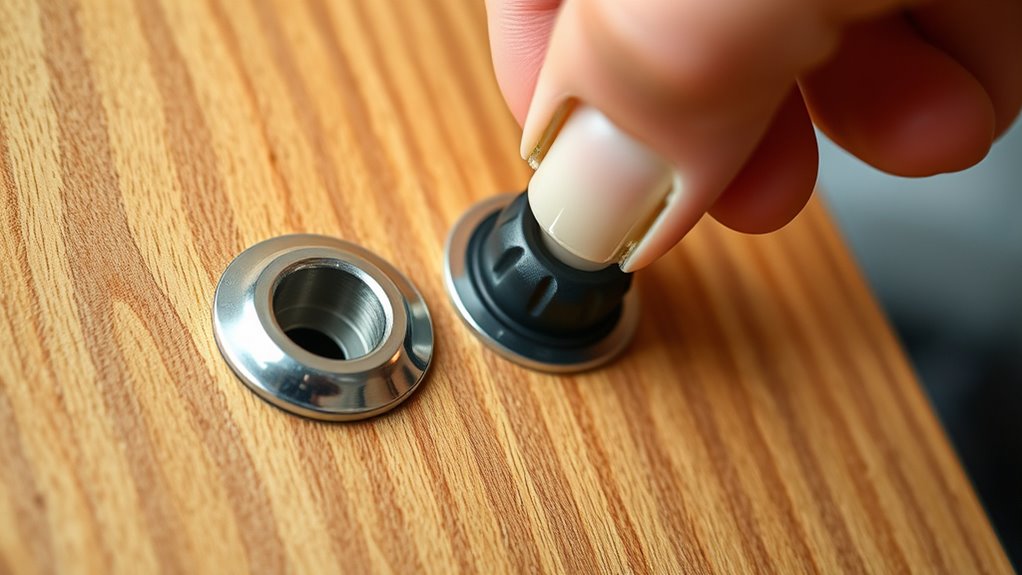

To install grommets and bushings for safe cable pass-through, select the right size and material to fit snugly in your panel or enclosure opening. Make certain the grommet sits flush to prevent sharp edges from protruding, and press it firmly into place. This creates a tight seal that guards against dust, moisture, and wear, while protecting your cables from abrasion. Keep in mind, proper installation boosts safety and durability—so, learning more can help you master every step.
Key Takeaways
- Select grommets and bushings that fit snugly to prevent movement and protect cables from sharp edges.
- Ensure proper installation, seating the grommet flush to create a tight seal against dust and moisture.
- Choose suitable materials like rubber or silicone based on environmental factors such as temperature and chemicals.
- Use appropriate tools and techniques to firmly insert grommets, avoiding damage or misalignment.
- Regularly inspect and replace worn or damaged grommets to maintain cable safety and system integrity.

When passing cables through panels or enclosures, installing grommets and bushings is essential to prevent damage and guarantee safety. Proper cable management begins with choosing the right grommets and bushings, which serve as protective barriers between sharp edges and your cables. Selecting the appropriate material is crucial; it ensures durability, flexibility, and resistance to environmental factors. Rubber, silicone, and neoprene are common options, each offering unique benefits. Rubber grommets are versatile and cost-effective, providing good cushioning and insulation. Silicone grommets withstand extreme temperatures and resist chemicals, making them suitable for demanding environments. Neoprene combines flexibility with chemical resistance, ideal for industrial settings. Your choice depends on the specific conditions your cables will face and the level of protection required.
Choosing the right grommets and bushings ensures cable protection, safety, and durability in various environments.
Material selection shouldn’t be an afterthought but a core part of your cable management plan. Consider the environment where your cables run—if they’re exposed to moisture, chemicals, or high temperatures, choose grommets made from resistant materials like silicone or neoprene. For less harsh conditions, rubber might suffice. Additionally, think about the size and shape of your cables. Grommets come in various diameters and profiles, so selecting the right size ensures a snug fit that minimizes movement and strain on the cables. Proper fitment not only enhances protection but also helps maintain a clean, organized enclosure, reducing the risk of accidental disconnections or damage.
When installing, ensure that your grommets and bushings are correctly positioned within the panels or openings. They should sit flush to prevent any sharp edges from protruding into the cable pathway, which could cause abrasion over time. Securely fitting grommets provide a tight seal that prevents dust, dirt, and moisture from infiltrating the enclosure, which is vital for maintaining the longevity of your cables and equipment. Remember, a well-chosen material coupled with accurate installation simplifies future maintenance and upgrades, as cables can be easily added or replaced without risking damage. Additionally, incorporating automation into your cable management processes can streamline installation and maintenance procedures, reducing human error.
Ultimately, effective cable management begins with thoughtful material selection and precise installation of grommets and bushings. When you prioritize these elements, you create a safer, more reliable system that minimizes wear and tear on your cables. This proactive approach not only prolongs the lifespan of your wiring but also streamlines your overall maintenance process, saving you time and resources in the long run. Properly managed cables with appropriate grommets and bushings contribute significantly to the safety, efficiency, and professional appearance of your electrical or communication systems.
Frequently Asked Questions
What Types of Cables Are Compatible With Grommets and Bushings?
You can use various cables with grommets and bushings, but check their cable insulation compatibility first. Typically, power, data, and signal cables work well, provided their insulation can withstand the grommet material choice. For instance, rubber or silicone grommets suit flexible cables, while harder plastics are better for rigid cables. Always guarantee the grommet material is compatible with your cable’s insulation to prevent damage and ensure safety.
How Do I Choose the Right Size Grommet for My Project?
To choose the right size grommet, measure the cable diameter accurately and select a grommet with an inner ring slightly larger for a snug fit. Consider material selection based on your project’s environment—rubber for flexibility, metal for durability. Use proper installation techniques, like gently pressing the grommet into the hole, to make certain a secure fit that protects cables from abrasion and sharp edges.
Can I Install Grommets Without Specialized Tools?
Yes, you can attempt DIY installation without specialized tools by using common tool alternatives. Grab a sturdy screwdriver or a hammer and a thick cloth to protect the grommet. Carefully work the grommet into the hole, gently tapping it with the hammer and cloth if needed. Be patient and precise—this proactive approach helps you avoid damage and achieve a professional finish without fancy equipment.
Are There Waterproof Grommets for Outdoor Applications?
Yes, waterproof grommets are available for outdoor applications. They’re made with waterproof materials that resist moisture and prevent water ingress, ensuring your cables stay dry and protected. These grommets are designed for outdoor durability, handling exposure to weather elements like rain, sun, and snow. Using waterproof grommets helps maintain the integrity of your setup, prolongs cable life, and keeps your outdoor installation safe and reliable.
How Often Should Grommets and Bushings Be Replaced?
You should replace grommets and bushings during your regular maintenance schedule, typically every 2 to 5 years, depending on environmental conditions. Keep an eye out for replacement indicators like cracking, hardening, or significant wear, which suggest it’s time for new ones. Regular inspections help prevent cable damage and guarantee safe, effective pass-throughs, especially in outdoor applications where weather can accelerate deterioration.
Conclusion
By installing grommets and bushings, you not only protect your cables but also prevent potential damage or accidents. It’s almost like a coincidence—when you take these simple steps, everything just works more smoothly and safely. So, next time you’re passing cables through a panel or wall, remember that a little precaution goes a long way. It’s a small effort that makes a big difference, keeping your setup secure and worry-free.