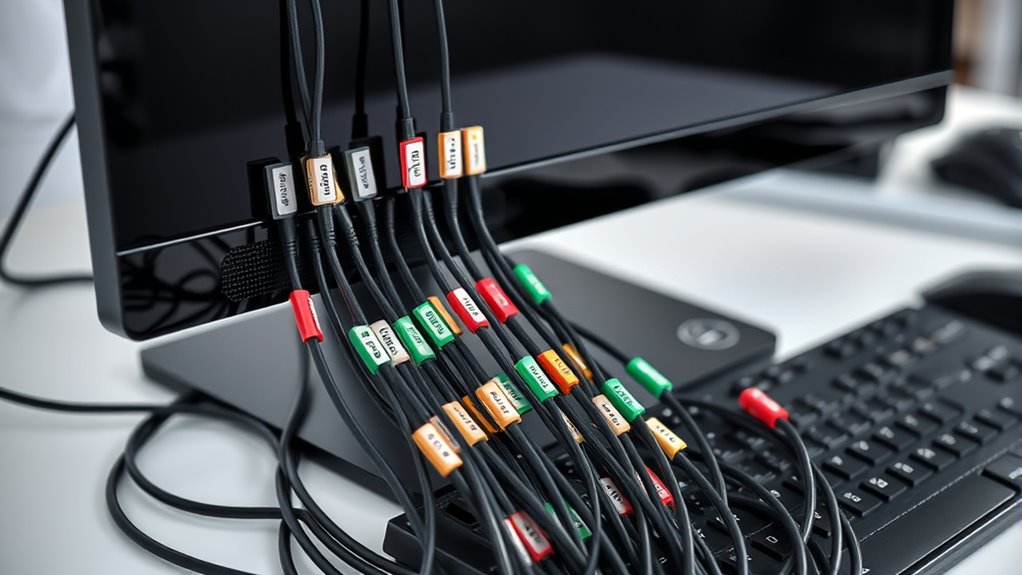

Many believe that labeling cables isn’t necessary, especially in simple setups. They think plugging and unplugging is easy enough to remember, so labels seem like extra effort. But as systems grow more complex, this assumption can cause confusion, slow down troubleshooting, and lead to costly mistakes. Considering how small an investment proper labeling requires, it’s worth questioning whether skipping this step might really save time or end up costing more later.
Key Takeaways
- Proper cable labeling prevents confusion and saves time during troubleshooting or maintenance.
- Organized labels reduce mistakes and improve system reliability in complex setups.
- Labeling enhances efficiency by making it easy to identify cables quickly, avoiding guesswork.
- Combining color coding with labels provides instant visual cues and detailed information.
- Implementing labeling practices offers long-term benefits, even if initial effort seems unnecessary.

Have you ever overlooked labeling your cables, thinking it’s unnecessary? Many people do, especially when setting up a home or office workspace. They believe that plugging in and unplugging cables as needed is straightforward enough to remember without any extra effort. However, neglecting to label cables can lead to confusion, wasted time, and even costly mistakes. That’s where simple practices like color coding and standard labeling come into play. These methods can drastically improve cable management and make troubleshooting quicker and easier. Additionally, understanding cable identification techniques can enhance your ability to organize and maintain your setup effectively. Color coding involves assigning specific colors to different types of cables or their functions. For example, you might use red for power cables, blue for network connections, and yellow for audio or video cables. By establishing a consistent color scheme, you instantly know what each cable does just by looking at it. This visual cue eliminates guesswork, especially in complex setups where multiple cables run parallel to each other. Color coding is quick to implement and highly effective, allowing you to identify and trace cables without needing to follow each one along its entire length. It’s a practical solution for both professionals and casual users who want to keep their systems organized. Standard labeling, on the other hand, involves attaching clear, descriptive tags directly onto cables. Labels can include details like the device they connect to, their purpose, or the date of installation. Using durable labels ensures that even if the cables are moved or the environment changes, the information remains intact and accessible. Standard labeling is especially useful when cables are stored away or when multiple people access the same equipment. It provides a reliable reference point that reduces errors during maintenance or upgrades. Plus, it saves you from having to trace every cable visually, which can be tedious and frustrating. Combining color coding with standard labeling offers a thorough approach to cable management. You get the quick visual recognition from colors and the detailed information from labels. This dual method ensures that anyone working with your setup can understand the system instantly, reducing downtime and preventing mistakes. It’s a small investment in time but pays off in efficiency and clarity. Ignoring these simple labeling practices might seem harmless at first, but over time, it can cause chaos, especially as your setup grows or changes. So, instead of dismissing labeling as unnecessary, consider adopting these straightforward strategies. They’re designed to keep your workspace tidy, organized, and much easier to manage, saving you headaches and effort down the line.
Top picks for "myth need label"
Open Amazon search results for this keyword.
As an affiliate, we earn on qualifying purchases.
Frequently Asked Questions
What Are the Best Labeling Tools for Cables?
You should use color coding and adhesive labels as the best tools for labeling cables. Color coding helps you quickly identify different cables at a glance, saving time and reducing errors. Adhesive labels are versatile and easy to apply, ensuring labels stay in place even in busy environments. Combining these tools makes cable management more organized and efficient, helping you avoid confusion and maintain a tidy setup.
How Long Does Cable Labeling Typically Last?
Think of your cable labels as a promise to stay clear and organized. Generally, cable labeling lasts for several years, depending on cable durability and environmental factors. High-quality labels with weatherproof and fade-resistant ink can keep their clarity for 3 to 5 years or more. To guarantee label longevity, choose durable materials and apply them properly. Regular checks help maintain your cable system’s clarity and efficiency over time.
Are There Eco-Friendly Cable Labeling Options?
Yes, you can choose eco-friendly cable labeling options like biodegradable labels and reusable tags. Biodegradable labels break down naturally, reducing environmental impact, while reusable tags can be used multiple times, cutting down on waste. These options are durable enough for regular use and help you stay eco-conscious without sacrificing organization. By switching to biodegradable or reusable labels, you support sustainability and keep your cables well-organized.
Can Labels Be Removed Without Damage?
You can remove cable labels without harm if you choose the right method. Gentle Label removal techniques, like peeling slowly or using heat, help prevent damage to the cable’s surface. Avoid harsh solvents or aggressive pulling, which risk damage. Proper removal ensures your cables stay intact and well-maintained, making future labeling easy and damage prevention a priority. Trust careful methods to keep your cables clean and functional.
How Do Labeled Cables Improve Troubleshooting Processes?
Labeled cables markedly improve troubleshooting efficiency by making cable identification quick and straightforward. When issues arise, you can instantly recognize which cable connects to specific devices, saving time and reducing errors. Proper labeling eliminates guesswork, streamlining maintenance and repairs. This organized approach ensures you spend less time searching for cables and more time resolving problems, ultimately enhancing your overall system management and minimizing downtime.
Conclusion
Don’t let the myth fool you—labeling cables is your secret weapon against chaos. It’s like giving your system a map, guiding you through the maze with confidence. When you take the time to label, you’re investing in a smoother, faster workflow and avoiding costly mistakes. Remember, a well-labeled setup is the lighthouse that keeps your work ship sailing smoothly through even the stormiest technical waters.