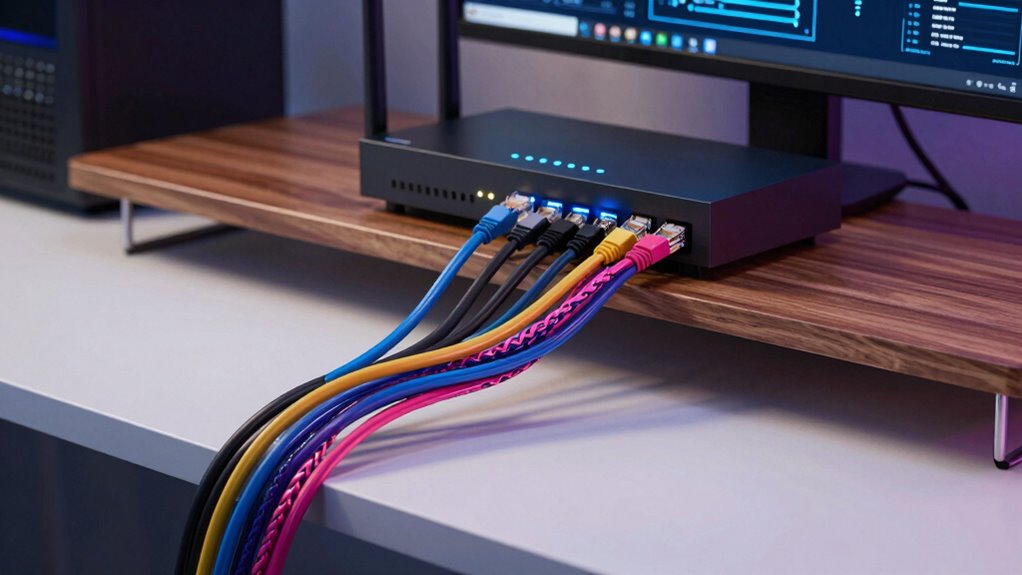

As wireless technology advances, your network needs stronger cabling to handle the increased data demands and higher speeds. Better cabling, especially fiber optics, supports the high-capacity backbones essential for seamless wireless performance. Even as wireless improves, reliable wired infrastructure ensures stability, low latency, and prevents bottlenecks. Investing in quality cabling keeps your network future-proof and ready for ongoing upgrades—if you’re curious about how this all fits together, there’s more to discover.

Get business pricing on networking and server gear
- Business-only prices and quantity discounts
- Tax-exempt purchasing
- Multiple users, one account, clear invoices
Key Takeaways
- Wireless advancements require a strong wired backbone to support increased data traffic and device connectivity.
- Higher wireless standards demand greater bandwidth, which relies on high-capacity fiber optic cabling.
- Improved wireless performance depends on stable, high-quality cabling to minimize latency and prevent bottlenecks.
- As wireless networks evolve, infrastructure must be future-proofed with durable, scalable cabling solutions.
- Better cabling ensures network reliability, supporting the seamless integration of advanced wireless technologies.
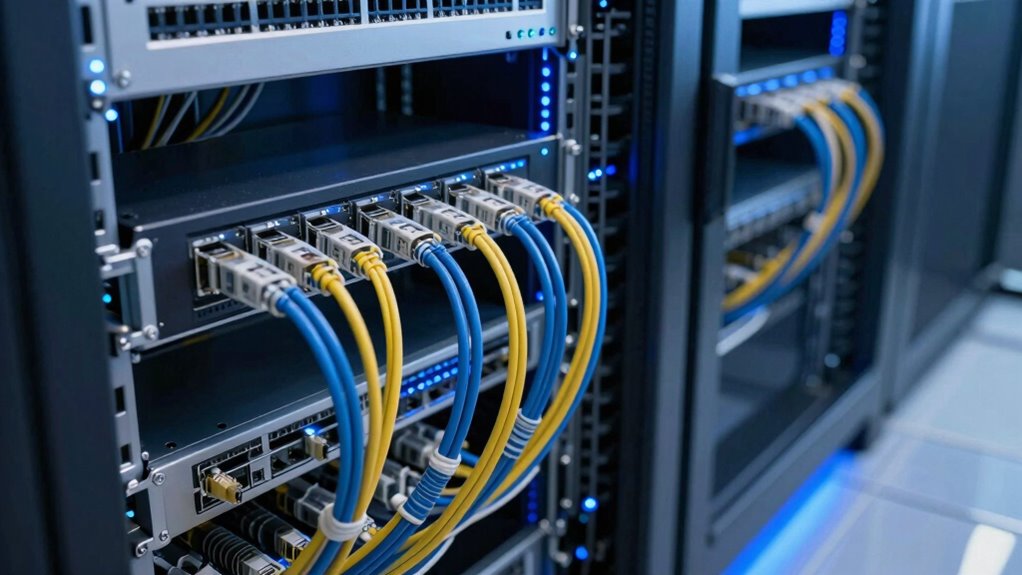
As wireless technology continues to improve, the demand for traditional cabling is evolving rather than diminishing. You might think that faster, more reliable wireless networks would make cabling less critical, but the reality is quite the opposite. Modern wireless systems rely heavily on robust network infrastructure, which depends on high-quality cabling—especially fiber optic cables. These cables are essential for supporting the vast data transfer rates needed to keep wireless signals strong and consistent. As you push for faster Wi-Fi and more connected devices, you’ll find that a solid foundation of well-designed cabling becomes even more indispensable.
Improved wireless tech increases reliance on high-quality fiber optic cabling for strong, consistent network performance.
Fiber optic cabling, in particular, plays a pivotal role in this ecosystem. Unlike traditional copper cables, fiber optics carry data at the speed of light, allowing your network infrastructure to handle increasing bandwidth demands without bottlenecks. This increased capacity is necessary because wireless improvements, such as Wi-Fi 6 and upcoming standards, require a high-capacity backbone to support seamless connectivity. You can’t achieve ideal wireless performance without first establishing a reliable, high-speed wired infrastructure. Fiber optic cables ensure that data reaches access points swiftly and efficiently, reducing latency and avoiding network congestion that could impair wireless performance. High-capacity backbone is essential for supporting the expanding data needs of modern networks.
Furthermore, as you upgrade your wireless systems to handle more devices simultaneously, the importance of well-laid cabling becomes even clearer. Wireless improvements are fantastic, but they still depend on wired connections for their backbone. Without a strong, scalable network infrastructure, your wireless signals may struggle to deliver consistent performance. Proper cabling provides the stability and bandwidth needed for these advanced wireless systems to operate at their full potential. It’s also more future-proof; fiber optic cables can support higher speeds and greater data loads as technology evolves, meaning you won’t have to overhaul your entire network infrastructure every few years. Additionally, the increasing demand for high data transfer rates places greater emphasis on the quality of your cabling infrastructure. Investing in high-quality cabling ensures your network remains resilient and capable of adapting to future technological advancements. A reliable cabling system also minimizes network downtime, which is crucial for maintaining productivity and service continuity.
The integration of network infrastructure with sustainable practices can further optimize overall system performance and longevity, aligning technological advancement with environmental responsibility. In essence, your desire for a seamless wireless experience drives the need for better cabling. As you upgrade your wireless standards and expand your network, you must guarantee your physical infrastructure is capable of supporting these advancements. Fiber optic cabling isn’t just a luxury anymore; it’s a necessity for maintaining high performance and reliability. So, even as wireless technology continues to improve, the demand for quality cabling—and a solid, scalable network infrastructure—remains a constant. You’re building a foundation that not only supports today’s wireless demands but also prepares you for the innovations of tomorrow.
As an affiliate, we earn on qualifying purchases.
Frequently Asked Questions
How Do Cable Types Affect Wireless Network Performance?
Cable types considerably impact wireless network performance. Fiber optics, for instance, provide faster, more reliable data transmission, reducing latency and boosting overall speed. Shielding materials in cables help prevent electromagnetic interference, ensuring a clearer signal. When you choose high-quality cables, such as those with advanced shielding or fiber optics, you enhance network stability and performance, supporting your wireless devices more effectively and reducing disruptions caused by poor cabling.
What Are the Cost Differences Between Upgrading Cables Versus Wireless Devices?
Upgrading cables, like fiber optics with enhanced cable shielding, can be more costly upfront but offers long-term benefits like higher speeds and reliability. Wireless device upgrades are often cheaper initially but may require frequent replacements due to interference or obsolescence. While wireless improvements boost convenience, investing in quality cabling guarantees stable, high-performance connections, ultimately reducing ongoing maintenance costs. The choice depends on your specific needs and budget constraints.
Can Better Cabling Reduce Wireless Interference Issues?
Yes, better cabling can reduce wireless interference issues. While wireless signals face challenges like signal attenuation, high-quality cables with superior shielding help minimize interference from external sources. This guarantees a more stable network connection. You’ll notice fewer disruptions, especially in environments with many electronic devices. Upgrading your cabling strengthens your overall network, making wireless performance more reliable—even as wireless tech advances and demands grow.
How Long Does It Take to Upgrade an Entire Cabling Infrastructure?
Upgrading an entire cabling infrastructure can take anywhere from a few days to several weeks, depending on the size of your facility and complexity. You’ll need time to install fiber optics for high-speed data transfer and guarantee proper cable shielding for interference reduction. Planning, coordinating with technicians, and testing the new system are essential steps. It’s a significant project, but the improved reliability and performance make it worth the effort.
Are There Environmental Factors Influencing Cabling Upgrades?
Environmental factors definitely influence cabling upgrades. You need to take into account environmental impact, such as temperature, humidity, and electromagnetic interference, which can affect cable performance and longevity. Sustainability considerations also come into play, prompting you to choose eco-friendly materials and energy-efficient solutions. While wireless tech advances, harsh environmental conditions remind you that reliable, well-maintained cabling remains essential for consistent network performance and minimizing ecological footprint.
As an affiliate, we earn on qualifying purchases.
Conclusion
Even as wireless tech keeps improving, the demand for better cabling grows like a stubborn weed in your garden. You’ll find that smoother, faster wireless won’t replace the need for reliable cabling—it’s the backbone that keeps everything running seamlessly. So, while you marvel at your wireless upgrades, remember that good cables are the silent heroes, holding it all together like the roots beneath a mighty tree, ensuring your network stays strong and steady.
As an affiliate, we earn on qualifying purchases.
scalable network cabling solutions
As an affiliate, we earn on qualifying purchases.
As an affiliate, we earn on qualifying purchases.
Halloween Picks
halloween
As an affiliate, we earn on qualifying purchases.