Coaxial cables are widely used in communication systems, mainly for cable TV, internet, and radio frequency transmission. They support reliable connections for broadband, security systems, and wireless signals. However, their limitations include physical vulnerabilities like damage from bending, moisture, and tension. Signal loss over long distances and susceptibility to interference are common issues. If you want to understand how these cables fit into modern networks and their challenges, keep exploring further.
Key Takeaways
- Coaxial cables are widely used for cable TV distribution, broadband internet, and radio frequency transmission.
- They provide reliable, high-quality signals with minimal interference over moderate distances.
- Limitations include signal attenuation over long distances and susceptibility to physical damage and environmental factors.
- External electromagnetic interference and ground loop issues can degrade signal quality.
- While durable and cost-effective, coaxial cables are increasingly complemented or replaced by fiber optics for higher bandwidth needs.
Common Applications in Telecommunications

Have you ever wondered how your internet and cable TV signals reach your home? Coaxial cables play a crucial role in many telecommunications applications. They are commonly used for cable television distribution, providing a reliable connection between the service provider and your TV. Additionally, coaxial cables support broadband internet, delivering high-speed data to homes and businesses. While fiber optic cables are increasingly popular for long-distance and high-capacity data transmission, coaxial cables still handle many local connections effectively. Wireless transmission is also common for mobile networks and Wi-Fi, but coaxial remains essential for wired connections where stability and bandwidth are critical. Overall, coaxial cables continue to be a key component in delivering diverse telecommunications services to users like you.
Role in Cable Television Systems
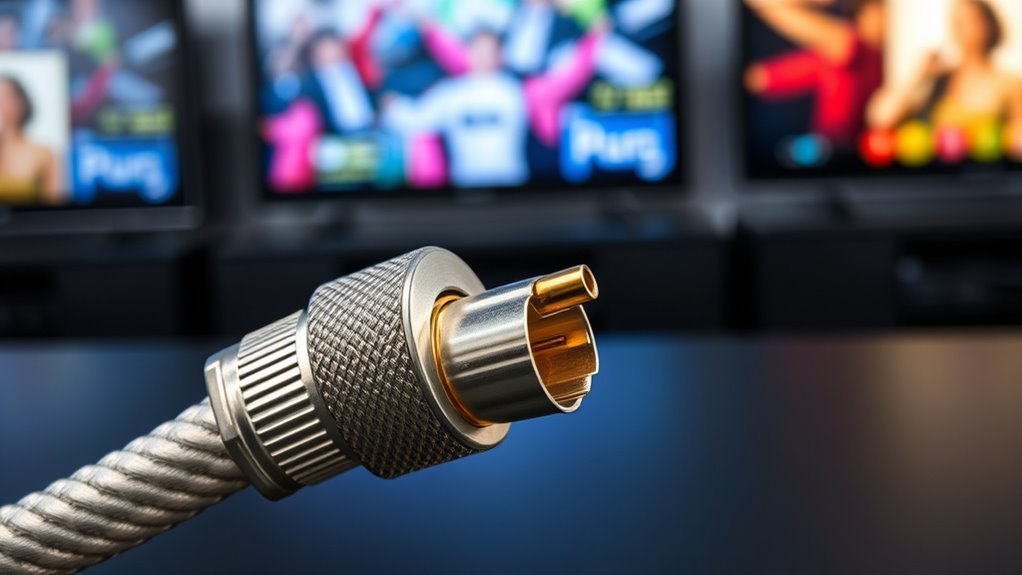
Ever wonder how your cable TV signals travel from the provider to your screen? Coaxial cables play a crucial role, carrying signals from the provider’s headend to your home. They deliver high-quality audio and video by transmitting signals with minimal interference. Today, fiber optic technology is increasingly used alongside coaxial cables to enhance signal quality and coverage over long distances. While fiber optics handle backbone connections, coaxial cables remain essential for last-mile delivery inside neighborhoods. Wireless transmission also complements coaxial systems by offering alternative distribution methods, especially in areas where laying cables is challenging. Together, these technologies ensure reliable, high-definition TV service. Coaxial cables continue to be vital in cable television systems, bridging the gap between advanced infrastructure and your living room entertainment, with high-frequency transmission playing a key role in maintaining signal integrity.
Internet Connectivity and Broadband Use

When it comes to internet connectivity and broadband use, coaxial cables provide high-speed data transmission that keeps you connected. However, signal interference can sometimes disrupt your service, especially in crowded areas. Additionally, infrastructure limitations may affect how well coaxial cables support your growing bandwidth needs. Incorporating top mattress toppers can improve overall comfort during extended usage periods, especially if you work or stream content from home. To optimize performance, understanding the types of coaxial cables available can help you choose the best option for your specific needs. Recognizing signal interference sources can also assist in troubleshooting connectivity issues and maintaining a stable internet connection. Being aware of Gold IRA options can also inform your investment decisions if you’re considering diversifying your assets for future security.
High-Speed Data Transmission
Coaxial cables play a crucial role in delivering high-speed data transmission for internet connectivity and broadband services. They provide reliable, consistent speeds essential for streaming, gaming, and large data transfers. While fiber optics offer faster speeds and higher bandwidth, coaxial cables remain a practical choice in many areas due to their durability and lower installation costs. Advancements in cable technology help enhance their performance and extend their utility in modern networks. Additionally, their ability to support high-frequency signals makes them suitable for a variety of telecommunications applications. Furthermore, ongoing innovations in cable design contribute to improved signal quality and reduced interference, ensuring better overall performance. Although advancements in fiber optics and wireless tech continue, coaxial cables remain a vital component in high-speed internet infrastructure, balancing speed, reliability, and affordability.
Signal Interference Challenges
Signal interference poses a significant challenge to maintaining stable internet connectivity and broadband performance. Ground loop issues can introduce hum and noise, disrupting data flow. Electromagnetic compatibility (EMC) is vital; poor EMC causes external signals to interfere with coaxial cables, degrading your connection. To understand common interference sources, consider this table:
| Source | Impact | Mitigation |
|---|---|---|
| Power lines | Induces electromagnetic noise, affecting signals | Proper grounding, surge protectors |
| Nearby radio signals | Cause crosstalk and data errors | Shielded cables, filtering |
| Ground loop issues | Create hum and voltage differences, disrupting data | Isolate ground connections |
Additionally, implementing proper shielding can significantly reduce external electromagnetic interference. Addressing these challenges enhances broadband stability and reduces signal loss, ensuring your internet remains reliable.
Infrastructure Limitations
Have you ever experienced slow or unreliable internet despite having a high-speed plan? Infrastructure limitations often cause this, especially in areas with power grid constraints and urban infrastructure challenges. Power grid issues can disrupt broadband services, leading to outages or reduced speeds. Urban areas, while densely populated, sometimes lack the necessary infrastructure investments to support widespread high-speed connections. These challenges hinder the deployment of coaxial cables and other broadband technologies, making it difficult to deliver consistent internet quality. Upgrading infrastructure requires significant resources and planning, which can be delayed or limited by local constraints. As a result, even with advanced coaxial cable systems, your internet experience may suffer if the broader infrastructure isn’t capable of supporting reliable, fast connectivity. Additionally, security system adoption and maintenance can be impacted by these infrastructure limitations, further affecting overall connectivity reliability. In some cases, the lack of adequate infrastructure can also impede the deployment of modern networking solutions and smart home technology. These infrastructure issues can also affect the expansion of fiber optic networks, which are often necessary to overcome some of these limitations and improve overall internet quality. Furthermore, the absence of sufficient investment in infrastructure hampers the rollout of newer technologies that could alleviate these connectivity issues.
Use in Radio Frequency Transmission
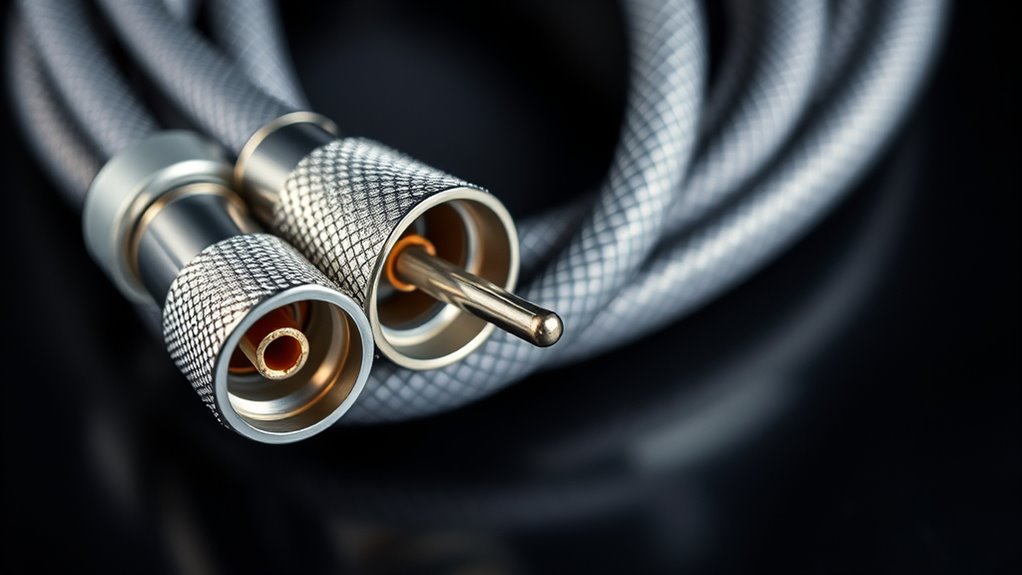
When using coaxial cables for radio frequency transmission, you benefit from their ability to maintain signal integrity over long distances. They support a wide frequency range, making them suitable for various RF applications. Plus, their shielding effectively blocks interference, ensuring clear and reliable signals. Additionally, understanding the divorce process in different states can help individuals navigate complex legal situations related to family law. The materials used in coaxial cables, such as dielectric insulation, are designed to minimize signal loss and enhance performance across different environments. Recognizing the importance of father-daughter bond can also reflect how strong connections improve overall system reliability. Proper shielding techniques are essential to prevent interference, which can compromise signal quality.
Signal Integrity Preservation
Maintaining signal integrity is essential for reliable radio frequency transmission, and coaxial cables play a critical role in this process. Their construction ensures minimal signal loss and interference, preserving signal quality over long distances. Material durability is key; high-quality materials resist wear and environmental damage, preventing degradation that could compromise signals. Additionally, cost efficiency is important, as durable cables reduce replacement and maintenance expenses, making them a practical choice for ongoing use. Proper shielding and insulation further enhance signal integrity by blocking external noise and preventing leakage. When selecting coaxial cables for RF transmission, prioritizing material durability ensures longevity, while cost-effective options help manage overall system expenses. Together, these factors help maintain consistent, high-quality signal transmission. Using high-quality cable materials also minimizes the risk of signal attenuation and interference, ensuring optimal performance in demanding environments. Understanding RF transmission principles can guide better cable selection and system design to optimize performance. Regular inspection and adherence to installation practices are vital for preserving signal integrity over time and preventing common issues such as signal degradation or noise interference.
Frequency Range Capabilities
The frequency range a coaxial cable can handle determines its suitability for various radio frequency transmission applications. Typically, coaxial cables operate effectively from a few kilohertz up to several gigahertz, making them ideal for TV signals, internet, and radio communications. Unlike fiber optics, which excel at high-frequency data transfer over long distances, coaxial cables are limited in bandwidth but still support a broad spectrum of RF signals. For wireless communication, coaxial cables connect antennas and transmitters, ensuring signal integrity at specific frequencies. Their frequency range directly impacts performance; higher frequencies require cables with minimal loss and precise construction. Understanding these capabilities helps you choose the right coaxial cable for your radio frequency needs, especially when balancing speed, distance, and signal quality. Additionally, the security of the cable connections can influence overall system robustness, particularly in sensitive communication environments.
Shielding Against Interference
Shielding against interference is essential for ensuring clear and reliable radio frequency transmissions. To achieve this, coaxial cables use electromagnetic shielding that prevents external signals from disrupting your data. Visualize this as a protective barrier around the core conductor, blocking unwanted interference. Key strategies include:
- Implementing ground loop mitigation to eliminate noise caused by differing ground potentials.
- Using foil or braided shields to reflect and absorb electromagnetic interference.
- Ensuring proper grounding techniques to maintain shielding effectiveness and prevent signal leakage.
This combination keeps your signals clean, reducing static and data errors. Proper shielding design also guards against electromagnetic interference from nearby devices, ensuring your RF transmissions stay consistent and clear.
Deployment in CCTV and Security Systems

Coaxial cables are a popular choice for CCTV and security systems because they provide reliable, high-quality video transmission over long distances. They are preferred over wireless alternatives, which can be affected by interference or signal loss, ensuring clear footage in critical security areas. While fiber optics offer even higher bandwidth and longer reach, coaxial cables remain cost-effective and easier to install in many settings. Their durable construction withstands environmental factors, making them suitable for outdoor or industrial use. You’ll find coaxial cables commonly used in surveillance setups, connecting cameras to monitors or recording devices. Although wireless options are growing in popularity, coaxial cables offer a dependable and straightforward solution for maintaining consistent, high-resolution security footage.
Advantages of Coaxial Cables in Data Transmission
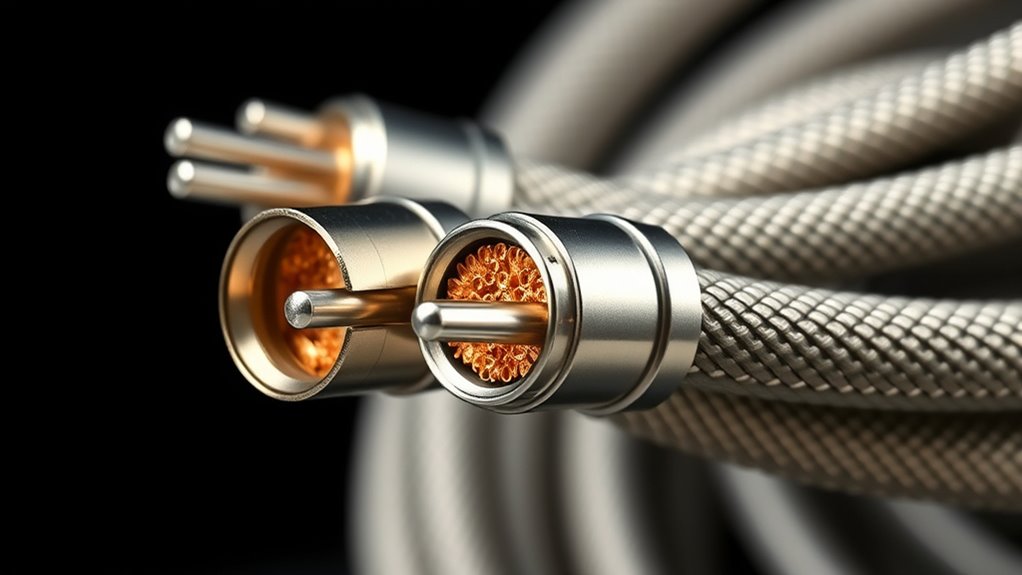
Coaxial cables provide high signal integrity, ensuring your data stays clear and accurate over long distances. They also resist interference from external sources, keeping your transmissions stable. These advantages make coaxial cables a reliable choice for data transfer.
High Signal Integrity
Because of their design, coaxial cables deliver high signal integrity by minimizing interference and signal loss over long distances. You’ll notice this through:
- A solid outer shield that blocks external noise, ensuring your data stays clear.
- The central conductor that efficiently transmits signals without degradation.
- Robust cable durability, allowing the cable to withstand environmental stress without compromising performance.
While installation complexity can be a factor, once set up, coaxial cables maintain consistent, high-quality signals. Their reliable construction helps prevent data errors and reduces the need for frequent replacements. This makes them ideal for applications demanding long-distance, high-fidelity data transmission. Overall, their design guarantees your signals stay strong, clean, and precise.
Resistance to Interference
The design features that guarantee high signal integrity also give coaxial cables a significant advantage when it comes to resisting interference. Their shielding, typically made of braided metal or foil, minimizes electromagnetic interference, enhancing electromagnetic compatibility. This shielding helps prevent external signals from disrupting data transmission and reduces the risk of ground loop issues that can cause noise or signal degradation. Because the central conductor is enclosed, coaxial cables are less susceptible to picking up radio frequency interference (RFI) and electromagnetic interference (EMI). As a result, your data remains clearer and more reliable over longer distances. This resistance to interference makes coaxial cables ideal for environments with high electromagnetic activity, ensuring your signals stay intact without needing complex filtering or additional shielding.
Physical Limitations and Vulnerabilities
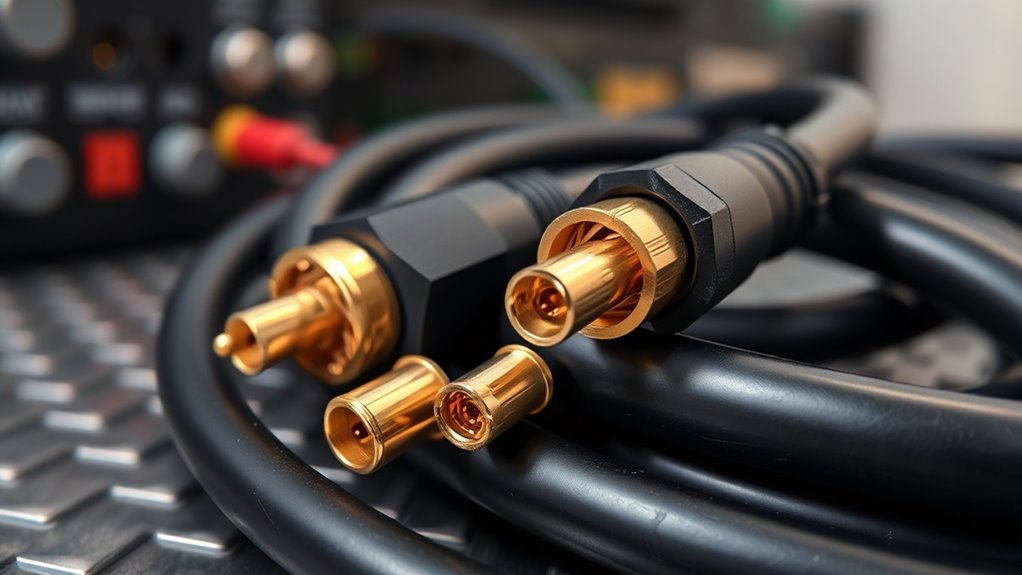
While coaxial cables are widely used for transmitting signals, they face several physical limitations and vulnerabilities that can impact performance. One major issue is signal attenuation, which weakens signals as they travel through the cable. Physical durability also matters, as external forces can damage the cable’s protective layers. Imagine:
Coaxial cables face physical limits like signal loss and damage from bending, moisture, or tension.
- Bending the cable sharply, causing internal stress and potential breakage.
- Exposing it to moisture or extreme temperatures, risking corrosion or cracking.
- Applying excessive tension during installation, compromising its structural integrity. These vulnerabilities highlight the importance of proper handling and installation. Damage can lead to reduced signal quality or complete failure. Understanding these physical limitations helps you maintain cable performance and longevity, ensuring reliable signal transmission over time.
Signal Degradation Over Long Distances
As signals travel through coaxial cables, they gradually weaken over long distances, leading to signal degradation. This happens because of distance attenuation, where the signal loses strength the farther it goes. The longer the cable, the more the signal diminishes, which can result in poor quality or loss of data. Additionally, bandwidth limitations become more apparent over extended runs, restricting the amount of information you can transmit effectively. This means that beyond a certain length, the signal may need boosting or amplification to maintain clarity. Understanding these factors helps you decide when coaxial cables are suitable and when alternative solutions might be better for transmitting signals over long distances without quality loss.
Compatibility and Installation Considerations
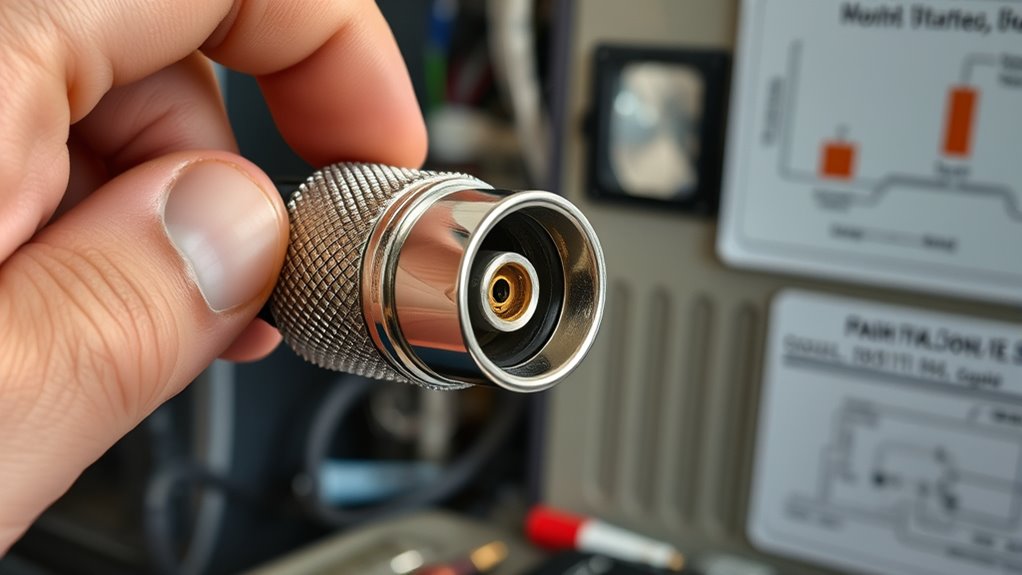
Choosing the right coaxial cable depends on guaranteeing compatibility with your equipment and understanding installation requirements. Start by checking connector types—whether it’s F-type, BNC, or RCA—to match your devices perfectly. Next, consider installation procedures: assure a clean, dry environment, avoid sharp bends, and secure connectors tightly. Visualize these steps:
- Connecting the correct connector type seamlessly without forcing.
- Running the cable along a smooth path, free of kinks or twists.
- Securing connectors with proper tools to prevent signal loss.
Matching connector types prevents compatibility issues, while following proper installation procedures minimizes signal degradation. Accurate compatibility and careful installation ensure superior cable performance, reliable signals, and longevity. Pay close attention to connector specifications and installation techniques to maximize your coaxial cable’s effectiveness.
Future Trends and Technological Improvements
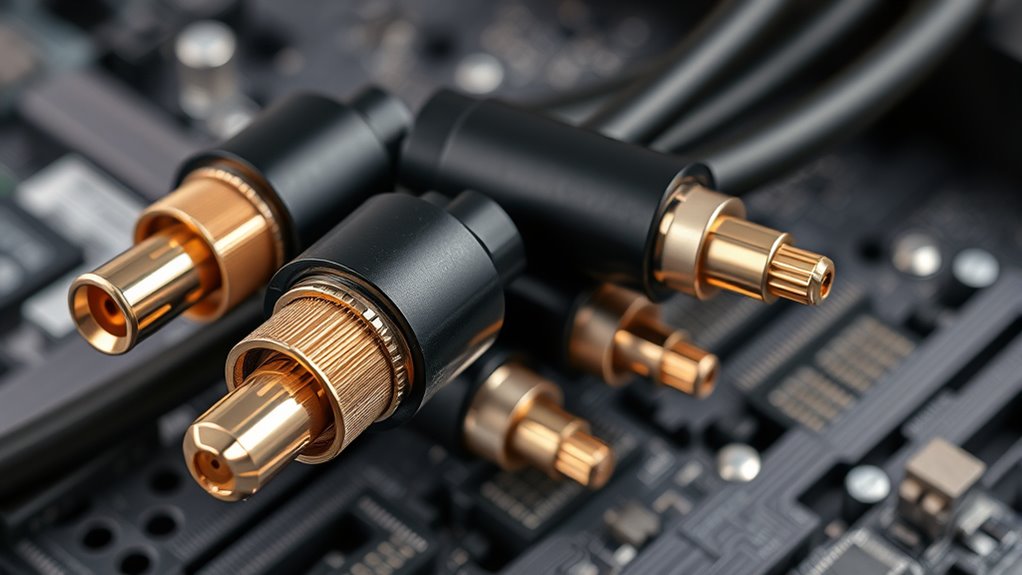
Advancements in coaxial cable technology are driving faster, more reliable connections to meet the demands of modern communication systems. Researchers are exploring hybrid solutions that combine coaxial cables with fiber optics, enhancing bandwidth while maintaining existing infrastructure. As fiber optics continue to evolve, they offer higher speeds and lower latency, making them ideal for future networks. Meanwhile, wireless alternatives like 5G and Wi-Fi are expanding, reducing reliance on physical cables altogether. However, coaxial cables remain relevant for specific applications due to their durability and cost-effectiveness. Upcoming innovations aim to improve shielding, reduce signal loss, and enable more compact designs. These technological improvements will help coaxial cables stay competitive, adapting to the growing needs for high-speed data transfer and supporting the integration of wireless and fiber optic technologies.
Frequently Asked Questions
How Do Coaxial Cables Compare to Fiber Optic Cables?
You’ll find that fiber optic cables outperform coaxial cables in many ways. They offer higher bandwidth capacity, allowing faster data transmission, and experience less signal attenuation over long distances. Coaxial cables are more susceptible to interference and have lower bandwidth limits, making them less ideal for high-speed, high-volume data needs. If you need reliable, high-capacity connections, fiber optics are the better choice, especially for modern, demanding networks.
What Are the Environmental Impacts of Using Coaxial Cables?
You’ll find coaxial cables cause considerable carbon footprints, contributing to environmental pollution through manufacturing and disposal. Their susceptibility to electromagnetic interference can lead to increased energy use and electronic waste. You should consider their environmental impact, as improper disposal releases hazardous materials, and the production process consumes resources. Overall, using coaxial cables impacts ecosystems, emphasizing the importance of eco-friendly alternatives and responsible recycling to reduce environmental harm.
Are There Safety Concerns With Handling Coaxial Cables?
You should handle coaxial cables carefully to avoid safety concerns. When working with them, guarantee proper cable insulation safety to prevent electrical shocks. Be aware that electromagnetic interference can affect signal quality, so keep cables away from strong electromagnetic sources. Always disconnect power before installation or maintenance, and wear protective gear if necessary. Proper handling minimizes risks and ensures safe, reliable operation of your coaxial cable systems.
How Recyclable Are Coaxial Cables After Their Lifespan Ends?
You can recycle coaxial cables, but the process isn’t always straightforward. Cable recycling involves separating the metal and plastic components for proper material disposal. While some recycling centers accept coaxial cables, others may not due to the mixed materials. You should check local recycling programs or specialized facilities to guarantee proper cable recycling. Proper disposal helps reduce environmental impact and promotes sustainable material reuse.
What Are the Cost Differences Between Coaxial Cables and Alternative Wiring?
You’ll find that coaxial cables usually cost more upfront than alternatives like fiber optics or twisted pair wiring. Installation costs for coax can be higher because they’re bulkier and more challenging to install, while maintenance expenses tend to be lower due to durability. But don’t forget, cheaper cables might cost you more in the long run with frequent replacements or signal issues. It’s a balancing act worth considering.
Conclusion
Think of coaxial cables as the veins of modern communication—carrying crucial information seamlessly through a complex body. While they serve many roles, they have their limits, like a road that can’t stretch forever without wear. Understanding their uses and vulnerabilities helps you navigate the digital landscape more wisely. By knowing how they function and where they fall short, you can make smarter choices and stay ahead in this ever-evolving tech world.