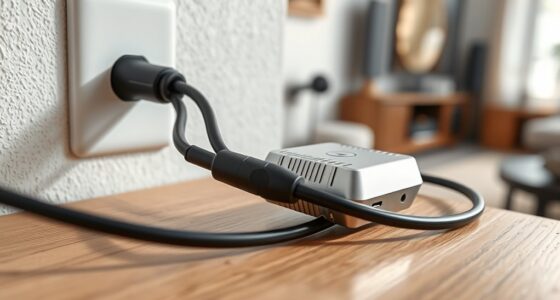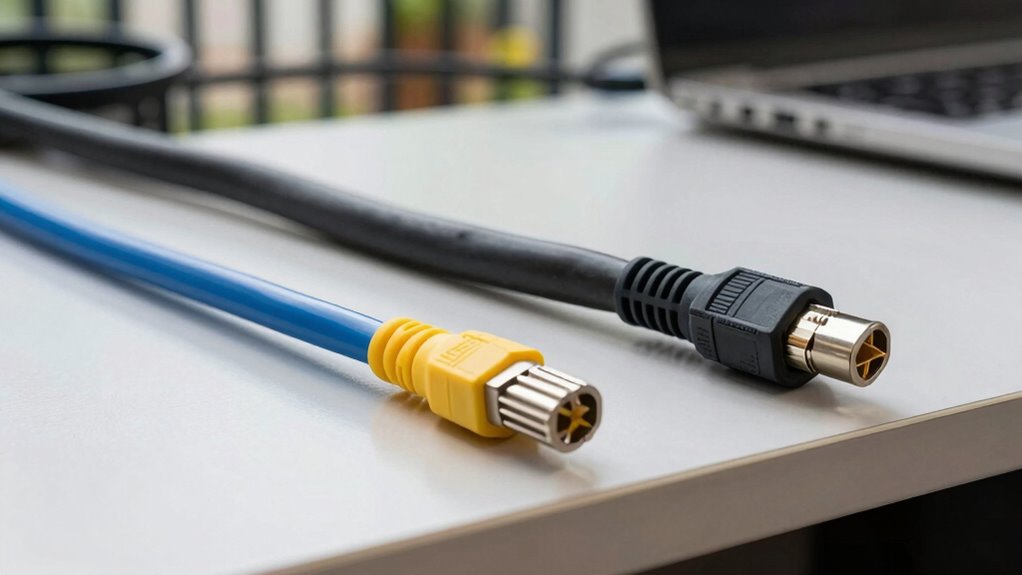
When choosing between indoor and outdoor rated network cables, consider your environment’s exposure to elements like moisture, UV rays, and temperature changes. Indoor cables are suitable for protected spaces like offices or homes, while outdoor cables have weatherproof jackets and additional protection for harsh conditions. If your cable runs outside or in exposed areas, opt for outdoor-rated cables to guarantee durability. To make the best decision, explore more about environmental factors and proper installation tips.
Key Takeaways
- Assess the environment: protected indoor spaces require non-weatherproof cables, while outdoor areas need weather-resistant, UV-protected cables.
- Consider exposure risks: outdoor cables must withstand moisture, UV rays, temperature changes, and physical stresses.
- Determine cable function: high-bandwidth or long-distance connections typically require outdoor-rated fiber optic cables.
- Evaluate installation conditions: underground or exposed routes need burial-grade armor, shielding, or extra protective layers.
- Follow local codes and manufacturer guidelines to ensure correct cable selection for safety and durability.

Have you ever wondered how to choose the right network cable for different environments? It’s a vital decision that impacts your network’s performance, durability, and safety. When considering indoor versus outdoor settings, you need to evaluate factors like exposure to weather, physical stress, and the type of data transmission required. For example, if you’re installing a network in a protected indoor space, standard Ethernet cables often suffice. But if your setup involves outdoor elements or harsh conditions, you’ll need cables designed specifically for those environments, like outdoor-rated cables or fiber optic lines.
Indoor cables are typically less rugged but easier to install. They usually feature a plastic jacket that protects against everyday wear and tear but isn’t designed to withstand moisture, UV rays, or temperature extremes. If you’re running Ethernet cables inside a building, power over Ethernet (PoE) applications are common, enabling both data and power to flow through a single cable. In this case, choosing the right cable guarantees peak performance and safety, especially when deploying PoE devices like security cameras or Wi-Fi access points. Fiber optic cables, which transmit data via light signals, are excellent choices for high-speed, long-distance indoor networks, providing superior bandwidth and immunity to electromagnetic interference.
Outdoor environments demand more robust cable solutions to withstand weather, UV exposure, and physical stresses. Outdoor-rated cables feature a thick, UV-resistant jacket that protects against sunlight degradation, moisture, and temperature fluctuations. When planning outdoor installations, you should also consider cable protection from physical damage—burial-grade cables are often armored or have extra shielding. If your network involves long distances or high data transfer rates, fiber optic cables are highly recommended, especially since they’re immune to electromagnetic interference, which can disrupt traditional copper cables. Fiber optic lines are also ideal for applications that require high bandwidth, such as connecting remote locations or supporting data-intensive tasks.
Another aspect to think about is whether your setup requires PoE. If so, ensure your outdoor-rated cable supports PoE standards, as this simplifies infrastructure by delivering power and data through one cable. Additionally, choosing cables with high-quality insulation can prevent signal degradation over extended runs. Proper cable management practices, including proper routing and securing, are essential to maintain network reliability in both indoor and outdoor environments. An important consideration is also ensuring the cable’s weatherproofing capabilities align with your specific environment, providing extra durability in outdoor conditions. In environments with fluctuating temperatures or exposure to chemicals, selecting cables with additional protective layers can further enhance longevity. When choosing between indoor and outdoor cables, always evaluate the environment’s specific demands. While indoor cables are suitable for protected spaces, outdoor cables are built to endure the elements and offer reliable, long-term performance. Making the right choice helps you avoid costly replacements and ensures your network remains stable and efficient.

VOIETOLT Cat 6 Outdoor Ethernet Cable 100 ft, 24AWG 10Gbps Cat6 Cable Cord Waterproof Direct Burial LLDPE UV Jacket, Internet Network Cable with 20 Ties Support POE Cat6 Cat5e Cat5, CCA, UTP for PC
- Durable Outdoor Design: Waterproof, UV resistant, and abrasion-resistant
- High-Speed Data Transfer: Supports up to 10Gbps at 550MHz
- Stable Signal Performance: Reduces interference and crosstalk
As an affiliate, we earn on qualifying purchases.
As an affiliate, we earn on qualifying purchases.
Frequently Asked Questions
Can Indoor Cables Withstand Temporary Outdoor Weather Conditions?
Indoor cables generally can’t withstand temporary outdoor weather conditions because their cable insulation isn’t designed for exposure. You might see some minor weather resilience, but prolonged exposure to moisture, UV rays, or temperature changes can damage the insulation and compromise performance. If you need a cable outdoors, look for one specifically rated for outdoor use, which features enhanced weather resilience to handle temporary or even long-term outdoor conditions safely.
Are Outdoor Cables More Susceptible to Interference Than Indoor Cables?
Outdoor cables are generally more susceptible to electromagnetic interference, which can cause signal degradation, compared to indoor cables. Because outdoor environments have more sources of interference like electrical noise from machinery or power lines, your network may experience more disruptions. To minimize these issues, choose outdoor-rated cables with enhanced shielding, ensuring your signal stays strong and clear despite the higher risk of interference in outdoor settings.
Do Outdoor-Rated Cables Require Special Connectors?
Outdoor-rated cables often require special connectors to guarantee proper weatherproofing and connector compatibility. These connectors are designed to resist moisture, dirt, and temperature fluctuations, preventing damage and signal loss. When installing outdoor cables, you need to choose connectors specifically rated for outdoor use, which typically include sealing features like gaskets or waterproof boots. This ensures your network stays protected from the elements and maintains reliable performance over time.
How Does UV Exposure Affect Cable Longevity?
UV exposure speeds up degradation of outdoor-rated cables, leading to UV degradation that weakens the cable’s outer jacket. Over time, this exposure reduces cable lifespan, making it more susceptible to cracks, brittleness, and eventual failure. To guarantee longevity, you should choose cables with UV-resistant jackets, especially if they’re exposed to sunlight regularly. Proper installation and protective coverings also help extend the life of your outdoor network cables.
Are There Cost Differences Between Indoor and Outdoor Cables?
The cost comparison between indoor and outdoor cables is like comparing apples to oranges—outdoor cables usually cost more upfront, but they save you money long-term by resisting weather damage. Installation expenses also vary; outdoor cables often need specialized connectors and protective conduits, increasing costs. If you’re facing harsh conditions, investing in outdoor-rated cable might seem pricey now, but it prevents costly replacements later.

Hamadap 100FT Replacement SC/APC to SC/APC Fiber Optic Internet Cable
- Flexible Router Placement: 100FT fiber for easy relocation
- DIY Installation Kit: Includes 2 SC to SC cables and couplers
- Durable and Pet-Proof: Armored stainless steel for crush resistance
As an affiliate, we earn on qualifying purchases.
As an affiliate, we earn on qualifying purchases.
Conclusion
Choosing between indoor and outdoor network cables is like selecting the right vessel for a journey—trust the environment to guide your choice. Indoor cables are your cozy boat, safe within familiar waters, while outdoor cables are your sturdy ship, built to brave the stormy seas. By understanding your environment’s demands, you anchor your network’s reliability and longevity. Remember, the right cable isn’t just a tool; it’s the compass guiding your digital voyage.

GEARit Cat6 Outdoor Ethernet Cable (250ft) 23AWG Pure Copper, FTP, LLDPE, Waterproof, Direct Burial, In-Ground, UV Resistant, POE, Network, LAN, Internet, Cat 6, Cat6 Cable – 250 Feet
- Outdoor Ethernet Cable: Durable, weather-resistant, direct burial design
- Easy Installation: Bury underground without conduits or extra gear
- High-Speed Performance: Supports up to 10 Gbps and 600 MHz
As an affiliate, we earn on qualifying purchases.
As an affiliate, we earn on qualifying purchases.
VOIETOLT Cat 6 Outdoor Ethernet Cable 100 ft, 24AWG 10Gbps Cat6 Cable Cord Waterproof Direct Burial LLDPE UV Jacket, Internet Network Cable with 20 Ties Support POE Cat6 Cat5e Cat5, CCA, UTP for PC
- Durable Outdoor Design: Waterproof, UV resistant, and abrasion-resistant
- High-Speed Data Transfer: Supports up to 10Gbps at 550MHz
- Stable Signal Performance: Reduces interference and crosstalk
As an affiliate, we earn on qualifying purchases.
As an affiliate, we earn on qualifying purchases.