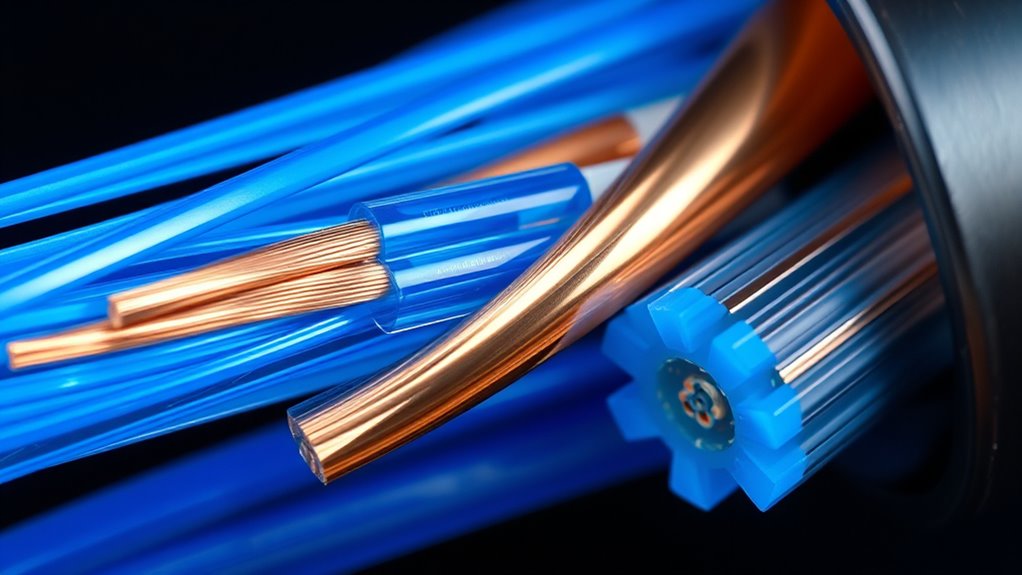

Imagine deploying a network in a hospital where both high-speed data transfer and reliable power are essential. Fiber-copper hybrid cables make this possible by combining fiber optics for fast, interference-free communication with copper conductors for power delivery. These cables simplify infrastructure and enhance performance, especially in challenging environments. Understanding their design, benefits, and installation considerations can help you make smarter choices for complex networking needs.
Key Takeaways
- Combine fiber optic and copper conductors for high-speed data transfer and reliable power transmission.
- Suitable for enterprise, industrial, healthcare, and data center applications requiring integrated signals.
- Offer enhanced resistance to electromagnetic interference, ensuring clearer, longer-distance communication.
- Installation is more complex, requiring specialized handling, proper termination, and skilled technicians.
- Thicker and less flexible than single-material cables, needing careful routing and environmental protection.
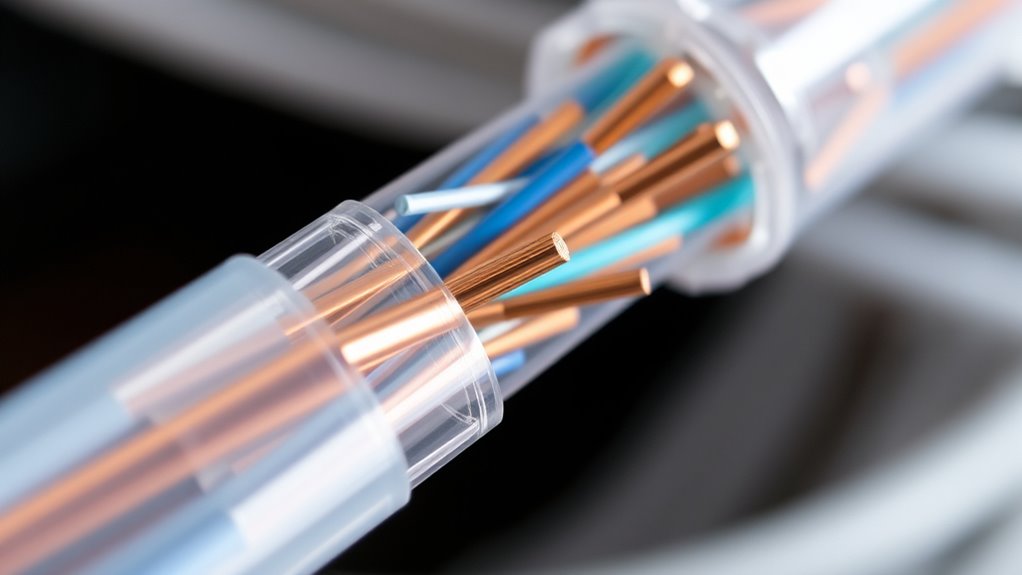
Fiber-copper hybrid cables combine the best of both worlds, offering a versatile solution for modern networking and communication needs. These cables integrate fiber optic strands with traditional copper conductors, allowing you to leverage the high-speed data transfer capabilities of fiber alongside the reliable power and signal transmission that copper provides. This combination makes them ideal for various applications, from enterprise networks to industrial settings, where different types of signals need to be transmitted simultaneously.
One significant advantage of fiber-copper hybrid cables is their ability to reduce signal interference. Fiber optic components are immune to electromagnetic interference, which can disrupt signals in copper cables, especially in environments with heavy electrical machinery or radio frequency interference. By incorporating fiber alongside copper, you minimize the risk of signal degradation, ensuring your data remains clear and reliable over longer distances. This makes hybrid cables especially suitable in settings where maintaining signal integrity is critical, such as data centers, hospitals, or manufacturing plants.
However, despite their benefits, hybrid cables do come with installation challenges. They are more complex to install compared to standard cables because they require careful handling and proper configuration. For instance, you need to ensure that the fiber and copper components are correctly terminated and protected against environmental factors like moisture and physical stress. Additionally, the mixed nature of these cables means your installation team must be familiar with both fiber optic and copper wiring techniques, which could increase setup time and costs. If not installed properly, you risk damaging the delicate fiber strands or creating points where interference can still occur.
Another installation challenge involves managing the cable’s physical structure. Hybrid cables tend to be thicker and less flexible than single-material cables, which can make routing through tight spaces more difficult. This may require special connectors or conduit systems, adding to the complexity and expense of deployment. You also need to be cautious about strain relief and bend radius limitations, as improper handling can impair both fiber and copper components.
fiber-copper hybrid network cables
As an affiliate, we earn on qualifying purchases.
As an affiliate, we earn on qualifying purchases.
Frequently Asked Questions
What Is the Typical Lifespan of Fiber-Copper Hybrid Cables?
You can expect fiber-copper hybrid cables to last around 10 to 15 years, depending on cable durability and installation challenges. Proper installation is essential to prevent damage that could shorten their lifespan. Factors like environmental conditions, handling, and maintenance also influence longevity. Regular inspections and protective measures help guarantee you get the most out of your hybrid cables, maintaining reliable performance over their expected lifespan.
How Do Hybrid Cables Perform in Extreme Weather Conditions?
Hybrid cables stand strong like a fortress, showing impressive weather resilience and thermal stability in extreme conditions. You’ll find they perform reliably through storms, high heat, or freezing cold, maintaining signal integrity and power. Their design shields both fiber and copper components from moisture, temperature swings, and environmental stress. So, you can trust these cables to keep your network running smoothly, no matter what Mother Nature throws your way.
Are Fiber-Copper Hybrid Cables Environmentally Recyclable?
Yes, fiber-copper hybrid cables are environmentally recyclable. You can typically separate the fiber from the copper using recycling processes designed for electronic waste, reducing environmental impact. Recycling these cables helps recover valuable materials, like copper and plastic, and minimizes landfill waste. By properly recycling hybrid cables, you contribute to sustainability efforts and reduce the ecological footprint associated with manufacturing new cables.
What Are the Maintenance Requirements for Hybrid Cable Systems?
You should regularly perform cable inspections to identify any signs of wear or damage early. Keep an eye out for corrosion, especially on the copper components, and take steps to prevent it with proper insulation and environmental controls. Guarantee connectors are clean and secure, and check for any physical damage. Routine maintenance like cleaning, inspecting, and addressing corrosion helps prolong the system’s lifespan and assures peak performance.
How Do Hybrid Cables Compare Cost-Wise to Separate Fiber and Copper Setups?
You might think hybrid cables are pricier, but they often prove more cost-efficient overall. While installation complexity can be higher initially, consolidating fiber and copper into one cable reduces material and labor costs over time. This integrated approach minimizes space, simplifies management, and cuts down on maintenance expenses. So, despite some upfront challenges, hybrid cables can save you money compared to running separate fiber and copper systems.
high-speed data fiber copper cables
As an affiliate, we earn on qualifying purchases.
As an affiliate, we earn on qualifying purchases.
Conclusion
Think of fiber-copper hybrid cables as the nervous system of your network, seamlessly weaving high-speed data and power into one resilient thread. They’re like a dependable bridge, crossing turbulent electromagnetic currents with ease, ensuring your signals stay clear and strong. With these cables, you’re building a highway of reliability through complex environments—a sturdy backbone that powers your digital world smoothly and confidently, no matter how challenging the terrain.
industrial fiber copper hybrid cables
As an affiliate, we earn on qualifying purchases.
As an affiliate, we earn on qualifying purchases.
hospital fiber optic copper cables
As an affiliate, we earn on qualifying purchases.
As an affiliate, we earn on qualifying purchases.