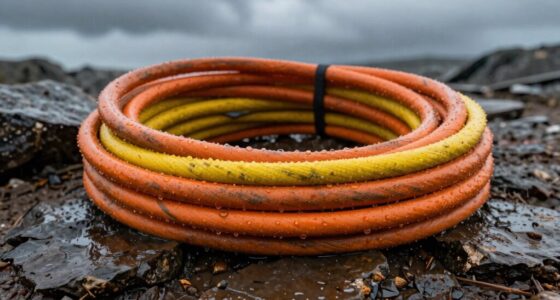
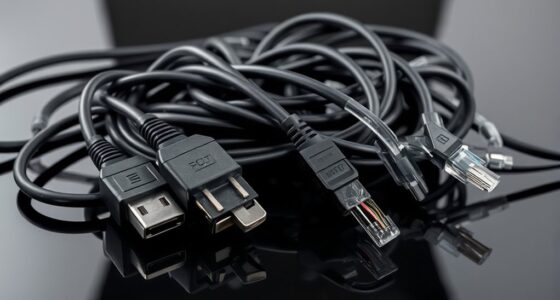
Did you know that not all coaxial cables are created equal, and choosing the right one can substantially impact your signal quality? While many people use these cables for TV or internet, the differences between types like RG6 and RG59 can be subtle yet essential. Understanding which cable suits your specific needs can save you time and money, but it’s often overlooked. Let’s explore what makes each type unique and when to use them.

Get business pricing on networking and server gear
- Business-only prices and quantity discounts
- Tax-exempt purchasing
- Multiple users, one account, clear invoices
Key Takeaways
- RG6 cables are ideal for residential TV and internet due to their good shielding and low signal loss.
- RG59 cables are flexible and cost-effective, suitable for CCTV and surveillance applications.
- Coaxial cables feature shielding layers such as foil and braided copper to prevent electromagnetic interference.
- Proper installation and shielding effectiveness are crucial for maintaining signal quality over long distances.
- Different coaxial cable types are selected based on environment, frequency needs, and specific use cases.

Have you ever wondered how cable TV and internet signals securely travel over long distances? The answer lies in the design of coaxial cables, which are engineered to transmit high-frequency signals with minimal interference. One of the key challenges in this process is signal loss, which occurs when the signal weakens as it travels through the cable. To combat this, coaxial cables are built with layers of shielding that enhance shielding effectiveness, preventing external electromagnetic interference from degrading the signal quality. The better the shielding, the less signal loss you’ll experience, ensuring a clear and stable connection from source to device.
Coaxial cables come in various types, each suited for specific uses and environments. For instance, RG6 cables are common for residential TV and internet setups because they offer good shielding effectiveness and low signal loss over long distances. RG59 cables, on the other hand, are typically used for CCTV and surveillance because they are cheaper and more flexible, though they might not provide the same level of shielding or performance for high-frequency signals. When choosing a coaxial cable, understanding the importance of shielding layers—such as braided copper, foil, or a combination—is vital. These layers serve as barriers that block external noise and electromagnetic interference, which can cause signal degradation and increase signal loss.
The core conductor, usually made of copper or aluminum, carries the signal, but it’s the shielding that plays a fundamental role in maintaining the integrity of that signal over distance. Higher shielding effectiveness translates into reduced signal loss, especially when signals need to travel through longer runs or in environments with a lot of electrical noise. This is why quality coaxial cables are designed with multiple shielding layers, offering better protection against interference and ensuring your signals stay strong from the source to your TV, modem, or other devices. Additionally, proper installation and avoiding sharp bends or kinks help maintain shielding effectiveness and prevent unnecessary signal loss. Moreover, advancements in AI-driven security systems contribute to safeguarding data transmitted over these cables, especially in sensitive environments.
RG6 coaxial cable for internet and TV
As an affiliate, we earn on qualifying purchases.
As an affiliate, we earn on qualifying purchases.
Frequently Asked Questions
How Do I Determine the Right Coaxial Cable for My Setup?
To choose the right coaxial cable, first, consider your device’s connector types—ensure compatibility with your equipment. Then, review cable specifications like impedance, shielding, and bandwidth needs. If you’re connecting high-frequency devices, opt for cables with better shielding and higher bandwidth. Matching the connector types and specifications to your setup guarantees peak performance and minimizes signal loss, helping you get the best results from your coaxial cable.
What Are Common Issues Caused by Coaxial Cable Degradation?
As your coaxial cable ages, it’s like a river losing its flow, causing signal interference and connection failures to ripple through your setup. Cracks, bends, or corrosion weaken the shield, letting noise slip in and disrupting clear signals. Over time, insulation wears thin, and signal quality drops, making your internet or TV flicker and falter. Regular checks help catch these issues early before your connection becomes a tangled mess.
Can Coaxial Cables Be Used for High-Frequency Applications?
Yes, coaxial cables can be used for high-frequency applications. They maintain good frequency response and help preserve signal integrity over long distances. When selecting a coaxial cable, make certain it’s rated for the specific high-frequency range you need, as lower-quality cables may introduce noise or signal loss. Proper shielding and quality connectors also play an essential role in optimizing performance for high-frequency signals.
How Does Shielding Affect Coaxial Cable Performance?
Think of shielding like a fortress protecting your coaxial cable’s signals. It reduces electromagnetic interference, much like a shield blocks arrows, preventing external noise from corrupting your data. Proper shielding minimizes signal attenuation, ensuring your high-frequency signals stay strong and clear. Without it, interference can cause data loss or degradation, especially in noisy environments. So, shielding is essential for maintaining peak performance and keeping your signals safe from external disruptions.
What Are the Environmental Considerations for Outdoor Coaxial Cable Installation?
When installing outdoor coaxial cables, you should consider wildlife interference and weatherproofing techniques. Wildlife can damage cables, so use protective conduits or animal-resistant materials. Weatherproofing is essential; apply waterproof jackets, seal connectors properly, and bury cables deep enough to avoid exposure. Regular inspections help identify damage early. These steps guarantee your coaxial cables remain functional despite environmental challenges, preventing signal loss or outages caused by weather or animals.
RG59 CCTV surveillance coaxial cable
As an affiliate, we earn on qualifying purchases.
As an affiliate, we earn on qualifying purchases.
Conclusion
When choosing coaxial cables, consider your needs, compare your options, and prioritize your priorities. Whether you require the high performance of RG6 or the flexibility of RG59, selecting the right cable guarantees quality, reliability, and long-lasting connections. Keep your signals clear, your system efficient, and your setup simple by making the informed choice. Ultimately, the right coaxial cable not only meets your requirements but also enhances your overall experience.
shielded coaxial cable for high-frequency signals
As an affiliate, we earn on qualifying purchases.
As an affiliate, we earn on qualifying purchases.
high-quality coaxial cable installation kit
As an affiliate, we earn on qualifying purchases.
As an affiliate, we earn on qualifying purchases.
Halloween Picks
halloween
As an affiliate, we earn on qualifying purchases.