
When working with fiber optics, always wear safety glasses to protect your eyes from tiny glass shards and laser light exposure. Handle fibers gently with the right tools, avoiding excessive force or bending beyond their limits to prevent damage or microfractures. Dispose of debris properly and keep your workspace clean to reduce injury risks and contamination. Using appropriate PPE like gloves and inspecting your equipment regularly guarantees both safety and system reliability. To explore more safety tips, stay tuned.
Key Takeaways
- Always wear appropriate safety glasses or goggles to protect against microscopic glass shards and harmful light exposure.
- Use fiber-specific tools carefully to prevent fiber damage, breakage, and microfractures during cutting, stripping, or splicing.
- Dispose of fiber debris properly in designated containers to avoid injury and maintain a clean, safe workspace.
- Handle fibers gently and avoid excessive bending beyond their minimum bend radius to prevent damage and signal loss.
- Follow established safety protocols, including PPE use and workspace cleanliness, to ensure system integrity and personal safety.

Fiber optics are an essential part of modern communication systems, but working with them requires careful attention to safety. The tiny glass or plastic fibers used to transmit data can pose serious hazards if not handled properly. One of the most critical safety measures is protecting your eyes. When you cut, strip, or splice fiber optic cables, tiny shards or fragments can become airborne. These microscopic glass splinters are dangerous because they can cause serious eye injuries if they come into contact with your eyeball. Always wear proper eye protection—safety glasses or goggles designed specifically for fiber optic work. These protective devices help shield your eyes from flying debris, reducing the risk of irritation or more severe injuries.
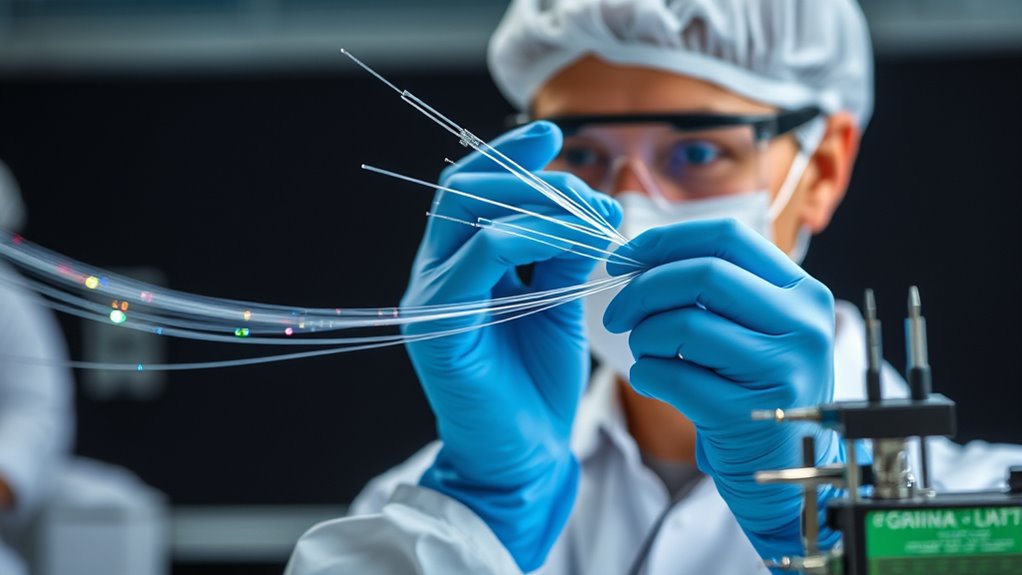
Handling fiber optic cables demands a careful, deliberate approach. Fiber handling isn’t just about managing the cables; it’s about understanding the fragility of the fibers themselves. The fibers are delicate, and excessive force or improper techniques can cause them to break or weaken, compromising the system’s performance. When you handle fiber, use tools that are designed for the task, like fiber scissors, cleavers, and strippers, to ensure precise cuts and clean terminations. Never force a connector or bend the fiber beyond its minimum bend radius, as this can cause microfractures that might lead to failure later. Always keep your workspace clean and free from dust, dirt, and debris, which can contaminate the connectors and degrade signal quality.
Handle fiber carefully with proper tools to prevent damage and maintain system performance.
Proper fiber handling also involves safety precautions to prevent injury from fiber shards. After cutting or stripping, dispose of the debris in a designated container to avoid accidental contact. If you’re working in a shared environment, make sure everyone wears appropriate safety gear and knows the proper procedures for fiber cleanup. When working with fiber optics, avoid looking directly into the fiber endface or the light source, as laser or LED emissions can cause eye damage. Use appropriate protective eyewear that filters out harmful wavelengths when testing or inspecting fibers. Additionally, many waterless planters incorporate moisture-retention technology, which reduces the need for frequent watering and minimizes the risk of water-related hazards during handling.
In addition to eye protection, always wear gloves when handling fiber cables to prevent cuts or skin irritation from sharp glass edges. Be conscious of your fiber handling techniques: gentle, controlled movements reduce breakage and minimize hazards. Remember, fiber optic safety isn’t just about protecting yourself from immediate injury; it’s also about maintaining the integrity of the system by avoiding contamination and damage. By combining careful fiber handling with proper eye protection, you create a safer work environment and ensure your fiber optic installations are reliable and safe for long-term use.

Cloudray Laser Protection Goggles 1064nm Laser Safety Glasses Fiber Laser Glasses for Laser Protection Fiber Laser Engraver Safety (Style C)
Parameter: Experience unmatched eye protection with our high-quality fiber laser safety glasses. With an Optical Density (OD) of…
As an affiliate, we earn on qualifying purchases.
As an affiliate, we earn on qualifying purchases.
Frequently Asked Questions
What Are the Long-Term Health Effects of Fiber Optic Exposure?
Long-term exposure to fiber optic toxicity is generally low risk, but it’s important to stay cautious. You may experience minor eye or skin irritation if you handle fiber optics improperly or are exposed to laser light for extended periods. While serious health effects are rare, repeated exposure could potentially cause eye damage or skin sensitivity. Always follow safety guidelines to minimize risks associated with long-term fiber optic exposure.
How Should Emergency Spills of Fiber Optic Materials Be Handled?
Did you know that improper spill management can lead to significant health risks? When fiber optic materials spill, you should immediately contain the spill to prevent fiber fragments from spreading. Follow proper cleanup procedures by wearing protective gear, carefully collecting the debris, and disposing of it in designated containers. Quick spill containment minimizes exposure and environmental impact, ensuring safety and compliance with regulations. Always review your facility’s specific protocols for best results.
Are There Specific Safety Certifications Required for Fiber Optic Tools?
You should verify your fiber optic tools meet certification standards and that you’ve completed proper safety training. Certifications like OSHA or industry-specific safety standards verify your tools are safe for use. Safety training teaches you proper handling, cutting, and splicing techniques, reducing risks of injury or fiber contamination. Always check tool labels for certification marks and stay current with safety courses to maintain compliance and ensure safe, effective work with fiber optics.
Can Fiber Optic Dust Cause Respiratory Issues Over Time?
Fiber optic dust can pose risks to your respiratory health if inhaled over time. The tiny particles may irritate your lungs and, with prolonged exposure, could contribute to respiratory issues. To protect yourself, wear proper masks and use ventilation when working with fiber optics. Always handle dust carefully and clean your workspace thoroughly to minimize inhalation risks, ensuring your respiratory health remains safeguarded during fiber optic projects.
What Are the Best Practices for Disposing of Fiber Optic Waste Safely?
You should always follow proper waste segregation and disposal container guidelines when discarding fiber optic waste. Use designated containers labeled for sharp or hazardous materials, avoiding general trash. Carefully collect fiber scraps and dust, sealing them securely to prevent injury or contamination. Never toss fiber waste in regular trash or recycling bins. By adhering to these practices, you minimize risks and guarantee safe, responsible disposal that protects yourself and the environment.

Jonard Tools JIC-375 Three Hole Fiber Optic Stripper – Strips 1.6-3.0mm Jacket, 600-900μm Buffer, 250μm Coating, Precision Tool with Angled Jaw and Safety Lock
3 HOLE STRIPPER: 3 hole fiber optic stripper performs all common fiber stripping functions
As an affiliate, we earn on qualifying purchases.
As an affiliate, we earn on qualifying purchases.
Conclusion
By following safety guidelines, wearing protective gear, and handling fiber optics carefully, you safeguard your eyes, your skin, and your health. By staying alert, staying prepared, and staying informed, you guarantee your work remains safe, efficient, and accident-free. Remember, safety isn’t just a step; it’s a mindset. Embrace caution, prioritize protection, and commit to safe practices every time you work with fiber optics. Your safety is your responsibility—make it a priority.

Fiber Optic Cleaver Automatic Stability FC-30 Cutter with 48,000 Cleaves Cleaver Angle <0.5° Built in Wast Bin for 250μm, 900μm, 3.0mm Fiber Cable and Flat Cable Double Fixtures as CT-30A Cleaver
48,000 Cleavers Blade Life; Blade Real tungsten steel blade, wear resistance, high hardness, corrosion resistance
As an affiliate, we earn on qualifying purchases.
As an affiliate, we earn on qualifying purchases.

Jonard Tools FDC-66 Fiber Optic Scraps Disposal Can
SECURE SCRAPS DISPOSAL: Twist lock cover securely locks fiber scraps inside the can for safe and effortless disposal
As an affiliate, we earn on qualifying purchases.
As an affiliate, we earn on qualifying purchases.