
Choosing the right cable temperature rating directly impacts outdoor performance by ensuring the insulation can withstand environmental stresses like sunlight, temperature swings, and moisture. Higher ratings prevent insulation failure, cracking, and brittleness caused by extreme conditions, helping your system stay safe and reliable. Proper ratings also improve lifespan, reduce maintenance costs, and prevent safety hazards like fires or shorts. Keep exploring to discover how selecting the correct rating can maximize your outdoor electrical system’s durability.
Key Takeaways
- Higher temperature ratings enhance insulation durability against environmental stresses like UV exposure and moisture.
- Proper ratings prevent insulation degradation, reducing risks of electrical failures and safety hazards outdoors.
- Cables with suitable ratings better withstand temperature fluctuations, prolonging lifespan in extreme weather conditions.
- Adequate temperature ratings ensure effective heat dissipation, minimizing insulation softening or cracking over time.
- Selecting correctly rated cables maintains system reliability and safety in outdoor environments with variable temperatures.

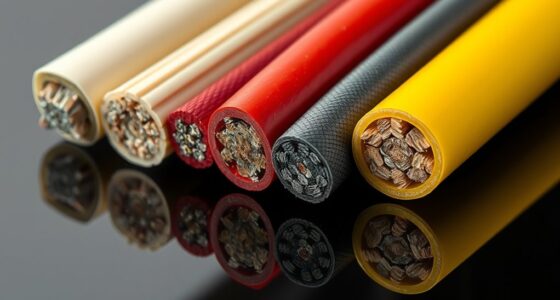
Understanding how cable temperature ratings impact outdoor performance is vital for guaranteeing safe and reliable electrical systems. When choosing cables for outdoor use, you need to pay close attention to the conductor insulation and how it interacts with environmental conditions. The temperature rating of a cable determines the maximum temperature the conductor insulation can withstand without degrading or compromising its integrity. If the cable’s temperature exceeds its rated limit, the insulation can soften, crack, or become brittle over time, increasing the risk of electrical failures or safety hazards. Consequently, selecting a cable with an appropriate temperature rating ensures that your system remains durable and resilient under various outdoor conditions.
Choosing cables with proper temperature ratings ensures outdoor system durability and safety.
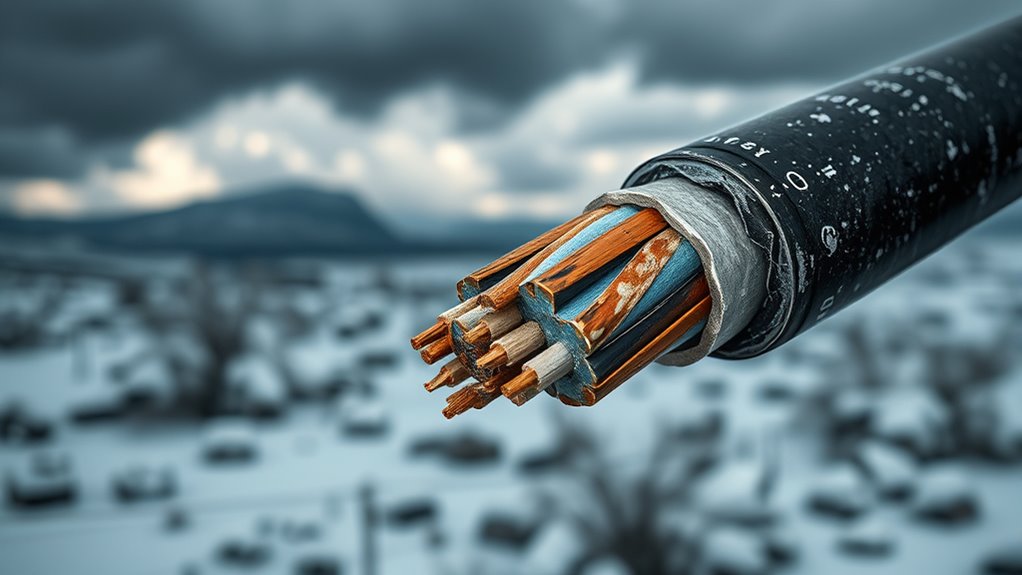
Outdoor environments expose cables to a range of factors that challenge their performance, including sunlight, moisture, temperature fluctuations, and chemical exposure. These elements can accelerate the aging process of conductor insulation if it isn’t rated to handle such stresses. For example, in direct sunlight, UV radiation can weaken certain insulation materials, making environmental durability a critical consideration. A cable with a higher temperature rating generally offers better resistance to these environmental factors, maintaining its integrity longer and reducing the need for frequent replacements. It’s important to match the cable’s temperature rating to the specific conditions it will face to prevent premature failure.
You should also keep in mind that outdoor cables often operate in environments with wide temperature swings, from freezing cold to scorching heat. A cable with a higher temperature rating can better accommodate these extremes without risking insulation breakdown. This not only prolongs the lifespan of the cable but also helps maintain consistent electrical performance. When installing cables in areas prone to temperature variations or harsh climates, opting for those with enhanced environmental durability becomes even more vital. This ensures the conductor insulation remains intact, preventing moisture ingress or corrosion that could compromise safety and efficiency.
In addition, choosing the right temperature rating affects the overall safety of your electrical system. Overheating cables can lead to insulation failure, short circuits, and potentially dangerous electrical fires. Properly rated cables help dissipate heat effectively, maintaining safe operating conditions even under heavy loads. By understanding the importance of conductor insulation and environmental durability, you make smarter decisions that improve the longevity and safety of your outdoor electrical infrastructure. Additionally, selecting cables with a suitable temperature rating can significantly reduce maintenance costs and downtime. Ultimately, investing in cables with suitable temperature ratings isn’t just about compliance; it’s about protecting your equipment, your property, and the people around you.
Frequently Asked Questions
How Does Ambient Temperature Influence Cable Performance Outdoors?
Ambient temperature affects your outdoor cables by causing thermal expansion, which can loosen connections, and accelerating insulation degradation, risking shorts or failures. When temperatures rise, your cables may expand, stressing the insulation and increasing the chance of damage. Conversely, cold temperatures can make materials brittle. Properly rated cables handle these fluctuations better, ensuring reliable performance despite outdoor thermal variations. Always consider ambient conditions when selecting cable ratings for outdoor use.
Are There Specific Cable Ratings Recommended for Extreme Weather Conditions?
When it comes to extreme weather, you should opt for cables with high temperature ratings and robust weather resistance. Specific ratings like UV-resistant, outdoor-rated, or those with enhanced cable insulation are recommended to keep power running smoothly. These cables are built to withstand harsh conditions and keep your setup safe. Don’t cut corners—invest in the right ratings to prevent issues and guarantee long-lasting outdoor performance.
How Does UV Exposure Affect Cable Temperature Ratings Over Time?
UV exposure accelerates UV aging, causing insulation degradation that can lower your cable’s temperature rating over time. As UV rays break down the insulation, the cable becomes more vulnerable to environmental stresses, which may reduce its capacity to handle high temperatures safely. To prevent performance issues, you should select UV-resistant cables for outdoor use and regularly inspect for signs of UV damage, ensuring continued safety and reliability.
Can Higher Temperature Ratings Extend Cable Lifespan Outdoors?
Yes, higher temperature ratings can extend your outdoor cable’s lifespan. When your cable’s insulation and conductor materials are rated for higher temperatures, they resist degradation from heat and UV exposure better. This means your cable stays flexible, maintains its insulating properties, and prevents early failure. Always verify your cable’s temperature rating matches your outdoor environment’s demands to maximize durability and performance over time.
What Safety Considerations Are Linked to Incorrect Cable Temperature Ratings?
Ignoring cable temperature ratings is like playing with fire — it risks safety hazards. When your cable insulation isn’t rated correctly, it can overheat, causing shorts, fires, or electrical shocks. Always follow safety standards to guarantee the cable can handle outdoor conditions. Incorrect ratings compromise insulation integrity, putting people and property at risk. Double-check the temperature rating to keep your outdoor electrical system safe and reliable, avoiding dangerous surprises.
Conclusion
Understanding your cable’s temperature rating is like giving it a suit of armor—protecting it from the harsh outdoor elements. When you choose the right rating, your cable can brave the storm, resisting the heat and cold that try to weaken it. Think of it as tuning a musical instrument; the right setting ensures it performs flawlessly, rain or shine. So, pick wisely, and let your outdoor setup stand tall and resilient against nature’s relentless tests.