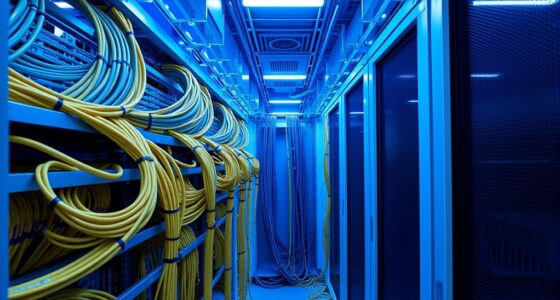

When designing a network with longevity in mind, you need to focus on building a flexible and scalable infrastructure that can adapt to future changes. Incorporating modular hardware, open standards, and energy-efficient equipment helps extend its lifespan and reduces costly upgrades. But how do you balance current needs with future growth? Exploring practical strategies can reveal the key to creating a resilient network that serves your organization for years to come.

Get networking and server gear delivered free — and shop member deals
- Fast, free delivery on millions of items
- Access to Prime Big Deal Days deals on October 6–7
- Prime Video, Amazon Music and more included
Key Takeaways
- Incorporate modular architecture and open standards to facilitate seamless upgrades and compatibility.
- Use scalable hardware and software solutions designed to support future capacity growth.
- Plan for hardware lifecycle management with scheduled refreshes to prevent obsolescence.
- Invest in energy-efficient and adaptable equipment to extend infrastructure lifespan and reduce operational costs.
- Maintain detailed documentation and stay updated on industry best practices to ensure ongoing relevance and ease of expansion.

In today’s fast-evolving digital landscape, designing networks with longevity in mind is essential to guarantee your infrastructure remains reliable and adaptable over time. One of the biggest hurdles you’ll face is scalability challenges. As your organization grows, your network must support increased data loads, additional devices, and new applications without compromising performance. If your design doesn’t account for future expansion, you risk bottlenecks, sluggish response times, and costly overhauls down the line. To mitigate this, you should prioritize a modular architecture that allows for seamless upgrades. Incorporate scalable hardware and flexible software solutions so you can add capacity without disrupting existing operations. Planning for scalability from the start ensures your network can evolve alongside your business needs. Additionally, considering future-proofing features can help you stay ahead of rapid technological changes and hardware obsolescence, further extending your network’s lifespan.
Design scalable, modular networks to ensure reliable growth and seamless upgrades over time.
Another critical factor to consider is hardware obsolescence. Technology advances rapidly, and hardware components can become outdated within a few years. Relying heavily on specific vendors or proprietary systems can lock you into a narrow ecosystem, making future upgrades more complex and expensive. To combat hardware obsolescence, choose open standards and universally compatible equipment whenever possible. This approach offers more flexibility, allowing you to swap out or upgrade components with minimal fuss. Also, implement a lifecycle management strategy that includes scheduled refreshes and maintenance. Regularly reviewing your hardware inventory guarantees you’re not stuck with outdated equipment that could compromise network security, efficiency, or compatibility.
Designing with longevity in mind also means building in future-proofing features. For example, incorporate high-capacity switches and routers that support higher data throughput, even if you don’t need that capacity immediately. This way, when demand increases, your network is already prepared. Invest in energy-efficient hardware that reduces operational costs and extends the lifespan of your infrastructure. Additionally, consider cloud integration as a way to offload some processing and storage needs, providing a buffer against hardware obsolescence and scalability challenges.
Lastly, don’t underestimate the importance of detailed documentation and a clear upgrade path. When your network is well-documented, troubleshooting and future expansions become more straightforward, saving time and money. Regularly staying informed about emerging technologies and industry best practices ensures your design remains relevant. By proactively addressing scalability challenges and hardware obsolescence, you lay a solid foundation that supports your organization’s growth, minimizes disruptions, and maximizes your investment over the long term.
As an affiliate, we earn on qualifying purchases.
Frequently Asked Questions
How Can I Future-Proof My Network Infrastructure Effectively?
To future-proof your network, you should prioritize scalability and minimize hardware obsolescence. Choose modular hardware that allows easy upgrades, and implement flexible architectures like SDN to adapt quickly to changing needs. Stay current with industry trends, plan for increased bandwidth, and invest in cloud-compatible solutions. Regularly review your infrastructure to identify potential bottlenecks, ensuring your network remains resilient and capable of handling future scalability challenges.
What Are the Common Pitfalls in Designing Durable Networks?
You should watch out for common pitfalls like neglecting hardware resilience, which can lead to frequent failures and costly repairs. Relying solely on a single vendor’s solutions may compromise your network’s reliability and flexibility. Avoid poor scalability planning, as it limits future growth. Regularly test your infrastructure, stay updated on best practices, and choose reputable vendors to make certain your network remains durable and adaptable over time.
How Does Environmental Sustainability Impact Network Longevity?
Environmental sustainability positively impacts your network’s longevity by promoting the use of sustainable materials and eco-friendly practices. When you choose durable, eco-conscious components, you reduce waste and minimize environmental harm, leading to a more resilient system. Incorporating green practices also encourages energy efficiency, lowering operational costs. By prioritizing sustainability, you guarantee your network remains effective longer, adapts to future needs, and aligns with global efforts to protect the environment.
What Are Cost-Effective Strategies for Long-Term Network Upgrades?
To guarantee cost-effective long-term network upgrades, focus on scalability planning and building strong vendor partnerships. Scalability planning helps you anticipate future growth, avoiding costly overhauls. Collaborate with vendors who offer flexible solutions and reliable support, making upgrades smoother and more affordable over time. Regularly reviewing your network’s performance and technology trends allows you to adapt proactively, saving money while maintaining a resilient, future-proof infrastructure.
How Can I Predict Future Network Traffic Demands Accurately?
Imagine you’re managing a university’s network. Using predictive analytics and traffic modeling, you analyze past usage patterns to forecast future demands. By examining peak hours and growth trends, you can accurately predict traffic spikes. Regularly updating these models with new data helps you adapt proactively. This approach guarantees your network scales efficiently, preventing bottlenecks and ensuring smooth connectivity as demand evolves over time.
energy-efficient enterprise routers
As an affiliate, we earn on qualifying purchases.
As an affiliate, we earn on qualifying purchases.
Conclusion
Think of your network as a mighty tree. By planting resilient roots with modular hardware and open standards, you guarantee it grows strong and adaptable over time. Regular care, like lifecycle management, keeps it healthy, while energy-efficient branches extend its lifespan. With thoughtful planning, your network becomes an evergreen, weathering storms and evolving with future seasons. Build it wisely now, and it’ll stand tall and reliable for years to come.
As an affiliate, we earn on qualifying purchases.
As an affiliate, we earn on qualifying purchases.
Halloween Picks
halloween
As an affiliate, we earn on qualifying purchases.