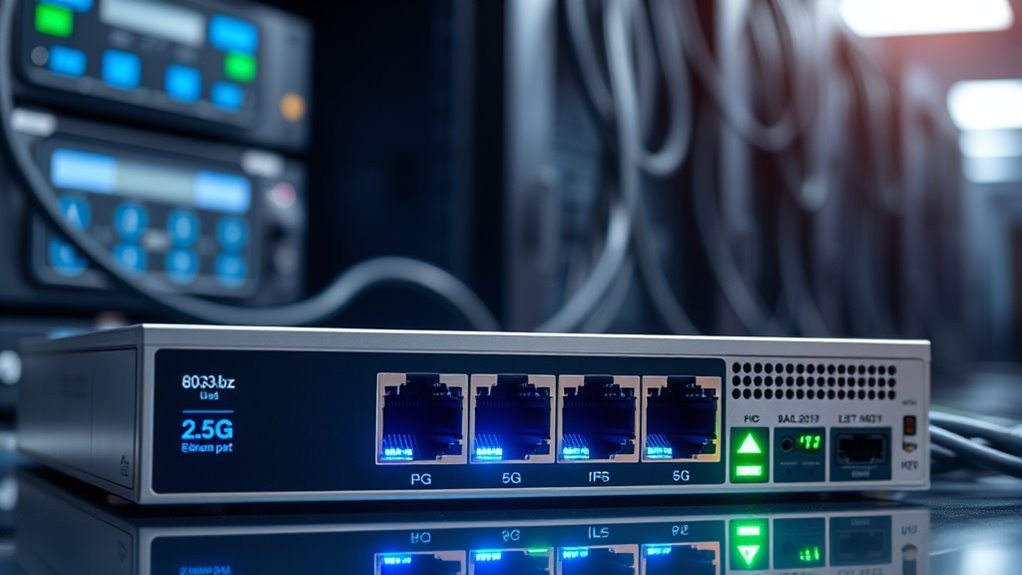
Understanding 802.3bz is key to upgrading your network with 2.5G and 5G Ethernet speeds, which boost performance without needing new cables or devices. This standard works over existing Cat5e and Cat6 cabling, making it easier to enhance speeds while keeping costs low. To fully benefit, you’ll need compatible hardware like switches and network cards. Keep exploring to find out how to guarantee your setup supports these faster speeds effectively.
Key Takeaways
- 802.3bz introduces 2.5G and 5G Ethernet speeds for faster network performance over existing cabling.
- It allows upgrading network speed without replacing current equipment, ideal for Cat5e and Cat6 cables.
- Compatibility varies; ensure devices support 802.3bz to maximize speed benefits.
- Proper cabling and hardware verification are essential for optimal 2.5G/5G Ethernet performance.
- Upgrading infrastructure with compatible hardware enhances network stability and future-proofing.
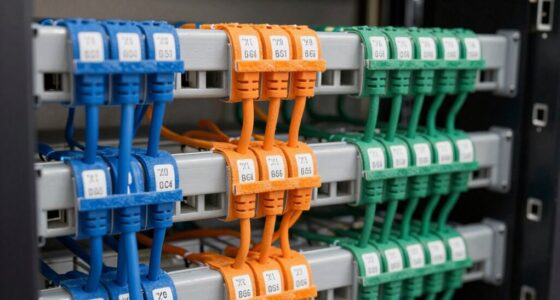
Have you ever wondered how your network can achieve faster speeds without replacing all your existing equipment? The answer lies in understanding the 802.3bz standard, which introduces 2.5G and 5G Ethernet speeds to improve network performance. One of the key factors in leveraging these speeds is guaranteeing your cabling requirements are met. Unlike traditional Gigabit Ethernet, which often runs on standard Cat5e or Cat6 cables, 802.3bz can operate efficiently over these cables but may benefit from higher-quality cabling for maximum performance. If you’re using older or lower-quality cables, you might experience reduced speeds or inconsistent connections. Upgrading or confirming that your cabling meets the necessary specifications can open the full potential of 2.5G and 5G Ethernet. Ensuring your cables are free from damage and properly rated will help achieve optimal network stability and speed.
Device compatibility plays a vital role in adopting 802.3bz technology. Not all network equipment supports these newer speeds, so it’s essential to verify whether your switches, network interface cards, and routers are compatible. Many modern devices are built to support 2.5G and 5G speeds, but older hardware might require firmware updates or replacement. Compatibility also extends to your existing infrastructure; if your devices can’t handle the increased speeds, you’ll see little benefit from upgrading to 802.3bz. Before making any changes, check the specifications and guarantee your hardware can negotiate these higher speeds seamlessly. This way, you’re not investing in upgrades that won’t deliver the expected performance gains. Confirming device support is crucial for successful implementation of the standard.

Raising Electronics Server Rack Open Frame Rack 4 Post 19 inch Adjustable Server/Audio Rack Cold Rolled Steel(42U,17Depth)
- Standard Equipment Compatibility: Fits 19-inch wide equipment with 17-inch depth
- Adjustable and Movable Rack: Flexible positioning for easy connections
- Heavy Duty Capacity: Supports up to 900 lbs
As an affiliate, we earn on qualifying purchases.
Frequently Asked Questions
How Does 802.3bz Compare to Older Ethernet Standards?
You’ll find that 802.3bz offers significant speed advantages over older Ethernet standards like 1G or 100Mbps, providing 2.5G and 5G speeds. It maintains backward compatibility, so you can use existing cables and hardware without issues. This upgrade accelerates data transfer, reduces bottlenecks, and improves network performance, making it ideal for demanding applications while seamlessly working with your current infrastructure.
What Are the Compatibility Requirements for 802.3bz Devices?
Imagine 802.3bz devices as travelers with a passport. To cross into the Ethernet world, your device needs compatibility with existing hardware and backward support for older standards. confirm your network equipment, cables, and NICs are compatible, and check for backward support to connect seamlessly. This way, your devices can communicate smoothly, like travelers effortlessly crossing borders with proper documentation.
Can 802.3bz Support Power Over Ethernet (Poe)?
Yes, 802.3bz supports PoE compatibility, allowing power delivery over the Ethernet connection. However, the standard primarily focuses on higher data rates, so verify your device and switch support PoE if you need power delivery. Check that your hardware explicitly mentions PoE support, as not all 802.3bz devices are automatically compatible. Proper compatibility guarantees both data transfer and power delivery work seamlessly.
What Are the Real-World Applications of 2.5g and 5G Ethernet?
This technology is a game-changer! You’ll find 2.5G and 5G Ethernet used in home networking to boost streaming and gaming, making lag a thing of the past. In data centers, they substantially increase data transfer speeds and reduce bottlenecks. These standards empower you to enjoy seamless connectivity, supporting demanding applications effortlessly, and can handle future upgrades, making your network faster and more reliable than ever imagined.
Are There Cost Differences Between Implementing 802.3bz and Higher Standards?
You’ll find that implementing 802.3bz generally has lower cost implications compared to higher standards like 10G or 25G Ethernet. This is because 802.3bz involves fewer manufacturing complexities, making equipment more affordable and easier to deploy. Higher standards often require more advanced hardware and intricate manufacturing processes, which drive up costs. So, choosing 802.3bz can be a cost-effective way to upgrade your network without sacrificing performance.

Belkin USB Type C to 2.5 Gb Ethernet Adapter, USB-IF Certified Thunderbolt 3 & 4 / USB-C to LAN Network Adapter Compatible with MacBook Pro/Air, iPad Pro, XPS, Surface, and Other USB C Devices
- Connection Type: USB-C to 2.5Gb Ethernet adapter
- Cable Length: 90mm tethered cable
- Maximum Speed: Up to 2,500Mbps
As an affiliate, we earn on qualifying purchases.
Conclusion
Now that you understand 802.3bz, you realize how this standard boosts network speeds without needing costly upgrades. Did you know that by 2025, over 50% of enterprise networks are expected to adopt 2.5G and 5G Ethernet? This shift means faster data transfer, improved efficiency, and better support for bandwidth-intensive applications. Embracing 802.3bz can future-proof your network, keeping you ahead in today’s fast-paced digital world.

NETGEAR 24-Port Gigabit Ethernet Unmanaged Network Switch (GS324)
- Number of Ports: 24 Gigabit Ethernet ports
- Port Speed: Auto-negotiates for optimal speed
- Cable Compatibility: Works with Cat5e/Cat6 cables
As an affiliate, we earn on qualifying purchases.

UGREEN 16 Port Gigabit Switch, Rackmount 4 Mode Plug & Play Ethernet Switch
- 16-Port Gigabit Connectivity: Supports 10/100/1000Mbps auto-negotiation
- Versatile Installation Options: Includes rackmount ears, supports wall and desktop mounting
- Multiple Operating Modes: Standard, VLAN, link aggregation, and flow control modes
As an affiliate, we earn on qualifying purchases.