To improve naming for panels, ports, and runs, use clear, descriptive labels that reflect their function or location, making troubleshooting easier. Apply consistent naming conventions across your system, such as prefixes for zones or building identifiers, combined with numbers or letters for individual components. Incorporate color coding for quick visual identification, and document everything thoroughly with diagrams and lists. Following these practices will help you create an organized, scalable system that’s easy to maintain. Keep exploring for more detailed guidance.

Get networking and server gear delivered free — and shop member deals
- Fast, free delivery on millions of items
- Access to Prime Big Deal Days deals on October 6–7
- Prime Video, Amazon Music and more included
Key Takeaways
- Develop a hierarchical naming system using prefixes for panels, zones, and components for easy identification.
- Use descriptive, function-based labels that clearly indicate the purpose or location of ports and runs.
- Standardize naming conventions across all panels and documentation to ensure consistency and clarity.
- Incorporate color coding alongside names to enhance visual recognition of different systems or functions.
- Maintain detailed, organized records with diagrams and lists that reflect the naming system for quick reference.

Clear and consistent naming for panels, ports, and runs is vital to streamline your wiring and troubleshooting processes. When you establish a logical naming convention early on, you make it easier to identify components quickly and reduce the chances of errors during installation or maintenance. Circuit labeling plays an important role here, as it guarantees each wire and connection is identifiable at a glance. To implement effective circuit labeling, you should adopt documentation standards that specify how labels are created, placed, and maintained. These standards help keep your system organized and accessible, especially when working with complex wiring layouts.
Consistent naming and labeling simplify wiring, troubleshooting, and maintenance for efficient system management.
Using clear, descriptive names for panels, ports, and runs helps avoid confusion. Instead of vague labels like “P1” or “Line 3,” opt for names that reflect their function or location, such as “MainPower-Input” or “ServerRoom-PortA.” This way, when troubleshooting or performing upgrades, you can immediately understand what each component does without cross-referencing diagrams repeatedly. Consistency is key—once you choose a naming pattern, stick to it across all your documentation and labeling efforts. This uniformity simplifies future modifications and minimizes mistakes.
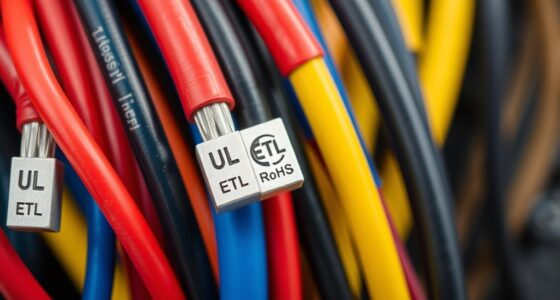
Incorporating your circuit labeling into your documentation standards ensures every team member follows the same conventions. Maintain detailed records that include the names of panels, ports, and runs alongside diagrams, wiring lists, and other documentation. These standards should specify font size, label placement, and the use of color codes if applicable. When your documentation is standardized, it becomes a reliable resource for troubleshooting, repairs, and upgrades, reducing downtime and enhancing safety. Standardized labeling systems are essential for ensuring clarity and consistency across your wiring infrastructure. Additionally, understanding the importance of color coding can further improve visual identification and reduce errors during wiring and maintenance tasks.
Furthermore, consider implementing a hierarchical naming system that reflects the physical or logical structure of your wiring. For example, use a prefix for the building or zone, followed by a number or letter for the specific panel or port. This approach makes it easy to locate components in large systems, especially during audits or expansion projects. Keep in mind that your naming system should be scalable, adaptable, and intuitive enough for anyone on your team to understand without extensive explanations. Establishing naming conventions that are well-documented and consistent across all projects will ensure long-term clarity and efficiency.
As an affiliate, we earn on qualifying purchases.
Frequently Asked Questions
How Do I Handle Naming Conventions for Complex Systems?
To handle naming conventions for complex systems, you should prioritize naming consistency and standardization strategies. Develop a clear, logical naming scheme that reflects the function, location, or hierarchy of components. Use meaningful abbreviations and avoid ambiguous terms. Document your standards and guarantee everyone follows them. Regularly review and update names as systems evolve, maintaining uniformity across panels, ports, and runs for easier troubleshooting and maintenance.
What Tools Assist With Automated Naming and Documentation?
You can use naming automation tools like CAD software with built-in scripting or dedicated automation scripts to streamline naming processes. Documentation tools such as schema management software or version control systems help keep track of naming conventions and changes. These tools automate naming tasks, reduce errors, and guarantee consistent documentation, saving you time and improving clarity across complex systems. They’re essential for maintaining organized and easily navigable designs.
How Often Should Naming Standards Be Reviewed and Updated?
You should review your naming standards at least annually to maintain consistency and adapt to project changes. Regularly revisiting your naming conventions guarantees that naming consistency remains intact and helps identify when revision frequency is necessary. By scheduling periodic reviews, you prevent outdated or ambiguous names, streamline documentation, and improve team communication. Staying proactive with updates keeps your naming standards effective, organized, and aligned with evolving project requirements.
Can Inconsistent Naming Affect Troubleshooting and Maintenance?
Inconsistent naming can seriously hinder troubleshooting and maintenance. When naming isn’t consistent, you might spend extra time deciphering labels or locating the right components, which delays repairs and causes confusion. Clear, standardized labels improve naming consistency and label clarity, making it easier to identify panels, ports, and runs quickly. This streamlines maintenance, reduces errors, and keeps your system running smoothly.
How to Train Team Members on Proper Naming Practices?
You train your team by emphasizing the importance of naming consistency, making it clear how cluttered naming hampers troubleshooting and maintenance. Use hands-on exercises and real-world examples to reinforce good practices. Pair theory with practice, encouraging feedback and open discussion. Regularly review naming conventions together, fostering a shared understanding. This ongoing team training builds habits that guarantee clear, consistent naming, ultimately boosting efficiency and reducing errors across the board.
wire labeling and identification kit
As an affiliate, we earn on qualifying purchases.
As an affiliate, we earn on qualifying purchases.
Conclusion
Clear naming isn’t just about labels; it’s about clarity and efficiency. When you choose meaningful names for panels, ports, and runs, you reduce confusion and speed up troubleshooting. It’s the difference between chaos and order, chaos and clarity. As you refine your naming conventions, you create a workflow that’s intuitive and reliable. Better names bring better understanding, turning complexity into simplicity—effortless navigation and seamless operation follow. In clarity, find your efficiency.
As an affiliate, we earn on qualifying purchases.
As an affiliate, we earn on qualifying purchases.
Halloween Picks
halloween
As an affiliate, we earn on qualifying purchases.