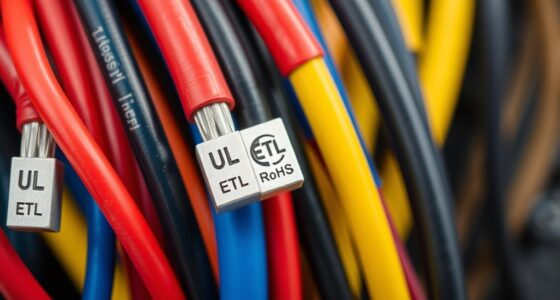
Standardizing cable color codes plays a vital role in maintaining safety and consistency across electrical and data wiring systems. When everyone follows a common set of standards, it becomes easier to identify wire functions quickly and reduce errors during installation or troubleshooting. However, with various international and local standards in place, understanding and implementing the right color scheme can be more complex than it seems—making it essential to explore the best practices and implications for your projects.

Get business pricing on networking and server gear
- Business-only prices and quantity discounts
- Tax-exempt purchasing
- Multiple users, one account, clear invoices
Key Takeaways
- Adopting international standards like NEC or IEC ensures consistency across wiring practices.
- Standardized color codes facilitate quick identification of wire functions, reducing errors.
- Uniform color schemes improve safety by clearly indicating grounding, power, and data cables.
- Consistent color coding simplifies documentation, troubleshooting, and maintenance tasks.
- Customizing color codes to organizational needs enhances operational clarity and efficiency.

Understanding cable color codes is essential for guaranteeing safe and efficient electrical wiring. When you work with cables, especially in complex environments like data centers, knowing these codes helps you quickly identify each wire’s purpose, reducing mistakes and improving safety. In data centers, cable color codes in data centers are standardized to distinguish between power, data, grounding, and other functions. This clarity is critical because it minimizes downtime, prevents accidental disconnections, and streamlines maintenance. When you familiarize yourself with these standards, you can easily troubleshoot issues, replace faulty cables, or upgrade systems without confusion. Furthermore, customizing cable color schemes allows you to tailor wiring setups to your specific needs, making ongoing management more straightforward. For example, you might assign green for grounding, red for power, blue for network data, and yellow for control signals. Customizing these schemes helps your team quickly interpret wiring diagrams and reduces errors, especially in environments with numerous cables crisscrossing each other.
Standardizing cable color codes involves adopting recognized international or local standards, such as the NEC (National Electrical Code) or IEC (International Electrotechnical Commission). By doing so, everyone involved in installation or maintenance speaks the same ‘language,’ which enhances safety and efficiency. When you follow these standards, you create a universal understanding that benefits everyone, from electricians to IT personnel. It also simplifies documentation, as color-coded labels and manuals align with the actual wiring, reducing miscommunication. Consistent use of cable color codes becomes especially important in large-scale data centers, where hundreds or thousands of cables connect servers, switches, and power supplies. Standardization reduces the risk of accidental disconnections or incorrect connections, which could lead to data loss or hardware damage.
Customizing cable color schemes isn’t about just making things look neat; it’s a strategic move that improves operational clarity. If you manage multiple data centers or complex installations, establishing a consistent, customized scheme ensures that everyone on your team knows exactly what each cable does at a glance. This practice speeds up maintenance, troubleshooting, and upgrades, saving time and money. It also enhances safety, as clear identification reduces the chance of mishandling live wires. When you prioritize standardization and customization of cable color codes, you foster a safer, more organized environment that supports reliable, efficient operation. Ultimately, well-implemented color coding becomes a crucial part of your wiring management, helping you maintain high standards and streamline your workflows.
Frequently Asked Questions
How Do Color Codes Vary Internationally for Similar Cables?
International standards shape cable color codes, but regional variations still exist. You’ll find that different countries adopt distinct colors for similar cables, making it essential to confirm local regulations. For example, the IEC standard uses specific colors, while North America may differ. Always verify regional variations before working with cables to ensure safety and compliance, as these differences can lead to confusion if overlooked.
Are There Industry Standards for Custom or Proprietary Cable Colors?
Yes, industry standards do exist for custom color schemes and proprietary standards. You might encounter companies creating their own color codes to distinguish specific functions or equipment, often aligning with internal protocols. These proprietary standards help streamline maintenance and troubleshooting within organizations. However, it’s essential to document these custom schemes clearly, so everyone on your team understands and follows them, ensuring safety and consistency across your wiring systems.
How Do Color Codes Apply to Fiber Optic Cables?
You see, color codes in fiber optic cables help identify core types, buffer sizes, and connector types quickly. The color code history shows a standard system, but color coding exceptions exist for custom or proprietary setups. You’ll find these codes applied to jackets, buffer tubes, and connectors, making maintenance easier. By understanding these color conventions, you guarantee proper handling and troubleshooting, reducing errors and improving network reliability.
What Safety Protocols Are Associated With Color-Coded Cables?
You should always follow safety protocols with color-coded cables to prevent accidents. Grounding safety is essential, so make sure cables are properly grounded to avoid electrical hazards. Use color codes for emergency identification, like red for live wires or yellow for caution, to quickly recognize critical cables during emergencies. Always wear protective gear and follow your organization’s safety procedures to stay safe when handling or working near these cables.
How Often Should Cable Color Codes Be Reviewed or Updated?
You should review and update your cable color codes regularly; think of it as hitting two birds with one stone. Typically, a quarterly or bi-annual frequency review and update schedule works well to keep your system safe and compliant. This guarantees that any changes in standards, equipment, or safety protocols are reflected promptly, reducing the risk of confusion or accidents. Staying proactive is key to maintaining an organized and safe environment.
Conclusion
By embracing standardized cable color codes, you create a safer, more organized environment where everything flows smoothly. It’s like giving your wiring system a subtle, yet powerful language everyone understands. With clear, consistent colors guiding you, troubleshooting becomes a breeze and maintenance feels less like a chore. When you prioritize this simple step, you’re gently paving the way for a more reliable, efficient operation — making your work easier and your system more resilient.
Halloween Picks
halloween
As an affiliate, we earn on qualifying purchases.