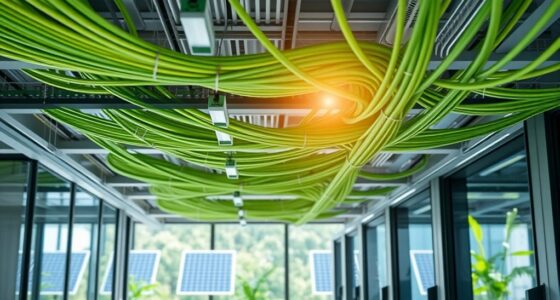
It’s no coincidence that the most energy-efficient cabling systems often go unnoticed, yet they play a vital role in reducing operational costs and environmental impact. By carefully selecting insulation materials, optimizing cable routing, and incorporating smart monitoring, you can markedly improve system performance. But what specific strategies can you implement to guarantee your cabling design isn’t just functional, but truly sustainable? Exploring these methods reveals how small choices lead to substantial gains.

Get business pricing on networking and server gear
- Business-only prices and quantity discounts
- Tax-exempt purchasing
- Multiple users, one account, clear invoices
Key Takeaways
- Select insulation materials with low dielectric constants and high thermal resistance to reduce energy loss and improve efficiency.
- Optimize cable routing by minimizing length and implementing direct, short pathways to decrease resistance and power dissipation.
- Use appropriate cable gauges based on load calculations to prevent over- or under-sizing, ensuring energy-efficient power delivery.
- Incorporate advanced monitoring systems for real-time energy management and dynamic adjustment of power distribution.
- Follow industry standards and best practices for cable organization, layout, and insulation quality to maximize system efficiency and safety.

As data centers and communication networks expand, designing cabling systems that maximize energy efficiency becomes increasingly essential. One of the key aspects to consider is the quality of cable insulation. Good cable insulation reduces energy loss, prevents overheating, and ensures reliable power transmission. When selecting cables, opt for materials with low dielectric constant and high thermal resistance, which help maintain ideal performance and reduce energy wastage. Proper insulation minimizes the amount of energy needed to transmit signals and power, leading to lower operational costs and increased sustainability. Additionally, effective cable insulation enhances safety by preventing short circuits and electrical faults, which can cause downtime and damage equipment. Incorporating innovative insulation materials that adapt to environmental conditions can further improve system resilience and efficiency. Power distribution plays a crucial role in energy-efficient cabling design. Efficient power distribution systems minimize losses that occur as electricity travels through cables. To achieve this, you should prioritize using thicker gauge cables for higher current loads, as they exhibit lower resistance and reduce voltage drops. Properly sizing cables based on load calculations ensures that you’re not over- or under-specifying, which can lead to unnecessary energy consumption or system instability. Routing cables carefully to avoid excessive length and interference also contributes to better power distribution efficiency. When planning your cable layouts, keep the shortest, most direct routes possible, reducing resistance and energy loss along the way. Incorporate power distribution units (PDUs) with high efficiency ratings to further enhance energy use within the system. Implementing segmented and organized cabling pathways reduces the risk of congestion and overheating, which can compromise insulation and lead to inefficient power transmission. Using cable management solutions such as trays, conduits, and labeling helps maintain an organized system that promotes airflow and prevents damage to insulation. This organization allows for easier maintenance and upgrades, ensuring the system remains energy-efficient over time. Moreover, consider integrating intelligent power management systems that monitor real-time energy consumption and identify inefficiencies. These systems enable you to make adjustments on the fly, optimizing power distribution and reducing unnecessary energy drain. Staying informed about emerging insulation technologies and standards can provide opportunities for ongoing improvements in energy efficiency. Finally, always stay updated on industry standards and best practices for cabling and power distribution. Regular audits and inspections help identify areas where insulation quality or power efficiency can be improved. By choosing high-quality cable insulation materials, designing thoughtful power distribution layouts, and maintaining organized cabling systems, you can greatly enhance your network’s energy efficiency. This proactive approach not only cuts costs but also supports your organization’s sustainability goals, ensuring your infrastructure is prepared for future growth and technological advances.
energy-efficient data center cabling
As an affiliate, we earn on qualifying purchases.
As an affiliate, we earn on qualifying purchases.
Frequently Asked Questions
How Does Cable Material Impact Energy Efficiency?
The cable material substantially impacts energy efficiency by affecting conductor conductivity and cable insulation. High-quality conductor materials, like copper or aluminum, offer better conductivity, reducing energy loss during transmission. Meanwhile, efficient cable insulation minimizes power leakage and maintains ideal performance. You should choose materials that balance conductivity and insulation properties to maximize energy efficiency, reduce costs, and enhance overall system reliability. This way, your cabling system operates more effectively and sustainably.
What Are the Latest Innovations in Energy-Efficient Cabling?
You’ll find that the latest innovations in energy-efficient cabling include smart insulation, which minimizes energy loss while maintaining durability, and modular connectors that streamline installation and reduce waste. These advancements subtly enhance your system’s efficiency by optimizing energy flow and simplifying maintenance. Embracing such technologies means you’re not just upgrading cables but subtly improving overall performance, ensuring your setup remains future-ready and eco-conscious.
How Can Cable Management Reduce Energy Losses?
You can reduce energy losses by ensuring proper cable management, which involves using high-quality connectors and good cable insulation. When connectors are secure and well-made, they minimize resistance and power dissipation. Additionally, proper insulation prevents energy leakage and maintains consistent current flow. Organizing cables neatly reduces electromagnetic interference, further improving efficiency. By focusing on these aspects, you enhance overall energy efficiency and reduce unnecessary energy consumption in your system.
What Are Cost-Effective Strategies for Upgrading Existing Cabling Systems?
Imagine upgrading your cabling system as planting a tree in your energy garden. To do this cost-effectively, start with a thorough cost analysis to prioritize upgrades that offer the best return. Look for solutions with strong lifecycle benefits, such as durable materials and scalable designs, which save money over time. These smart choices reduce maintenance costs and improve efficiency, making your investment grow like a well-tended tree.
How Do Environmental Conditions Affect Cabling Energy Efficiency?
Environmental conditions critically impact your cabling’s energy efficiency. Excessive thermal expansion from temperature fluctuations can cause connections to loosen, increasing resistance and energy loss. Moisture resistance becomes essential in humid or wet environments, preventing corrosion and shorts that drain power. By choosing cables designed for these conditions, you guarantee reliable performance and reduce energy waste, ultimately saving you money and maintaining system efficiency in diverse environmental settings.
high thermal resistance insulation cables
As an affiliate, we earn on qualifying purchases.
As an affiliate, we earn on qualifying purchases.
Conclusion
By applying these energy-efficient cabling strategies, you’ll maximize system performance and save loads on energy bills—it’s like revealing the secret to limitless efficiency! Choosing high-quality materials, proper sizing, and smart routing makes your setup more reliable and sustainable. With organized management and real-time monitoring, you’ll stay ahead of issues before they arise. Embrace these tips, and watch your power systems become unstoppable forces of energy savings—more powerful than you ever imagined!
As an affiliate, we earn on qualifying purchases.
organized cable management solutions
As an affiliate, we earn on qualifying purchases.
As an affiliate, we earn on qualifying purchases.
Halloween Picks
halloween
As an affiliate, we earn on qualifying purchases.