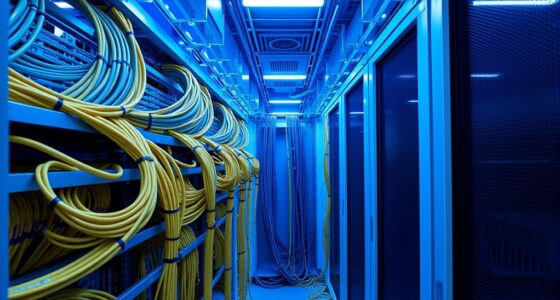

Like a silent backbone of our digital world, data cables support the flow of information that keeps our lives connected. But beneath this invisible network lies a hidden cost—its carbon footprint—that grows with each installation and upgrade. As global demand for data increases, understanding the environmental impact of these cables becomes more urgent. What steps are being taken to make this essential infrastructure more sustainable?
Key Takeaways
- Manufacturing data cables involves energy-intensive processes that rely heavily on fossil fuels, contributing to greenhouse gas emissions.
- The lifecycle of data cables, from raw material extraction to disposal, significantly impacts their overall carbon footprint.
- Using renewable energy sources in production can substantially reduce emissions associated with manufacturing.
- Recycling metals like copper and aluminum in cable production lessens environmental harm and lowers the carbon footprint.
- Process improvements and sustainable practices in manufacturing are essential for minimizing the environmental impact of data cables.
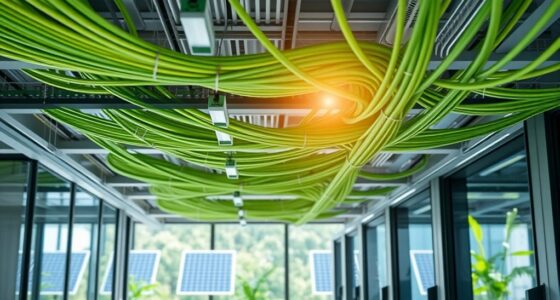
As our reliance on digital infrastructure grows, understanding the environmental impact of data cables becomes increasingly important. These cables, essential for transmitting vast amounts of information across the globe, have a carbon footprint that’s influenced by various factors, from manufacturing to installation. One key aspect is how the manufacturing processes are evolving to incorporate renewable energy sources. Traditionally, producing data cables involves energy-intensive steps, such as extracting raw materials, refining metals like copper and aluminum, and assembling the components. These processes often rely heavily on fossil fuels, which contribute significantly to greenhouse gas emissions. However, there’s a shift underway as manufacturers increasingly adopt renewable energy to power their factories, reducing the carbon footprint associated with production. By harnessing solar, wind, or hydroelectric power, companies can cut emissions, making the entire supply chain more sustainable.
Manufacturers are increasingly adopting renewable energy to make data cable production more sustainable and reduce carbon emissions.
The integration of renewable energy into manufacturing processes isn’t just a trend but a necessary step toward minimizing environmental impact. It requires substantial investment in infrastructure and technology upgrades, but the long-term benefits are clear. Using renewable energy reduces reliance on fossil fuels, which are the primary source of carbon emissions during manufacturing. This shift also encourages manufacturers to optimize their processes for energy efficiency, further lowering emissions. For example, some companies are redesigning their factories to operate with less energy, utilizing more sustainable materials, and improving recycling practices for components like plastics and metals. These efforts collectively decrease the carbon footprint of each data cable produced. Additionally, advancements in energy-efficient manufacturing techniques are helping to further reduce emissions during production.
Furthermore, the environmental impact doesn’t end with manufacturing. The entire lifecycle of data cables—from raw material extraction to end-of-life disposal—affects their overall carbon footprint. Sustainable manufacturing practices, including sourcing materials responsibly and recycling metals, help reduce environmental harm. As you consider the environmental costs of digital infrastructure, it’s important to recognize how the shift toward renewable energy and greener manufacturing processes can make a difference. Transitioning to cleaner energy sources during production means fewer emissions are released into the atmosphere, which is crucial in combating climate change.
Ultimately, understanding the relationship between renewable energy and manufacturing processes highlights the potential for reducing the carbon footprint of data cables. As technology advances and more companies prioritize sustainability, you can expect greener production methods to become the norm. This not only benefits the environment but also promotes a more sustainable digital future, where the energy used in your connected world is increasingly sourced from clean, renewable resources.
Frequently Asked Questions
How Do Data Cable Manufacturing Processes Impact Their Carbon Footprint?
Your data cable manufacturing impacts its carbon footprint primarily through manufacturing emissions, which occur during raw material extraction, production, and assembly. Supply chain logistics also play a significant role, as transportation and distribution consume energy and generate emissions. By optimizing these processes, reducing transportation distances, and using sustainable materials, you can lower the overall carbon footprint of data cable production and help mitigate environmental impact.
Are There Eco-Friendly Materials Used in Sustainable Data Cables?
Sure, eco-friendly data cables do exist! You can find ones made from biodegradable plastics and recycled materials, which help cut down waste and pollution. It’s like giving Mother Earth a high-five with every plug-in. These sustainable options reduce your carbon footprint and show that tech can be eco-conscious without sacrificing performance. So yes, you can have your cable and save the planet too—no magic wand needed.
How Does Cable Recycling Reduce Overall Environmental Impact?
Recycling benefits your efforts to reduce environmental impact by minimizing waste and conserving resources. When you recycle data cables, you prevent them from ending up in landfills, where they can release harmful substances. Instead, valuable materials like copper and plastics are recovered and reused in new cables or products. This process cuts down on the need for raw material extraction, saving energy, reducing pollution, and ultimately lessening your overall environmental footprint.
What Innovations Are Reducing the Carbon Footprint of Data Cables?
Reducing the carbon footprint of data cables is happening through innovative ideas like incorporating biodegradable coatings and harnessing renewable energy during manufacturing. These advancements cut costs, curb carbon emissions, and create cleaner, greener gadgets. By blending biology with technology, companies can produce eco-friendly cables that minimize environmental impact. You benefit from smarter, sustainable solutions that support a healthier planet while enjoying reliable, innovative connectivity.
How Do Data Transmission Volumes Influence the Environmental Impact?
Higher digital transmission and increased bandwidth consumption amplify the environmental impact because they require more energy to transmit data. When you send large amounts of data, data cables and network infrastructure work harder, leading to increased carbon emissions. To reduce your impact, optimize your data use, avoid unnecessary transmissions, and support energy-efficient technology. This way, you help minimize the environmental footprint associated with rising data transmission volumes.
Conclusion
So, next time you plug in that data cable, remember it’s not just about convenience. While manufacturers boast of greener processes and recycled materials, the truth is, you’re still supporting energy-hungry production and environmental costs. It’s ironic how something so small can have such a massive footprint. Maybe, in the end, the biggest connection you make is between your digital life and the planet’s health—one cable at a time.