When you’re setting up or maintaining cable systems, having the right tools is crucial to guarantee safety, efficiency, and a professional finish. From managing wires to making secure connections, each tool plays a vital role in your workflow. Without them, tasks can become more difficult, and mistakes can happen. Curious about which tools are most critical for a successful installation? Keep going to find out what you need to get the job done right.
Key Takeaways
- Cable management tools like zip ties and trays ensure neat, organized wiring and easier maintenance.
- Safety equipment such as insulated gloves and glasses protect installers from electrical hazards.
- Cutting and connecting tools, including cable cutters and crimpers, guarantee precise and reliable connections.
- Measurement devices like tapes and levels help achieve accurate cable lengths and aligned installations.
- Mounting tools such as drills and screwdrivers facilitate secure attachment of hardware components.
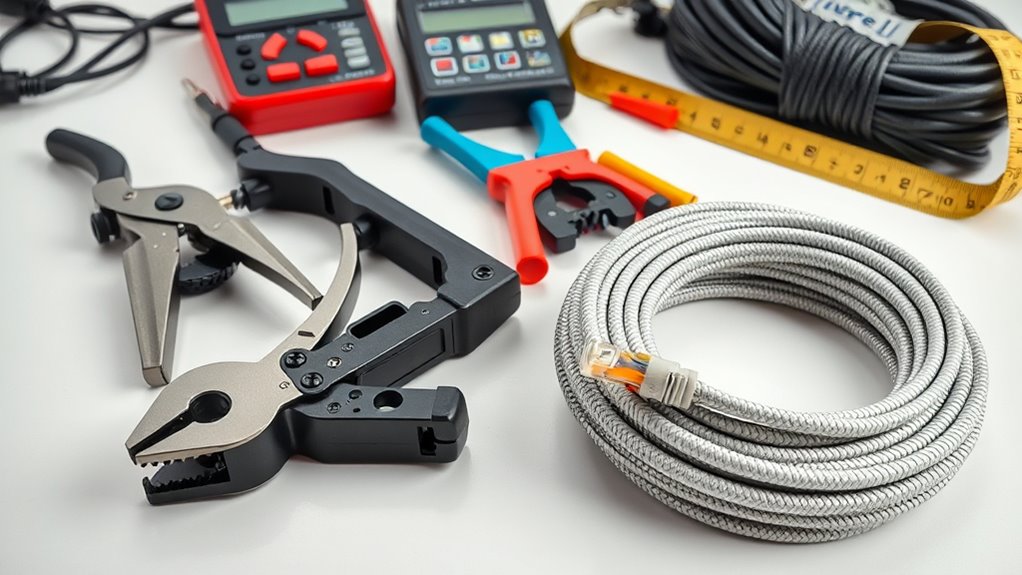
Have you ever wondered what tools are essential for a successful cable installation? The right equipment makes all the difference, ensuring your work is efficient, safe, and organized. At the core of a professional setup is proper cable management. You need tools like cable organizers, zip ties, and cable trays to keep your wires neat and prevent tangling. Good cable management not only improves the appearance of your installation but also reduces the risk of damage and makes future maintenance easier. When cables are organized, you can quickly identify issues or upgrades without having to untangle a mess of wires, saving you time and frustration.
Proper cable management tools ensure neat, safe, and efficient installations.
Along with organization tools, safety equipment is equally crucial. When working with cables, especially in high-voltage or complex systems, you need protective gear like insulated gloves, safety glasses, and helmets. These items shield you from electrical shocks, flying debris, or accidental falls. Wearing the proper safety equipment isn’t just about following regulations—it’s about protecting yourself from potential hazards that could lead to injury or equipment damage. Combining safety gear with a careful approach creates a safer working environment and minimizes accidents that could delay your project.
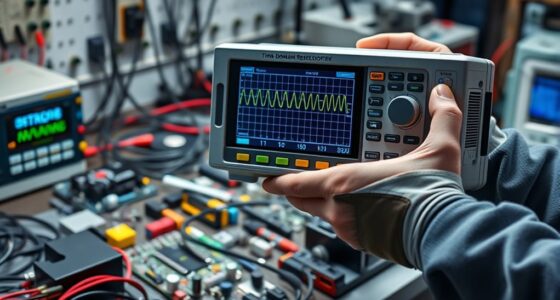
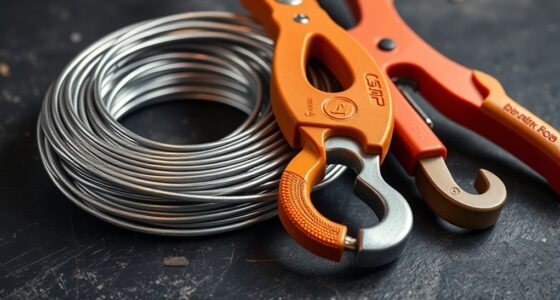
To guarantee precise cuts and clean terminations, a quality cable cutter or wire stripper is indispensable. These tools allow you to remove insulation without damaging the conductor, ensuring reliable connections. A good crimping tool is also essential for attaching connectors securely, which is critical for maintaining signal integrity and safety. When you use the right tools for these tasks, you reduce the risk of connection failures and electrical issues down the line.
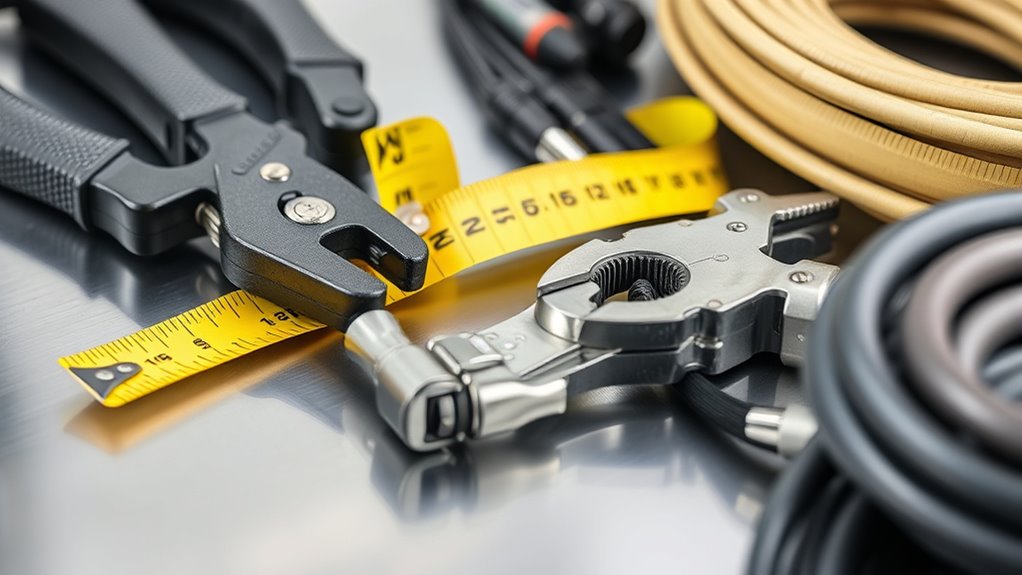
Measuring tapes or cable length meters help you determine exactly how much cable you need, avoiding waste and ensuring your setup fits perfectly. A level or a laser level keeps your cables straight and aligned, especially when running cables along walls or ceilings. This attention to detail enhances the professional look of your installation and prevents sagging or accidental disconnections. Additionally, selecting the appropriate cable connectors ensures a secure and reliable connection, which is vital for both safety and performance.
Finally, a reliable drill or screwdriver makes mounting hardware straightforward. Whether you’re attaching brackets or securing panels, having the right power tools saves time and effort. Remember, combining the correct tools with a focus on cable management and safety equipment leads to a smooth, efficient, and safe installation process. When you’re well-equipped, you’re more confident, your work looks professional, and you’re better prepared to handle unforeseen challenges along the way.
Frequently Asked Questions
What Safety Gear Is Recommended During Cable Installation?
During cable installation, you should wear personal protective equipment like gloves, safety glasses, and a hard hat to stay safe. Make sure you’ve undergone safety training to understand potential hazards and proper procedures. Use high-visibility clothing if working near traffic or heavy equipment. Always check your gear before starting, and follow safety protocols to prevent injuries. Staying alert and prepared helps guarantee a safe and efficient installation process.
How Do Weather Conditions Affect Cable Installation Tools?
Weather impacts your cable installation tools like a storm affecting a calm sea—challenging your progress. Rain, snow, and humidity can weaken tool durability, causing rust or corrosion, and make handling more slippery and dangerous. Extreme temperatures can also affect the precision and effectiveness of your tools. To guarantee smooth installation, you need weather-resistant gear and regular maintenance, adapting your techniques to the changing climate, so your work remains steady despite nature’s mood swings.
Are There Eco-Friendly Tool Options Available?
Yes, eco-friendly tool options are available. You can choose tools made from recyclable materials or with biodegradable options, reducing environmental impact. Many manufacturers now produce cable installation tools from sustainable resources, helping you stay eco-conscious on the job. By selecting these environmentally friendly tools, you contribute to sustainability efforts while maintaining efficiency and safety during installation. This approach supports greener practices in your cable installation projects.
What Are the Maintenance Tips for Cable Installation Tools?
Did you know that properly maintained tools can last up to 50% longer? To keep your cable installation tools in top shape, regularly check and calibrate them to guarantee accuracy. Store your tools in a dry, organized space, following storage best practices to prevent rust and damage. Clean them after each use, and lubricate moving parts as needed. These simple steps help maintain performance and extend your tools’ lifespan.
Can These Tools Be Used for Outdoor and Indoor Installations?
Yes, these tools can be used for both outdoor and indoor installations. You might consider wireless alternatives for easier DIY setups or hardwired tools for more permanent solutions. Keep in mind weather conditions and physical space when utilizing your tools outdoors. Properly maintaining your equipment ensures longevity and reliable performance, whether you’re working inside or outside. Always choose the right tools for your specific installation environment to achieve the best results.
Conclusion
By using the right tools, you can guarantee a safe, efficient, and professional cable installation. Did you know that proper cable management can reduce installation time by up to 30%? Investing in quality accessories, safety gear, and measurement devices not only improves your work quality but also minimizes risks. So, equip yourself with these essential tools, stay safe, and make every project a success!