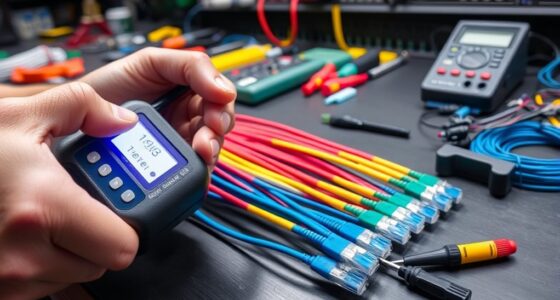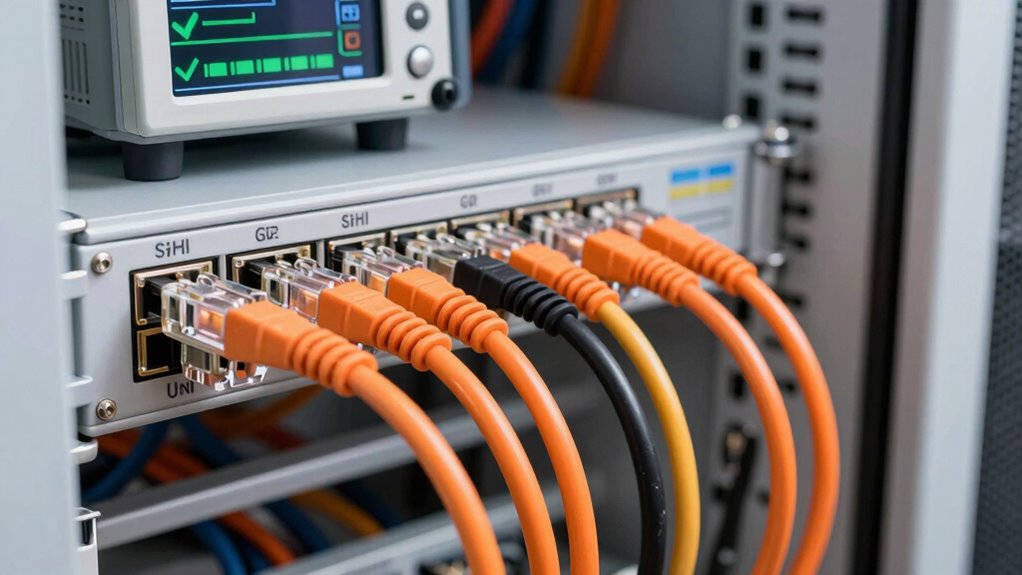

Good cable testing after installation shows that your cables are working properly, meeting safety standards, and can handle your data loads without issues. You should check for signal integrity, guaranteeing electrical signals are clear and free from noise or distortion. Fault detection is essential too, to find and fix any problems early. Confirming compliance with industry standards guarantees reliability and safety. Keep going to find out more about how thorough testing ensures long-term network performance.

Get networking and server gear delivered free — and shop member deals
- Fast, free delivery on millions of items
- Access to Prime Big Deal Days deals on October 6–7
- Prime Video, Amazon Music and more included
Key Takeaways
- Comprehensive signal integrity checks confirm consistent, clear electrical signals without noise or distortion.
- Fault detection identifies and locates issues like open circuits or shorts early, preventing future problems.
- Testing verifies compliance with industry standards and safety regulations for reliable performance.
- Accurate testing results ensure cable connections are stable, durable, and capable of handling required bandwidth.
- Visual and physical inspections complement electrical tests to detect physical damages or insulation issues.
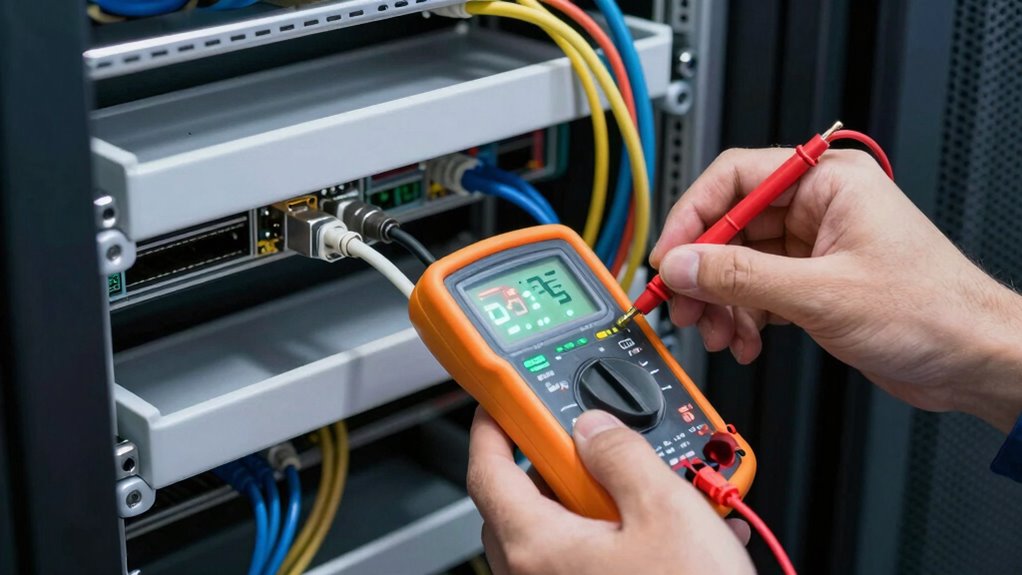
After installing new cables, testing them is a crucial step to guarantee they function properly and meet safety standards. You want to confirm the signal integrity remains high, so data flows smoothly without loss or interference. Good cable testing confirms that the cables are capable of handling the required bandwidth and that there are no issues that could compromise performance down the line. When you perform thorough testing, you’re actively checking for faults that could affect system reliability, such as continuity problems, insulation failures, or physical damages that might not be visible to the naked eye.
A detailed cable test should include measurements of signal integrity. This means verifying that the electrical signals transmitted through the cables are consistent, clear, and free from excessive noise or distortion. Signal integrity testing helps you identify issues like attenuation, crosstalk, or impedance mismatches, all of which can degrade network performance. If these problems are present, they could cause data errors, slowdowns, or even complete communication failures. When your testing shows strong signal integrity, you can be confident that your cables are ready for operational use. Additionally, understanding cable specifications ensures that the tested cables meet the necessary standards for performance and safety, including compliance with industry standards****.
Fault detection is another critical aspect of good cable testing. You need to identify any faults early before they cause bigger problems in your network. Fault detection involves checking for open circuits, short circuits, or any discontinuities along the cable. These issues can create unpredictable behavior or complete failures in your system. Using specialized testing tools, you can pinpoint exactly where the faults are located, which simplifies repairs and reduces downtime. Detecting faults during testing allows you to address problems proactively, avoiding costly troubleshooting and potential system failures later. Moreover, proper testing procedures help ensure connectivity reliability, which is essential for maintaining a stable network environment. Ensuring test accuracy during the process further enhances your confidence in the system’s performance and safety. Recognizing the importance of standardized testing methods can also improve overall reliability and compliance.
As an affiliate, we earn on qualifying purchases.
Frequently Asked Questions
How Often Should Cable Testing Be Performed After Installation?
You should perform cable testing regularly to guarantee peak performance and safety. Generally, testing frequency depends on your environment and usage, but a good rule of thumb is to test annually or after any significant changes or maintenance. Regular cable maintenance and testing help identify issues early, preventing failures. Stay proactive by scheduling consistent testing, especially in high-demand or critical systems, to keep your network reliable and efficient.
What Are Common Signs of Faulty Cable Connections?
You’ll notice faulty cable connections through visual inspection, such as exposed wires or damaged insulation. Connection integrity issues may cause intermittent signals, slow data transfer, or complete connection failure. Keep an eye out for corrosion or loose fittings, which can compromise performance. Regular testing helps identify these problems early, ensuring your connections stay secure and reliable. Addressing signs of faults promptly maintains peak network performance and prevents future issues.
Can Cable Testing Detect All Types of Cable Faults?
While cable testing is essential, it doesn’t catch every fault—like subtle issues in cable insulation or minor signal integrity problems. You might find broken or shorted connections, but small insulation leaks or slight signal degradation can slip through. Think of testing as a high-powered magnifying glass: it reveals many faults but not every hidden flaw. For thorough safety, combine testing with ongoing inspections and quality controls.
What Equipment Is Required for Post-Installation Cable Testing?
You need specialized equipment like cable testers, Time Domain Reflectometers (TDR), and OTDRs to make certain proper post-installation testing. These devices check cable insulation integrity and connector integrity, helping you identify any faults, miswiring, or insulation issues. Using these tools, you can verify that the cable runs are functioning correctly, ensuring reliable performance and preventing future failures. Proper testing guarantees your installation meets safety and industry standards.
How Long Does a Typical Cable Test Take?
A typical cable test takes about 30 minutes to an hour, depending on cable length and complexity. You’ll quickly verify cable insulation and connector integrity, ensuring no faults or degradation. Visualize running tests that check for continuity, signal loss, and insulation breaches—these are quick, systematic checks. This process confirms your cable’s performance, preventing future issues and guaranteeing reliable connectivity without significant downtime.
As an affiliate, we earn on qualifying purchases.
Conclusion
Think of your installed cables as the roots of a tree, silently supporting the entire ecosystem above. When you test them thoroughly, you’re ensuring these roots are strong and healthy, ready to nourish your network’s growth. Good testing is like watering and pruning, revealing any weak spots before they cause damage. With diligent checks, your cables stand resilient—a sturdy foundation that quietly sustains your digital world, just like roots hidden beneath the surface, essential yet unseen.
As an affiliate, we earn on qualifying purchases.
As an affiliate, we earn on qualifying purchases.
Halloween Picks
halloween
As an affiliate, we earn on qualifying purchases.