The best cloud backup storage services in this roundup are mostly personal NAS devices, which store files on your own network rather than automatically providing off-site cloud storage. My best overall pick is the Synology DS225+ for buyers who want a flexible two-drive system and a mature software ecosystem; the UGREEN DH4300 Plus stands out for four-bay expansion, while the BUFFALO LinkStation 220 8TB is a simpler ready-to-use option with drives included. The main tradeoffs are setup effort, storage capacity, drive redundancy, and whether you need a separate cloud backup for protection beyond your home. A portable device such as the Synology BeeDrive serves a different purpose from a network-attached storage system, so matching the device to your backup routine matters. Read on for the full breakdown and a guide to choosing the right setup.

Get business pricing on networking and server gear
- Business-only prices and quantity discounts
- Tax-exempt purchasing
- Multiple users, one account, clear invoices
Key Takeaways
- The Synology DS225+ leads for flexibility: its diskless, two-bay design gives buyers more control over drives and storage planning, but requires a separate drive purchase and setup.
- Four-bay models suit growing libraries: the UGREEN DH4300 Plus and DXP4800 Pro offer more room to expand than two-bay or single-drive LinkStation models, at the cost of a larger, more involved setup.
- Included-drive LinkStations prioritize convenience: the Buffalo 210 and 220 models arrive with drives, while their fixed configurations offer less freedom than diskless NAS systems.
- Capacity does not equal backup protection: a single-drive NAS, including the larger-capacity Buffalo 210 options, does not provide drive redundancy; buyers should keep another copy elsewhere.
- Portable and network storage solve different problems: the BeeDrive and PocketCloud are suited to mobile or direct-device workflows, while NAS systems are better fits for shared, always-available home storage.
| Synology BeeDrive 2TB Portable Wireless SSD |  | Best Portable Backup Hub | Storage capacity: 2 TB | Interface: USB 3.2 | Connectivity: USB-A, USB-C, Wi-Fi, cellular | VIEW LATEST PRICE | See Our Full Breakdown |
| UGREEN NAS DH4300 Plus 4-Bay Network Attached Storage |  | Best High-Capacity Home NAS | Drive bays: 4 | Maximum capacity: 128 TB | Drive inclusion: Diskless; HDDs/SSDs not included | VIEW LATEST PRICE | See Our Full Breakdown |
| BUFFALO LinkStation 210 2TB 1-Bay NAS with Included Hard Drive |  | Best Simple NAS with Drive Included | Storage capacity: 2TB | Drive bays: 1 | Hard drive: Included | VIEW LATEST PRICE | See Our Full Breakdown |
| KingSpec N100 2TB Personal Cloud NAS with Pre-Installed SSD |  | Best Quiet, Ready-to-Use Personal NAS | Storage capacity: 2 TB | Drive type: 2.5-inch SATA SSD | Connectivity: Ethernet | VIEW LATEST PRICE | See Our Full Breakdown |
| UGREEN DH2300 2-Bay NAS for Personal Storage and Device Backups |  | Best Expandable Two-Bay Value | Drive bays: 2 | Maximum capacity: 64 TB | Drive inclusion: Storage drives not included | VIEW LATEST PRICE | See Our Full Breakdown |
| UGREEN NAS DXP4800 Pro 4-Bay Network Attached Storage |  | Best for Power Users | Drive bays: 4 x 3.5-inch HDD bays | Processor: Intel Core i3-1315U, 6 cores, 8 threads, up to 4.5GHz | Memory: 8GB DDR5, expandable to 96GB | VIEW LATEST PRICE | See Our Full Breakdown |
| STATIONPC PocketCloud Portable NAS with M.2 NVMe and SD Card Slots |  | Best for On-the-Go Backups | Storage: Up to 8TB; up to 16TB with matching Dock | Drive interface: M.2 PCIe x4 NVMe | Connectivity: USB, Wi-Fi 6, SD card; Ethernet with Dock | VIEW LATEST PRICE | See Our Full Breakdown |
| Synology DS225+ 2-Bay Diskless NAS Media Server | 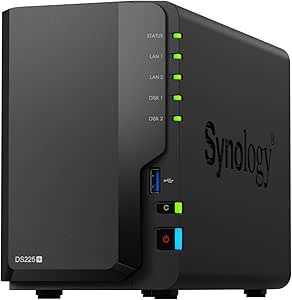 | Best for Backup and Media in One | Drive bays: 2 | Drive configuration: Diskless | Processor: Intel CPU with hardware transcoding | VIEW LATEST PRICE | See Our Full Breakdown |
| BUFFALO LinkStation 220 8TB 2-Bay NAS with Hard Drives |  | Best for Ready-to-Use Shared Storage | Model: LS220D0802 | Storage capacity: 8TB total | Drive bays: 2 | VIEW LATEST PRICE | See Our Full Breakdown |
| BUFFALO LinkStation 210 6TB 1-Bay NAS with Hard Drive | | Best for Simple Single-Drive Backups | Model: LS210D0601 | Storage capacity: 6TB | Drive bays: 1 | VIEW LATEST PRICE | See Our Full Breakdown |
| BUFFALO LinkStation 210 4TB 1-Bay NAS with Hard Drive | | Best for Simple, Subscription-Free Backups | Model: LS210D0401 | Storage capacity: 4TB | Drive bays: 1 | VIEW LATEST PRICE | See Our Full Breakdown |
| BUFFALO LinkStation 720 8TB 2-Bay NAS with Hard Drives |  | Best for Flexible Capacity and Cloud Integrations | Model: LS720D0802 | Total capacity: 8TB | Drive bays: 2 | VIEW LATEST PRICE | See Our Full Breakdown |
| cloud backup storage service | Drive bays | Storage capacity |
|---|---|---|
| Synology BeeDrive 2TB Portable | — | 2 TB |
| UGREEN NAS DH4300 Plus 4-Bay N | 4 | — |
| BUFFALO LinkStation 210 2TB 1- | 1 | 2TB |
| KingSpec N100 2TB Personal Clo | — | 2 TB |
| UGREEN DH2300 2-Bay NAS for Pe | 2 | — |
| UGREEN NAS DXP4800 Pro 4-Bay N | 4 x 3.5-inch HDD bays | — |
| STATIONPC PocketCloud Portable | — | — |
| Synology DS225+ 2-Bay Diskless | 2 | — |
| BUFFALO LinkStation 220 8TB 2- | 2 | 8TB total |
| BUFFALO LinkStation 210 6TB 1- | 1 | 6TB |
| BUFFALO LinkStation 210 4TB 1- | 1 | 4TB |
| BUFFALO LinkStation 720 8TB 2- | 2 | — |
More Details on Our Top Picks
Synology BeeDrive 2TB Portable Wireless SSD
The Synology BeeDrive suits people who want backups to travel with them rather than stay attached to a home network. It can consolidate computer files, phone photos, iCloud Photos, SD-card contents, and external-drive files on one portable 2TB SSD, then make files available through its mobile app. Its Deep Search can find items by descriptions, visible text, time, or place, with AI processing performed locally. Compared with the fixed Ethernet-based KingSpec N100, BeeDrive is easier to carry and offers wireless mobile access, but it does not replace a large, always-on household NAS. Automatic computer syncing also happens when the BeeDrive is connected, so it is not a hands-off network backup target. Check the listed OS requirements before buying, particularly if you use Windows 10 on ARM.
Pros:- Combines backups and media from computers, phones, iCloud Photos, SD cards, and external drives.
- Mobile app supports wireless browsing, downloading, and sharing.
- Deep Search can locate files using descriptions, text, time, or place.
- Local AI processing keeps search work on the device.
Cons:- Automatic computer syncing occurs when the BeeDrive is connected.
- Fixed 2TB capacity is less suited to large household media libraries than a multi-bay NAS.
- Requires supported OS versions and excludes Windows 10 on ARM and Windows Server.
Best for: People who move between computers and phones and want a portable place to consolidate files, photos, and removable-media backups.
Not ideal for: Households seeking continuous network backups or storage well beyond 2TB; computer syncing requires the BeeDrive to be connected, and the capacity is fixed.
- Storage capacity:2 TB
- Interface:USB 3.2
- Connectivity:USB-A, USB-C, Wi-Fi, cellular
- Read speed:1050 MB/s
- Weight:43 g
- Dimensions:2.56 x 0.59 x 2.56 in
- Compatible systems:Android 10 or later; iOS 15 or later; Windows 10 64-bit version 1809 or later and Windows 11; macOS 12 or later
- Search and backup features:Automatic backup and sync, wireless mobile access, Deep Search, OCR, image description generation, offline file search
Our verdict“Choose BeeDrive if you want a portable, searchable backup hub for personal devices rather than an always-on home NAS.”
UGREEN NAS DH4300 Plus 4-Bay Network Attached Storage
The UGREEN NAS DH4300 Plus is the strongest fit here for households that want room to grow beyond a couple of drives. Four bays support up to 128TB, while automatic photo backup and AI album features help organize a shared library across computers and mobile devices. Its 2.5GbE port, 8GB of memory, Docker support, and 4K HDMI output give it more headroom and flexibility than the two-bay UGREEN DH2300. That extra capability comes with setup choices: the DH4300 Plus is diskless, so buyers must supply compatible drives, and its wired-only connection needs a suitable Ethernet location. It also does not support virtual machines. I’d choose it over simpler options when expandable local capacity and broader home-media use matter more than an all-in-one, ready-to-store package.
Pros:- Four bays support up to 128TB of local storage.
- Automatic photo backups and AI album features help manage shared media.
- 2.5GbE networking and 8GB LPDDR4X RAM provide more headroom than the DH2300.
- Docker support and 4K HDMI output extend its uses beyond basic file backup.
Cons:- Diskless configuration means drives must be purchased and installed separately.
- Requires wired Ethernet and does not support Wi-Fi.
- Virtual machines are not supported.
Best for: Households and media collectors planning a large local backup library, with the willingness to choose and install their own drives.
Not ideal for: Buyers who need Wi-Fi, included storage, or virtual-machine support, or who want the simplest ready-to-use backup device.
- Drive bays:4
- Maximum capacity:128 TB
- Drive inclusion:Diskless; HDDs/SSDs not included
- Memory:8GB LPDDR4X RAM
- Network port:2.5GbE
- Connectivity:Ethernet, HDMI, SATA, USB
- Supported applications:Docker; virtual machines not supported
- Wireless connectivity:Wi-Fi not supported; wired Ethernet only
Our verdict“Pick the DH4300 Plus if expandable capacity and extra home-media features matter more than included drives or wireless networking.”
BUFFALO LinkStation 210 2TB 1-Bay NAS with Included Hard Drive
The BUFFALO LinkStation 210 keeps the entry into network backup straightforward: its 2TB drive is included, and the package offers automated backup software, folder access controls, and personal cloud access without a monthly subscription. That makes it less of a parts-and-setup project than the diskless UGREEN DH4300 Plus, which offers much more room for expansion but requires drives of your own. The LinkStation’s one-bay design is the tradeoff: there is no second drive for a mirrored setup, and its ceiling is far below a multi-bay NAS. SSL-encrypted file transfers add protection when files move across the network, but buyers should check the stated macOS compatibility limit. I’d shortlist it for a modest household backup share, not for a growing media archive or users who want flexible storage expansion.
Pros:- Includes a 2TB hard drive, avoiding separate drive selection.
- Automated backup software supports centralized backups from compatible computers.
- Personal cloud access is offered without a monthly subscription.
- Folder access controls and SSL-encrypted transfers add useful privacy controls.
Cons:- One drive bay limits capacity and leaves no room for a second installed drive.
- Its included 2TB capacity is modest beside multi-bay options such as the DH2300.
- Listed macOS compatibility is limited to macOS 15 and earlier.
Best for: Windows or compatible macOS households that want a basic, centralized 2TB backup and personal-cloud device with its drive already installed.
Not ideal for: People planning a large or expandable library, needing multi-drive redundancy, or using macOS newer than the listed supported versions.
- Storage capacity:2TB
- Drive bays:1
- Hard drive:Included
- Compatibility:Windows and macOS 15 (Sequoia) and earlier
- Security:Closed system and SSL encryption
- Backup software:NAS Navigator and PC backup software
- Warranty:2 years
Our verdict“Choose the LinkStation 210 for simple, included-drive network backups, but skip it if you need expansion or multi-drive protection.”
KingSpec N100 2TB Personal Cloud NAS with Pre-Installed SSD
The KingSpec N100 bridges the gap between a portable drive and a conventional diskless NAS: it arrives with a 2TB SSD installed, supports automatic multi-device backups, and can link existing Google Drive, OneDrive, or Dropbox accounts. That reduces setup work compared with the drive-less UGREEN DH2300, though the UGREEN can grow to a much larger capacity with separately purchased drives. A fanless aluminum enclosure and low stated power draw suit a quiet, always-on spot at home, while remote access makes stored files available beyond the local network. The main constraint is its fixed 2TB capacity, and it needs Ethernet rather than Wi-Fi. I’d favor the N100 for buyers who value a compact, quiet appliance and cloud-account integration over drive-bay expansion or a larger local archive.
Pros:- Pre-installed 2TB SSD avoids drive installation.
- Fanless aluminum design is suited to quiet, continuous operation.
- Supports remote access, automatic multi-device sync, and links to Google Drive, OneDrive, or Dropbox.
- Compact enclosure and stated standby power below 3 W suit a small home setup.
Cons:- Requires an Ethernet connection and does not offer built-in Wi-Fi.
- The 2TB SSD limits growth compared with the expandable UGREEN DH2300.
- Its compact design does not provide the multi-bay capacity of larger NAS options.
Best for: People wanting a quiet, compact home backup device with an SSD already installed and the option to link existing cloud accounts.
Not ideal for: Large-media households or anyone who needs Wi-Fi, multiple drive bays, or capacity beyond the included 2TB SSD.
- Storage capacity:2 TB
- Drive type:2.5-inch SATA SSD
- Connectivity:Ethernet
- Dimensions:5.12 x 3.78 x 0.91 inches
- Weight:8.8 ounces
- Design:Fanless aluminum enclosure
- Power draw:Standby: <3 W; full load: <8 W
- Warranty:3 years
Our verdict“Choose the N100 for quiet, low-effort personal backups and cloud-account linking, not for a large expandable archive.”
UGREEN DH2300 2-Bay NAS for Personal Storage and Device Backups
The UGREEN DH2300 is a practical step up from a single-drive box for people who want to build a shared backup library gradually. Its two bays support up to 64TB with separately purchased drives, and features such as automatic device backups, AI photo tagging, duplicate detection, RAID modes, and two-factor authentication give it a stronger home-NAS toolkit than the included-drive BUFFALO LinkStation 210. The tradeoff is that buyers must supply and configure storage, while the Buffalo is simpler to start using. The DH2300 also uses wired 1GbE, with transfer speeds listed up to 125 MB/s, and does not support Docker, virtual machines, or server applications. I’d choose it for multi-device backups and expandable photo storage, but not as a platform for running services or for a Wi-Fi-only setup.
Pros:- Two bays support up to 64TB with compatible drives.
- Automatic backups work across Windows, iOS, Android, and macOS.
- AI photo tagging and duplicate-photo detection help organize image libraries.
- RAID modes, two-factor authentication, permission controls, and encrypted transfers add backup and access protections.
Cons:- Storage drives are not included and must be purchased separately.
- Uses wired Ethernet; Wi-Fi requires an external USB adapter.
- Does not support Docker, virtual machines, SAN Manager, or server applications.
Best for: Households backing up phones and computers that want two-bay expansion, photo organization, and storage they can select themselves.
Not ideal for: Buyers who want drives included, built-in Wi-Fi, or NAS features for Docker, virtual machines, or server applications.
- Drive bays:2
- Maximum capacity:64 TB
- Drive inclusion:Storage drives not included
- Memory:4 GB
- Ethernet:1GbE
- Maximum transfer speed:Up to 125 MB/s
- Connectivity:Ethernet, HDMI, SATA, USB
- Supported features:Automatic backups, AI photo tagging, RAID modes, two-factor authentication, permission controls, encrypted transfers
Our verdict“Pick the DH2300 if you want an expandable two-bay backup NAS with photo tools, and skip it if you need wireless or server features.”
UGREEN NAS DXP4800 Pro 4-Bay Network Attached Storage
The DXP4800 Pro is the most capable choice here for buyers who want a cloud backup hub that can also run applications and virtual machines. Its four drive bays, two M.2 slots, and RAID options give it more room to build a flexible storage setup than the two-bay Synology DS225+. Dual 10GbE and 2.5GbE ports can also speed up transfers on a suitably equipped network, while expandable DDR5 memory supports heavier workloads such as Docker containers. That extra headroom comes with added setup and management complexity; it is more machine than a household seeking straightforward computer backups may need. The NAS is diskless, and the stated maximum capacity is inconsistent across the supplied product information, so I would verify supported drive limits before planning a large array.
Pros:- Four HDD bays and two M.2 slots support flexible capacity and SSD configurations
- Expandable DDR5 memory and Docker and virtual machine support suit home-lab workloads
- 10GbE and 2.5GbE ports offer faster transfer options than the Synology DS225+
- Tool-free drive trays and multi-zone cooling simplify drive installation and help manage heat
Cons:- Diskless setup requires separate drive purchases and configuration
- Maximum capacity is listed as both 128TB and 144TB in the supplied information
- Advanced features and networking may be unnecessary complexity for basic backup needs
Best for: Home lab owners and technically confident households building a high-capacity backup server with room for apps, virtual machines, and fast local transfers
Not ideal for: First-time NAS buyers who mainly want simple automated backups without configuring storage pools, applications, or a network upgrade
- Drive bays:4 x 3.5-inch HDD bays
- Processor:Intel Core i3-1315U, 6 cores, 8 threads, up to 4.5GHz
- Memory:8GB DDR5, expandable to 96GB
- Network ports:10GbE and 2.5GbE
- Storage support:Up to 4 HDDs and 2 M.2 PCIe 4.0 SSDs
- RAID modes:RAID 0, 1, 5, and 10
- Operating system:UGOS Pro
- Chassis:Unibody aluminum with multi-zone cooling
Our verdict“Choose the DXP4800 Pro if you want an expandable, high-performance NAS for backups plus home-lab workloads and are comfortable configuring it.”
STATIONPC PocketCloud Portable NAS with M.2 NVMe and SD Card Slots
The PocketCloud fills a niche that the stationary NAS units here do not: backing up files away from a desk or home network. Its SD card and USB backup options are useful for photographers and travelers who need to copy media directly, while Wi-Fi 6 and app-based file management provide access without a conventional NAS setup. Two replaceable batteries are specified for up to six hours of continuous use, making it more suited to mobile workflows than the desktop-focused Synology DS225+. Capacity depends on the M.2 drive you supply, and the device is diskless; reaching the stated 16TB capacity also requires its matching Dock. Ethernet is unavailable without that Dock, so buyers who want a reliable wired home backup server should choose a fixed NAS instead.
Pros:- SD card, USB, and Wi-Fi 6 backup options suit varied mobile workflows
- Two replaceable batteries are rated for up to six hours of continuous use
- LCD and one-click backup simplify copying files away from a computer
- Portable aluminum enclosure includes a cooling fan
Cons:- M.2 storage is not included, so the device needs a separate drive
- Ethernet connectivity requires the matching Dock
- The stated 16TB capacity also requires the Dock, limiting the standalone unit to 8TB
Best for: Traveling photographers and field workers who need to back up SD cards, USB drives, and mobile devices while away from a home network
Not ideal for: Households seeking always-on wired network storage or buyers who want included storage and uncomplicated desktop deployment
- Storage:Up to 8TB; up to 16TB with matching Dock
- Drive interface:M.2 PCIe x4 NVMe
- Connectivity:USB, Wi-Fi 6, SD card; Ethernet with Dock
- Battery:Two replaceable 3200mAh batteries
- Continuous use:Up to 6 hours
- Display:LCD
- Weight:722 g
- Included storage:Diskless
Our verdict“Pick PocketCloud for portable media backups and field access, not as a replacement for an always-on wired home NAS like the Synology DS225+.”
Synology DS225+ 2-Bay Diskless NAS Media Server
The Synology DS225+ suits buyers who want one compact device for automated backups, shared files, and media streaming. DiskStation Manager brings those jobs together, while RAID and snapshot protection add safeguards beyond simply storing a second copy of files. Compared with the BUFFALO LinkStation 220, the DS225+ offers snapshots and a broader media-server role, but it arrives without drives, so setup requires selecting and installing storage. Its two bays also offer less room to grow than the four-bay UGREEN DXP4800 Pro, and the advertised maximum capacity is 40TB. Support for up to 30 IP cameras adds flexibility for small surveillance setups, though that feature may matter little to buyers focused only on computer backups. This is a balanced desktop option, not the highest-capacity choice in the group.
Pros:- DiskStation Manager combines automated backups, file sharing, and media streaming
- RAID and snapshot protection provide distinct layers of data protection
- Compact tabletop enclosure fits smaller home and office setups
- Supports surveillance systems with up to 30 IP cameras
Cons:- Diskless configuration requires separate drives before use
- Two bays provide less expansion room than the four-bay UGREEN DXP4800 Pro
- Maximum listed capacity is 40TB
Best for: Households and small offices that want a compact NAS for scheduled backups, snapshot protection, file sharing, and media streaming
Not ideal for: Buyers who want a ready-to-use NAS with included drives or need more capacity and expansion room than a two-bay enclosure provides
- Drive bays:2
- Drive configuration:Diskless
- Processor:Intel CPU with hardware transcoding
- Maximum storage capacity:40TB
- Transfer speed:Up to 282 MB/s
- Surveillance support:Up to 30 IP cameras
- Dimensions:9.14 x 4.25 x 6.5 in (D x W x H)
- Warranty:3 years
Our verdict“Choose the DS225+ if you want a compact, versatile backup and media NAS and are prepared to supply your own drives.”
BUFFALO LinkStation 220 8TB 2-Bay NAS with Hard Drives
The LinkStation 220 is a practical pick for buyers who want included drives and shared network storage without assembling a diskless system. Its 8TB total capacity can be configured as RAID 1 for drive redundancy, leaving 4TB usable, or RAID 0 for access to all 8TB without that redundancy. That choice makes its tradeoff especially clear: the Synology DS225+ adds snapshot protection and a wider media-server feature set, while the LinkStation 220 arrives with storage and focuses on straightforward backups and sharing. Subscription-free personal cloud access and folder permissions help with remote access and household file separation. Its listed macOS support ends at version 15, so buyers on newer or future systems should check compatibility before choosing it.
Pros:- Includes two hard drives, reducing the setup work required by diskless NAS options
- RAID 1 provides drive redundancy, while RAID 0 makes the full 8TB available
- Subscription-free personal cloud access supports remote file sharing
- Folder permissions and SSL encryption help control access to shared files
Cons:- RAID 1 reduces usable capacity from 8TB to 4TB
- Listed macOS compatibility is limited to macOS 15 and earlier
- Compared with the Synology DS225+, the supplied feature set does not list snapshot protection
Best for: Families or small offices that want an included-drive NAS for shared files and automated backups, with a choice between redundancy and full capacity
Not ideal for: Buyers who need more than 4TB usable with RAID 1, advanced snapshot tools, or confirmed support for macOS versions newer than 15
- Model:LS220D0802
- Storage capacity:8TB total
- Drive bays:2
- Included hard drives:Yes
- RAID modes:RAID 1 (4TB usable) and RAID 0 (8TB usable)
- Compatibility:Windows and macOS 15 and earlier
- Security:SSL encryption and folder access restrictions
- Warranty:2 years, including hard drives
Our verdict“Choose the LinkStation 220 if you want included drives and simple shared backups, and can accept 4TB usable when using RAID 1.”
BUFFALO LinkStation 210 6TB 1-Bay NAS with Hard Drive
The LinkStation 210 6TB is the simplest fit for a buyer who wants an included drive for centralized files and automated computer backups, without managing a multi-bay array. Its subscription-free personal cloud, folder-level access controls, and SSL-encrypted transfers cover the core sharing and remote-access needs described for this model. Compared with the two-bay LinkStation 220, the LS210 has fewer parts and no RAID configuration to choose, but it also lacks the 220’s option to mirror data across two drives. A single drive leaves no in-device redundancy if that drive fails, and expansion is limited by the one-bay design. It is a straightforward storage destination, not a substitute for a separate backup copy or a more resilient NAS setup.
Pros:- Includes a 6TB hard drive for immediate centralized storage setup
- Supports automated backups from multiple computers
- Folder-level access restrictions help manage shared files
- Subscription-free personal cloud access and SSL-encrypted transfers are included
Cons:- Single drive bay offers no RAID redundancy or internal expansion
- Listed macOS compatibility is limited to macOS 15 and earlier
- Unlike the two-bay LinkStation 220, it cannot mirror data to a second internal drive
Best for: Individuals or small households who want an included 6TB drive for shared files and automated backups across Windows and supported macOS devices
Not ideal for: Buyers who need drive redundancy, room to add internal storage, or listed compatibility with macOS versions newer than 15
- Model:LS210D0601
- Storage capacity:6TB
- Drive bays:1
- Hard drive included:Yes
- Compatibility:Windows and macOS 15 and earlier
- Security:SSL encryption and closed system
- Warranty:2 years, including hard drive
- Country of manufacture:Japan
Our verdict“Choose the LinkStation 210 if you want a simple included-drive backup destination and do not need RAID redundancy or internal expansion.”
BUFFALO LinkStation 210 4TB 1-Bay NAS with Hard Drive
The LinkStation 210 4TB suits households that want one shared place for computer backups and files without adding a cloud subscription. Its included drive gives you 4TB of network storage, while backup software and folder access controls help manage routine backups and shared access. Compared with the LinkStation 720 8TB, this model is simpler: it has one drive bay and no stated Dropbox, Azure, or OneDrive integrations, but it also avoids choosing between RAID modes. The tradeoff is that a single drive bay offers no second-drive RAID option, so this is better for straightforward backup and file sharing than for a more flexible storage setup. Mac users should also check compatibility: the listed support goes through macOS 15.
Pros:- Includes a 4TB hard drive, so storage is ready as part of the package.
- Supports centralized storage and automated computer backups.
- Folder access restrictions help control who can see shared files.
- Personal cloud access does not require a monthly subscription.
Cons:- One drive bay provides no RAID option or second-drive redundancy.
- Listed macOS compatibility stops at macOS 15.
- Lacks the named Dropbox, Azure, and OneDrive integrations offered by the LinkStation 720.
Best for: Windows or macOS 15-and-earlier households seeking an included-drive NAS for centralized backups and private file sharing without a recurring cloud subscription.
Not ideal for: Buyers who want drive redundancy, integrations with Dropbox, Azure, or OneDrive, or compatibility beyond macOS 15.
- Model:LS210D0401
- Storage capacity:4TB
- Drive bays:1
- Included storage:Hard drive
- Compatibility:Windows and macOS 15 and earlier
- Security:Closed system and SSL encryption
- Backup software:NAS Navigator management utility and PC backup software
- Warranty and support:2 years, including hard drive; 24/7 US-based support
- Country of manufacture:Japan
Our verdict“Choose the LinkStation 210 if you want a straightforward 4TB home backup hub with an included drive, but skip it if redundancy or broader cloud integrations matter.”
BUFFALO LinkStation 720 8TB 2-Bay NAS with Hard Drives
The LinkStation 720 8TB is the more flexible pick for buyers who want a network backup hub plus links to existing cloud accounts. Its two included drives support RAID 1 or RAID 0: RAID 1 keeps a mirrored copy but leaves 4TB usable, while RAID 0 uses the full 8TB without that mirror. That choice separates it from the single-bay LinkStation 210 4TB, which is simpler but cannot offer the same drive arrangement. Integrations with Dropbox, Azure, and OneDrive add options for connecting network storage with those services. The main tradeoff is setup and capacity: it needs a router for network access, and buyers choosing RAID 1 must accept half the listed total capacity as usable. It is a stronger fit for growing backup needs than a basic one-drive NAS, but not a standalone portable cloud service.
Pros:- Includes hard drives and offers 8TB total capacity.
- RAID 1 provides a mirrored drive arrangement, while RAID 0 uses the full capacity.
- Integrates with Dropbox, Azure, and OneDrive.
- Closed-system design and SSL encryption support data security.
Cons:- RAID 1 leaves 4TB usable from the 8TB total.
- Requires a router connection for network storage access.
- RAID 0 uses full capacity but does not provide the mirrored arrangement of RAID 1.
Best for: Households or small teams that want an 8TB two-drive NAS, a choice between mirrored or full-capacity storage, and integrations with Dropbox, Azure, or OneDrive.
Not ideal for: Buyers who need a portable device, do not have a router connection available, or require all 8TB to remain usable while using RAID 1.
- Model:LS720D0802
- Total capacity:8TB
- Drive bays:2
- RAID modes:RAID 1 (4TB usable) or RAID 0 (8TB usable)
- Compatibility:Windows and macOS
- Cloud integrations:Dropbox, Azure, and OneDrive
- Security:Closed system and SSL encryption
- Included items:AC adapter, Cat 6A Ethernet cable, LinkStation LS720D, quick setup guide, and warranty statement
- Warranty and support:2-year warranty; 24/7 US-based support
Our verdict“Pick the LinkStation 720 if you want two-drive flexibility and named cloud integrations, provided you can connect it to a router and accept RAID 1’s 4TB usable capacity.”
How We Picked
I ranked these cloud backup storage services by how well each device fits a practical backup routine, rather than treating every product as equivalent cloud storage. I weighed setup and ongoing management, drive-bay count, included versus separately sourced storage, expansion options, and suitability for backing up multiple devices. I also considered whether a product is portable, network-attached, or oriented toward a simpler ready-made setup, since those differences affect where and how backups can happen.
The ranking favors flexibility, a clear path to growing storage, and a usable backup role. That puts the Synology DS225+ ahead as a versatile two-bay system, with UGREEN’s four-bay models appealing to buyers who value expansion. Buffalo’s drive-included LinkStations remain sensible for people who prefer a simpler package, but single-drive models rank lower for backup resilience. Portable options are included for their distinct workflows, not because they replace a home NAS or an off-site cloud copy.
Factors to Consider When Choosing Cloud Backup Storage Services
Before choosing a device, decide what you mean by “cloud backup.” A personal NAS can make files available over a network and may support remote access or cloud-related backup workflows, but it is not automatically an off-site copy. I would choose based on the number of devices, the consequences of losing the data, and how much setup and maintenance I am willing to handle.
Separate Local Storage From Off-Site Backup
A NAS in your home can protect against a laptop failure, but it may not protect files from theft, fire, power damage, or a household-wide outage. A sync folder is not always a backup either: accidental deletions or unwanted changes can propagate across devices. For irreplaceable files, plan for at least one copy outside the home, such as a separate cloud backup service or a drive stored elsewhere. Check whether your chosen device supports the backup destination and schedule you need before buying. The tradeoff is added cost and complexity for protection against a wider range of failures. Do not treat remote access as proof that your files are safely backed up off-site.
Choose Drive Bays Around Future Growth and Recovery
Drive bays affect more than the maximum amount of space: they shape how easily you can expand and whether you can set up redundancy. A single-bay device keeps the hardware simple, but the drive itself remains a single point of failure. Two or more bays can support storage arrangements that tolerate some drive failures, though usable capacity may be lower than the sum of the drives. Redundancy is not a substitute for a separate backup because it will not protect against every deletion, disaster, or device failure. Estimate how much data you expect to add over several years rather than buying only for today’s files. A larger bay count makes the most sense when you value expansion enough to accept a bigger setup and more drive decisions.
Compare Included Drives With Diskless Flexibility
A model with drives included can reduce the number of purchasing decisions and may be ready to configure sooner. A diskless NAS lets you choose drive capacity and may make it easier to tailor the system to your storage plan, but you must budget for compatible drives and install them. Do not compare advertised drive capacity directly with usable storage: redundancy settings and system overhead can reduce the space available for files. Also check drive replacement procedures and whether you can expand the system without rebuilding your entire setup. Included storage favors convenience; diskless designs favor control. Pick the approach that matches your appetite for setup rather than assuming one is automatically the better value.
Match the Device to Your Backup Routine
A network-attached device is a better fit when several computers or household members need a shared destination that stays available at home. Portable storage can suit travel, direct transfers, or backups from devices that are not always on the same network, but it may depend on someone remembering to connect or sync it. Think about where files originate and how often those devices are online. If a backup requires regular manual steps, missed sessions can leave gaps even when the hardware has enough capacity. A simple routine that runs reliably can be more useful than a feature-rich setup that is rarely maintained. Choose for the workflow you can keep up, not just the most impressive list of capabilities.
Plan for Remote Access, Privacy, and Account Security
Remote access can make a home NAS useful when you travel, but it also adds account and network-security responsibilities. Review how the manufacturer handles remote connections, software updates, authentication, and access permissions before exposing files beyond your home network. Use strong, unique credentials and enable additional authentication protections when available. Separate shared household folders from private documents so convenience does not grant everyone the same access. A simpler setup may be preferable if you do not want to monitor updates or manage remote access settings. For sensitive files, consider encryption and keep recovery information somewhere separate from the device.
Account for Maintenance and Recovery Before Buying
Storage systems need attention over time: drives can fail, software needs updates, and backup jobs can stop without anyone noticing. Look for a setup that makes it easy to check whether backups completed and to restore a test file. Keep a record of the device’s configuration and recovery credentials outside the device itself. Buyers often focus on getting data onto a NAS and overlook how they would retrieve it after hardware trouble or an account lockout. A more flexible system can offer more control, but that control usually comes with more maintenance decisions. If you want minimal upkeep, favor a straightforward configuration and schedule occasional checks rather than building a complex setup you will not monitor.
Frequently Asked Questions
Does a personal NAS count as cloud backup?
Not by itself. A NAS stores files on hardware you control, usually at home or in a small office, and it may offer network or remote access. That can protect against a computer’s local drive failing, but it does not automatically create an off-site copy. For protection against theft, fire, or damage to the whole location, add a separate backup destination outside the home. Check the device’s supported backup options and set up scheduled copies rather than relying on file access alone.
Is a single-drive NAS enough for important files?
It can be enough as a convenient storage destination, but a single drive has no second drive to take over if that disk fails. The higher-capacity Buffalo LinkStation 210 models offer more room than smaller configurations, yet capacity does not change this limitation. Keep another copy on a separate device or in an off-site backup service if the files matter. A two-bay system can provide drive-failure tolerance depending on its configuration, but it still does not replace an independent backup. Choose based on how much downtime or data loss you can accept.
Should I buy a diskless NAS or one with drives already installed?
Choose a drive-included model if you want a more direct path to setup and prefer not to source drives separately. A diskless NAS gives you more control over drive choice and capacity, but you need to check compatibility, install the drives, and account for that extra purchase. Compare usable capacity rather than relying only on the total printed capacity, since redundancy settings can reduce the space available for files. Also think ahead to replacement: a system you can maintain confidently is more useful than one whose flexibility goes unused. The right choice depends on whether convenience or customization matters more to your routine.
When should I choose portable storage instead of a NAS?
Portable storage makes sense when files need to move with you, when devices are often away from your home network, or when a direct transfer workflow is simpler than maintaining a server. A NAS is generally a better fit for shared storage and recurring backups from devices on a home or office network. Portability can introduce a manual step, so consider whether you will remember to connect and sync the device regularly. A portable unit also should not be your only copy of important files. Some buyers may use portable storage for travel and a separate NAS or cloud destination for ongoing household backups.
How much storage capacity should I plan for?
Start with the total size of the files you want to protect, then account for expected growth, older file versions, and any media library you want to store. Leave room for capacity lost to drive redundancy or system settings rather than assuming all listed storage will be available for files. If you are choosing a multi-bay NAS, consider whether you can add or replace drives later without disrupting your backup routine. Buying too little can force an early migration, while buying far beyond your needs may add cost and management effort without a clear benefit. Recheck capacity periodically so you can expand before storage fills up.
Conclusion
For most buyers seeking a flexible home backup hub, I recommend the Synology DS225+ as the best overall pick, provided you are comfortable choosing and installing drives. For a best-value direction focused on a ready-made setup, consider the BUFFALO LinkStation 210 configurations, while remembering that a single drive should not be your only copy. The best premium choice for buyers prioritizing expansion is the UGREEN NAS DXP4800 Pro; the UGREEN DH4300 Plus is another four-bay option for a broader storage plan. Beginners who want included drives and a simpler starting point may prefer a Buffalo LinkStation, while buyers who value guided software and future flexibility should look at Synology. For portable transfers, choose the BeeDrive or STATIONPC PocketCloud for its distinct mobile workflow, not as a replacement for a shared NAS and off-site backup. Whatever you choose, pair local storage with an independent copy for stronger protection.