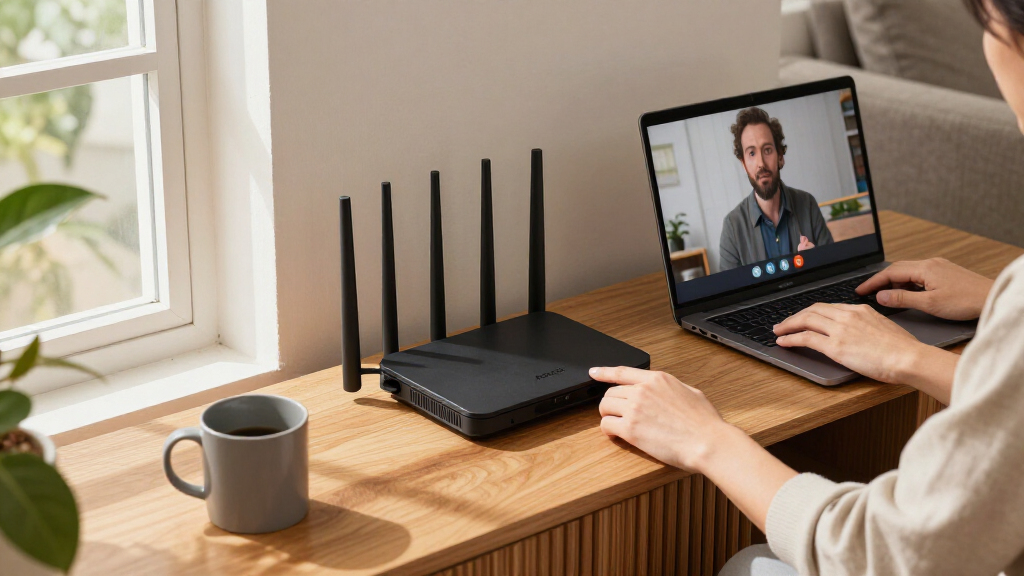

The best Netgear networking products depend on whether you need wider Wi-Fi coverage, a faster router, or more wired connections. My best overall pick is the Orbi 370 Series WiFi 7 Mesh System for homes where a single router may leave dead zones; the Nighthawk WiFi 7 Tri-Band Router is a stronger fit for buyers prioritizing high-capacity wireless performance, while the GS308 8-Port Gigabit Switch adds straightforward wired ports without complicated setup. The tradeoff is between coverage, speed, features, and how much network management you actually need. A mesh system and a standalone router solve different problems, just as a managed switch differs from a plug-and-play model. Read on for my full breakdown of all 15 options and how to choose among them.

Get business pricing on networking and server gear
- Business-only prices and quantity discounts
- Tax-exempt purchasing
- Multiple users, one account, clear invoices
Key Takeaways
- The Orbi 370 3-pack is my overall pick for coverage: a mesh setup addresses room-to-room signal gaps better than relying on a single router, but it takes more placement and setup than a standalone model.
- Wi-Fi 7 routers serve different needs: the tri-band Nighthawk prioritizes capacity, while the dual-band RS90 is a simpler route to Wi-Fi 7; neither replaces mesh nodes when coverage is the main problem.
- Wired networking offers the clearest split between simplicity and control: the GS308 is plug-and-play, while GS305E and GS105Ev2 add basic management features for people who want more network oversight.
- More ports and faster uplinks are not interchangeable: the GS108MX adds a multi-gig connection to an otherwise Gigabit switch, making it more useful for select high-speed links than for upgrading every attached device.
- Special-case products have narrower roles: the A7500 is for adding Wi-Fi to a compatible computer, PLP2000 can help where Ethernet cabling is difficult, and the refurbished RS300 trades new-product status for a premium router feature set.
| NETGEAR Orbi 370 Series WiFi 7 Mesh System, 3-Pack |  | Best for Large Homes | WiFi generation: WiFi 7 | Frequency band: Dual-band | Maximum data transfer rate: Up to 5 Gbps | VIEW LATEST PRICE | See Our Full Breakdown |
| Netgear Nighthawk WiFi 6 Router R6700AX |  | Best for Simple Apartment WiFi | Model: R6700AX | WiFi standard: WiFi 6 (802.11ax) | Frequency bands: Dual-band: 2.4 GHz and 5 GHz | VIEW LATEST PRICE | See Our Full Breakdown |
| NETGEAR GS305E 5-Port Gigabit Ethernet Easy Smart Managed Switch |  | Best Compact Managed Switch | Number of ports: 5 | Port speed: 1 Gbps | Interface: RJ45 | VIEW LATEST PRICE | See Our Full Breakdown |
| NETGEAR 5-Port Gigabit Ethernet Easy Smart Managed Network Switch GS105Ev2 |  | Best for Small-Business Traffic Controls | Number of ports: 5 | Data transfer rate: 1 Gbps | Interface: RJ45 | VIEW LATEST PRICE | See Our Full Breakdown |
| NETGEAR Nighthawk AX3000 WiFi 6 Router (RAX36) |  | Best WiFi 6 Upgrade | Model: RAX36 | WiFi standard: WiFi 6 (802.11ax) | Wireless speed: Up to 3 Gbps | VIEW LATEST PRICE | See Our Full Breakdown |
| NETGEAR GS308EP 8-Port PoE+ Gigabit Ethernet Smart Managed Switch |  | Best for PoE-Powered Devices | Ports: 8 RJ45 Gigabit Ethernet ports | PoE+ ports: 8 | Total PoE power budget: 62 W | VIEW LATEST PRICE | See Our Full Breakdown |
| NETGEAR GS308 8-Port Gigabit Ethernet Unmanaged Switch | 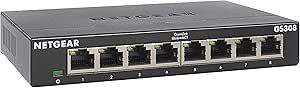 | Best Simple Wired Expansion | Ports: 8 RJ45 Gigabit Ethernet ports | Data transfer rate: 1 Gbps | Switch type: Unmanaged | VIEW LATEST PRICE | See Our Full Breakdown |
| NETGEAR Nighthawk WiFi 7 Tri-Band Router, Up to 9.3 Gbps | 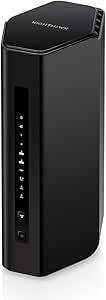 | Best Premium WiFi 7 Router | WiFi standard: WiFi 7 | Bands: Tri-band: 2.4 GHz, 5 GHz, and 6 GHz | Maximum speed: Up to 9.3 Gbps | VIEW LATEST PRICE | See Our Full Breakdown |
| NETGEAR Nighthawk AX1800 WiFi 6 USB 3.0 Adapter (A7500) |  | Best for Upgrading a Windows PC | Model: A7500-100PAS | Hardware interface: USB 3.0 | WiFi standard: WiFi 6 (AX1800) | VIEW LATEST PRICE | See Our Full Breakdown |
| NETGEAR Powerline Ethernet Adapter Kit PLP2000, 2-Pack, 2000 Mbps |  | Best for Wired Links Through Electrical Wiring | Model: PLP2000 | Included adapters: 2 | Maximum speed: Up to 2000 Mbps | VIEW LATEST PRICE | See Our Full Breakdown |
| NETGEAR Nighthawk RS90 Dual-Band WiFi 7 Router |  | Best Entry-Level WiFi 7 Router | WiFi generation: WiFi 7 | Frequency bands: Dual-band, 2.4 GHz and 5 GHz | Maximum data rate: Up to 3.6 Gbps | VIEW LATEST PRICE | See Our Full Breakdown |
| NETGEAR Orbi 770 Series WiFi 7 Tri-Band Mesh System, 3-Pack |  | Best for Large Homes | WiFi generation: WiFi 7 | Frequency bands: Tri-band | Maximum data transfer rate: Up to 11 Gbps | VIEW LATEST PRICE | See Our Full Breakdown |
| NETGEAR Nighthawk RS300 Tri-Band WiFi 7 Router, Certified Refurbished | | Best Multi-Gig Refurbished Router | Condition: Certified refurbished | WiFi generation: WiFi 7 | Frequency bands: Tri-band, including 6 GHz | VIEW LATEST PRICE | See Our Full Breakdown |
| NETGEAR GS108MX 8-Port Gigabit Unmanaged Ethernet Switch with 10G/Multi-Gig Port |  | Best for Multi-Gig Wired Expansion | Switch type: Unmanaged | Ports: 8 × 1 Gbps Ethernet and 1 × 10G/Multi-Gig Ethernet | Interface: RJ45 | VIEW LATEST PRICE | See Our Full Breakdown |
| NETGEAR GS108 8-Port Gigabit Ethernet Unmanaged Switch |  | Best Basic Wired Switch | Switch type: Unmanaged desktop switch | Number of ports: 8 | Data transfer rate: 1 Gbps | VIEW LATEST PRICE | See Our Full Breakdown |
More Details on Our Top Picks
NETGEAR Orbi 370 Series WiFi 7 Mesh System, 3-Pack
The Orbi 370 three-piece mesh system is the strongest fit here for spreading WiFi across a large home: its router and two satellites are rated for coverage up to 6,000 sq. ft. and as many as 70 devices. Unlike the standalone Nighthawk RAX36, it uses satellites to extend coverage, which can help address dead zones without relying on one router’s location. WiFi 7 and a 2.5 Gbps LAN port also give it more headroom than the WiFi 6 routers in this group, though its stated internet compatibility tops out at plans up to 2.5 Gbps. The tradeoff is a larger multi-unit setup, and coverage depends on placement and the home’s layout. Armor protection continues only with a separate subscription after its trial.
Pros:- Router and two satellites are rated to cover up to 6,000 sq. ft.
- Supports up to 70 connected devices.
- WiFi 7 and a 2.5 Gbps LAN port provide newer wireless and wired capacity.
- App-guided setup, older WiFi 6 and WiFi 5 device compatibility, and satellite expansion.
Cons:- Coverage varies with building materials, layout, and satellite placement.
- NETGEAR Armor requires a subscription after the 30-day trial.
- Designed for use in the United States only.
Best for: Households with multiple floors or far-flung rooms, many connected devices, and a need for mesh coverage rather than a single-router signal.
Not ideal for: Apartment dwellers or small-home users who do not need satellite coverage; a standalone router such as the R6700AX is a simpler fit.
- WiFi generation:WiFi 7
- Frequency band:Dual-band
- Maximum data transfer rate:Up to 5 Gbps
- Coverage:Up to 6,000 sq. ft.
- Maximum connected devices:70
- Package contents:Router and two satellites
- LAN port bandwidth:2.5 Gbps
- Internet compatibility:Cable and fiber providers; plans up to 2.5 Gbps
Our verdict“Choose the Orbi 370 if a large or multi-level home needs satellite-based coverage and WiFi 7, rather than the simpler single-router approach of the RAX36.”
Netgear Nighthawk WiFi 6 Router R6700AX
The Nighthawk R6700AX is the straightforward pick for a small home or apartment that needs a current WiFi 6 router without a mesh kit. Its stated coverage reaches 1,500 sq. ft., with capacity for up to 20 devices, and the Nighthawk app handles setup and management. Compared with the Nighthawk RAX36, it has lower listed wireless speed and coverage, but its role is a more modest connection for everyday household devices rather than a higher-capacity single-router setup. Four Gigabit LAN ports support wired devices, while WPA3 adds a current security option. Range can fall when walls or interference obstruct the signal, and the included Armor protection is a trial rather than ongoing coverage.
Pros:- WiFi 6 dual-band service with listed speeds up to 1.8 Gbps.
- Coverage rated for up to 1,500 sq. ft. and 20 devices.
- Four Gigabit LAN ports for wired devices.
- Nighthawk app management and WPA3 support.
Cons:- Single-router coverage can be reduced by walls, floors, and interference.
- Netgear Armor protection requires a paid subscription after the 30-day trial.
Best for: Apartment residents or small-households seeking a WiFi 6 router, app-based setup, and wired ports for a few devices.
Not ideal for: Large homes, households with more than 20 connected devices, or users who need satellite coverage or internet service above the listed Gigabit WAN capacity.
- Model:R6700AX
- WiFi standard:WiFi 6 (802.11ax)
- Frequency bands:Dual-band: 2.4 GHz and 5 GHz
- Maximum speed:Up to 1.8 Gbps
- Coverage area:Up to 1,500 sq. ft.
- Device capacity:Up to 20 devices
- LAN and WAN ports:4 × Gigabit LAN; 1 × Gigabit WAN
- Security and management:WPA3; Nighthawk app; 30-day Netgear Armor trial
Our verdict“Pick the R6700AX for a modest-sized home that needs uncomplicated WiFi 6, while larger households should compare it with the higher-capacity RAX36 or Orbi mesh system.”
NETGEAR GS305E 5-Port Gigabit Ethernet Easy Smart Managed Switch
The GS305E is the compact wired-network pick for someone who needs more than basic port expansion. Its five Gigabit Ethernet ports support VLANs, QoS, and IGMP snooping, giving a home office or small business ways to separate traffic and prioritize selected devices. That makes it more configurable than the unmanaged GS308, though the GS308 offers more ports for a network that only needs straightforward connections. The GS305E’s fanless metal case can sit on a desk or mount on a wall without adding fan noise. It is a switch, not a router: an existing router is still needed for internet access, and it provides no PoE for powering access points or cameras.
Pros:- Five Gigabit Ethernet ports in a compact form.
- VLAN, QoS, and IGMP snooping support add useful traffic controls.
- Fanless operation avoids adding switch noise to a workspace.
- Metal case supports desktop or wall mounting.
Cons:- Does not provide Power over Ethernet.
- Requires an existing router and has only five ports.
- Regional compatibility is limited to the United States and Canada.
Best for: Home-office users or small teams who need a few wired connections plus basic traffic controls such as VLANs and QoS.
Not ideal for: Buyers who need PoE-powered devices, more than five wired connections, or a router with WiFi and internet routing built in.
- Number of ports:5
- Port speed:1 Gbps
- Interface:RJ45
- Management:Easy Smart Managed; web browser interface
- Network features:VLAN, QoS, and IGMP snooping
- Mounting:Desktop or wall mount
- Cooling and case:Fanless; metal
- PoE:Not supported
- Dimensions and weight:3.9 × 3.7 × 1.1 in; 8.8 oz
Our verdict“Choose the GS305E over the unmanaged GS308 when a compact five-port switch needs VLAN and traffic-management features, not PoE.”
NETGEAR 5-Port Gigabit Ethernet Easy Smart Managed Network Switch GS105Ev2
The GS105Ev2 suits a small wired network that needs traffic controls in a compact, silent switch. Its five Gigabit ports pair VLAN configuration, QoS, and port monitoring with desktop or wall mounting, so it offers more visibility and control than the unmanaged GS308. Compared with the GS305E, the GS105Ev2’s listed distinction is its limited lifetime hardware warranty; the GS305E instead specifies a metal case and includes IGMP snooping in its feature list. Either way, five ports set a firm ceiling, and this switch does not replace a router or supply Power over Ethernet. The product data lists a plastic case, so buyers who specifically want the GS305E’s metal construction may prefer that alternative.
Pros:- Five Gigabit Ethernet ports for wired connections.
- Easy Smart Managed features include VLAN, QoS, and port monitoring.
- Fanless design supports silent operation and energy-efficient Ethernet.
- Desktop or wall-mount placement and a limited lifetime hardware warranty.
Cons:- Five ports can limit expansion as a network grows.
- No Power over Ethernet is specified.
- Regional compatibility is limited to the United States and Canada.
Best for: Small-business or home-office users with a handful of wired devices who want VLAN, QoS, and port-monitoring controls without fan noise.
Not ideal for: Growing networks that need more than five ports, PoE for access points or cameras, or a router in the same device.
- Number of ports:5
- Data transfer rate:1 Gbps
- Interface:RJ45
- Switch type:Easy Smart Managed
- Management features:VLAN, QoS, and port monitoring
- Mounting:Desktop or wall mount
- Case material:Plastic
- Dimensions and weight:3.7 × 3.9 × 1.06 in; 8.96 oz
- Warranty:Limited lifetime hardware warranty
Our verdict“Select the GS105Ev2 when port monitoring and its listed limited lifetime warranty matter more than the GS305E’s metal case and IGMP snooping.”
NETGEAR Nighthawk AX3000 WiFi 6 Router (RAX36)
The Nighthawk RAX36 is the stronger single-router WiFi 6 option in this group for households that want more stated capacity than the R6700AX. It is rated for up to 3 Gbps, coverage of 2,000 sq. ft., and as many as 25 devices; its 1.7 GHz quad-core processor and four Gigabit Ethernet ports add capacity for a mix of wireless and wired use. That makes it a better fit than the R6700AX on listed speed, coverage, and device count, but it still cannot extend coverage like the Orbi 370 mesh system. The RAX36 also requires a separate cable modem, and its compatible internet service is capped at plans up to 1 Gbps, so its wireless speed figure should not be mistaken for supported internet-plan speed.
Pros:- WiFi 6 wireless speeds listed up to 3 Gbps.
- Coverage rated for up to 2,000 sq. ft. and 25 devices.
- 1.7 GHz quad-core processor and four Gigabit Ethernet ports.
- Supports WPA3 security.
Cons:- A separate cable modem is required for internet service.
- Compatible internet service is limited to speeds up to 1 Gbps.
- A single router cannot provide the satellite-based coverage of the Orbi 370.
Best for: Households replacing an older router with WiFi 6 who want a single unit for up to 25 devices, along with several wired connections.
Not ideal for: Homes with persistent dead zones that need satellites, or users with internet plans above 1 Gbps who need a router rated for faster service.
- Model:RAX36
- WiFi standard:WiFi 6 (802.11ax)
- Wireless speed:Up to 3 Gbps
- Coverage:Up to 2,000 sq. ft.
- Recommended device capacity:Up to 25 devices
- Frequency band:Dual-band
- Processor:1.7 GHz quad-core
- Ethernet ports:4 × 1 Gbps
- Modem and internet compatibility:Modem not included; compatible internet service up to 1 Gbps
Our verdict“Choose the RAX36 for a higher-capacity WiFi 6 single-router setup than the R6700AX, provided your internet plan is within its 1 Gbps limit and you already have a modem.”
NETGEAR GS308EP 8-Port PoE+ Gigabit Ethernet Smart Managed Switch
The GS308EP is the pick for a small setup where Ethernet ports also need to deliver power. Its eight PoE+ ports and 62 W budget can simplify wiring for compatible cameras, phones, and access points, while VLAN, QoS, and port monitoring offer more control than the plug-and-play GS308. That makes it a better fit for a small office or home surveillance setup than a basic unmanaged switch. The tradeoff is that its management remains basic, and 62 W can run short if several connected devices draw heavily. I’d choose the GS308 instead when powering devices is unnecessary; buyers who need advanced Layer 2 features should look beyond this model. Its fanless design also avoids adding switch noise to a workspace.
Pros:- Eight PoE+ ports can power compatible network devices over Ethernet
- 62 W total PoE budget supports multiple lower-draw devices
- VLAN, QoS, and port monitoring add useful basic network controls
- Fanless design supports silent desktop or wall-mounted installation
Cons:- The 62 W power budget may not cover multiple high-draw devices
- Smart management lacks advanced Layer 2 functions
- Larger and heavier than the compact GS308
Best for: Small offices and home network owners who need to power several PoE-compatible cameras, phones, or access points and want basic VLAN and QoS controls.
Not ideal for: Users connecting only computers and consoles, who can avoid PoE costs and setup with the simpler GS308, or administrators who need advanced Layer 2 management.
- Ports:8 RJ45 Gigabit Ethernet ports
- PoE+ ports:8
- Total PoE power budget:62 W
- Data transfer rate:16 Gbps
- Management:Smart managed; VLAN, QoS, and port monitoring
- Mounting:Desktop or wall mount
- Dimensions:10.2 × 10.2 × 2.2 in
- Weight:1.1 kg
Our verdict“Choose the GS308EP when you need one compact switch to provide both wired connections and PoE power, but not advanced managed-network features.”
NETGEAR GS308 8-Port Gigabit Ethernet Unmanaged Switch
For adding wired connections without managing network settings, the GS308 is the straightforward choice in this group. Its eight Gigabit ports and plug-and-play setup suit a desk, TV cabinet, or small office where the router has run out of Ethernet connections. Unlike the PoE-capable GS308EP, it does not power cameras or access points, but that also keeps the job simple when connected devices have their own power. The fanless metal case supports quiet desktop or wall-mounted placement. There are no VLAN or QoS controls here, so it’s a poor fit for buyers who need traffic separation or port-level management. Regional compatibility is listed for the U.S. and Canada, which limits its appeal elsewhere.
Pros:- Eight Gigabit Ethernet ports expand wired connections
- Plug-and-play setup requires no network configuration
- Fanless operation stays quiet in shared spaces
- Compact metal case supports desktop or wall mounting
Cons:- No PoE output for cameras, phones, or access points
- Unmanaged design offers no VLAN, QoS, or port monitoring controls
- Regional compatibility is limited to the U.S. and Canada
Best for: Home users or small offices in the U.S. or Canada that need to connect several wired devices with no configuration or PoE requirements.
Not ideal for: Buyers who need to power PoE cameras or access points, configure VLANs, or use the switch outside its stated U.S. and Canada region.
- Ports:8 RJ45 Gigabit Ethernet ports
- Data transfer rate:1 Gbps
- Switch type:Unmanaged
- Power input:12 V DC
- Case material:Metal
- Mounting:Desktop or wall mount
- Dimensions:6.22 × 4.02 × 1.02 in
- Warranty:3-year limited hardware warranty
Our verdict“Pick the GS308 for quiet, no-configuration wired expansion when PoE and management features are not part of the job.”
NETGEAR Nighthawk WiFi 7 Tri-Band Router, Up to 9.3 Gbps
Among the standalone routers in this roundup, the Nighthawk WiFi 7 Tri-Band is the premium choice for households ready to use WiFi 7 and multi-gig wired connections. Its 2.4, 5, and 6 GHz bands and claimed speeds up to 9.3 Gbps give compatible devices more wireless capacity than a conventional WiFi 6 router such as the Nighthawk R6700AX. The 2.5 Gig WAN port and two 2.5 Gig LAN ports also give faster wired equipment room to connect beyond Gigabit speeds. This is a router, not a modem, so an existing modem or gateway is required. The stated 2,500-square-foot coverage is not a guarantee through walls or floors; homes with difficult layouts may be better served by the Orbi 370 mesh system. NETGEAR Armor also moves to a subscription after its trial.
Pros:- Tri-band WiFi 7 supports compatible devices across 2.4, 5, and 6 GHz
- Two 2.5 Gig LAN ports support faster wired connections
- App supports setup and network management
- Automatic firmware updates and built-in router protection are included
Cons:- Requires an existing modem or gateway
- Coverage can drop with walls, floors, and wireless interference
- NETGEAR Armor requires a subscription after the 30-day trial
Best for: Households with a compatible modem, WiFi 7 devices, and multi-gig wired equipment that want a high-capacity standalone router for a broad home footprint.
Not ideal for: Buyers without a separate modem or gateway, homes needing mesh coverage across difficult layouts, or anyone seeking ongoing security features without a subscription.
- WiFi standard:WiFi 7
- Bands:Tri-band: 2.4 GHz, 5 GHz, and 6 GHz
- Maximum speed:Up to 9.3 Gbps
- Coverage:Up to 2,500 sq. ft.
- Device capacity:Up to 100 devices
- WAN port:1 × 2.5 Gig
- LAN ports:2 × 2.5 Gig and 2 × 1 Gig
- Modem requirement:Requires an existing modem or gateway
- NETGEAR Armor:30-day trial; subscription required afterward
Our verdict“Choose this Nighthawk for WiFi 7 and multi-gig ports in a standalone router, but favor an Orbi mesh system if your home needs distributed coverage.”
NETGEAR Nighthawk AX1800 WiFi 6 USB 3.0 Adapter (A7500)
The A7500 USB adapter makes sense when a Windows desktop or notebook needs a WiFi upgrade but replacing the computer is not on the agenda. It adds WiFi 6 connectivity through USB 3.0, supports WPA3, and has a flexible antenna that can be repositioned to help with signal reception. Unlike the Nighthawk WiFi 7 router, this adapter does not upgrade the home network itself; it addresses one compatible PC and tops out at AX1800. That makes it a targeted fix rather than a whole-home networking purchase. Its main restrictions are clear: compatibility is limited to Windows 10 and 11, and the adapter occupies a USB port while connected. Buyers whose PC already has a capable WiFi 6 adapter have little reason to add another.
Pros:- Adds WiFi 6 to compatible Windows PCs through USB 3.0
- Supports dual-band speeds up to 1.8 Gbps
- Flexible antenna can be positioned for reception
- Supports WPA3 security
Cons:- Compatible only with Windows 10 and 11
- Occupies a USB port during use
- AX1800 does not provide the higher wireless capacity of the WiFi 7 Nighthawk router
Best for: Owners of Windows 10 or 11 PCs with older WiFi hardware who want WiFi 6 support and WPA3 without replacing the computer.
Not ideal for: Mac or Linux users, people seeking a router or whole-home upgrade, and PC owners who already have suitable WiFi 6 hardware.
- Model:A7500-100PAS
- Hardware interface:USB 3.0
- WiFi standard:WiFi 6 (AX1800)
- Maximum data transfer rate:1.8 Gbps
- Operating systems:Windows 10 and 11, 32-bit and 64-bit
- Router compatibility:WiFi 5 and WiFi 6 routers and mesh systems
- Security:WPA3
- Dimensions:6.1 × 3.8 × 1.8 in
Our verdict“Choose the A7500 to update an eligible Windows PC’s wireless connection, not as a substitute for upgrading your router or home coverage.”
NETGEAR Powerline Ethernet Adapter Kit PLP2000, 2-Pack, 2000 Mbps
The PLP2000 kit is an alternative for reaching a room where running Ethernet cable is impractical and WiFi is unreliable. Its two adapters send a network connection through household electrical wiring, with plug-and-play setup and Gigabit Ethernet ports at the adapter ends. The built-in filtered power outlet can preserve a wall socket for another device. Unlike the GS308, which adds ports where the network already reaches, this kit is meant to carry a wired connection between rooms. The advertised maximum of 2000 Mbps is a theoretical figure, not a promise of real-world throughput; results depend on the home’s electrical wiring and conditions. It does not provide WiFi, so it suits devices with Ethernet ports rather than phones or wireless-only equipment. It is also specified for U.S. use.
Pros:- Uses existing electrical wiring to carry a network connection between rooms
- Plug-and-play setup avoids running a new Ethernet cable through the home
- Filtered power outlet helps preserve access to a wall socket
- MIMO with Beamforming technology supports the powerline connection
Cons:- Does not provide WiFi for wireless-only devices
- Actual performance depends on household electrical wiring
- Specified for U.S. use
Best for: U.S. households that need a wired connection in another room, cannot easily run Ethernet, and have devices with Ethernet ports.
Not ideal for: Buyers seeking WiFi extension, guaranteed speeds regardless of electrical wiring, or a kit for use outside the U.S.
- Model:PLP2000
- Included adapters:2
- Maximum speed:Up to 2000 Mbps
- Technology:HomePlug AV2, MIMO with Beamforming
- Ethernet ports:2 RJ-45
- Standards:IEEE 1901 and IEEE 802.3
- Input power:100–240 V, 50/60 Hz
- WiFi:Not supported
- Region:U.S.
Our verdict“Pick the PLP2000 when a wired device needs network access in another room and your electrical wiring offers a practical alternative to running cable.”
NETGEAR Nighthawk RS90 Dual-Band WiFi 7 Router
The Nighthawk RS90 is a straightforward way to add WiFi 7 to a home that already has a modem or gateway. Its advertised 3.6 Gbps dual-band capacity and coverage for up to 50 devices suit everyday streaming, browsing, and connected-home use, while the 2.5 Gig WAN port leaves room for a faster internet plan. Compared with the Nighthawk RS300, the RS90 gives up the 6 GHz band, higher wireless speed, and multi-gig LAN ports; in return, it avoids the RS300’s refurbished condition. Four Gigabit LAN ports offer useful wired connections, but they do not match the RS300’s faster LAN options. Coverage is rated for up to 2,000 square feet, so homes with difficult layouts may be better served by the Orbi 770 mesh system. You will also need separate modem equipment, and continued NETGEAR Armor service requires a subscription after its trial.
Pros:- WiFi 7 with advertised speeds up to 3.6 Gbps
- 2.5 Gig WAN port supports a faster incoming connection
- Four Gigabit LAN ports for wired devices
- App management, built-in security features, and automatic firmware updates
Cons:- Requires a separate modem or gateway with an RJ45 Ethernet port
- Dual-band design lacks the RS300’s 6 GHz band
- NETGEAR Armor requires a subscription after the 30-day trial
Best for: Households upgrading from an older router that already have a modem and want WiFi 7, app management, and a 2.5 Gig WAN connection without stepping up to a tri-band model.
Not ideal for: People seeking whole-home coverage across multiple floors, 6 GHz WiFi, or multi-gig wired connections for several devices; consider a mesh system or a router such as the RS300 instead.
- WiFi generation:WiFi 7
- Frequency bands:Dual-band, 2.4 GHz and 5 GHz
- Maximum data rate:Up to 3.6 Gbps
- Maximum connected devices:Up to 50
- WAN port:1 × 2.5 Gigabit
- LAN ports:4 × 1 Gigabit Ethernet
- Management:NETGEAR Nighthawk app
Our verdict“Choose the RS90 if you want a standalone WiFi 7 upgrade for a modest-size home and already have modem equipment.”
NETGEAR Orbi 770 Series WiFi 7 Tri-Band Mesh System, 3-Pack
The Orbi 770 three-pack earns its place for buyers whose main problem is coverage, not a shortage of router features. One router and two satellites are rated to cover up to 8,000 square feet and support up to 100 devices, making this a more fitting choice for a large or spread-out home than the single-unit Nighthawk RS90. Tri-band WiFi 7 advertises speeds up to 11 Gbps, and compatibility with WiFi 6 and WiFi 5 devices lets older phones and laptops remain on the network. Setup and management run through the Orbi app. The tradeoff is a three-unit system that may be excessive in a smaller home, where a standalone router avoids extra hardware. Its stated internet-provider compatibility is cable or fiber plans up to 2.5 Gbps, and the product is intended for use in the United States. NETGEAR Armor also requires a subscription after the 30-day trial.
Pros:- Router and two satellites provide a mesh layout for broad coverage
- Rated for up to 8,000 sq. ft. and 100 connected devices
- Tri-band WiFi 7 advertises speeds up to 11 Gbps
- Works with WiFi 6 and WiFi 5 devices
Cons:- Three units can be more equipment than a smaller home needs
- Designed for use in the United States only
- NETGEAR Armor requires a subscription after the 30-day trial
Best for: Owners of large, multi-room homes who need WiFi coverage beyond a single router and have a cable or fiber plan up to 2.5 Gbps.
Not ideal for: People in apartments or smaller homes who do not need three mesh units, or buyers outside the United States.
- WiFi generation:WiFi 7
- Frequency bands:Tri-band
- Maximum data transfer rate:Up to 11 Gbps
- Included components:One router and two satellites
- Supported devices:Up to 100
- LAN port bandwidth:2,500 Mbps
- Provider compatibility:Cable or fiber plans up to 2.5 Gbps
- Management:NETGEAR Orbi app
Our verdict“Pick the Orbi 770 three-pack over the Nighthawk RS90 when a large home needs mesh coverage rather than a single router.”
NETGEAR Nighthawk RS300 Tri-Band WiFi 7 Router, Certified Refurbished
The certified-refurbished Nighthawk RS300 is the most capable standalone router in this group for buyers who want tri-band WiFi 7 and faster wired networking. Its 9.3 Gbps advertised wireless speed, including a 6 GHz band, gives compatible devices another band to use; two 2.5 Gig LAN ports also suit a wired workstation or storage device better than the RS90’s Gigabit-only LAN ports. Its rated 2,500-square-foot coverage remains well below the Orbi 770 system’s 8,000-square-foot mesh rating, so the RS300 is better for a single coverage zone than a large, difficult layout. It is a router, not a modem, and multi-gig internet may require a compatible modem. The main compromise is condition: this unit is refurbished and carries a 90-day limited warranty, unlike a new router purchase.
Pros:- Tri-band WiFi 7 includes the 6 GHz band
- Advertised wireless speed up to 9.3 Gbps
- Two 2.5 Gig LAN ports support multi-gig wired devices
- Includes WPA3, guest networking, VPN, and automatic firmware updates
Cons:- Certified-refurbished condition comes with a 90-day limited warranty
- Requires a separate modem for cable or fiber service
- A compatible multi-gig modem may be needed to use multi-gig internet plans
Best for: Technically minded buyers who want 6 GHz WiFi 7 and multi-gig wired ports in a standalone router and are comfortable buying a certified-refurbished unit.
Not ideal for: Buyers who want a new product with a longer warranty, need mesh coverage for a large home, or do not have a separate modem.
- Condition:Certified refurbished
- WiFi generation:WiFi 7
- Frequency bands:Tri-band, including 6 GHz
- Maximum wireless speed:Up to 9.3 Gbps
- Internet port:1 × 2.5 Gig
- LAN ports:2 × 2.5 Gig and 2 × 1 Gig
- Security:WPA3, built-in router protection, and automatic firmware updates
- Warranty:90-day limited warranty
Our verdict“Choose the RS300 if multi-gig wired connections and tri-band WiFi 7 matter more to you than buying new or getting mesh coverage.”
NETGEAR GS108MX 8-Port Gigabit Unmanaged Ethernet Switch with 10G/Multi-Gig Port
The GS108MX is the wired-network pick for a home office or small setup that needs more Ethernet connections and has one device or uplink that can benefit from multi-gig speeds. It combines eight 1 Gbps ports with a 10G/Multi-Gig port, unlike the standard GS108, which provides eight Gigabit ports without the faster connection. Plug-and-play operation keeps setup simple: connect devices, then let the switch handle traffic without managed controls. The fanless metal case supports quiet desktop use or wall mounting. Its limitation is clear, though: only one port is multi-gig, and this unmanaged model does not provide configurable network controls. Buyers who need several multi-gig connections or VLAN-style management should look at a different class of switch. Also check the available space: the listed dimensions make it larger than a compact, basic switch may require.
Pros:- One 10G/Multi-Gig port plus eight 1 Gbps Ethernet ports
- Plug-and-play setup requires no configuration
- Fanless metal case operates silently
- Can be placed on a desktop or wall-mounted
Cons:- Unmanaged design lacks configurable network controls
- Only one port supports 10G/Multi-Gig speeds
- The listed dimensions may take more space than a basic switch needs
Best for: Home-office owners or small teams adding wired devices who need one 10G/Multi-Gig connection alongside several standard Gigabit ports.
Not ideal for: Network administrators who need configurable controls, or households that need multi-gig speeds on several ports rather than one.
- Switch type:Unmanaged
- Ports:8 × 1 Gbps Ethernet and 1 × 10G/Multi-Gig Ethernet
- Interface:RJ45
- Mounting:Desktop or wall mount
- Case material:Metal
- Cooling:Fanless
- Dimensions:11.81 × 7.68 × 3.07 inches
- Warranty:Limited lifetime hardware warranty
Our verdict“Choose the GS108MX over the GS108 when you need one multi-gig link but still want simple, unmanaged operation.”
NETGEAR GS108 8-Port Gigabit Ethernet Unmanaged Switch
The GS108 keeps wired expansion simple: it adds eight Gigabit Ethernet ports without requiring configuration, making it a practical companion for a router such as the Nighthawk RS90 when its four LAN ports are not enough. Its fanless metal enclosure can sit on a desk or mount on a wall, while Energy Efficient Ethernet helps reduce power use. Compared with the GS108MX, the GS108 has no 10G/Multi-Gig port, so it is a better fit when standard Gigabit connections are sufficient and a faster uplink is not part of the plan. That simplicity also means no configurable network controls; buyers who need managed features should consider an Easy Smart model such as the GS305E. This version is intended for the U.S. and Canada, which limits its suitability elsewhere.
Pros:- Eight 1 Gbps RJ45 ports expand a router’s wired connections
- Plug-and-play setup needs no configuration
- Fanless metal design supports quiet desktop or wall-mounted use
- Energy Efficient Ethernet helps reduce power consumption
Cons:- Limited to use in the U.S. and Canada
- No multi-gig port, unlike the GS108MX
- Unmanaged design does not offer configurable network controls
Best for: U.S. or Canadian households and small offices that need more standard Gigabit Ethernet ports for computers, printers, TVs, or consoles.
Not ideal for: Buyers outside the U.S. and Canada, users who need a multi-gig port, or network administrators who need managed controls.
- Switch type:Unmanaged desktop switch
- Number of ports:8
- Data transfer rate:1 Gbps
- Interface:RJ45
- Mounting options:Desktop or wall mount
- Case material:Metal
- Maximum power:2.8 W
- Regional compatibility:U.S. and Canada
- Warranty:Limited lifetime hardware warranty
Our verdict“Pick the GS108 for straightforward Gigabit expansion in the U.S. or Canada when multi-gig speed and managed features are unnecessary.”

How We Picked
I ranked these 15 Netgear products by the problem they solve, rather than treating routers, mesh systems, switches, adapters, and powerline kits as direct substitutes. For Wi-Fi products, I weighed coverage approach, Wi-Fi generation, band configuration, and the practical difference between a standalone router and a multi-unit system. For wired products, I looked at port count, managed versus unmanaged operation, PoE support, and whether a multi-gig port meaningfully changes the use case.
Fit and tradeoffs shaped the order: products that serve common home needs with fewer compromises rank ahead of options aimed at narrower setups. A mesh system can earn a higher place for a large or awkwardly shaped home, but it is not automatically the right choice for a small space. Likewise, managed switches and PoE models offer capabilities that basic switches lack, yet those extras matter only when a buyer has devices and network plans that use them. The refurbished RS300 is judged as a distinct purchase option, not as a new unit.
Factors to Consider When Choosing Best Netgear Networking Products
Before choosing a Netgear device, start with the network problem rather than the newest specification. Coverage, client capacity, wired connections, and setup preferences point to different product types, and buying a more advanced device will not fix a mismatch between the hardware and your home or office.
Match the product type to the problem
A router connects your network to the internet and broadcasts Wi-Fi, while a mesh system uses multiple units to extend wireless coverage around a home. A switch adds Ethernet connections to a network that already has a router; it does not provide Wi-Fi or replace the router. Powerline adapters use electrical wiring to carry a network connection between rooms, but their results can vary with wiring and circuit layout. A USB adapter updates wireless connectivity for a computer, not the whole household. Identify the weak point first so you do not buy a capable device that solves the wrong problem.
Choose Wi-Fi generation and band configuration for your devices
A newer Wi-Fi generation can be useful when your devices support it, but it does not automatically improve every older phone, laptop, or smart-home device. Check the capabilities of the devices you use most, especially if you are upgrading for a specific laptop or gaming system. Tri-band models can offer more wireless capacity than dual-band models, but the benefit depends on client count, traffic, and how the network is arranged. Wi-Fi 7 should be a forward-looking choice, not a reason to ignore coverage or compatibility. If your current devices cannot use the newer features, a better-placed or more appropriate Wi-Fi 6 setup may make more sense.
Estimate coverage before deciding between one router and mesh
Floor area alone is a poor guide to Wi-Fi coverage because walls, floors, building materials, and router placement can change the signal substantially. A centrally placed standalone router may suit a compact home, while separate mesh units can help reach distant rooms or multiple floors. Mesh nodes still need suitable placement and a usable connection back to the main unit; putting a node in a dead zone may not solve the problem. Avoid paying for a multi-pack when one router can cover the rooms you use. If coverage is uneven, map where devices lose signal before choosing hardware.
Buy only the Ethernet features your network can use
Count the wired devices you need to connect now, then leave room for likely additions such as a computer, console, access point, or network storage device. An unmanaged switch is the simplest choice when you only need more ports. Easy Smart or smart-managed models make sense when you want features such as traffic organization or greater control, but they add configuration work. PoE+ is useful when compatible devices can receive power over Ethernet, such as certain access points or cameras; without those devices, the feature may go unused. A multi-gig port helps only if the connected device and the rest of that network path can also support higher speeds.
Treat powerline and USB adapters as targeted fixes
Powerline kits can avoid running a long Ethernet cable, but electrical wiring quality and how outlets are connected can affect performance. Check return terms and test the intended outlets before relying on powerline for latency-sensitive or high-bandwidth work. A USB Wi-Fi adapter is a focused upgrade for one computer, and its usefulness depends on operating-system support, USB placement, and whether the computer’s existing wireless hardware is the actual bottleneck. Neither product expands whole-home Wi-Fi in the same way as a router or mesh system. Choose these options when their specific convenience outweighs the uncertainty of the connection path.
Account for setup, support, and refurbishment status
Think about who will maintain the network after installation: an unmanaged switch has little to configure, while a managed model may need settings checked when devices or network needs change. Router and mesh setup can also differ in how much placement, app use, and ongoing administration they involve. For refurbished hardware, review the seller’s condition details, included accessories, warranty, and return policy before purchase. A refurbished premium router may be attractive when its capabilities fit your needs, but its status and support terms are part of the tradeoff. Choose based on the full ownership experience, not the feature list alone.
Frequently Asked Questions
Should I choose the Orbi 370 mesh system or a Nighthawk router?
Choose the Orbi 370 when your main concern is reaching rooms that a single router struggles to cover, especially across multiple floors or a spread-out layout. A Nighthawk router is a more direct fit when one central location can serve your home and you want a standalone wireless hub. Mesh adds units to place and manage, while a router keeps the setup more compact. Wi-Fi generation alone does not settle this choice: coverage layout is the deciding factor. If possible, check signal in the rooms that matter before replacing equipment.
Is a Wi-Fi 7 router worthwhile if most of my devices use Wi-Fi 6?
It can be worthwhile if you expect to keep the router for several years, plan to add Wi-Fi 7 devices, or need the particular capacity and features of a newer model. Your Wi-Fi 6 devices will not gain Wi-Fi 7 capabilities just because the router supports them. If the current problem is weak signal, changing router placement or choosing mesh may have more effect than moving to a newer generation. Also check that your internet plan and wired connections do not limit the speed you can use. Match the upgrade to a real bottleneck rather than the newest label.
When should I buy a managed switch instead of an unmanaged switch?
An unmanaged switch is a good match when you simply need extra Ethernet ports and prefer not to configure network settings. A managed or Easy Smart model is more suitable when you need greater control over traffic or want to organize a more involved home or small-office network. PoE+ adds another decision: it is useful only if you have compatible devices that need power through Ethernet. More controls can help a planned network, but they also create settings that someone must understand and maintain. If you cannot name a feature you need, a basic switch is likely the simpler fit.
Can a powerline adapter replace a mesh system for a room with weak Wi-Fi?
Not in every setup: powerline carries a network connection over electrical wiring, while mesh uses wireless nodes to extend coverage. Powerline may suit a room where a direct wired link is desirable and running Ethernet is impractical, but performance depends on the home’s wiring and outlet arrangement. Mesh is designed to extend Wi-Fi across more of the home, though node placement still matters. If the room needs a stable connection for a device with Ethernet, powerline may be worth trying; for several wireless devices or broad coverage gaps, mesh is usually the more direct approach. Check whether the target outlets share a suitable electrical path before relying on powerline.
What should I check before buying the refurbished Nighthawk RS300?
Confirm the unit’s stated condition, included power supply and accessories, warranty coverage, and return window with the seller. Check that the router’s wireless features fit your devices and that you are comfortable buying refurbished rather than new. A premium feature set cannot compensate for missing accessories, uncertain support, or a condition that does not match your expectations. Also compare the RS300’s role with the new Nighthawk Wi-Fi 7 options in this roundup instead of assuming refurbished automatically means the better choice. The right decision depends on the specific listing and the support terms attached to it.
Conclusion
For the best overall coverage-focused choice, I recommend the Orbi 370 Series WiFi 7 Mesh System; it suits households where one router may not reach every room. Buyers who want a high-capacity premium standalone router should look at the tri-band Nighthawk Wi-Fi 7 model, while the dual-band RS90 is a simpler Wi-Fi 7 option for less demanding setups. For best value in basic wired expansion, the GS308 keeps the job simple; beginners who only need more ports should start there rather than pay for management features they will not use. Choose the GS308EP for compatible PoE+ devices, the GS108MX when a multi-gig link has a clear purpose, the PLP2000 when cabling is difficult, and the A7500 when one computer needs a wireless adapter. That leaves each buyer with a clear first choice based on the network problem they need to solve.