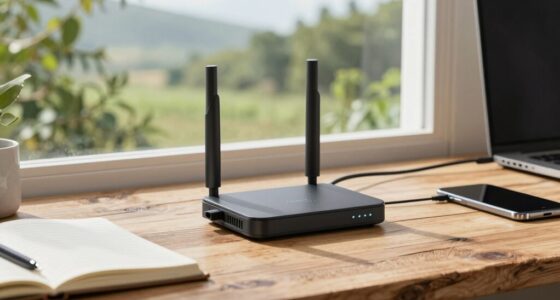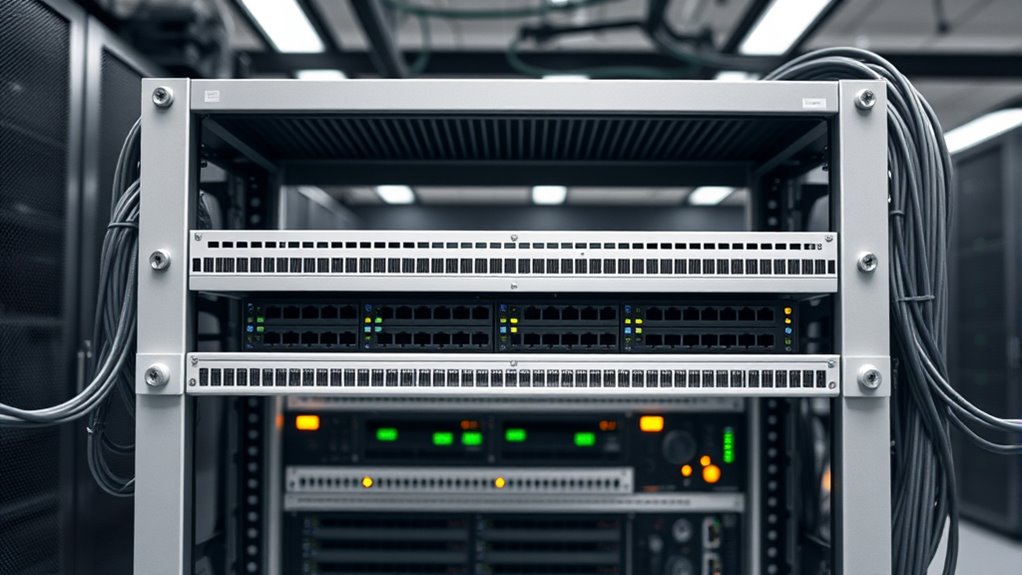

A 12U open frame rack can organize network, server, and AV equipment while keeping cables and controls accessible, but the right choice depends on where it will sit and how deep your gear is. My best overall pick is the StarTech 12U 4-Post Open Frame Rack for its adjustable 22–40-inch depth, mobile design, and stated 1,200-pound capacity. The VEVOR adjustable-depth 12U rack is a flexible alternative for mixed floor and wall setups, while the Tecmojo 24-inch swing-gate wall rack suits buyers who want rear access in a fixed installation. The main tradeoffs are wall-mounted versus freestanding support, compact depth versus room for deeper equipment, and mobility versus a stable permanent setup. Read on for the full comparison, selection criteria, and guidance on matching rack dimensions to your gear.

Get business pricing on networking and server gear
- Business-only prices and quantity discounts
- Tax-exempt purchasing
- Multiple users, one account, clear invoices
Key Takeaways
- Adjustable depth separates the most adaptable floor racks: the StarTech 4-post model spans 22–40 inches, while the VEVOR adjustable model spans 23–40 inches; both suit changing equipment better than fixed-depth options.
- Wall mounting makes depth and access more consequential: the listed wall models range from 15.8 to 24 inches, and swing-gate designs can ease rear access where a rack cannot be pulled away from the wall.
- Mobility is not the same as portability: casters help reposition a loaded floor rack, but they do not replace checking wheel locks, floor conditions, or the support requirements of a wall-mounted rack.
- Load claims vary sharply across the lineup: StarTech lists a 1,200-pound capacity for its 4-post mobile rack, while its 2-post wall model lists 200 pounds and RackPath lists 150 pounds; verify the rating and installation conditions for the exact model.
- Shelves and mounting hardware can simplify setup but do not solve fit by themselves: models from Tecmojo, VEVOR, RackPath, and others include shelf-related features, yet buyers still need to check usable depth, rail-hole compatibility, and equipment ventilation.



| 12u open frame rack | Material | Depth | Dimensions |
|---|---|---|---|
| TECMOJO 12U Open Frame Network | Cold rolled steel | — | — |
| 12U Wall Mount Rack Open Frame | SPCC cold-rolled steel / alloy steel | 18 in | 18 × 19.7 × 12 in (L × W × H) |
| StarTech 12U 4-Post Open Frame | Cold-rolled steel | Adjustable from 22 to 40 in | — |
| Tecmojo 12U Wall Mount Server | Cold-rolled steel | 18 in | 20 × 26 × 18 in (W × H × D) |
| VEVOR 12U Open Frame Network R | Q235 steel | 23.03 in | 23.03 × 20.08 × 24.61 in (D × W × H) |
| Tecmojo 12U Wall Mount Network | Alloy steel | 15.8 inches | 15.8" D x 19.9" W x 24.1" H |
| RackPath 12U Open Frame Networ | Reinforced cold-rolled steel | — | — |
| Tecmojo 12U Wall Mount Server | Cold-rolled steel | 24 inches | 24" D x 20" W x 26" H |
| VEVOR 12U Open Frame Server Ra | Carbon steel | — | — |
| StarTech 12U 2-Post Wall Mount | SPCC steel | — | 20" D x 19.8" W x 25.2" H |
| NavePoint 12U Wall Mount Serve | 1.5 mm cold-rolled alloy steel | 24 inches | 24 × 20.8 × 26 inches |
| NavePoint 12U Wall Mount Rack | 1.5 mm SPCC cold-rolled steel | 16 inches | 15.8 × 20 × 24.15 inches |
| Tecmojo 12U Open Frame Network | Cold-rolled steel | — | — |
| NavePoint 12U Wall Mount Serve | Alloy steel | 18 inches | 18 × 20 × 25 inches |
More Details on Our Top Picks
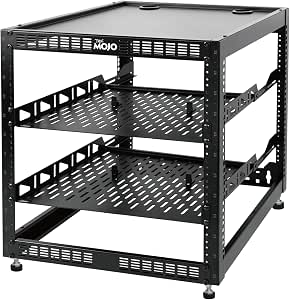
TECMOJO 12U Open Frame Network Rack with Casters and Shelves
The TECMOJO makes the most sense when your rack needs to move between rooms or shift around a workspace. Four casters and two ventilated shelves give it an advantage over the fixed Tedgetal wall-mount rack, especially for mixed AV gear that does not all attach directly to the rails. Its stated 260 lb capacity also provides more headroom than the Tedgetal’s 230 lb rating, though it falls far short of the heavy-duty StarTech 4-post rack. The tradeoff is that mobility and included shelves do not add dust or access protection: equipment remains exposed in this open frame. Assembly may take some technical confidence, and 12U is a firm ceiling, so I would choose a taller option for a growing installation.
Pros:- Four casters make repositioning easier than with fixed wall-mount options.
- Two ventilated shelves accommodate devices that lack rack ears.
- Listed 260 lb capacity exceeds the Tedgetal 12U rack’s 230 lb rating.
- Includes mounting hardware and setup instructions.
Cons:- Open sides leave equipment exposed to dust and casual access.
- Assembly may be challenging for buyers unfamiliar with rack hardware.
- The 12U height limits room for future expansion.
Best for: Home AV or small-office users who need a 12U rack they can reposition and want shelves for non-rackmount devices.
Not ideal for: Buyers installing heavy server hardware, needing more than 12U, or requiring an enclosed, dust-protected cabinet.
- Capacity:12U
- Material:Cold rolled steel
- Load capacity:260 lb
- Shelves:2 ventilated shelves
- Casters:4
- Frame style:Open frame
- Included accessories:Mounting hardware and accessories
Our verdict“Choose this TECMOJO if you want a movable 12U rack with shelves for a mixed AV setup, rather than a fixed wall installation.”
12U Wall Mount Rack Open Frame 19-Inch Server Equipment 2-Post Network Cabinet, 18-Inch Depth, Black – Tedgetal
The Tedgetal is a practical pick when the priority is a fixed 12U wall installation rather than a mobile floor rack. Its 18-inch depth and open two-post layout suit many switches, routers, and AV components, while keeping cabling and front access uncomplicated. Compared with the TECMOJO rack with casters and shelves, this one gives up mobility and shelf storage in favor of a simpler wall-mounted footprint. Its 230 lb capacity is respectable for a 2-post rack, but it is not in the same class as the StarTech 4-post model’s 1,200 lb rating or its adjustable depth. The stated three-year limited warranty and lifetime technical support are useful points of differentiation; buyers should still check device depth and plan their own cable management.
Pros:- 18-inch depth suits many compact networking and AV devices.
- Open 2-post design allows quick access to equipment and cabling.
- 230 lb stated load capacity for a wall-mount rack.
- Includes a three-year limited warranty and lifetime technical support.
Cons:- Fixed 18-inch depth may not fit deeper equipment.
- No built-in cable-management accessories are listed.
- Wall mounting limits placement flexibility and requires a suitable mounting surface.
Best for: Home-network and small-office installers mounting standard 19-inch switches, routers, or compact AV equipment to a wall.
Not ideal for: People with deep or especially heavy servers, a need for a freestanding mobile rack, or a requirement for included cable-management accessories.
- Capacity:12U
- Depth:18 in
- Dimensions:18 × 19.7 × 12 in (L × W × H)
- Load capacity:230 lb (100 kg)
- Material:SPCC cold-rolled steel / alloy steel
- Mounting type:Wall mount
- Item weight:8.07 kg
- Warranty and support:Three-year limited warranty; lifetime technical support
Our verdict“Pick the Tedgetal for a simple, supported wall-mounted installation with standard-depth gear, not for deep or high-load server builds.”
StarTech 12U 4-Post Open Frame Rack, 22-40 in, 1200 lb, Mobile
For a 12U rack, the StarTech stands apart through four vertical rails, 22–40-inch adjustable depth, and a listed 1,200 lb capacity. That combination makes it a stronger fit for deep, heavy equipment than the fixed-depth Tedgetal or the 23-inch VEVOR. The extra support across four posts matters when equipment is too deep or weighty for a lighter wall-style frame. Its casters, leveling feet, or base-plate placement options also let buyers choose between movement and a steadier installation. The main compromise is size: this is a substantial floor rack, not a compact wall-mounted solution, and its 12U height still caps expansion. The open frame also provides no doors or side panels, so it cannot offer the security or dust barrier of an enclosure.
Pros:- Four vertical rails support equipment more securely than a 2-post frame.
- Adjustable 22–40-inch depth accommodates a wider range of devices.
- Listed 1,200 lb capacity exceeds the other products in this batch.
- Casters, leveling feet, and a base plate offer different placement setups.
Cons:- Floor-standing footprint is less suitable for tight spaces than wall-mount racks.
- Open frame has no doors or side panels for dust control or security.
- 12U capacity may be restrictive for expanding deployments.
Best for: IT teams or serious home-lab builders mounting deep, heavy rack equipment that needs four-rail support and adjustable depth.
Not ideal for: Buyers who need a small wall-mounted rack, enclosed equipment protection, or more than 12U of capacity.
- Capacity:12U
- Depth:Adjustable from 22 to 40 in
- Load capacity:1,200 lb (544 kg)
- Height:25 in (64 cm)
- Rails:4 vertical rails
- Material:Cold-rolled steel
- Compliance:EIA/ECA-310-E
- Warranty:2 years
Our verdict“Choose the StarTech when deep, heavy equipment and adjustable four-post support matter more than a compact or enclosed rack.”
Tecmojo 12U Wall Mount Server Rack, Open Frame Network Rack for 19-Inch Equipment, 18-Inch Depth, Swing Gate, Tapped and Square Holes
The swing gate is this Tecmojo’s defining advantage: it gives a wall-mounted rack a way to move for rear access, which can make cable changes less awkward than with the fixed Tedgetal frame. It also supports horizontal or wall installation, offering more placement choice than a wall-only design. That flexibility comes with a comparatively modest 110 lb load limit, well below the 230 lb Tedgetal and the 260 lb mobile TECMOJO rack. I would reserve it for lighter networking or AV equipment and verify the mounting surface before loading it. Its 18-inch depth suits compact setups, but the open structure leaves equipment exposed, and the swing-gate feature does not turn it into a dust-resistant enclosure.
Pros:- Swing gate provides more convenient access to equipment and cabling.
- Can be installed on a wall or horizontally.
- 18-inch depth fits compact equipment installations.
- Three-year warranty is specified.
Cons:- 110 lb maximum load is substantially below the Tedgetal’s 230 lb rating.
- Open construction offers little protection from dust or unauthorized handling.
- Wall installation requires suitable space and a secure supporting surface.
Best for: Home or small-office users with lighter 19-inch networking or AV gear who want a wall rack that can swing open for access.
Not ideal for: Installers mounting heavy servers, needing a deeper rack, or lacking suitable wall space and a secure mounting surface.
- Capacity:12U
- Dimensions:20 × 26 × 18 in (W × H × D)
- Depth:18 in
- Maximum load:110 lb
- Material:Cold-rolled steel
- Installation:Wall mount or horizontal
- Mounting hole spacing:16 in apart
- Weight:27.5 lb
- Warranty:3 years
Our verdict“Choose this Tecmojo for a lighter wall-mounted setup where swing-open access matters more than high load capacity.”
VEVOR 12U Open Frame Network Rack, 23-Inch Depth, Wall Mounted or Floor Standing Server Rack, Heavy Duty 4 Post, with Vented Shelves & Mounting Hardware
The VEVOR offers a middle path for buyers who want more placement options than a wall-only rack but do not need the StarTech’s 22–40-inch adjustable depth. It can be wall mounted or floor standing, and its 23-inch depth gives it more room than the 18-inch Tedgetal for compatible equipment. The stated capacity changes by installation: 500 lb on the floor versus 200 lb on the wall, so the mounting method matters when planning a loaded build. Vented shelves and included hardware help with mixed-device setups, though the 30.9 lb rack may take a second person to position safely. Its fixed depth and open sides remain limits: deep gear may not fit, and dust or access protection is minimal.
Pros:- Supports floor-standing or wall-mounted installation.
- 23-inch depth offers more room than the 18-inch Tedgetal.
- Stated capacity reaches 500 lb floor-standing and 200 lb wall-mounted.
- Includes vented shelves and mounting hardware.
Cons:- Capacity is lower when wall mounted, so installation choice affects the load limit.
- Fixed 23-inch depth may not fit deeper equipment.
- At 30.9 lb, it may require help during installation and positioning.
- Open sides leave equipment exposed to dust and casual access.
Best for: Small offices, classrooms, or retail setups that need a 12U rack with both floor-standing and wall-mount installation options.
Not ideal for: Buyers needing adjustable depth for deep servers, enclosed protection, or a light rack that one person can easily handle.
- Capacity:12U
- Dimensions:23.03 × 20.08 × 24.61 in (D × W × H)
- Depth:23.03 in
- Material:Q235 steel
- Load capacity, floor-standing:500 lb
- Load capacity, wall-mounted:200 lb
- Weight:30.9 lb
- Installation:Wall mounted or floor standing
- Warranty:1 year
Our verdict“Pick the VEVOR if you want one 12U frame that can be mounted on a wall or used on the floor, while accepting its fixed 23-inch depth.”
Tecmojo 12U Wall Mount Network Rack, 15.8in Depth, Open Frame Server Rack for 19in Equipment, Black
For a 12U rack in a tight space, this Tecmojo’s 15.8-inch depth is its clearest advantage: it takes less room than the 24-inch Tecmojo with swing gate and is aimed at installations where full-depth gear is not needed. Its cold-rolled steel frame and stated 110-pound capacity suit lighter networking or AV components, while the open sides keep equipment accessible. Installation accessories are listed as included, but the product data does not specify a swing gate, shelves, or a lock, so buyers should plan cable access and security around the bare-frame design. Compared with the StarTech RK12WALLOA, it has less stated capacity and no adjustable depth, but its shallower footprint may be easier to place. Check wall construction and equipment depth before choosing it.
Pros:- Shallow 15.8-inch depth helps conserve room against a wall.
- Cold-rolled steel construction with a rust-resistant powder coat.
- Includes installation accessories and instructions.
- Open frame provides straightforward equipment access.
Cons:- Fixed depth may not accommodate deeper equipment.
- 110-pound capacity is below the StarTech RK12WALLOA’s stated 200-pound capacity.
- No lock or specified swing gate for added security or rear access.
Best for: Home-network and small-office installers mounting shallow switches, patch panels, or compact AV gear where wall space is limited.
Not ideal for: Buyers with deep servers, heavier equipment, or a need for a lock or swing-gate rear access; its fixed 15.8-inch depth and 110-pound capacity limit those setups.
- Rack size:12U
- Depth:15.8 inches
- Dimensions:15.8″ D x 19.9″ W x 24.1″ H
- Weight capacity:110 lbs
- Material:Alloy steel
- Mounting type:Wall mount
- Color:Black
- Model number:11130206
Our verdict“Choose this Tecmojo for a shallow, lighter-duty 12U wall installation, not for deep or heavy rack equipment.”
RackPath 12U Open Frame Network Rack with Vented Shelves, Wall Mount/Floor Standing, 150 lbs Capacity
The RackPath stands apart from bare-frame options by including two vented 1U shelves, giving buyers a place for equipment that cannot mount directly to the rails. Those shelves can make a mixed network and AV setup easier to arrange, and their ventilation supports airflow around shelf-mounted devices. The frame can be wall-mounted or used freestanding, a useful choice if the installation may change. Its 150-pound capacity sits between the shallow Tecmojo’s 110 pounds and the StarTech RK12WALLOA’s 200 pounds, though the product data does not say how that capacity is distributed across the rack and shelves. The tradeoff is less configuration flexibility: the shelves are fixed, and the open frame offers little protection from dust or impact. Buyers needing adjustable depth should compare it with the StarTech.
Pros:- Two vented 1U shelves accommodate non-rack-mount equipment.
- Wall-mount and floor-standing installation options.
- 150-pound stated load capacity.
- Installation hardware is included.
Cons:- Fixed shelves cannot be repositioned to suit changing equipment.
- Open frame leaves gear exposed to dust and accidental impact.
- No adjustable rack depth is specified.
Best for: Small offices and AV installers combining rack-mount network gear with a few non-rack components and needing shelves included.
Not ideal for: Buyers who need adjustable shelf positions, a protected enclosure, or room for equipment beyond a 12U layout.
- Rack height:12U
- Shelves:Two vented 1U shelves
- Shelf depth:14 inches
- Load capacity:150 lbs
- Material:Reinforced cold-rolled steel
- Mounting options:Wall mount or floor standing
- Finish:Black powder-coated
- Item weight:23.1 lbs
Our verdict“Pick the RackPath when included shelves and mounting flexibility matter more than adjustable depth or equipment protection.”
Tecmojo 12U Wall Mount Server Rack, Open Frame Network Rack for 19″ Equipment, 24″ Depth, Swing Gate, Tapped and Square Holes
This deeper Tecmojo is the better fit when a 12U wall rack needs room for deeper 19-inch equipment and accessible rear cabling. Its swing gate lets the rack move away from the wall for service, which is a meaningful advantage over the fixed, shallow Tecmojo 15.8-inch model. Tapped and square mounting holes also offer flexibility for compatible rack hardware. The tradeoff is that this added access and depth take more installation space, and the listed 110-pound static capacity—or 55 pounds when sliding—calls for restraint with heavy gear. By comparison, the StarTech RK12WALLOA supports 200 pounds and adjusts from 12 to 20 inches, but does not list a swing gate. This Tecmojo makes most sense when rear access matters more than maximum load capacity.
Pros:- 24-inch depth suits equipment that exceeds shallow wall-rack clearances.
- Swing gate improves access to rear connections and cabling.
- Tapped and square holes support different mounting hardware.
- Open frame promotes airflow and equipment access.
Cons:- Static capacity is 110 pounds, with a lower 55-pound sliding capacity.
- Requires more wall clearance than the 15.8-inch Tecmojo.
- Safe installation depends on adequate wall support.
Best for: Network or AV installers mounting deeper 19-inch equipment on a wall and needing to reach rear connections for service.
Not ideal for: Buyers with heavy equipment, shallow wall clearances, or a preference for a higher stated load capacity.
- Rack size:12U
- Depth:24 inches
- Dimensions:24″ D x 20″ W x 26″ H
- Static load capacity:110 lbs
- Sliding load capacity:55 lbs
- Material:Cold-rolled steel
- Mounting hole spacing:16 inches
- Weight:32.1 lbs
- Mounting type:Wall mount
Our verdict“Choose this model for deeper equipment and swing-gate service access, provided its load limits fit your gear.”
VEVOR 12U Open Frame Server Rack, Adjustable Depth 23-40 in, Free Standing or Wall Mount Network Server Rack with Casters
The VEVOR is the most adaptable choice here for equipment that needs a longer, adjustable frame. Its 23-to-40-inch depth range can accommodate a wider mix of server and AV chassis than either wall-focused Tecmojo, while four casters make a freestanding installation easier to reposition. The listed 500-pound ground capacity is far above the wall-mount figures on the other options, but that number should not be confused with its separate 150-pound wall-mount limit. This distinction makes the support method central to the decision. Compared with the RackPath, the VEVOR offers much more depth adjustment and mobility, but it does not list included vented shelves. Assembly may also take more planning, and the open construction leaves equipment exposed to dust and bumps.
Pros:- Adjustable 23-to-40-inch depth fits a broad range of equipment.
- 500-pound ground capacity supports heavier freestanding installations.
- Four casters allow the rack to be repositioned.
- Can be installed freestanding or wall-mounted within the listed load limits.
Cons:- Wall-mount capacity is 150 pounds, far below the ground-load figure.
- Assembly may require technical skill and careful setup.
- Open frame leaves equipment exposed, and shelves are not listed.
Best for: IT teams and AV installers building a freestanding 12U system with deep equipment, substantial combined weight, and a need to move the rack.
Not ideal for: Buyers seeking a compact wall rack, included shelves, or an enclosed space that shields equipment from dust and impact.
- Rack size:12U
- Adjustable depth:23–40 inches
- Ground load capacity:500 lbs
- Wall-mount load capacity:150 lbs
- Material:Carbon steel
- Mounting options:Freestanding or wall mount
- Casters:4
Our verdict“Pick the VEVOR for deep, heavy equipment on a mobile freestanding rack, and use its lower wall-load limit if mounting it.”
StarTech 12U 2-Post Wall Mount Open Frame Rack, 19in, 200lb (RK12WALLOA)
The StarTech is the strongest wall-mount pick in this group for buyers who need a higher stated load capacity: it supports 200 pounds, compared with 110 pounds for both listed Tecmojo wall racks. Its 12-to-20-inch adjustable depth also gives more fit flexibility than the fixed-depth Tecmojo models, helping installers align the rack to equipment and available clearance. The 2-post open layout keeps gear accessible, but it is wall-mount-only; unlike the VEVOR, it cannot roll as a freestanding rack, and its capacity depends on a suitably supported wall. No rack accessories are included, so shelves or cable-management parts may need separate sourcing. This is a practical choice for a straightforward, load-conscious wall installation, not for buyers who need a swing gate or a deeper 24-inch frame.
Pros:- 200-pound stated capacity is higher than the listed Tecmojo wall racks.
- Adjustable 12-to-20-inch depth accommodates different equipment clearances.
- Cold-rolled SPCC steel construction.
- Open design keeps equipment and connections accessible.
Cons:- Wall mounting only; no casters or freestanding option.
- A heavy installed load requires a wall with suitable structural support.
- Rack accessories are not included.
Best for: Installers mounting a substantial load of standard 19-inch network or AV gear to a wall with adequate structural support.
Not ideal for: Buyers who need a freestanding mobile rack, included shelves, or 24-inch depth and rear swing-gate access.
- Rack size:12U
- Dimensions:20″ D x 19.8″ W x 25.2″ H
- Adjustable depth:12–20 inches
- Weight capacity:200 lbs
- Material:SPCC steel
- Mounting type:Wall mountable
- Weight:14.6 kg
- Model number:RK12WALLOA
- Color:Black
Our verdict“Choose the StarTech for a sturdy, adjustable-depth wall rack when its 200-pound capacity and accessory-free setup suit your installation.”
NavePoint 12U Wall Mount Server Rack with Swing Gate Open Frame for 19-Inch IT Equipment, 24″ Deep, Black
The standout here is its dual-hinged swing gate: it opens 180 degrees to either side, giving installers more choice when a rack sits beside a wall or in a tight closet. At 24 inches deep, it accommodates longer equipment than the 16-inch NavePoint option, while its 110-pound capacity is a more modest load limit than that shorter model’s stated 200 pounds. The open frame supports passive airflow and keeps equipment accessible, but it also leaves gear exposed to dust and accidental contact. I’d shortlist this for a fixed installation where rear cable access matters more than maximum load capacity. Buyers needing shelves or floor placement should compare it with the Tecmojo 12U rack, which includes shelves and supports either mounting approach.
Pros:- Dual-hinged gate opens left or right through 180 degrees
- 24-inch depth suits longer rack equipment than the 16-inch NavePoint model
- Cold-rolled steel frame has a powder-coated finish
- Open construction allows passive airflow and direct equipment access
Cons:- 110-pound capacity is lower than the 16-inch NavePoint model’s stated 200 pounds
- Wall mounting limits placement options compared with the floor-capable Tecmojo rack
- Open frame provides little protection from dust or physical contact
Best for: Network installers fitting deeper 19-inch equipment in a wall-mounted closet who need flexible rear access for cable work.
Not ideal for: Buyers with heavy equipment loads, a need for enclosed dust protection, or plans to place the rack on the floor.
- Rack capacity:12U
- Depth:24 inches
- Dimensions:24 × 20.8 × 26 inches
- Weight capacity:110 lb
- Material:1.5 mm cold-rolled alloy steel
- Mounting:Wall mount
- Gate:Removable, dual-hinged swing gate; opens left or right
- Finish:Black powder coat
Our verdict“Choose this NavePoint when a deep wall-mounted setup needs flexible rear access and its 110-pound load limit fits the equipment.”
NavePoint 12U Wall Mount Rack – Server Rack for 19 Inch IT Equipment Open Frame Rack – Network Rack for AV & Server Equipment 16” Deep Rack, Black
This is the load-focused choice among the two wall-mounted NavePoint frames here: its stated 200-pound capacity exceeds the 24-inch swing-gate model’s 110 pounds, even though this rack is only 16 inches deep. That shorter profile can suit networking gear and compact AV components where a deeper frame would project too far from the wall. The tradeoff is equipment fit: check the depth of every device and its connectors before choosing, since this is less accommodating than the 24-inch NavePoint. Its open layout supports airflow, and built-in cable slots help keep wiring organized, but it lacks the swing gate that makes rear service easier on its deeper sibling. The flat-packed assembly also takes setup time, and the listing’s minimum-weight wording makes the capacity figure worth verifying for your intended installation.
Pros:- Stated 200-pound capacity, higher than the 24-inch NavePoint swing-gate model
- 16-inch depth keeps the wall-mounted footprint relatively shallow
- Cable slots and points support tidier wire routing
- Open frame promotes airflow around installed equipment
Cons:- Short depth can rule out deeper devices and their cable connections
- No swing gate, unlike the 24-inch NavePoint model
- Flat-packed rack requires assembly, and the capacity wording should be checked against the installation
Best for: IT and AV teams mounting heavier, relatively shallow rack equipment in a space-constrained room or closet.
Not ideal for: Buyers with deep servers, a preference for a swing-out service gate, or a setup that needs floor mounting or included shelves.
- Rack capacity:12U
- Depth:16 inches
- Dimensions:15.8 × 20 × 24.15 inches
- Stated weight capacity:200 lb
- Material:1.5 mm SPCC cold-rolled steel
- Mounting:Wall mount; adaptable for 2-post mounting
- Color:Black
- Item weight:21.4 lb
Our verdict“Pick this model for heavier equipment that fits a 16-inch frame, but choose the 24-inch NavePoint if deeper gear or swing-out access matters more.”
Tecmojo 12U Open Frame Network Rack for IT & AV Gear, Wall or Floor Mounted with Shelves and Hardware
Unlike the NavePoint wall-only racks, this Tecmojo can be wall-mounted or floor-mounted, so it fits a wider range of rooms and installation plans. Its load rating changes with placement: up to 260 pounds on the floor and 130 pounds on a wall. That distinction matters when choosing where heavier equipment will sit; the higher figure does not apply to a wall installation. Two ventilated shelves and mounting hardware are included, making this a practical pick for mixed AV or networking gear that does not all attach directly to rack rails. The shelves add flexibility, but the open structure offers little dust or impact protection, and assembly calls for some technical ability. Compared with the 16-inch NavePoint, this package offers more placement options and shelves, while the NavePoint has a stated higher wall-load capacity.
Pros:- Supports both floor and wall mounting
- Stated capacity reaches 260 lb on the floor and 130 lb on a wall
- Includes two ventilated shelves and mounting hardware
- Drilling template and assembly manual help plan setup
Cons:- Wall capacity is lower than the 16-inch NavePoint’s stated 200-pound capacity
- Open frame leaves equipment exposed to dust and accidental contact
- Assembly may require technical skill
Best for: Small IT or AV teams that need a 12U frame usable on a floor or wall, with shelves for non-rackmount devices.
Not ideal for: Buyers who need enclosed protection, want a simple wall-only installation, or must put the full floor-rated load on a wall.
- Rack capacity:12U
- Material:Cold-rolled steel
- Floor-mounted capacity:260 lb
- Wall-mounted capacity:130 lb
- Mounting:Wall or floor
- Included shelves:2 ventilated shelves
- Included setup items:Mounting hardware, assembly manual, drilling template
Our verdict“Choose this Tecmojo for a flexible floor-or-wall installation with included shelves, while matching the load to the selected mounting method.”
NavePoint 12U Wall Mount Server Rack with Swing Gate, 18-Inch Depth, Black
This 18-inch NavePoint occupies a middle ground between the 16-inch NavePoint and the 24-inch swing-gate version: it offers more depth than the former, without projecting as far as the latter. Its key limitation is the stated 55-pound weight capacity, well below both other NavePoint options, so I’d reserve it for lighter networking or AV equipment. The swing gate provides access for servicing and cable changes, while the open frame allows passive cooling. Those conveniences do not offset the modest load rating for buyers planning to add heavier servers. It is also wall-mounted and exposed, rather than enclosed, so it suits a tidy, low-traffic closet better than a dusty or vulnerable location. Compared with the 24-inch NavePoint, it is shallower but sacrifices substantial load headroom.
Pros:- 18-inch depth sits between the 16-inch and 24-inch NavePoint models
- Swing gate gives access for equipment service and cable changes
- Steel construction with black powder-coated finish
- Open frame supports passive airflow
Cons:- 55-pound stated capacity is substantially below the other NavePoint models in this group
- Wall-mount design offers no floor-standing option
- Open construction leaves equipment exposed to dust and physical contact
Best for: Home-networking or small-office buyers installing a light 12U setup who want swing-gate access and moderate equipment depth.
Not ideal for: Buyers mounting heavy servers, needing dust or impact protection, or planning to expand beyond the stated 55-pound limit.
- Rack capacity:12U
- Depth:18 inches
- Dimensions:18 × 20 × 25 inches
- Weight capacity:55 lb
- Item weight:20.5 lb
- Material:Alloy steel
- Mounting:Wall mount
- Color:Black
Our verdict“This 18-inch NavePoint suits light wall-mounted systems that benefit from a swing gate, but its 55-pound limit rules it out for heavier builds.”

How We Picked
I ranked these 14 racks around the decisions that most affect a 12U installation: mounting style, usable depth, structural support, access, and setup flexibility. A rack that fits the room but cannot support the intended gear is a poor match, so I gave weight to stated capacity and whether the design uses two or four posts. I also compared fixed-depth wall racks with adjustable-depth or mobile floor options, since those designs serve different equipment and spaces rather than competing on one measure alone.
The leading positions favor options with a useful combination of fit flexibility, support, and practical access—not simply the longest feature list. The StarTech 4-post model ranks first for its broad adjustment range and stated capacity; the VEVOR adjustable rack follows for its flexible mounting and depth, with its setup tradeoffs kept in view. Compact wall racks rank higher for buyers who need a shallow installation, while models with limited stated capacity or less adaptable dimensions are better fits for narrower use cases. Product names and specifications are taken from the supplied listings; I do not infer load limits, compatibility, or installation suitability beyond those details.
Factors to Consider When Choosing 12u Open Frame Rack
Before choosing a 12U rack, start with the equipment and installation site rather than the rack’s headline features. A difference of a few inches can affect door clearance, cable bends, airflow, and whether a device can be mounted at all. These checks help distinguish a compact wall solution from a flexible floor rack.
Match Rack Depth to the Whole Equipment Setup
Measure the equipment body, but also account for plugs, cable connectors, airflow clearance, and any rear cable-management hardware. A listed rack depth is not always the same as the usable rail-to-rail depth, so compare the manufacturer’s mounting dimensions with each device’s installation requirements. Shallow wall models can keep a router, patch panel, or compact AV components close to the wall, but may rule out deeper switches or servers. A deeper rack creates room to work, though it can protrude into a walkway or require more clearance behind it. If equipment may change later, adjustable depth can be more useful than buying a fixed size with only today’s devices in mind.
Choose Wall Mounting or Floor Support Based on the Load
A wall rack saves floor space, but its safe use depends on the wall structure, fasteners, mounting method, and loaded weight—not just the rack’s advertised capacity. Confirm whether the rating assumes attachment to a particular wall type and whether it describes a static load or another condition. A freestanding four-post rack spreads support across a larger footprint and can suit heavier or deeper equipment, but it occupies floor area and needs a stable location. Avoid treating a rack’s capacity as permission to load every shelf and rail to its limit without checking the installation details. If the wall, anchors, or equipment weight are uncertain, a floor-supported design may be the more practical direction.
Plan for Rear Access, Cable Work, and Service
Think about the tasks you will perform after installation: changing a cable, replacing a device, or reaching a power strip. A fixed wall rack can be compact, but working behind equipment may be awkward if the rear is close to a wall. A swing-gate design can improve access, although the open gate needs room to move and its added reach may conflict with a doorway or adjacent gear. Freestanding racks can be easier to approach from multiple sides, while casters can help move them for service if the floor and wheel locks allow it. Sketch the rack’s footprint and access area before purchase rather than measuring only the rack itself.
Check Rail Format and Equipment Mounting Needs
The 19-inch rack format describes the equipment mounting width, but buyers should still confirm that each device uses compatible rack ears, rails, or mounting hardware. Hole style matters too: tapped holes and square holes use different fasteners, and some devices may need cage nuts, screws, or adapters not included with the rack. Two-post designs can suit lighter, shallower equipment that supports that mounting method; deeper or heavier equipment often calls for support at four points. Shelves can hold non-rack-mount devices, but check shelf depth, weight support, and ventilation rather than assuming any shelf fits any device. Make a short equipment list with mounting method and depth before selecting a frame.
Treat Shelves, Casters, and Ventilation as Tradeoffs
Included shelves can reduce the need for separate accessories, especially for modems, small computers, or AV components without rack ears. They also consume vertical space and may obstruct airflow if devices are crowded or placed directly above warm equipment. Casters make repositioning easier, but a mobile rack still needs a level surface and secure wheel locks during operation; moving it while cables remain connected can strain ports. Open frames provide easy access and passive airflow, yet offer less physical protection and cable concealment than enclosed cabinets. Choose accessories for a real installation need, not just because they appear in the product description.
Decide Whether to Pay for Flexibility
Adjustable depth, four-post support, and mobility are most useful when the equipment list is varied, likely to grow, or hard to predict. For a small, fixed set of shallow devices, those features may add bulk without improving the installation. A compact wall rack can be the better choice when floor area is scarce and the load is within the rack’s stated and installation-specific limits. Paying for a swing gate makes sense when rear service access is otherwise difficult, but it offers little benefit if the rack has ample clearance on all sides. Compare the cost of a more adaptable frame with the cost and hassle of replacing a too-small rack later, while checking the exact model specifications before deciding.
Frequently Asked Questions
Is a 2-post 12U rack suitable for a server?
It depends on the server’s weight, depth, and mounting instructions. Two-post designs are generally a more natural match for lighter, shallower networking gear than for deep equipment that needs support at both front and rear. Check the rack’s stated capacity and the server maker’s mounting requirements, including whether a shelf or four-post rail kit is required. A 4-post frame is the safer direction when the equipment is heavy or extends far behind the front rails. Do not choose by unit height alone; the support points and load rating matter just as much.
How much clearance should I leave behind a wall-mounted 12U rack?
Leave enough space for the deepest device, its connectors, cable bends, and any airflow clearance specified by the equipment maker. The rack’s advertised depth may not equal its usable mounting depth, so check the rail position and installation drawing before measuring the wall location. A swing-gate model can make rear service easier, but it still needs room for the gate to open without hitting nearby objects. If the rack will sit in a tight closet, account for the doorway and your hands’ access during maintenance. A paper or tape outline can reveal a clearance problem before mounting holes are drilled.
Can I mount a 12U rack on drywall?
Do not assume ordinary drywall alone can support a loaded rack. The mounting surface, studs or structural backing, fasteners, rack design, and total loaded weight all affect safe installation. Follow the rack maker’s mounting instructions and confirm that the wall structure and anchors match them. A rack’s listed capacity does not automatically describe what any wall can hold. If the installation involves heavy equipment or uncertain wall construction, consult a qualified installer or choose a floor-supported frame.
Should I choose a fixed-depth wall rack or an adjustable-depth rack?
A fixed-depth wall rack can be a tidy fit when you already know the equipment dimensions and want a shallow installation. An adjustable-depth frame offers more room for future devices, changing cable layouts, or equipment with different mounting needs, but it may occupy more space and take more setup. Compare usable rail depth rather than relying only on the product’s stated outer depth. Also consider whether your wall can support the complete loaded setup, since adjustable depth does not increase wall strength. If the equipment list is settled and compact, fixed depth can be simpler; if it is likely to change, adjustment may be worth the added footprint.
Do casters make a loaded 12U rack safe to move?
Casters make repositioning possible, but they do not remove the need to check total load, wheel capacity, floor condition, and rack stability. Confirm that the rack and casters are rated for the fully loaded configuration, and lock the wheels before normal use. Disconnect or protect power and data cables before moving the frame so they do not pull on equipment ports. Tall, unevenly loaded racks can shift during movement, so keep heavier equipment low and move slowly over a clear, level path. If frequent relocation is not part of the setup, a stationary frame may be simpler to secure.
Conclusion
For the broadest mix of equipment and room to adjust, I recommend the StarTech 12U 4-Post Open Frame Rack as the best overall pick, particularly when its mobile format and stated capacity suit the installation. The VEVOR adjustable-depth 12U rack is my best value-style choice for buyers who need depth flexibility and wall-or-floor options, while the Tecmojo 24-inch swing-gate wall rack is a strong fit when rear access matters in a fixed location. Beginners with a known set of compact devices should favor a straightforward fixed-depth wall rack and verify its mounting needs before installation; buyers with heavier equipment should prioritize a properly supported four-post frame. For a shallow space, compare the 15.8-, 16-, and 18-inch wall options against actual equipment depth, and for a stated 200-pound wall-rack capacity, consider the StarTech 2-post model only if its support and installation requirements match your setup. My final rule is simple: choose by loaded weight, usable depth, and service access first, then narrow the list by shelves, casters, and mounting convenience.
Halloween Picks
halloween
As an affiliate, we earn on qualifying purchases.